
iTechGuides is reader-supported. When you buy through links on our site, we may earn an affiliate commission. As an Amazon Associate I earn from qualifying purchases. Learn more
In launch-era testing, the 6GB Nvidia GeForce GTX 1060 was generally faster than AMD’s Radeon RX 480 in many 1080p games and used less power, but it did not win every game. The RX 480 could tie or lead in selected titles, and results depended on the game, graphics API, drivers, and specific card. For a used-card purchase today, compare the exact model, VRAM, condition, and price—not just the GPU name.
How the GTX 1060 and RX 480 compare
The original GTX 1060 launched on July 19, 2016, with a $249 starting price for partner cards; Nvidia’s Founders Edition was $299. Its main competitor was AMD’s RX 480, which was also positioned for mainstream gaming. Launch-era reviews generally found the GTX 1060 ahead in many 1080p tests, but the size of the lead varied by game.
| Comparison | GTX 1060 | RX 480 |
|---|---|---|
| Typical launch-era 1080p result | Often faster in the tested DirectX 11 games; Ars Technica reported an average lead of roughly 15% in its test set. | Competitive overall, with wins in some AMD-favored games and APIs. |
| Power | 120W official TDP; cited tests measured lower system draw than the RX 480. | Higher system draw than the GTX 1060 in the cited comparisons; results vary by test and board. |
| Memory configurations | Original model: 6GB; later cut-down model: 3GB. | Available in 4GB and 8GB versions. |
| Best fit indicated by launch testing | 1080p gaming, with entry-level 1440p and VR use. | 1080p gaming, especially where a particular game or API favors AMD. |
The average does not predict every game. In GamersNexus’ 1080p Ultra test, the GTX 1060 Founders Edition averaged 82 FPS and the MSI Gaming X 86 FPS, compared with 74 FPS for the RX 480 8GB. In Shadow of Mordor at 1080p Ultra, the Founders Edition delivered 87.7 FPS versus 78 FPS for the RX 480 8GB; at 1440p, results were about 63 FPS and 58 FPS, respectively. In Black Ops III, however, RX 480 cards reached 127 and 132 FPS at 1080p High, ahead of the GTX 1060 Founders Edition’s 122.7 FPS. At 1440p in that game, the RX 480 8GB reached 83 FPS versus 78 FPS for the GTX 1060.
What’s actually slowing this PC down?
Pick the symptom - the matching free tool is one click away.
Those are results from specific cards, settings, games, and review-era drivers—not a guarantee for every system or a prediction of performance in current games. DirectX 11, Vulkan, and DirectX 12 workloads can rank the cards differently, as can board clocks and driver versions. Ars Technica found the GTX 1060 faster in its test suite except in Hitman and Ashes of the Singularity, which favored AMD. GamersNexus’ GTX 1060 review and benchmarks and Ars Technica’s launch review show how much the result can depend on the test set.
#1 Best Overall
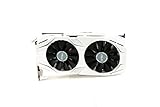
- 1809 MHz boost Clock (OC mode) with 6GB GDDR5;NVIDIA ANSEL for a revolutionary new way to capture in-game screenshots
- Dual-fan cooling provides double airflow for 3x quieter gameplay
- Vr ready with dual HDMI 2.0 ports to simultaneously connect headset & monitor
- GPU TWEAK II makes monitoring performance and streaming easier than ever, featuring game booster and XSplit Gamecaster, all via an intuitive interface.Auto-extreme technology delivers premium quality and reliability with aerospace-grade super alloy power II components to run 15% faster and last 2.5 longer than reference
Power, heat, and cooling
Nvidia specified a 120W TDP for the GTX 1060 and equipped the reference board with one 6-pin PCIe power connector. That lower power target showed up in cited system-level tests: TechSpot measured maximum total system draw of 197W in The Witcher 3, 12% below the RX 480 system and 22% below the GTX 980 system. GTX 1060 system draw was 17% below RX 480 in Black Ops III and 22% lower in Just Cause 3. These are test-specific whole-system measurements, not the graphics card’s power draw alone.
TechSpot recorded a 66°C peak for the GTX 1060 Founders Edition at 21°C ambient, compared with 81°C for the reference RX 480. Those figures describe the tested reference cards and conditions; partner cards can behave differently because of their heatsinks, fan curves, case airflow, and ambient temperature. For example, GamersNexus measured the pre-overclocked MSI Gaming X at 37.36°C under its own test conditions and noted that its fans stopped at idle. That unusually low board-specific reading should not be treated as a typical temperature for every GTX 1060.
Nvidia’s launch comparison claimed an average 15% performance lead and more than 75% greater power efficiency across its selected 1080p games. Its footnote specifies GTX 1060 driver 368.64 at a measured 120W TGP and RX 480 driver 16.6.2 at a measured 185W TGP. This was Nvidia’s controlled comparison, not a universal result across games or systems. TechSpot’s GTX 1060 review provides the cited system-power and temperature measurements.
Recommended Free Tools
Rank #2

- 51Risc GTX 1660 Ti: Memory: 6GB GDDR6, GPU Clock: 1500 MHz, Boost Clock: 1785 MHz, DP x 1 + HDMI x 1 + DVI x 1, 8 Pin Power Supply.
- Fantastic Card for Budget Gamers: The 51Risc 1660 Ti is a perfect upgrade for 1080p gaming, It’s 3x faster than a GTX 960, 1.5x faster than a GTX 1060, and offers comparable performance to a GTX 1070. You will get improved power efficiency over the previous generation for a faster, cooler and quieter gaming experience, You don’t need to spend a lot for upgrading your PC with a less than 500W PSU and a PCIe 3.0 motherboard when you choose our GTX 1660 ti video card.
- Connections: Being a dual-slot card, the 51Risc GTX 1660 Ti with a power draw rated at 125 W maximum. Display outputs include: 1x DVI, 1x HDMI 2.0, 1x DisplayPort 1.4a. GeForce GTX 1660ti is connected to the rest of the system using a PCI-Express 3.0 x16 interface.
- Dual Fan Cooling: This GDDR6 graphics card is equipped with blade dual fans for more airflow, quiet operation, and no noise disturbance.
- What you get: 1x 51Risc GeForce GTX 1660Ti graphics card, 1x User manual, professional after-sale service.
GTX 1060 3GB or 6GB?
The 6GB GTX 1060 was the original launch model and the version most relevant to comparisons with the RX 480. The later 3GB GTX 1060 is not simply the same card with half the memory: Ars Technica reported that it also has fewer shader cores and delivered roughly 5–10% less performance than the 6GB model in its early comparison. Its performance could still beat an RX 480 8GB in some games and lose in others. For 1440p, Ars considered the 6GB version preferable.
VRAM capacity is only one part of performance, but it matters when a game’s assets and settings exceed the available memory. Before buying a listing, confirm which GTX 1060 it is and inspect the full board specification:
- Memory capacity and, for the 3GB card, its reduced shader-core configuration.
- Exact board model, cooler, fan behavior, display outputs, and card length.
- Required power connector; the reference GTX 1060 uses one 6-pin PCIe connector, but verify the specific partner card.
- Whether the card is used or refurbished, its condition, and what warranty the seller provides.
A listing labeled only “GTX 1060” does not establish that it is the 6GB model—or tell you enough to confirm physical and power compatibility.
Rank #3

- Real Base Clock: 1607 MHz / Real Boost Clock: 1835 MHz; Memory Detail: 6144MB GDDR5. Revolutionary new 360-degree image capture
- EVGA GeForce GTX 1060 SC - Small Size, Huge Performance. Height: 4.376in - 111.15mm; Length: 6.8in - 172.72mm; Width: Dual Slot
- What you see is what you get! – No additional software required to achieve listed clock speeds
- DX12 OSD Support with EVGA Precision XOC. Requirements: Minimum of a 400 Watt power supply, 6-pin PCIe power connector
- 3 Year Warranty & EVGA's 24/7 Technical Support.Operating System Support:Windows 7,8,10(32/64bit).OpenGL 4.6 Support
Is either card suitable for 1440p, 4K, or VR?
1080p
1080p is the clearest fit for both cards in the cited launch-era testing. The 6GB GTX 1060 was often the faster choice, while the RX 480 remained a capable alternative and could perform better in particular games.
Quick wins for a faster PC:
Scan for outdated or missing drivers - takes under a minuteDriver Scan →Repair Windows errors before they cause bigger problemsFix Now →1440p
The GTX 1060 can serve for entry-level 1440p gaming, but expectations should be set by the game and settings. The cited Shadow of Mordor results show a modest GTX 1060 lead, while Black Ops III favored the RX 480. The 6GB GTX 1060 is the more sensible choice over its 3GB counterpart for this resolution based on Ars Technica’s launch-era comparison.
4K and VR
Neither card is a strong 4K choice in the cited testing. GamersNexus recorded GTX 1060 performance at or below 30 FPS in one 4K High workload, which is a warning against assuming that a card capable of some 1440p gaming will deliver smooth 4K performance. The GTX 1060 was positioned for 1080p and entry-level 1440p/VR use; actual VR suitability depends on the headset, application, and desired settings.
Which card should you choose?
- Choose a GTX 1060 6GB if its price and condition make sense and your priority is 1080p performance, lower power use in the cited tests, or the more suitable GTX 1060 configuration for 1440p.
- Consider an RX 480 if it is a better-value purchase in your market, has the memory capacity you need, or your games favor AMD’s architecture or the relevant graphics API.
- Compare exact used listings rather than relying on launch prices. These are legacy cards, so seller condition, warranty, cooling, physical fit, and power compatibility can matter as much as small differences in old benchmark averages.
Nvidia’s launch specifications and announcement are available in its GTX 1060 launch post and newsroom announcement.
Quick Recap
Product prices and availability are accurate as of the date/time indicated and are subject to change. Any price and availability information displayed on Amazon at the time of purchase will apply.

