
iTechGuides is reader-supported. When you buy through links on our site, we may earn an affiliate commission. As an Amazon Associate I earn from qualifying purchases. Learn more
The Nintendo Switch OLED is most appealing if you often play in handheld or tabletop mode and want a larger, higher-contrast built-in screen. It still connects to a TV, but its improvements are mainly display and convenience features—not a higher-resolution screen or an established performance tier.
What the Switch OLED improves
A larger OLED display for handheld play
Nintendo specifies a 7-inch OLED display for this model. By comparison, the standard Switch has a 6.2-inch LCD and Switch Lite has a 5.5-inch LCD. The OLED screen is still 1280 × 720, so the difference is the panel type and size, not a higher pixel count. The built-in screen matters most when you play handheld or set the console down for tabletop play. Nintendo’s OLED model overview lists the display specifications.
| # | Preview | Product | Price | |
|---|---|---|---|---|
| 1 |

|
Nintendo Switch – OLED Model w/White Joy-Con | $388.44 | Buy on Amazon |
| 2 |
|
Nintendo Switch OLED Model w/ White Joy-Con (Renewed) | $256.00 | Buy on Amazon |
| 3 |

|
Nintendo Switch – OLED Model w/Neon Red & Neon Blue Joy-Con | $384.98 | Buy on Amazon |
| 4 |

|
Nintendo Switch 2 System | $499.00 | Buy on Amazon |
| 5 |
|
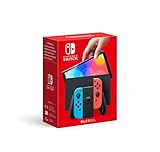
Nintendo Switch (OLED Model) - Neon Blue/Neon Red (Renewed) | $259.00 | Buy on Amazon |
A more usable tabletop stand
The wide, adjustable stand gives the console a more flexible base for tabletop play. Detach the Joy-Con controllers, place the system on a surface, and adjust its angle to suit your view. This is a practical improvement if you regularly play without holding the console.
What’s actually slowing this PC down?
Pick the symptom - the matching free tool is one click away.
More built-in storage, plus optional expansion
The OLED model includes 64 GB of internal storage, with some of that space reserved for system use. Compatible microSD cards can add capacity, but a card is an optional purchase rather than a requirement for every buyer.
#1 Best Overall
- Vivid 7” OLED screen
- Local co-op, online, and local wireless multiplayer
- 64 GB internal storage (a portion of which is reserved for use by the system)
- Enhanced audio in handheld and tabletop modes
- Wide adjustable stand
Wired networking and enhanced audio
The OLED dock has a wired LAN port for a network connection when the console is docked; the LAN cable is sold separately. Nintendo also identifies enhanced audio in handheld and tabletop modes, but does not quantify a sound-quality improvement.
What the pros and cons mean in everyday use
Pros
- A larger OLED panel makes handheld play the clearest reason to choose this model.
- The adjustable stand makes tabletop sessions more flexible.
- 64 GB of internal storage provides more room than the standard Switch’s 32 GB, although system use reduces available space.
- The dock’s wired LAN port is useful if you prefer a cable connection while playing on a TV.
- It supports handheld, tabletop, and TV play, and Nintendo says it is compatible with the Nintendo Switch game library.
Cons and limits
- The built-in display remains 720p; the upgrade is OLED technology and screen size, not resolution.
- The screen upgrade has little direct benefit in TV mode, when the game displays on the television instead of the console’s built-in screen.
- Nintendo’s cited differences are primarily hardware and convenience features. The product information does not establish a separate game-processing performance tier.
- A working standard Switch may be better value if you mostly play docked. Whether an upgrade is worthwhile depends on your local price and how you use the console.
- Compatibility is broad, but not every experience is identical: Nintendo notes that the larger console does not fit every Nintendo Labo design parameter, and some experiences may differ.
How it compares with the other Switch models
| Model | Built-in screen | Play modes | Storage and practical distinction |
|---|---|---|---|
| Switch OLED | 7-inch OLED, 1280 × 720 | Handheld, tabletop, and TV | 64 GB internal storage; dock includes a wired LAN port |
| Standard Switch | 6.2-inch LCD | Handheld, tabletop, and TV | 32 GB internal storage; a possible lower-cost fit if its screen and features meet your needs |
| Switch Lite | 5.5-inch LCD | Handheld only | Smaller, lighter system; check handheld-mode support for each game you want |
Specifications and compatibility caveats are from Nintendo’s Switch model comparison and OLED model information. All three models belong to the Nintendo Switch family, but Switch Lite does not support TV mode.
Rank #2
- Vivid 7” OLED screen
- Local co-op, online, and local wireless multiplayer
- 64 GB internal storage (a portion of which is reserved for use by the system)
- Enhanced audio in handheld and tabletop modes
- Wide adjustable stand
Which Nintendo Switch should you buy?
Choose the Switch OLED if handheld or tabletop is your usual mode
Pick OLED if you regularly use the built-in screen, want the larger OLED panel, and still value the option to play on a TV. The stand and extra internal storage are useful additions, but the screen is the main reason to pay more for this version.
Do these 3 things before closing this tab:
1Clear out junk files and repair common Windows errors2Fix the driver behind crashes, sound loss and screen glitches3Repair Windows errors before they cause bigger problemsConsider the standard Switch if you mostly play docked
If your console spends most of its time connected to a TV, the OLED screen may not justify an upgrade from a working standard model. For a new purchase, compare the actual local prices and condition of the available systems rather than assuming one model is always the better value.
Rank #3
- Vivid 7” OLED screen
- Local co-op, online, and local wireless multiplayer
- 64 GB internal storage (a portion of which is reserved for use by the system)
- Enhanced audio in handheld and tabletop modes
- Wide adjustable stand
Choose Switch Lite only if handheld-only works for you
Switch Lite may suit someone who prioritizes a compact handheld and does not need TV play. Before buying, confirm that each game you care about supports handheld mode.
Check Switch 2 before buying a new system
Nintendo describes Switch 2 as the next evolution of its console and says it plays compatible Nintendo Switch games, with exceptions. Compare current local price and availability, then verify compatibility for the specific games you plan to play. Do not assume every Switch title or accessory works identically. Nintendo’s Switch 2 information provides the manufacturer’s compatibility context.
Quick Recap
Rank #4
- The next evolution of Nintendo Switch
- One system, three play modes: TV, Tabletop, and Handheld
- Larger, vivid, 7.9” LCD touch screen with support for HDR and up to 120 fps
- Dock that supports 4K when connected to a compatible TV*
- GameChat** lets you voice chat, share your game screen, and connect via video chat as you play
What to check before you buy
- Your main play mode: Decide how often you will use handheld, tabletop, and TV modes. OLED’s screen advantage is relevant when you view the console itself.
- The games you want: Check handheld-mode support for a Lite, and verify specific Switch game compatibility if considering Switch 2.
- Price and condition: Compare the systems available in your region, including the condition of any used console. Prices and stock vary, so there is no universal value winner.
- Storage needs: Account for the OLED model’s 64 GB internal capacity, some reserved for system use, and consider a compatible microSD card only if you need more space.
- Accessories and special experiences: If you use Nintendo Labo or another particular setup, check its fit and compatibility rather than assuming every experience is unchanged.
Product prices and availability are accurate as of the date/time indicated and are subject to change. Any price and availability information displayed on Amazon at the time of purchase will apply.

