
iTechGuides is reader-supported. When you buy through links on our site, we may earn an affiliate commission. As an Amazon Associate I earn from qualifying purchases. Learn more
A new UK protocol can help make honey-authenticity assessments more dependable by standardising how reference samples are collected for authenticity databases. It does not test a jar for adulteration: laboratories still need analytical methods to examine unknown honey, and those methods have limits.
What the protocol does—and what it does not do
The Government Chemist-led Protocol for the Collection of Honey Reference Samples for the Construction of Authenticity Databases sets out how to collect and document honey samples that will form the baseline for authenticity databases. It was published in October 2023 and updated in September 2024 to add online forms in Annex 4. Defra and the Government Chemist co-funded the work; a working group chaired by Selvarani Elahi MBE brought together relevant stakeholder experts.

Such databases help laboratories interpret an unknown sample by comparing its characteristics with reference data. If databases use samples collected under different conditions or interpret them differently, laboratories may reach different conclusions. The protocol aims to improve the homogeneity, integrity and provenance of reference samples so those comparisons have a sounder basis.
The Tool Desk
Outbyte Driver Updater FREEScan for outdated or missing drivers - takes under a minuteDriver Scan →Outbyte PC Repair FREEClear out junk files and repair common Windows errorsFree Scan →The distinction matters: the protocol is for samples used to build authenticity databases, not for collecting a suspect jar for direct authenticity testing. It also excludes non-honey reference materials such as syrups and bee-feeding materials. Following its sampling procedure does not establish that any particular honey is authentic.
#1 Best Overall

- FDA-Approved & Clinically Trusted: The only oral fluid HIV self-test capable to detect both HIV-1 and HIV-2 antibodies. The same trusted test used by healthcare providers. Approved for use in individuals 14 years of age and older
- Quick & Easy Results in 20 Minutes: Just three simple steps and 20 minutes to know your HIV status, no lab visit or waiting required. Contact the OraSure support call center for confidential expert assistance and guidance if needed. FSA/HSA Eligible
- Pain-Free Oral Swab Testing: Uses a gentle gum swab; no needles, no discomfort, and no mess. Each kit includes: 1 OraQuick test device and vial, 1 Test Stand, 1 "HIV, Testing & Me" educational booklet, 1 instructional guide
- Confidential & Convenient At-Home Testing: Perform your test anytime, anywhere, with complete privacy. No appointments, waiting rooms, or follow-up visits. Ideal for individuals seeking discreet, self-directed HIV testing
- Sustainable & Reliable: Rebranded from OraQuick In-Home HIV Test with eco-friendly packaging; same trusted accuracy and performance as before.
Why a representative baseline matters
Honey naturally varies with geographic origin, floral source, season and year. A database can support conclusions only within the range its reference samples represent. A baseline made only from UK honey, for example, cannot by itself establish whether honey from another origin is authentic. Comparing a sample with honey produced in the same year may provide greater confidence because composition can shift over time, even for similar origins and floral sources.
The protocol therefore ties the sampling plan to the database’s intended use. If a database is meant to assess retail products, its reference set should include representative retail products or a reliable way to link other samples to them. Import and sales data can help define a plan, and the protocol recommends considering statistically relevant sample numbers. For retail honey, blending and processing records—and traceable provenance for the blend’s components—are important to understanding what the sample represents.
The scale of blending is one reason that provenance matters. A C Nielsen figure cited in the protocol says blended honey accounted for 95% by volume of the UK retail market for the 12 months ending 31 December 2022. That is a historical figure, not a current market-share estimate; the protocol defines the market as main retailers, discounters and a high percentage of health and bargain stores.
Rank #2

- Tests for the Most Common STDs: An easy-to-use common STD test with simple, high quality accurate, and private results. Simple HealthKit's Common STD Test screens for the most common and curable STDs / STIs: Chlamydia, Gonorrhea & Trichomoniasis
- Includes Telehealth: As part of our commitment to you. We are here from start to finish, no loose ends. If you receive a positive or abnormal test result, follow-up care is included. No extra charge. No hidden fees. It's that simple.
- Private & Easy To Use: Discreet, at-home testing that fits your life. Clear instructions, quick collection, and no awkward clinic visits. Just test, mail, and get answers.
- High Quality Results & Physician Approved, Test Intended for 18+ Only. Lab processing is included with your test purchase. Lab is CLIA Certified and CAP Accredited. Results delivered through a HIPAA-compliant portal.
- HSA / FSA Eligible: Use your HSA/FSA funds and save. A smarter, more affordable way to take care of your health without surprise costs.
How the collection process follows the supply chain
Reference samples may be collected at several points, from apiaries and beekeeper operations through processing, import-country handling and the final retail lot. The protocol’s Annex 4 provides different forms for beekeeper or batch information, processing or load information, import-country sampling and the final honey lot. The appropriate point depends on the database’s scope and on whether the sample can be linked to the products or batches it is intended to represent.
Bulk honey
For bulk honey that has not been homogenised in a drum or other container, the protocol recommends a hollow sampling spike, or corer, often with an integral plunger. For homogenised honey held across many units, it describes recognised statistical approaches for selecting units and combining equal portions of subsamples. It recommends at least 100 g for each subsample and at least 300 g for a single sample or an aggregate sample.
Retail and processed honey
A retail product may contain honey from multiple sources, so a label or a single production location may not describe every component. Processing and blending records can help connect the final lot to its inputs. The retail sample should be suitable for the database’s intended scope, with enough traceable information to interpret how the product was assembled.
Records, identity and sample integrity
Traceability is not an optional extra: it helps establish where a reference sample came from and what it can reasonably represent. The protocol discusses recording provenance from beekeeper to testing point, along with relevant location information. Where useful, supporting evidence may include pollen and sensory analysis for floral origin, or established quality tests. It recommends that these tests ideally use methods and laboratories accredited to ISO 17025.
For bulk sampling, the protocol ranks collection by an independent organisation as the strongest of its listed approaches for demonstrating traceability. It calls for trained personnel and a predefined, documented procedure. Collection documentation can range from complete digital records linked to time, date and GPS coordinates to paper or other electronic records; reporting can communicate the level of collection confidence and metadata completeness.
- Use clean, food-grade, opaque glass or, preferably, plastic containers.
- Give each container a unique sample identification code or number.
- Seal the sample, or place it in a sealed bag, using a tamper-evident closure.
- Keep records that link the sample to its collection point, batch or lot and relevant supply-chain information.
Transport, storage and laboratory handling
The protocol recommends keeping samples at approximately 25–35°C during storage and transport before analysis to avoid crystallisation and maintain honey quality. For samples with moisture above 23.0%, it recommends frozen storage from collection to analysis. After testing, it strongly recommends storage at −18°C or lower. If a sample may be tested again, its storage history should be recorded.
Rank #4
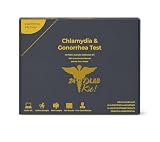
- At-home urine collection kit for chlamydia and gonorrhea — for men and women aged 18 and over. No clinic visit, no appointment, no waiting room.
- Simple four-step process: register your kit online, collect a urine sample at home, mail it back using the included prepaid label, then receive secure digital results typically within 2 to 3 business days of lab receipt.
- Lab results are analyzed in a CLIA-certified laboratory and reviewed by board-certified physicians before delivery. The lab meets federal standards for clinical accuracy under CLIA regulations. Results are HIPAA-compliant and never shared with your employer or insurance provider.
- This kit is designed for routine sexual wellness screening — whether after a new partner, as part of a regular health check-in, or simply for peace of mind. No symptoms required. Take control of your sexual health on your own schedule.
- If your result comes back positive, free follow-up support connects you with an independent physician network at no additional cost for guidance and next steps. This kit is HSA and FSA eligible — use your pre-tax health account at checkout.
Crystallised samples should be avoided at the laboratory. If crystals are observed, the protocol describes gentle warming at no higher than 40°C followed by thorough mixing. These handling practices protect the reference sample’s condition; they are not tests for adulteration.
Independent reader supportYour contribution helps us test, update, and keep practical guides available for everyone.How reference samples support analytical testing
Reference databases provide context for analytical methods, but no single method currently covers every aspect or type of honey adulteration. The Food Standards Agency’s 2025 research report investigated spatially offset Raman spectroscopy (SORS) and machine-learning models for rice- and sugar-beet-syrup adulteration, as well as DNA markers using qPCR to provide evidence about plant sources. The study covered 17 UK honey types and simulated adulteration levels of 1–30% for qPCR and 10–50% for SORS.
Within that study, the DNA method distinguished adulterated samples at 1%. The SORS random-forest model classified 1.1% of pure samples as adulterated and 3.64% of adulterated samples as pure. Those figures describe the study’s samples and models, not guaranteed performance on every honey or adulterant. The report calls for refining the models, reducing misclassifications and expanding the range of commercial honeys assessed.
Best Value
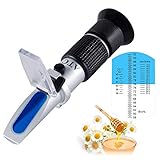
- ACCURATE READINGS : The Honey refractometer can measure Brix (sugar): 58-90%, Resolution: Brix (sugar): 0.2%, 10-32% water with 0.2% reading
- ADVANCED AUTOMATIC TEMPERATURE COMPENSATION(ATC)TECHNOLOGY:Adjust Automatically to Compensate for Temperature, Which makes it even easier to get fast results.
- SIMPLY USE: Using the dropper to take a sample of wort and put it on the prism. Then hold the refractometer up to the light and look scale through the eyepiece, more accurate to measure sugars in verities of melon, fruits or juice.
- WIDE USE: The Honey Refractometer is ideal for measuring honey, condensed milk, vegetable oils, sugar syrup, fruit jam and molasses.
- PORTABLE HONEY CONTENT TESTER: Easy to use, sturdy design, compact in size and light in weight, convenient to keep up and carry around
AOAC’s Standard Method Performance Requirements for nontargeted honey testing also makes the baseline’s scope central: the authentic samples used to build a fingerprint define what the method can assess, and validation samples should be independent and cover that scope. Better provenance and representative sampling make it clearer what a database-based classification does—and does not—mean.
What a separate regulatory sampling programme found
In its FY2025 honey assignment, the U.S. Food and Drug Administration tested 54 domestic and 48 imported samples and found two violative samples in each group—four of 102 total. The FDA cautions that the assignment was not designed to compare violation rates by country of origin. It also says its current method detects only a subset of undeclared sweeteners, with additional methods under development. This is U.S. regulatory sampling context, not an evaluation of the UK reference-sample protocol.
Quick Recap
Product prices and availability are accurate as of the date/time indicated and are subject to change. Any price and availability information displayed on Amazon at the time of purchase will apply.

