
iTechGuides is reader-supported. When you buy through links on our site, we may earn an affiliate commission. As an Amazon Associate I earn from qualifying purchases. Learn more
Carbon nanotube (CNT) desalination remains a research prospect, not a commercial technology shown by the available reviews to be undergoing a relaunch. CNT channels may move water rapidly, but translating that behavior into large, durable membranes that reliably reject salt is still an engineering challenge. Getting the field “back on track” means proving repeatable manufacturing, performance under realistic operating conditions, long-term stability, cost viability, and safe containment—not simply demonstrating promising transport through individual nanotubes.
How carbon nanotube desalination is supposed to work
Carbon nanotubes are nanoscale carbon cylinders studied as channels for water transport. Their inner channels may allow water to pass rapidly, while membrane design and the properties of the tubes can help determine whether dissolved salts are rejected. That combination is scientifically attractive for desalination, but the behavior of an individual channel does not establish how a large membrane sheet will perform.
Researchers have explored several membrane structures. They differ in how the nanotubes are arranged and supported, and therefore in their potential manufacturing and stability challenges.
What’s actually slowing this PC down?
Pick the symptom - the matching free tool is one click away.
- Vertically aligned CNT arrays: Nanotubes are arranged as channels through a membrane structure. Producing large areas with consistent alignment and density is difficult.
- Buckypaper: A membrane-like sheet made from a network of nanotubes. Its performance depends on the network structure and the way water and salts move through it.
- Composite membranes: CNTs are incorporated into a polymer, used as an intermediate layer, or coated onto a membrane or support. These designs must address how the nanotubes disperse and bond with surrounding materials.
The 2020 review Recent Advances in Applications of Carbon Nanotubes for Desalination describes these configurations and the factors that influence them, including tube diameter, length, alignment, defects, and functionalization. It also cautions, in effect, against treating idealized nanochannel results as proof of scalable membrane performance; much of the literature it reviews relies on simulations, and scale-up remains difficult.
#1 Best Overall

- INSTANT LIFESAVING FRESHWATER: Conquer any ocean challenge with this portable manual seawater desalinator. Achieve up to 97% desalination, transforming saltwater into pure, emergency drinking water. Your ultimate survival water filter for sea survival.
- UNSTOPPABLE 0.53 gal/HOUR FILTRATION: Experience rapid, reliable water purification with an incredible 2L/hour filtration efficiency. This robust water purifier survival system ensures you always have clean, safe water, even in the most extreme off grid atmospheric water maker scenarios.
- ULTRALIGHT COMPACT SURVIVAL GEAR: Engineered for extreme portability, this lightweight and compact emergency water filter is your essential companion. Perfect for backpacking water filtration system needs, ensuring survival water is always within reach, no matter how remote.
- CRITICAL FOR ADVENTURE & EMERGENCY: Don't leave your safety to chance. This water filtration system survival tool is vital for outdoor adventures, sea survival, and any emergency water situation. A must have portable water purifier for every serious survivor.
- YOUR INDEPENDENT WATER SOURCE: Break free from reliance on external water sources. This powerful water filter provides unparalleled independence, functioning as your personal water maker from air in any crisis. Be prepared with ultimate emergency water.
Why CNT desalination has not reached full-scale use
The obstacles are linked: a membrane must be manufacturable at useful scale, perform consistently, withstand operating conditions, and make economic sense. The reviews identify several unresolved hurdles.
Uniform manufacturing at large area
Large-area, high-density arrays of consistently aligned CNTs are difficult to produce. Misalignment and defects can change transport or create weak points, so a result from a small sample may not carry over to a full membrane. The field needs repeatable production, not just a promising specimen.
Rank #2

- HYBRID & RO FILTER - This outdoor water filter uses a hybrid filter element and RO filter element, which can purify 99.99% of impurities, so that you can drink clean and virus-free water when camping outdoors.
Cost and scale-up
A review of functional CNT membranes reports that the work it examined was at bench scale and that high cost has limited full-scale application. That finding does not establish that every CNT design has the same cost, but it shows why laboratory performance alone is insufficient evidence of commercial practicality. See the 2019 review, published online in 2018, Challenges and opportunities in functional carbon nanotubes for membrane-based water treatment and desalination.
Integrating nanotubes into a membrane
CNTs are hydrophobic and tend to bundle, making it hard to distribute them uniformly or ensure compatibility with a polymer matrix. Functionalization can improve compatibility, but excessive modification may damage useful CNT properties and produce chemical waste. Composite designs therefore face a balance: improve the interface without undermining the nanotubes or creating new manufacturing problems.
Rank #3
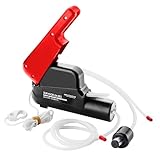
- WORLD'S SMALLEST HAND-POWERED DESALINATOR: Compact, lightweight reverse osmosis seawater filter built for life rafts, sailboats, marine survival kits, and ditch bags. Sized for groups of 1 to 6 people where space and weight are critical.
- 5.7 GALLONS OF FRESH WATER PER DAY: This manual desalinator produces 0.24 gallons per hour and up to 5.7 gallons per day at 40 strokes per minute. Five-year operational lifetime, reliable freshwater for groups when you need it most.
- PATENTED ENERGY RECOVERY PUMP, EASIER TO OPERATE: Reverse osmosis with energy recovery delivers more freshwater per stroke and lower pumping effort than conventional manual desalinators. Critical when fatigue is the enemy in survival.
- MARINE-GRADE SALTWATER & SURVIVAL CONSTRUCTION: Corrosion-resistant stainless steel, composite, and food-contact-compliant plastics. Operates from 36°F to 113°F. No electricity, batteries, or fuel needed, just hand power.
- TRUSTED SINCE 1928: Katadyn has been delivering clean water solutions for nearly a century. Used by hikers, travelers, and professionals worldwide, our products are built for reliable performance wherever you go.
Balancing water output, salt rejection, and durability
Desalination membranes must deliver water while rejecting salt, and both outcomes need to hold under realistic pressure and salinity. The reviewed literature describes tradeoffs between permeability and rejection, possible structural changes under pressure, and unresolved questions about reproducibility and long-term performance. A high water-flux result by itself does not show that a membrane produces adequately desalinated water over time.
Understanding environmental and health risks
The 2020 review says evidence about human and environmental effects remains scarce, with longer-term impacts requiring study. Development therefore needs to assess whether CNTs remain contained during use, cleaning, replacement, and disposal—and what happens if they are released.
Rank #4
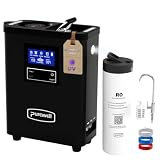
- 💧EMERGENCY WATER FILTRATION: The Purewell K8680/P01 water purification system uses a 0.0001 micron RO membrane and is equipped with a dual system UV lamp. It can reduce up to 99.999% of TDS, PFOA, PFOS, fluorine, arsenic, chlorine, lead, most heavy metals, odors, chemicals and other trace substances. It has passed SGS and NSF/ANSI international laboratory tests, and the materials comply with FDA food-grade standards. Even in the wild, it can ensure healthy drinking water!
- 💧TDS MONITORING: K8680/P01 Survival Water Purifier, the RO filter element has a lifespan of up to 12-36 months and can provide 1-3 years of clean drinking water. It can save you $25 per day. The display will show the water quality status. If the usage period has been reached or when the TDS value of the filtered water is too high (the lifespan may vary depending on the water quality), please update the filter components in time. PP pre-filter ASIN: B0FCB7Y58B, RO filter element ASIN: B0FC62GRVC
- 💧SUPER LONG BATTERY LIFE: The K8680/P01 water filtration system with 54W Super Fast Charger. It can be used for 6.5 hours. In just 3 minutes, it can quickly fill a 2.1-liter water bottle, meeting the needs of 20 adults for an entire day of outdoor activities. Additionally, the Type-C interface supports reverse charging, allowing it to charge devices such as mobile phones and tablets. It is an ideal companion for outdoor teams camping and family RV trips.
- 💧ENERGY SAVING + WATER SAVING: Each time the system is turned on, the electric RO travel water filter system automatically performs a 10-second self-cleaning cycle. The ratio of purified water to waste water is as high as 2:1, with a desalination rate of up to 95%. When not in use, the water system automatically enters an energy-saving standby mode to reduce energy consumption. Additionally, it is equipped with a 2-stage UV lamp to ensure the safety of the filtered water.
- 💧 EMERGENCY & OUTDOOR READY: Built with a durable aluminum alloy body, this portable RO purifier features integrated night-vision lighting and an emergency light mode. Includes a compact carry bag for quick setup during camping, off-grid travel, or power outages. (Note: Designed for fresh/brackish water, not for ocean seawater).
What would put the technology back on track?
A credible roadmap starts with controllable fabrication and testing that resembles real desalination service. Researchers need to report water flux and salt rejection together, then show that both remain dependable through extended operation and cleaning. They also need to measure fouling, pressure tolerance, batch-to-batch repeatability, and CNT containment rather than treating those issues as later-stage concerns.
Quick wins for a faster PC:
Clear out junk files and repair common Windows errorsFree Scan →Scan for outdated or missing drivers - takes under a minuteDriver Scan →Repair Windows errors before they cause bigger problemsFix Now →Alternative CNT architectures and combinations with other thin nanoporous materials are research directions discussed in the review literature, not established commercial routes. No architecture can be ranked as commercially superior without comparable evidence under relevant operating conditions.
Best Value

- MANUAL OPERATION NO POWER REQUIRED: Hand-operated desalination pump works without electricity or batteries, ensuring reliable freshwater supply anytime, anywhere for marine emergencies, survival situations, and outdoor adventures
- HIGH EFFICIENCY DESALINATION (97%): Advanced filtration system effectively removes salt and impurities from seawater, achieving a desalination rate of 97% to provide safe and drinkable freshwater
- STEADY WATER OUTPUT UP TO 2L/H: Delivers up to 2 liters of freshwater per hour with continuous hand pumping, meeting essential hydration needs during emergency situations
- LIGHTWEIGHT & COMPACT DESIGN: Weighing only 1.35kg with a compact size of 255x135x75mm, this portable water maker is easy to carry and store in survival kits or lifeboats
- EMERGENCY WATER SUPPLY FOR 16 PEOPLE: Capable of producing up to 500kg of freshwater in total, providing a reliable drinking water solution for 16 people in lifeboats, marine environments, or disaster preparedness kits
Evidence that would demonstrate progress
The following are practical tests inferred from the documented manufacturing, performance, stability, cost, and environmental gaps; they are criteria for evaluating progress, not achievements already established by the reviews.
- Repeatable production of large membrane areas, with consistent alignment, pore density, and geometry.
- Comparable results across separate production batches.
- Water production and salt rejection measured together under realistic pressure and salinity.
- Long-duration operating data, including pressure tolerance, fouling behavior, and cleaning performance.
- A credible cost analysis for manufacturing and operation at relevant scale.
- Evidence that CNTs remain contained, or a demonstrated way to manage any release safely.
What the current evidence does—and does not—show
The reviews support the view that CNT membranes have properties worth investigating and that several architectures have been studied. They also describe bench-scale work, scale-up and cost barriers, and unresolved questions about performance, durability, reproducibility, and environmental effects. They do not establish a current commercial relaunch, a commercially comparable set of CNT desalination products, or a direct deployment case.
That distinction matters: the reviews do not show that CNT desalination has failed, but neither do they justify presenting the technology as ready for widespread use. “Back on track” is best understood as a testable research and engineering program, with commercial practicality contingent on evidence that the current literature has not yet established.
The Tool Desk
Outbyte Driver Updater FREEFix the driver behind crashes, sound loss and screen glitchesFind Drivers →Outbyte PC Repair FREERepair Windows errors before they cause bigger problemsFix Now →Quick Recap
Product prices and availability are accurate as of the date/time indicated and are subject to change. Any price and availability information displayed on Amazon at the time of purchase will apply.

