
What’s actually slowing this PC down?
Pick the symptom - the matching free tool is one click away.
iTechGuides is reader-supported. When you buy through links on our site, we may earn an affiliate commission. As an Amazon Associate I earn from qualifying purchases. Learn more
Meta Ray-Ban Display glasses are a real, shipping product, but they are not full augmented-reality glasses or a phone replacement. They are first-generation AI glasses with a small full-color monocular heads-up display in the right lens and a Meta Neural Band that lets you control the interface with discreet finger gestures.
At $799, they make the most sense for early adopters who specifically want glanceable navigation, live captions, messages, camera framing, and private visual prompts. Most buyers who primarily want music, calls, AI, camera capture, and comfortable all-day wear should save money with the display-free Ray-Ban Meta Gen 2.
Our verdict
- Price: $799, including the glasses and Meta Neural Band.
- Launch date: September 30, 2025, in the United States.
- Current availability: Primarily the US, with Meta’s product page currently showing an in-store-only purchase experience.
- Best for: Glanceable information, captions, pedestrian navigation, discreet controls, and hands-free messaging.
- Biggest drawbacks: Heavy frames, monocular-display comfort, display-heavy battery drain, limited app support, and a high price.
- Recommendation: Buy only after trying the display and Neural Band in person. For most everyday buyers, Ray-Ban Meta Gen 2 is the better value.
The display and Neural Band are genuinely impressive. They can make a short interaction—checking a message, following a turn, reading a caption, or previewing a photo—feel more natural than taking out a phone. But those moments do not turn the glasses into immersive AR. The product remains a niche, first-generation wearable whose premium is almost entirely for the display and new control system.
Recommended Free Tools
What are Meta Ray-Ban Display glasses?
Meta Ray-Ban Display glasses combine conventional-looking Ray-Ban eyewear with five main components: a camera, open-ear speakers, microphones, Meta AI, and a small full-color display built into the right lens. The display can show short cards of information rather than a large virtual screen.
That distinction matters. These are best described as display AI glasses or glasses with a glanceable HUD. They do not provide binocular 3D overlays, a wide spatial-computing workspace, an immersive game view, or a cinema-sized virtual monitor. Their 20-degree display is deliberately limited so that the wearer can glance at information without having the whole world covered by graphics. Engadget’s hands-on coverage and UploadVR’s review both emphasize this short-interaction design.
#1 Best Overall
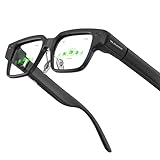
- Dual-Lens Waveguide Display Technology: Engineered with an advanced binocular waveguide optical system, these AR smart glasses deliver a truly immersive viewing experience. The ultra-bright 1200-nit MicroLED display produces crisp, vivid visuals, allowing you to view notifications clearly, real-time data, and digital content. Includes translation of more than 40 languages.
- All-Day Comfort, Virtually Weightless: Designed to feel natural from the moment you put them on, these ultralight 37g AR smart glasses combine an ergonomic frame with two soft nose pads for lasting comfort. From focused work sessions to active evenings, they stay comfortable, secure, and effortlessly wearable throughout your day.
- Your Personal AI Assistant, Always On: Designed for seamless everyday use, these AI AR agent glasses put a powerful AI assistant at your fingertips. Easy access to leading AI models delivers instant answers, intelligent recommendations, and hands-free support, helping professionals, students, and innovators stay informed and productive wherever they go.
- Live Basketball Updates Anywhere: Stay connected with real-time, text-based basketball scores and game updates displayed directly in your field of view. Designed for sports fans on the go, these smart glasses let you follow live games hands-free while commuting, working, traveling, or staying active. It's the ultimate basketball fan-themed gift for sports lovers!
- Real-Time Communication, Translation, Messaging, Music, Teleprompter, Navigation: These smart AR glasses act as a companion, offering real-time multilingual translation. Integrated messaging alerts keep you informed instantly, while the built-in teleprompter supports meetings, presentations, or content creation. Enjoy immersive access to music, notifications, and information suitable for global travelers, business professionals, and presenters who need efficiency and convenience on the go. (Auxiliary route guidance, prioritizing safe observation of the real-world environment.)
The glasses still need a phone and the Meta AI app for setup and many connected functions. They are intended to reduce how often you reach for the phone, not eliminate it. They cannot freely mirror every iPhone or Android app, and the supported experience is centered on Meta AI, dedicated glasses functions, and connected Messenger, WhatsApp, and Instagram services.
Price, box contents, and availability
The current US price is $799. That bundle includes:
- Meta Ray-Ban Display glasses
- Meta Neural Band
- Glasses charging case
- USB-C cable
- Neural Band charger
- Cleaning cloth
- Quick-start, safety, and warranty guides
Meta’s current product page lists the glasses at $799 and marks them In-store only. That is important when comparing them with ordinary consumer electronics: the purchase is tied to a demonstration and fitting process, rather than being a straightforward online checkout in every market. Correct fit matters for both the optical display and the Neural Band’s gesture recognition.
Meta originally announced plans for an early-2026 rollout to Canada, France, Italy, and the United Kingdom. On January 6, 2026, however, it announced that international expansion was being paused because of demand and limited inventory. The current official FAQ still describes the product as currently available in the United States. Do not assume that a retailer, import listing, or navigation-city listing means official normal retail availability in your country.
Prescription lenses are available through participating certified retailers within a stated total-power range of -4.00 to +4.00. Readers outside that range should confirm compatibility with an optician before purchasing. Prescription availability and extra lens costs may vary by retailer.
Specifications and what they mean in practice
| Specification | Official or reported figure | Practical implication |
|---|---|---|
| Display | Full-color, 600 × 600 pixels | Useful for text, prompts, captions, map cards, and previews—not a large entertainment screen. |
| Display type | Monocular, in the right lens | Only the right eye sees the display. Comfort and alignment are highly individual. |
| Field of view | 20 degrees on Ray-Ban’s product page; approximately 14° horizontal × 14° vertical, or about 20° diagonal, in UploadVR’s description | A glanceable window rather than an immersive view. |
| Brightness | Up to 5,000 nits reported in technical hands-on coverage | Designed to remain visible in bright conditions, although peak brightness is not a guarantee of identical outdoor performance for every user. |
| Refresh rate | Up to 90Hz; content reported at 30Hz | Menus and gestures can feel responsive, but this is not a high-frame-rate gaming display. |
| Camera | 12MP ultra-wide with 3× digital zoom | Good for first-person capture and framing assistance; distant subjects still expose the limitations of a small wearable camera. |
| Photos | 3,024 × 4,032 pixels | Suitable for casual social capture, not a replacement for a modern phone camera in difficult or distant scenes. |
| Video | 1,440 × 1,920 at 30fps | Portrait-oriented first-person video with a default three-minute maximum that can be changed in the Meta AI app. |
| Audio | Two custom open-ear speakers | You can hear music, directions, calls, and AI responses without blocking your ears, but sound can leak. |
| Microphones | Five-microphone array plus a contact microphone near the nose bridge | Supports voice commands, calls, and audio capture, with real-world performance affected by wind and background noise. |
| Storage | 32GB; listed capacity of 500-plus photos and 100-plus 30-second videos | Captures must be imported to the phone before normal viewing and sharing. |
| Wireless | Wi-Fi 6 and Bluetooth 5.3 | Still dependent on phone connectivity and internet access for many AI and connected features. |
| Weight | 68g standard; 70g large | Substantially heavier and thicker than display-free smart glasses. |
| Lenses | Transitions Gen8 clear-to-grey photochromic lenses | Designed for indoor and outdoor use, although tint transition and optical preferences vary. |
| Water resistance | IPX4 | Suitable for light rain and splashes, not submersion or prolonged liquid exposure. |
| Prescription support | -4.00 to +4.00 total power through participating certified retailers | Confirm the exact prescription and retailer support before ordering. |
Ray-Ban provides the core specifications on its official product page. The independent display measurements and field-of-view interpretation come from Tom’s Guide and UploadVR, and should be understood as reported testing rather than a promise that every wearer will see exactly the same result.
Outdated Drivers Are Slowing You Down
One free scan finds every outdated or missing driver and matches the right update for your exact hardware.Free scan · exact hardware matchWindows Errors? Fix Them Before They Spread
Repair common Windows errors and clear accumulated junk for a smoother, more stable PC - no reinstall needed.Free scan · no reinstallDesign and comfort: the biggest everyday compromise
These are not ordinary Ray-Ban Meta frames with a screen quietly added. The display hardware, camera, speakers, batteries, and electronics make them considerably thicker and heavier. The frames weigh 68g in the standard size and 70g in the large size. Reviewers measured roughly 69g and disagreed about how attractive or conspicuous the result looks.
Some hands-on coverage found the Sand finish reasonably stylish, while UploadVR described the glasses as visibly technical. Both reactions are plausible: the glasses can pass as eyewear at a glance, but they are much less discreet than standard Ray-Ban Meta frames. Anyone sensitive to bridge pressure, temple weight, or oversized frames should treat an in-store fitting as essential rather than optional.
There are Black and Sand colors and Standard and Large frame sizes. The included Transitions Gen8 lenses are a practical choice because the glasses can move between indoor and outdoor environments without changing lenses. They do not, however, solve the weight or display-comfort issue.
The monocular display is a personal-fit decision
The screen sits in front of the right eye only. Some reviewers adapted quickly and found it sharp and surprisingly unobtrusive; others reported eye strain or discomfort within seconds. That is not a contradiction in the hardware—it is a reminder that monocular displays interact differently with different eyes, prescriptions, facial geometry, and alignment preferences.
The Tool Desk
Outbyte Driver Updater FREEScan for outdated or missing drivers - takes under a minuteDriver Scan →Outbyte PC Repair FREEClear out junk files and repair common Windows errorsFree Scan →Display tilt can be adjusted in the display settings, and trying the other frame size may help. Nevertheless, a buyer should look at text, walk around, and use the gestures during the retailer demo. A display that seems exciting for 30 seconds may not be comfortable after an hour.
Display experience: useful, but intentionally small
Independent hands-on reports generally found the display bright, crisp, and more useful than its small field of view suggests. It is particularly effective when the information is brief: a notification, a caption, a turn prompt, a message preview, a calendar card, a photo preview, or a short AI response.
The restricted field of view is also the reason these glasses do not feel like a conventional AR headset. You cannot comfortably watch a film on a large floating screen, play a normal 3D game, or arrange several desktop windows around you. The display appears when needed and then gets out of the way. That makes it less distracting than a headset, but also limits what the $799 device can do.
Text alignment and brightness can be adjusted, and accessibility settings include text-size and text-weight controls, color correction, and display magnification. Even so, the monocular design and small viewing window mean that it will not suit every low-vision user or every prescription.
Do these 3 things before closing this tab:
1Repair Windows errors before they cause bigger problems2Scan for outdated or missing drivers - takes under a minute3Clear out junk files and repair common Windows errorsMeta Neural Band: the feature that makes the display practical
The Neural Band is a wrist-worn electromyography controller. It uses surface EMG, or sEMG, to detect electrical activity associated with finger movements. Unlike camera-based hand tracking, it does not need to see the hand. Gestures can work with the hand at your side, on your lap, in a pocket, or in darkness. The band provides haptic feedback when it recognizes a gesture. Meta explains the technology in its EMG wearable technology overview.
Voice commands remain available, but the band is what makes the visual interface feel discreet. Saying a wake phrase in a quiet meeting or waving a hand in front of a camera can be socially awkward. A small finger movement and a vibration are much less conspicuous.
| Gesture | Function |
|---|---|
| Thumb to middle finger | Interacts with display functions such as waking or sleeping the display and returning to menus. |
| Thumb to index finger | Selects or clicks. |
| Thumb double-tap along the side of the index finger | Activates or exits Meta AI. |
| Thumb swipe along the side of the index finger | Navigates or scrolls. |
| Hold the index finger and rotate the wrist | Adjusts volume or changes camera, gallery, or map zoom. |
| Hold middle finger to thumb | Opens or closes the launcher while inside an app. |
The volume and zoom gesture is the most convincing demonstration of the technology. Reviewers found that the controls became intuitive with practice and that haptic feedback increased confidence. The weaknesses are equally practical: the band is another device to wear, it has its own charger, it needs a snug fit, and directional swipes can fail occasionally during movement. Some users may also experience wrist marks or skin discomfort.
The band is rated for up to 18 hours, but its real value depends on whether the wearer is willing to remember a second charging routine. Without it, the glasses can still be used with voice and physical controls, but the most distinctive hands-free interaction is diminished.
What the glasses can actually do
Messages and notifications
The display can show incoming notifications and support viewing or replying to messages through WhatsApp, Messenger, Instagram, and the connected phone’s messaging system. This is one of the clearest advantages over display-free Ray-Ban Meta glasses: the wearer can glance at information instead of relying entirely on audio or reaching for a phone.
It is not unrestricted phone mirroring. A notification from an unsupported app does not automatically become a full glasses interface, and the product does not expose every function available on the phone.
Calls and video calls
Calls can be made through connected services, and video calls can be initiated through Messenger, WhatsApp, or Instagram accounts. During a video call, the wearer can see the other caller in the display while the other person sees the glasses’ first-person camera view. That creates a useful hands-free way to show someone a repair, a view, a sports moment, or a location.
The open-ear speakers make calls possible without covering the ears, but they are not acoustically private. People nearby may hear parts of a call or AI response, especially in a quiet room or at higher volume.
Camera preview and capture
The in-lens camera preview is a meaningful upgrade over ordinary Ray-Ban Meta glasses. Instead of pointing the camera and hoping the framing is correct, the wearer can open the camera app, see a live preview in the right lens, and use the Neural Band to capture or zoom. The preview is particularly useful for first-person framing, quick snapshots, and situations where looking down at a phone would miss the moment.
It does not make the camera equivalent to a phone camera. The 12MP ultra-wide sensor and 3× zoom are best suited to nearby or moderately distant subjects. In a real-world sports test, Tom’s Guide reported that a player across a baseball field remained a small blur even with zoom.
Rank #2

- Giant Virtual Screen – Immersive Theater Anywhere: Step into a breathtaking virtual screen up to 500 inches, transforming movies, games, and apps into larger‑than‑life experiences. Whether you’re commuting, flying, or unwinding at home, your personal cinema travels with you—bringing immersive entertainment wherever life goes.
- Premium Display Quality – Smooth, Sharp, and True-to-Life: XREAL 1S delivers ultra‑smooth viewing with a 120Hz refresh rate in 3DoF mode and a 90Hz global refresh that eliminates flicker and blur. Every unit is individually color‑tuned for precise, natural hues. The redesigned optical engine boosts clarity by 9%, delivering crisp detail from center to edge. Advanced optical alignment ensures each image point locks perfectly to your eye, keeping visuals sharp, vivid, and lifelike.
- Spatial Viewing Modes – Work, Watch, and Play on Your Terms: Shape your environment with XREAL 1S. Effortlessly switch between 0DoF follow mode, 3DoF anchor mode, Ultrawide Mode (32:9 or 21:9), Real 3D Mode, and Side-View Mode — ideal for both deep focus and entertainment. Pair with XREAL Eye to unlock 6DoF spatial anchoring, allowing for total freedom of movement while your screen stays pinned.
- Native 3DoF Spatial Screen – Plug & Play Freedom: XREAL 1S brings your AR experience to life with native 3DoF spatial viewing powered by the X1 chip. No apps, no setup — simply connect to any USB‑C DP‑enabled device and step straight into expansive spatial content. With rock‑solid stability and smooth head tracking, every session feels natural and comfortable, free from motion sickness and distractions, keeping you fully immersed.
- REAL 3D – Instant Spatial Depth for Everything You Watch: XREAL 1S debuts the world’s first on‑glasses REAL 3D spatial technology, instantly transforming all your content—from games and movies to apps and photos—into true 3D with a single switch. Experience richer depth and lifelike visuals across everything you watch or play, supported at up to 30fps with just 90–100ms latency for smooth, natural viewing.
- The camera has an external capture LED intended to indicate when a photo or recording is active.
- Media must be imported into the Meta AI app before normal viewing or sharing.
- After import, the media is transferred to the phone’s photo app and removed from the glasses.
- The default maximum video length is three minutes, though the limit can be changed in the Meta AI app.
- Digital zoom helps framing but cannot replace optical reach or computational photography on a modern phone.
Music and audio
The two open-ear speakers support music, calls, navigation prompts, and AI responses while leaving the ears open to surrounding sound. That is useful for walking and general awareness, but it involves the usual open-ear trade-off: audio is not private, and loud environments may require higher volume. The glasses are not the right choice for someone who expects sealed-headphone privacy.
Pedestrian navigation
Pedestrian navigation is available in beta in selected cities. The wearer can search for nearby restaurants, cafés, parks, attractions, and other places, then start walking directions from the Maps app. Directions can appear visually and through audio.
Free tools Windows power users keep installed
One-click scans. No signup required.
Meta’s current FAQ lists Atlanta, Austin, Boston, Chicago, Dallas, Fort Worth, Houston, Los Angeles, Miami, New York City, Orlando, Philadelphia, Phoenix, San Antonio, San Diego, San Francisco, San Jose, Seattle, Washington, D.C., Toronto, Montreal, Vancouver, London, Manchester, Paris, Rome, Milan, and Naples.
That list should not be interpreted as universal navigation coverage or proof of normal retail availability in every listed country. Navigation is beta, city-dependent, and affected by region, firmware, account, permissions, and phone connectivity. Precise, ongoing location access must be granted to the Meta AI app.
Live captions and translation
Live captions transcribe speech in real time and place the words in the display. They can be started from the glasses, the Meta AI app, or with the voice command Hey Meta, start captions. The first use requires downloading the desired caption language.
Meta documents live translation involving English, French, Italian, and Spanish. The wearer can see translated speech in the display, while the other participant can read or hear a translated response through the app. Accuracy depends on language support, background noise, microphone position, internet access, and the complexity of the conversation.
Meta has also announced real-time captions for phone, WhatsApp, Messenger, and Instagram Direct voice calls. This gives the glasses meaningful potential for people who are hard of hearing or who have difficulty following conversations in noisy environments, although availability can depend on current software and account settings. Meta’s accessibility announcement describes these captioned-call features and broader wearable accessibility work.
Meta AI
Meta AI can answer questions, describe scenes, translate text, interact with connected functions, and help with messages or media. The display improves the experience when an answer is better read than heard, or when the wearer needs a visual confirmation.
It remains a connected assistant rather than a fully independent computer. Many functions require a paired phone, wireless internet, location permission, a Meta account, and support in the wearer’s country and language. Results can also be limited by the connected app. Buyers should think of Meta AI as a useful hands-free layer, not an unrestricted general-purpose assistant.
Teleprompter and Neural Handwriting
Meta announced a teleprompter feature in January 2026. Users can copy notes from a phone app, Google Docs, or Meta AI; the notes appear as customizable text cards in the display and can be advanced with the Neural Band. This could be useful for presentations, interviews, speeches, or remembering a sequence of instructions.
Meta also announced Neural Handwriting as an early-access feature in the United States and English. The wearer writes with a finger on any surface, while the Neural Band detects the muscle activity and converts it into messages, initially for WhatsApp and Messenger.
Neither feature should be treated as universally available. Meta’s wearable software is staged by firmware, region, language, account, and Early Access settings. Confirm the feature on the specific demo unit before paying for the glasses.
Accessibility: unusually promising, with important limits
The display and EMG controller give this product more accessibility potential than a standard camera-and-audio smart-glasses design. Relevant features include:
- Real-time captions for nearby speech.
- Captions during phone, WhatsApp, Messenger, and Instagram Direct voice calls.
- Live translation.
- Screen-reader support.
- Text-size and text-weight controls.
- Color correction and display magnification.
- Hands-free input that does not require the hand to be visible.
- Ongoing research into EMG control for people with limited hand mobility or paralysis.
These features should not be treated as medical equipment or as a replacement for professional accessibility technology. The display is monocular, the field of view is small, and caption or translation accuracy can vary substantially with noise, language, connectivity, and speech patterns. A user should test the actual display, caption speed, text size, and prescription fit rather than relying on a feature list.
Quick wins for a faster PC:
Fix the driver behind crashes, sound loss and screen glitchesFind Drivers →Clear out junk files and repair common Windows errorsFree Scan →Scan for outdated or missing drivers - takes under a minuteDriver Scan →Camera and audio quality: convenience over phone replacement
The strongest camera improvement is not necessarily image quality; it is framing convenience. The wearer can see what the camera sees before capturing, which addresses a common weakness of display-less camera glasses. First-person footage also feels natural because the camera follows the wearer’s point of view.
The limitations become obvious with distance, low light, fast motion, and zoom. The ultra-wide lens favors context and nearby subjects, while 3× digital zoom cannot create detail that the sensor did not capture. For important photos, a phone remains the better camera.
Audio is more successful as an always-available layer. Open-ear speakers work for directions, casual music, and calls without isolating the wearer. Wind and crowded environments will still challenge microphones and speakers, and nearby people may hear sensitive audio. These are smart glasses for ambient convenience, not private headphones.
Battery life and charging
Meta rates the glasses for up to six hours on a charge and the Neural Band for up to 18 hours. The current Ray-Ban product page says the fully charged case provides up to 24 hours of total glasses use. Meta’s original September 2025 launch announcement said up to 30 hours with the portable case, so the current 24-hour product-page figure should be used for buying expectations; the older 30-hour number is a launch claim.
Neither total-case figure means continuous display use. Battery consumption changes sharply with screen brightness, cameras, connectivity, calls, and AI processing.
| Use pattern | Expected battery effect |
|---|---|
| Occasional notifications and brief AI queries | Closest to the mixed-use claim. |
| Music and ordinary calls | Moderate drain, depending on volume and call duration. |
| Frequent navigation | Higher drain because the display, location services, phone link, and audio are active. |
| Continuous captions or translation | High drain from sustained display and processing use. |
| Video calls | Very high drain because the camera, display, microphones, wireless link, and audio run together. |
| Frequent recording and camera preview | Very high drain, especially with long clips and repeated previews. |
Engadget’s hands-on testing reached roughly seven hours with limited use, but reported substantially shorter runtime during display-intensive video calls and live translation. The reviewer also needed to recharge the case at least every other day. Treat six hours as an optimistic mixed-use ceiling, not a guaranteed workday with the screen active.
The glasses case weighs 169g and must be charged separately over USB-C. The Neural Band has its own charger and cannot be charged from the glasses case. In practice, the complete system means managing two wearable batteries and a charging case.
Privacy, safety, and social acceptance
The camera indicator is helpful but not consent
The glasses include an external capture LED intended to signal when a photo or video is being taken. Meta’s support documentation says the LED activates during capture. That is an important safeguard, but a small light cannot guarantee that everyone nearby sees it, understands it, or consents to being recorded.
Free tools Windows power users keep installed
One-click scans. No signup required.
Camera-equipped eyewear creates a social privacy concern even when used lawfully. People may be uncomfortable around glasses that look like ordinary eyewear but can record from the wearer’s point of view. Follow local laws, venue rules, and ordinary consent etiquette. Do not assume that the capture LED resolves the social issue.
Data controls
Meta distinguishes between Essential Data and optional Additional Data. Essential Data is collected automatically for operation, safety, security, troubleshooting, connectivity, battery behavior, reliability, and software maintenance. Additional Data can be shared voluntarily to help Meta improve products and features.
Rank #3

- XREAL's Self-Developed X1 Spatial Computing Chip: Delivers Native 3DoF tracking with ultra-low 3ms M2P latency, ensuring stable visuals even during rapid movements. With the optional XREAL Eye, full 6DoF spatial anchoring. It delivers high processing power, seamless compatibility with devices, and distortion-free visuals through advanced stabilization.
- The New Optic Engine-X-Prism Optics: XREAL’s advanced lens and projection system—ultra-slim, precision-engineered optics that project a large, sharp virtual screen right in front of your eyes, while still letting you see your real surroundings clearly. With a best-in-class 57° FOV, Optic Engine 4.0 recreates the feeling of watching a massive 171-inch screen from four meters away—all in lightweight, compact design. Its advanced anti-glare design minimizes reflections and light interference, enhancing clarity and immersion.
- Experience True AR with 6 DoF, Spatial Anchor Anytime: Pairing with XREAL Eye, anchor your screen anywhere in your room, so it stays perfectly fixed in place—even as you walk around, lean in, or change your position. Unlike 3DoF, which keeps the screen at a constant distance relative to your head movements, 6DoF keeps your virtual screen locked to a real spot in your space for true spatial freedom and a more natural, immersive AR experience.
- REAL 3D – Turn everything you watch into an immersive 3D experience: REAL 3D Now Available on All One Series Glasses, instantly transforming all your content—from games and movies to apps and photos—into true 3D with a single switch. Experience richer depth and lifelike visuals across everything you watch or play.
- 57°FOV, 171'' Spatial Screen – More Immersive Visual Experience: Experience a virtual screen starting at 171 inches wide, filling your view with blockbuster visuals, thanks to XREAL’s advanced optics and industry-leading 57° FOV. Powered by Sony’s 0.55' Micro-OLED display technology and a smooth 120Hz refresh rate, get swept into your games or movies with immersion that rivals traditional home theaters—without the size, setup, or space concerns.
Meta says the optional Additional Data setting does not include photos and videos captured by the glasses. The setting can be changed in the Meta AI app under the glasses’ privacy controls. Review those settings before use, especially if the glasses will be used around confidential conversations or workplaces.
Safety limits
- Emergency calls such as 911 must be initiated from the phone, not the glasses.
- IPX4 means water-resistant against light splashes, not waterproof or suitable for swimming.
- Do not rely on the display while driving. Meta offers a driving-detection and audio-only setting, but a driver should prioritize the road and local safety rules.
- The display is designed for quick glances, not continuous visual attention while walking, cycling, or driving.
- Open-ear sound can reduce privacy and may not be appropriate for sensitive conversations in public.
Meta Ray-Ban Display vs. Ray-Ban Meta Gen 2
The most important comparison is not Display versus another AR headset. It is Display versus the much cheaper display-free Ray-Ban Meta Gen 2.
The Tool Desk
Outbyte PC Repair FREEClear out junk files and repair common Windows errorsFree Scan →Outbyte Driver Updater FREEFix the driver behind crashes, sound loss and screen glitchesFind Drivers →| Category | Meta Ray-Ban Display | Ray-Ban Meta Gen 2 |
|---|---|---|
| US starting price | $799 | $379 |
| In-lens display | Yes, monocular full-color HUD | No |
| Neural Band | Included | Not included |
| Claimed glasses battery | Up to 6 hours | Up to 8 hours |
| Camera | 12MP ultra-wide, 3× zoom, preview in the lens | 12MP camera with higher-resolution 3K video on Gen 2 |
| Main advantage | Visual information and discreet gesture control | Camera capture, music, calls, AI, comfort, and battery |
| Best buyer | Someone specifically buying a display wearable | Someone wanting practical smart glasses for everyday use |
The Display model costs $420 more than the Gen 2. That premium buys the display, Neural Band, camera preview, visual notifications, captions, map prompts, and visual AI responses. It does not buy a larger AR screen, professional camera quality, all-day display use, or a broad third-party app ecosystem.
Meta’s own product-line positioning separates the products in roughly this way: Display is for glanceable visual information, while ordinary Ray-Ban Meta models focus on capture, calls, music, and AI. Meta’s current comparison guidance is useful, but buyers should still prioritize their actual daily use.
Who should buy Meta Ray-Ban Display?
Buy them now if all or most of these statements describe you:
- You specifically want a hands-free visual interface, not just camera glasses.
- Private captions, translation, or visual prompts would solve a real daily problem.
- You regularly walk in a supported city and would use glanceable directions.
- You want to frame first-person photos without pulling out a phone.
- You are comfortable wearing a noticeably heavier frame.
- You can try the monocular display before purchase and find it comfortable.
- You accept first-generation software, battery, and regional limitations.
- You are willing to charge both the glasses and Neural Band.
Who should buy Ray-Ban Meta Gen 2 instead?
Choose the display-free Ray-Ban Meta Gen 2 if your priorities are:
Outdated Drivers Are Slowing You Down
One free scan finds every outdated or missing driver and matches the right update for your exact hardware.Free scan · exact hardware matchPC Slower Than It Used to Be?
A free scan shows the junk files, broken settings and background clutter dragging Windows down - then fixes them in one click.Free scan · Windows 10 & 11- Comfortable all-day wear.
- A more conventional Ray-Ban appearance.
- Longer claimed battery life.
- Music, calls, AI, and camera capture without visual overlays.
- Higher-resolution 3K video on the Gen 2 camera.
- A much lower purchase price.
- Less interface complexity and no second wrist-worn controller.
For most people asking for their first pair of smart glasses, Gen 2 is the safer recommendation. It delivers the core camera, audio, call, and AI experience without charging a Neural Band or accepting the display’s comfort risks.
Alternatives by use case
- For everyday smart glasses: Ray-Ban Meta Gen 2 is the closest lower-cost alternative and the best fit for audio, calls, camera capture, and AI.
- For a large virtual display, movies, gaming, or a monitor: Look at display-first products in the Xreal, Rokid, Viture, or RayNeo class. These are a different category, usually prioritizing a larger view over ordinary-eyewear convenience.
- For a lighter, more discreet HUD: Even Realities-type glasses may be more appealing if the priority is glanceable information in a less camera-heavy form factor. Compare the current feature set and availability before buying.
- For sports: Oakley Meta models may be more appropriate when the priority is an activity-oriented frame rather than a monocular information display.
- For privacy-first use: Consider camera-less smart glasses if recording concerns outweigh the benefits of first-person capture.
These alternatives should not be treated as direct replacements. A larger-display headset, a lighter HUD, and a camera-equipped Ray-Ban all make different compromises. Prices and availability change frequently, so verify them at publication time.
Common problems and fixes
The Neural Band does not recognize gestures
- Confirm that the band is powered on and has charge.
- Wear it snugly with the reference line positioned correctly.
- Clean the sensors and skin-contact area.
- Make sure the glasses and band are paired to the same Meta AI account.
- Perform gestures deliberately rather than rapidly, especially while learning.
Meta recommends cleaning the band with a soft, damp cloth. Do not use alcohol, solvents, soap, steam, or running water.
The glasses or band stop responding
To force-restart the glasses, close both arms, turn the glasses off, hold the capture button, turn the glasses back on, and release the button when the LED turns red. Wait approximately 17 seconds.
To force-restart the Neural Band, press and hold its button until the LED fades out completely, then release after approximately eight seconds. A factory reset should be the last resort because it deletes captures and requires pairing again. The official FAQ contains the current reset and setup instructions.
The display feels misaligned or uncomfortable
Try the display-tilt adjustment, a different frame size, and a different nose or temple fit. If the monocular image causes discomfort, stop using it rather than trying to force adaptation. The in-store demo is the best opportunity to read text, walk around, and test the display for more than a quick glance.
Navigation is unavailable
Check that you are in a supported city, that precise ongoing location access is enabled for the Meta AI app, that the app and firmware are current, and that the phone has internet access. A supported city does not guarantee that every account or firmware build has the beta feature.
Battery drains faster than expected
Continuous display use, video calls, live captions, live translation, frequent recording, high brightness, long audio sessions, and poor wireless connectivity can all reduce runtime. The six-hour figure is an up-to mixed-use estimate, not a guarantee of six hours with the screen, camera, and translation active.
Pros and cons
Pros
- First Meta glasses with a genuine full-color in-lens display.
- Bright, sharp interface designed for quick glances.
- Neural Band gestures work without camera-based hand tracking.
- Visual access to messages, captions, maps, AI responses, and photos.
- Camera preview makes framing easier.
- Useful potential for live captions and translation.
- Video calls can show the remote caller while sharing a first-person camera view.
- Open-ear audio leaves the ears open to the environment.
- Prescription lenses and Transitions lenses are supported within stated limits.
- Strong accessibility potential, including captions, magnification, and hands-free control.
Cons
- $799 is more than twice the $379 starting price of Ray-Ban Meta Gen 2.
- Frames are thick and heavy compared with display-free smart glasses.
- The monocular display may cause discomfort or eye strain for some users.
- Heavy display use can reduce battery life substantially.
- The glasses case and Neural Band add charging overhead.
- The best experience depends on wearing a second wrist device.
- Supported apps do not equal unrestricted phone mirroring.
- No immersive AR, binocular workspace, or large entertainment display.
- Navigation is beta and city-limited.
- Open-ear speakers can leak audio.
- The camera and digital zoom do not replace a phone camera.
- Requires a phone, Meta account, Meta AI app, and often internet access.
- Official availability remains primarily US-focused.
- Privacy and social-acceptance concerns remain because the glasses include a camera.
- Features can vary by firmware, language, region, account, and Early Access status.
Final recommendation
Meta Ray-Ban Display glasses are worth considering if the display itself is the reason you want smart glasses. Captions, navigation prompts, messages, camera framing, and discreet Neural Band control are not gimmicks for the right user. They can reduce phone use in ways that audio-only glasses cannot.
They are not the obvious upgrade for every Ray-Ban Meta owner. The heavier frame, monocular comfort question, limited app model, two-device charging routine, and display-sensitive battery life make the $799 price difficult to justify for ordinary music, calls, AI, and camera use.
Buy Meta Ray-Ban Display for a display-first wearable, accessibility features, and first-generation experimentation. Buy Ray-Ban Meta Gen 2 for the better everyday balance of comfort, camera, audio, battery, and price. Choose another display headset if you want a large virtual screen, gaming, movies, a broad computer display, or a lighter and more discreet HUD.
Frequently Asked Questions
Are Meta Ray-Ban Display glasses full AR glasses?
No. They have a small monocular full-color HUD in the right lens, with an approximately 20-degree field of view. They do not provide immersive 3D overlays, a large virtual screen, or a binocular AR workspace.
Quick wins for a faster PC:
Fix the driver behind crashes, sound loss and screen glitchesFind Drivers →Clear out junk files and repair common Windows errorsFree Scan →Scan for outdated or missing drivers - takes under a minuteDriver Scan →How much do Meta Ray-Ban Display glasses cost?
The current US price is $799, including the glasses and Meta Neural Band. Prescription lenses may add to the cost, and the current Meta product page lists the purchase experience as in-store only.
Can I use prescription lenses with Meta Ray-Ban Display glasses?
Yes, through participating certified retailers within a stated total-power range of -4.00 to +4.00. Confirm your exact prescription and retailer support before purchasing.
Do the glasses work without the Neural Band?
The glasses retain voice and physical controls, but the Neural Band provides the most discreet and useful interaction with the display. It is included with the $799 bundle and requires its own charging routine.
Are the glasses available outside the United States?
Official retail availability remains primarily US-focused. Meta paused its planned international expansion to Canada, France, Italy, and the UK in January 2026 because of demand and limited inventory. Check the current official FAQ for your market rather than relying on launch announcements.
Recommended Free Tools
The Bottom Line
Bottom line: Meta Ray-Ban Display is an impressive first-generation display wearable, not a universal smart-glasses upgrade. Buy it for the monocular HUD, captions, navigation, camera preview, and Neural Band—not for immersive AR, all-day display use, or phone replacement. Try it in person first; otherwise, Ray-Ban Meta Gen 2 is the better choice for most buyers.
Quick Recap
Product prices and availability are accurate as of the date/time indicated and are subject to change. Any price and availability information displayed on Amazon at the time of purchase will apply.

