
Free tools Windows power users keep installed
One-click scans. No signup required.
iTechGuides is reader-supported. When you buy through links on our site, we may earn an affiliate commission. As an Amazon Associate I earn from qualifying purchases. Learn more
Meta glasses have made privacy more visible as a question of design, consent, and access—but the available evidence does not show that they have changed public attitudes across the population. Their blinking capture light, AI camera features, disputes over what the light signals, and responses from businesses and policymakers have put the issue in everyday settings. That is evidence of a change in attention and institutional response, not proof of a measured shift in what people believe.
What do Meta glasses signal when they record?
Gallery photos and videos
Meta says the front-facing capture LED blinks when the glasses take gallery photos or record video. During video recording, it continues blinking. Meta also says the LED cannot be switched off. According to the company, photos and videos remain on the glasses until the wearer imports them to a phone; sharing is a separate choice by the wearer.
AI camera prompts are a different use
Meta also describes using the camera to answer prompts—for example, asking what landmark or plant the camera sees. That is distinct from saving a gallery photo or video. The gallery-storage explanation should not be taken to describe where or how every AI feature processes information.
Outdated Drivers Are Slowing You Down
One free scan finds every outdated or missing driver and matches the right update for your exact hardware.Free scan · exact hardware matchWindows Errors? Fix Them Before They Spread
Repair common Windows errors and clear accumulated junk for a smoother, more stable PC - no reinstall needed.Free scan · no reinstallIn September 2026, Meta Engineering said it was extending Private Processing to AI-glasses workloads. Meta describes processing in confidential virtual machines and discusses transparency records and external research. These are the company’s descriptions of its approach, not independent verification that every privacy risk is resolved.
#1 Best Overall

- #1 SELLING AI GLASSES - Tap into iconic style for men and women, and advanced technology with the newest generation of Ray-Ban Meta smart AI glasses. Capture photos and video recordings, listen to music, make hands-free calls or ask Meta AI questions on-the-go.
- UP TO 8 HOURS OF BATTERY LIFE - On a full charge, these smart AI glasses can last 2x longer than previous generations, up to 8 hours with moderate use. Plus, each pair comes with a charging case that provides up to 48 hours of charging on-the-go.
- 3K ULTRA HD: RECORD SHARP VIDEOS WITH RICH DETAIL — Hands-free video recording with an ultra-wide 12 MP camera in up to 3K resolution. Record clips up to 3 minutes per session. Capture sharp, vibrant memories while staying in the moment.
- LISTEN WITH OPEN-EAR AUDIO — Listen to music and more with discreet open-ear speakers that deliver rich, quality audio without blocking out conversations or the ambient noises around you.
- ASK YOUR GLASSES ANYTHING WITH META AI — Get real-time suggestions, answers, object identification, and reminders hands-free. Requires Bluetooth connection to your smartphone and the Meta AI app. Ensure your phone has internet connectivity.
Why do people disagree about what the light means?
The LED can make gallery capture more legible to people nearby than a camera with no visible signal. But a light does not, by itself, explain every kind of sensing or processing a device may perform. That gap is at the center of a scope dispute, not a disagreement about whether the glasses have a capture light.
Meta says blocking the LED disables the camera and that it is updating detection to cover physical tampering or destruction. Separately, in a May 2026 investigation announcement, the Texas Attorney General raised concerns about an “always enabled” processing mode and LED coverage. Those are allegations made in an investigation announcement, not findings from a court or an adjudicated regulatory decision. The two accounts address different claims about what the indicator covers.
Rank #2

- #1 SELLING AI GLASSES - Tap into iconic style for men and women, and advanced technology with the newest generation of Ray-Ban Meta smart AI glasses. Capture photos and video recordings, listen to music, make hands-free calls or ask Meta AI questions on-the-go.
- UP TO 8 HOURS OF BATTERY LIFE - On a full charge, these smart AI glasses can last 2x longer than previous generations, up to 8 hours with moderate use. Plus, each pair comes with a charging case that provides up to 48 hours of charging on-the-go.
- TRANSITIONS — Experience ultimate adaptability with Transitions lenses on Ray-Ban Meta. Enjoy continuous visual performance in changing light environments, with lenses that darken with sunlight and fade to clear indoors, you'll be ready for whatever your day brings.
- 3K ULTRA HD: RECORD SHARP VIDEOS WITH RICH DETAIL — Hands-free video recording with an ultra-wide 12 MP camera in up to 3K resolution. Record clips up to 3 minutes per session. Capture sharp, vibrant memories while staying in the moment.
- LISTEN WITH OPEN-EAR AUDIO — Listen to music and more with discreet open-ear speakers that deliver rich, quality audio without blocking out conversations or the ambient noises around you.
How have the glasses changed expectations in public?
Consent has become a practical etiquette question
Meta’s guidance tells wearers to ask permission before capturing other people, stop if someone objects, and avoid sensitive places or settings where people expect privacy. As Meta guidance quoted by the Associated Press in 2026 puts it: “Respect people’s preferences. Not everyone loves being photographed. Stop recording if anyone expresses that they would rather you not.”
That advice makes the wearer responsible for more than obeying a device indicator: people nearby may not know whether a wearer is taking a gallery photo, using an AI feature, or simply wearing the glasses. In practice, the guidance points to consent and context as part of deciding whether to use the camera at all.
Rank #3
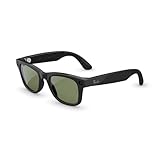
- #1 SELLING AI GLASSES - Tap into iconic style for men and women, and advanced technology with the newest generation of Ray-Ban Meta smart AI glasses. Capture photos and video recordings, listen to music, make hands-free calls or ask Meta AI questions on-the-go.
- UP TO 8 HOURS OF BATTERY LIFE - On a full charge, these smart AI glasses can last 2x longer than previous generations, up to 8 hours with moderate use. Plus, each pair comes with a charging case that provides up to 48 hours of charging on-the-go.
- 3K ULTRA HD: RECORD SHARP VIDEOS WITH RICH DETAIL — Hands-free video recording with an ultra-wide 12 MP camera in up to 3K resolution. Record clips up to 3 minutes per session. Capture sharp, vibrant memories while staying in the moment.
- LISTEN WITH OPEN-EAR AUDIO — Listen to music and more with discreet open-ear speakers that deliver rich, quality audio without blocking out conversations or the ambient noises around you.
- ASK YOUR GLASSES ANYTHING WITH META AI — Get real-time suggestions, answers, object identification, and reminders hands-free. Requires Bluetooth connection to your smartphone and the Meta AI app. Ensure your phone has internet connectivity.
Businesses and policymakers have responded with local limits
In an October 5, 2026 report, the Associated Press described several responses in different jurisdictions: Norway was considering a temporary ban in public spaces; Dutch retailer Hans Anders had suspended sales pending debate; and the UK Cinema Association had introduced policies to prohibit or restrict camera-enabled glasses. These were reported developments at that time, not a settled global policy.
In California, AP reported that Governor Gavin Newsom vetoed a proposed bill in October 2026. The measure would have penalized secret recording in specified private settings and required indicators on wearable recording devices beginning in 2028. Newsom’s reported objection was that it defined wearable recording devices too broadly. The bill did not take effect. Recording-consent law varies by state, so this episode does not establish a universal rule.
Rank #4

- #1 SELLING AI GLASSES - Tap into iconic style for men and women, and advanced technology with the newest generation of Ray-Ban Meta smart AI glasses. Capture photos and video recordings, listen to music, make hands-free calls or ask Meta AI questions on-the-go.
- UP TO 8 HOURS OF BATTERY LIFE - On a full charge, these smart AI glasses can last 2x longer than previous generations, up to 8 hours with moderate use. Plus, each pair comes with a charging case that provides up to 48 hours of charging on-the-go.
- 3K ULTRA HD: RECORD SHARP VIDEOS WITH RICH DETAIL — Hands-free video recording with an ultra-wide 12 MP camera in up to 3K resolution. Record clips up to 3 minutes per session. Capture sharp, vibrant memories while staying in the moment.
- LISTEN WITH OPEN-EAR AUDIO — Listen to music and more with discreet open-ear speakers that deliver rich, quality audio without blocking out conversations or the ambient noises around you.
- ASK YOUR GLASSES ANYTHING WITH META AI — Get real-time suggestions, answers, object identification, and reminders hands-free. Requires Bluetooth connection to your smartphone and the Meta AI app. Ensure your phone has internet connectivity.
Does this prove that public attitudes have changed?
No population-wide survey or comparable longitudinal measure in the available evidence establishes a broad change in people’s privacy beliefs. The evidence instead documents visible signals and company guidance, an investigation announcement, political debate, and restrictions or proposed restrictions by particular venues, businesses, and governments. Together, those developments support the narrower interpretation that privacy around wearable cameras has become more salient and is prompting more explicit negotiations about consent and access.
There are signs of substantial use, but they do not answer the attitude question. Meta said in 2026 that “Millions of people now use Meta’s AI glasses every day”; that is a company-published usage statement, not an independently audited statistic. AP reported that more than 7 million AI-powered Meta glasses were sold in 2025, attributing the figure to reporting in its account of the California bill. Sales and use figures indicate reach, not what the public thinks about privacy.
Best Value

- META AI, A PERSONAL EXPERT BY YOUR SIDE – Meta AI gives you smarter answers and delivers everyday help based on what you see and say, completely hands-free. Start shopping with a look, manage your busy schedule or get nutrition tips without stopping to search on your phone.
- AI GLASSES MADE FOR YOU – Meta Glasses are meticulously designed to deliver a fit that feels custom to you. Choose from a variety of bold colors and experience a comfortable, stylish fit that feels uniquely yours.
- TRANSLATE ACROSS 20+ LANGUAGES – Travel like a local whether you’re navigating a bustling market in Spain or having a conversation in Japanese. Just say “Hey Meta” to start a live translation and connect with people as easy as one, deux, tres.
- CAPTURE THE WORLD AS YOU SEE IT – Instantly record the moment while staying in the moment. Simply press the button or say “Hey Meta” to take a photo or video of what you see in true-to-life, vibrant color ready to share on Instagram, Whats App or text.
- THESE GLASSES ANNOUNCE THEMSELVES – Every pair of Meta Glasses has a light that tells everyone when you're capturing the moment. The camera and the privacy light work as one system — if the light is blocked, no moments can be captured for your gallery.
Meta CEO Mark Zuckerberg’s vision, quoted in a September 2026 Meta Engineering post from his July 2025 essay “Personal Superintelligence,” was that glasses able to understand what people see and hear would become “our primary computing devices.” That is a corporate vision statement. It helps explain why questions about sensing throughout the day matter, but it is not evidence that this future has arrived or that public attitudes have shifted.
Quick Recap
What should a wearer or bystander take from the debate?
For wearers
- Follow Meta’s advice to ask before capturing others, stop when asked, and avoid sensitive settings.
- Use the app’s controls for captures, voice, notifications, and shared information, as described in Meta’s privacy guidance.
- Do not treat a blinking LED as a complete explanation of every AI-related function; consider the context and whether people nearby can reasonably understand what is happening.
For bystanders
- The light is Meta’s stated signal for gallery photo and video capture, but it does not establish every detail of AI processing.
- If a recording or camera use is unwelcome, Meta’s own guidance tells wearers to stop when someone objects. Venue policies and local law may impose additional limits.
Product prices and availability are accurate as of the date/time indicated and are subject to change. Any price and availability information displayed on Amazon at the time of purchase will apply.

