
The Tool Desk
Outbyte Driver Updater FREEScan for outdated or missing drivers - takes under a minuteDriver Scan →Outbyte PC Repair FREERepair Windows errors before they cause bigger problemsFix Now →iTechGuides is reader-supported. When you buy through links on our site, we may earn an affiliate commission. As an Amazon Associate I earn from qualifying purchases. Learn more
Mentor Graphics extended Nucleus RTOS on August 18, 2014 with capabilities for MCU and multicore apps, including an ARM Cortex-M process model, MPU-based memory partitioning without virtual memory, and the Mentor Embedded Multicore Framework for heterogeneous AMP systems running Nucleus, Linux, or bare-metal software.
The announcement was significant because it aimed to stretch one commercial embedded software platform across two traditionally different designs: resource-constrained microcontrollers and application-class multicore systems. The release combined three main additions: Cortex-M protection and execution-in-place support, multicore coordination for asymmetric multiprocessing, and expanded graphics capabilities.
This is a historical technology announcement, not evidence that the same product, price, processor support, or licensing terms remain available in 2026. The available evidence confirms what Mentor announced in 2014; it does not establish current Nucleus ownership, availability, pricing, or support.
Key takeaways
- Mentor Graphics announced the Nucleus RTOS expansion on August 18, 2014, targeting ARM Cortex-M microcontrollers as well as heterogeneous multicore systems.
- The Cortex-M process model used the processor’s memory protection unit for region-based isolation without requiring an MMU or virtual memory.
- The Mentor Embedded Multicore Framework, or MEMF, was designed for asymmetric multiprocessing in systems where different cores could run Nucleus RTOS, Linux, or bare-metal software.
- MEMF was described as a clean-room implementation of functionality associated with virtIO, remoteproc, and rpmsg; that wording does not establish formal standards compliance.
- The release added OpenGL ES integration, support associated with Imagination and Vivante GPUs, Qt for Nucleus RTOS, and Tara Systems’ Embedded Wizard integration.
- Mentor described Nucleus as available in 2014 with a starting list price of $5,000, but the announcement does not verify current availability or pricing.
What did Mentor Graphics announce?
Mentor Graphics announced a new version of Mentor Embedded Nucleus RTOS on August 18, 2014. The release expanded the operating system’s process model to ARM Cortex-M-based cores and introduced MEMF for heterogeneous multicore and asymmetric multiprocessing applications. The same announcement described graphics enhancements involving OpenGL ES, GPU support, Qt, and Embedded Wizard.
#1 Best Overall

- DUAL-CORE PERFORMANCE & MEMORY: Features the RP2040 microcontroller chip with a dual-core ARM Cortex M0+ processor running at a flexible clock speed up to 133 MHz. Equipped with 264KB of on-chip SRAM and 2MB of on-board Flash memory, providing ample space for complex code and data storage. Includes an on-chip accelerated floating point library for demanding calculations.
- VERSATILE I/O & PERIPHERALS: Provides access to 29 GPIO pins from the RP2040 chip (20 accessible via pin headers, others via soldering). Features a rich set of peripherals including 2x SPI, 2x I2C, 2x UART, 4x 12-bit ADC, and 16 controlled PWM channels. Supports USB1.1 host and device modes for flexible connectivity and communication.
- CUSTOM PERIPHERALS & POWER MODES: Includes 8 programmable I/O (PIO) state machines, allowing for the creation of custom peripheral support beyond standard hardware. Supports low-power sleep and hibernation modes, making it suitable for battery-powered applications. Programming is simplified with drag-and-drop file transfer via USB mass storage recognition.
- COMPACT FORM & EASY INTEGRATION: Features a stamp hole design allowing the board to be directly soldered onto a user-designed backplane for compact and robust integration into custom projects. Includes an accurate on-chip clock, timer, and a temperature sensor. The pins arrive unsoldered, offering flexibility for either direct mounting or use with the included pin headers.
- COMPLETE 6-PACK SET & SUPPORT: Includes 6 x RP2040-Zero Microcontroller Boards and 6 x Pin Header Sets. Digital documentation and technical support for setup, programming, and troubleshooting are available through our store customer service.
The announcement positioned Nucleus for embedded products ranging from MCU-based industrial and medical equipment to connected devices and systems built around heterogeneous SoCs. Mentor’s strategy was to provide a common software model across a wider range of ARM processor classes while adding the isolation, multicore coordination, and graphics features that larger embedded systems often require. Mentor’s 2014 announcement on PR Newswire is the primary source for these product claims.
What changed for ARM Cortex-M microcontrollers?
The most important MCU-specific change was extending the Nucleus process model to ARM Cortex-M cores. Cortex-M devices generally operate with tighter RAM, flash, power, and performance budgets than application processors. Traditional MCU firmware is often organized as bare-metal code, a superloop, or a lightweight task-based RTOS application. Mentor’s proposal added process-style separation and memory partitioning while retaining a lightweight execution environment.
The release specifically described memory partitioning through the Cortex-M memory protection unit, or MPU. The MPU can define memory regions with different access permissions, allowing software components to be separated without the virtual-memory machinery normally associated with an MMU-based application processor.
Free tools Windows power users keep installed
One-click scans. No signup required.
The Nucleus approach therefore attempted to bridge two embedded software profiles:
| Software profile | Typical priority | What the Nucleus expansion attempted to add |
|---|---|---|
| MCU firmware | Low memory use, low power, deterministic control, and execution from limited hardware resources | Process-style separation, MPU-based memory partitioning, and execution in place from flash |
| Application-processor software | Richer multitasking, networking, graphics, and stronger process isolation | A common Nucleus process model that could extend toward Cortex-M devices |
The release’s “common” process model should not be interpreted as universal binary compatibility across every ARM core. Code reuse across a product family would depend on compatible drivers, middleware, hardware abstraction, memory layouts, compiler support, and application architecture. A shared operating-system model can reduce duplicated engineering work, but it does not make one unchanged application binary run on every Cortex-M and application-class processor.
How does MPU-based memory partitioning differ from virtual memory?
MPU-based memory partitioning restricts access to configured physical memory regions; virtual memory uses an MMU and address translation to provide a more flexible address-space abstraction. The Nucleus release presented Cortex-M MPU protection as a way to improve isolation without requiring virtual memory, not as an equivalent replacement for a full MMU.
| Characteristic | Cortex-M MPU approach | MMU and virtual-memory approach |
|---|---|---|
| Primary job | Enforce access permissions for configured physical regions | Translate virtual addresses and enforce address-space permissions |
| Hardware requirement | Compatible Cortex-M MPU | Processor with an MMU and supporting operating-system software |
| Memory model | Physical memory is planned and partitioned explicitly | Virtual address spaces can provide more flexible mapping and isolation |
| MCU relevance | Lower-overhead protection for resource-constrained devices | Often too resource-intensive or unavailable on smaller MCUs |
| Design limitation | Region count, alignment, permissions, and static layout require careful planning | Greater flexibility, but with additional hardware and software complexity |
MPU protection can limit the damage caused by an errant task or component, but MPU protection does not automatically make an application safe, secure, or certifiable. Protection depends on correct privileged and unprivileged execution boundaries, interrupt handling, driver design, shared-memory rules, and recovery behavior. The announcement does not provide a region count, quantitative fault-containment result, safety certification, or compliance claim for a named safety standard.
MPU limitations become important when an application has many independently protected components. A process layout may need redesign if the target Cortex-M device provides too few usable regions or if the application requires dynamic mappings that do not fit the MPU model. DMA buffers, interrupt handlers, peripheral registers, and shared memory also require an explicit ownership and permission strategy.
Rank #2
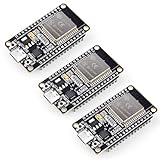
- Dual-Core Performance Up to 240 MHz: Run sensor processing, wireless communication, automation logic and connected-device tasks on a 32-bit dual-core ESP32 platform designed for responsive embedded and IoT projects
- Built-in Wi-Fi and Bluetooth 4.2: Connect to 2.4 GHz Wi-Fi networks or use Bluetooth Classic and BLE for wireless sensors, smart devices, remote controls, home automation and other connected projects
- Flexible Power-Saving Modes: ESP32 power-management features support dynamic clock scaling and low-power operating modes, helping developers reduce energy use in compatible sensing, monitoring and connected-device applications, suitable for battery-powered Internet of Things (IoT) devices.
- USB-C Programming with CP2102: Connect through USB-C for power, sketch uploads and serial monitoring, while GPIO, UART, SPI and I2C interfaces support sensors, displays, motor drivers and other modules (USB-C cable not included)
- Over-the-Air Update Support: Configure OTA functionality through a compatible ESP-32 software framework to update deployed firmware over Wi-Fi without reconnecting the board by USB for every revision
What does execute in place mean on Cortex-M?
Execute in place, or XIP, means that executable code can run directly from nonvolatile flash rather than being copied entirely into RAM first. Mentor positioned Nucleus as a lightweight environment capable of execution in place from flash, which is relevant when an MCU has limited RAM.
XIP can reduce the amount of RAM reserved for code, but XIP is not a guarantee of faster execution or fixed real-time behavior. Flash wait states, instruction caches, bus contention, flash erase and programming operations, and interrupt execution paths can affect timing. Writable data, stacks, heaps, buffers, and peripheral state still require RAM. The announcement confirms the XIP positioning but supplies no measured memory footprint, interrupt-latency result, or performance benchmark.
What problem did the Mentor Embedded Multicore Framework solve?
MEMF was intended to coordinate heterogeneous SoCs in which different processor cores perform different jobs and may run different software environments. A representative design could place Linux on an application-class core for networking, storage, or a high-level user interface, while Nucleus RTOS or bare-metal firmware runs deterministic control code on a Cortex-M or other microcontroller-class core.
PC Slower Than It Used to Be?
A free scan shows the junk files, broken settings and background clutter dragging Windows down - then fixes them in one click.Free scan · Windows 10 & 11Crashes, No Sound, or Screen Glitches?
Random freezes, missing sound and display glitches usually trace back to one bad driver. Find and replace yours safely.Free scan · under a minuteApplication-class core Linux
| networking, storage, user interface
|
| MEMF: IPC, shared resources, core lifecycle
|
MCU-class core Nucleus RTOS
deterministic control and device functions
Optional processor/FPGA Bare-metal firmware or specialized processingThe framework was described as providing inter-process communication, resource sharing, processor control, and boot and shutdown management for individual cores. Those functions address coordination between operating environments; they do not eliminate the need for system-level decisions about ownership, timing, memory, and failure recovery.
| MEMF-related function | Engineering question it addresses | What the announcement does not establish |
|---|---|---|
| Inter-process communication | How software domains exchange messages across cores | Specific throughput, latency, queue limits, or API compatibility for every platform |
| Resource sharing | How cores coordinate shared memory, buffers, peripherals, or other resources | A universal ownership model for clocks, DMA, interrupts, or peripherals |
| Processor control | How a system manages another processor’s lifecycle | Detailed crash recovery, watchdog, failover, or restart guarantees |
| Boot and shutdown | How individual cores are started or stopped | Board-specific boot sequencing, power-domain behavior, or update/rollback policy |
Mentor said MEMF was based on a clean-room implementation of functionality associated with virtIO, remoteproc, and rpmsg. That is a qualified description. It should not be simplified to “MEMF was virtIO,” “MEMF was standard rpmsg,” or proof that every Nucleus/Linux combination used the same interfaces as a modern Linux implementation. Contemporaneous Embedded.com coverage also summarized the AMP, IPC, and processor-lifecycle claims but did not supply independent benchmark or certification evidence.
What is the difference between AMP and SMP?
Asymmetric multiprocessing assigns different roles and potentially different operating systems to different processor cores, whereas symmetric multiprocessing normally presents multiple similar cores to one operating-system instance and scheduler. MEMF targeted the former model.
| Model | Core arrangement | Software arrangement | Typical reason to use it |
|---|---|---|---|
| AMP | Heterogeneous or independently managed cores | Different cores may run Linux, Nucleus RTOS, or bare-metal firmware | Separate high-level services from deterministic control or specialized processing |
| SMP | Usually similar cores exposed as one multiprocessor system | One operating-system image and scheduler distribute work across cores | Scale workloads while preserving one operating-system programming model |
AMP is attractive when Linux is useful for networking, storage, or a rich interface but unsuitable for a tightly bounded control loop, or when a low-power MCU core can handle control work more efficiently than an application processor. AMP also allows a product to assign specialized functions to a bare-metal processor or FPGA soft core.
The trade-off is a more complicated system boundary. Engineers must define cross-core message formats, shared-memory ownership, cache-coherency behavior, memory barriers, synchronization, boot order, update sequencing, and failure behavior. A Linux core can remain alive while an RTOS core fails, or the reverse; the product must decide whether to continue in a degraded mode, reset one core, or reset the whole SoC.
Rank #3

- Dual core ESP-32 development board, 2.4GHz dual mode development board.There are two touch buttons, one is reset, the other is enable module to enter the halberd program mode.
- The module is ESP--32 module, the peripheral uses the USB serial port chip CP2102 to expand the micro USB interface, which can be directly debugged by a USB connected computer, and the data transmission is fast and stable.
- ESP32 shield 30P expansion board, supports two power supply : DC 6.5-16v and USB 5V
- ESP32 development board GPIO breakout board GVS output power supply can be 5V or 3.3V, which is more convenient to match the external 5V electronic module sensor.
- This esp32 kit is safe, reliable, and scalable to a variety of applications. Stable and highly reliable. Great contact and stable signal transmission for your program
How would Linux, Nucleus, and bare-metal software coexist?
Coexistence requires a deliberate partition of processing, memory, peripherals, and lifecycle responsibilities. MEMF was presented as an integration framework for this arrangement, but the announcement does not define a universal architecture for every SoC.
A practical ownership plan would answer these questions before implementation:
- Which core owns each peripheral, clock, pin-multiplexing setting, interrupt, and DMA channel?
- Which memory regions are private, and which are shared between Linux, Nucleus, and bare-metal software?
- Who allocates and frees shared buffers, and how are buffer lifetime and stale messages handled?
- How are cache maintenance, alignment, memory barriers, and synchronization handled across cores?
- How is firmware loaded, updated, rolled back, and authenticated for each software domain?
- What happens when a remote processor stops responding or restarts with stale IPC endpoints?
IPC alone does not make a shared-memory design safe. Malformed messages, ownership mistakes, lock contention, cache incoherency, and denial-of-service behavior can still break a system. Processor lifecycle control similarly raises questions about active DMA, interrupt routing, peripheral state, shared power domains, and restart consistency.
Do these 3 things before closing this tab:
1Scan for outdated or missing drivers - takes under a minute2Clear out junk files and repair common Windows errors3Fix the driver behind crashes, sound loss and screen glitchesWhat graphics and GPU capabilities were added?
The release broadened Nucleus beyond control-oriented firmware by describing OpenGL ES integration, GPU support associated with Imagination and Vivante, Qt for Nucleus RTOS, and integration with Tara Systems’ Embedded Wizard for memory-efficient user interfaces.
| Graphics component | Role described in the announcement | Information not supplied |
|---|---|---|
| OpenGL ES | Graphics API integration for embedded applications | Exact API version, benchmark results, and supported boards |
| Imagination and Vivante | Named GPU ecosystems associated with Nucleus graphics support | GPU model numbers, production driver list, and performance data |
| Qt for Nucleus RTOS | Richer interactive user-interface development | Qt version, licensing terms, and complete hardware-acceleration details |
| Embedded Wizard | Memory-efficient graphical interfaces from Tara Systems | Embedded Wizard version, footprint measurements, and board coverage |
Graphics support is useful for connected devices and products with displays, but GPU integration does not guarantee hardware-accelerated composition, a particular frame rate, or deterministic control behavior. Display rendering can compete with real-time tasks for CPU time, memory bandwidth, cache, and bus access. The graphics stack may therefore be best placed on an application-class core in an AMP design, leaving time-critical control on a separate Nucleus or bare-metal core. The available contemporaneous Electronics for Engineers summary reports the same broad graphics and multicore positioning without adding the missing model or benchmark details.
Why was this expansion strategically important?
The release attempted to unify software development across a product family that might contain both small MCUs and larger application processors. A company could potentially reuse parts of its process model, middleware strategy, development workflow, and application architecture instead of maintaining entirely separate software stacks for every processor class.
The intended benefits included:
- Isolation on MCUs: MPU permissions could separate software components without requiring an MMU.
- Resource efficiency: XIP and a lightweight environment could help reduce RAM pressure on constrained devices.
- Mixed operating environments: Linux could handle high-level functions while Nucleus or bare metal handled deterministic or specialized work.
- Product-family reuse: A common Nucleus process model could reduce duplicated engineering effort when hardware moved between ARM processor classes.
- Richer interfaces: OpenGL ES, GPU support, Qt, and Embedded Wizard extended the platform toward display-oriented products.
- Commercial integration: A vendor-backed framework could reduce the burden of assembling and maintaining separate multicore, graphics, and RTOS components.
These were strategic and architectural advantages, not independently measured outcomes. The available announcement contains no benchmark, memory-footprint table, latency result, certification package, or complete hardware-support matrix.
What were the practical limitations and failure modes?
MPU region constraints
MPU protection is less flexible than an MMU-based virtual-memory system. Applications with many isolated components may require careful static memory planning, and an application design that fits comfortably on an application processor may need simplification on a Cortex-M device. The announcement does not state how many MPU regions a process required or how Nucleus handled region exhaustion.
Rank #4

- GPIO 1 INTO 2: The esp32 breakout board can expand one GPIO pin of esp32 development board to two.Convenient to reuse all pins in smart home DIY projects. Great breadboard alternative.
- 30Pins ref asin:B0BK13HWBJ ; B08D5ZD528 ; B07WCG1PLV ; B0B11N1X8R ; B0B19KRPRC ; B0B19DXFHX
- The expansion board is a double-layer board. One pin is wired on both sides. Therefore, the circuit is stable and highly reliable, and there will be no poor circuit contact and unstable signal transmission.
- Compatible with ESP32 board.These boards fit the 30 pin ESP32(ESP32 as the picture show)
- Pin Header & Screw Terminal. you can select them as you asked
Shared-memory hazards
Cross-core communication still requires disciplined handling of buffer ownership, alignment, cache maintenance, memory barriers, synchronization, malformed messages, and stale data. A framework can provide communication mechanisms without proving that an application’s shared-memory protocol is correct.
Core lifecycle hazards
Booting or shutting down an individual core can affect peripheral state, interrupt routing, DMA activity, clocks, power domains, and IPC endpoints. MEMF was advertised as providing core boot and shutdown management, but the announcement does not document watchdog behavior, partial-failure recovery, failover, or restart guarantees.
Linux and RTOS ownership conflicts
A mixed Linux-and-RTOS system must explicitly assign ownership of clocks, pin multiplexing, shared peripherals, interrupts, memory, firmware loading, power management, and update procedures. Without that ownership model, MEMF can become another integration layer rather than a complete solution.
Graphics versus determinism
A rich graphical interface can consume memory bandwidth, CPU time, cache, and bus capacity needed by real-time workloads. GPU support expands product possibilities, but the release provides no evidence that graphics workloads preserve a particular control-loop deadline.
Safety and dependability claims
Mentor positioned Nucleus toward industrial, medical, and other applications with demanding dependability requirements. That positioning should not be rewritten as certification or compliance with IEC 61508, ISO 26262, IEC 62304, DO-178C, or another standard. The available evidence supplies no safety manual, certification artifact, or independent assessment.
Was Nucleus RTOS available, and how much did it cost?
According to Mentor’s August 18, 2014 announcement, the expanded Nucleus product was available at that time with a starting list price of $5,000 USD. The $5,000 figure is a historical starting price, not a current 2026 quote, and the source does not explain whether the price included MEMF, graphics packages, board-support packages, source access, support, maintenance, or royalties.
| Commercial question | What the 2014 evidence confirms | What still requires vendor verification |
|---|---|---|
| Availability | Nucleus was described as available on August 18, 2014 | Whether the product remains sold, under which brand, and with which current processor support |
| Price | Starting list price of $5,000 USD was announced | Current license, maintenance, royalty, volume, regional, and package pricing |
| Feature packaging | Cortex-M, MEMF, and graphics capabilities were described | Whether MEMF, graphics, BSPs, safety products, and support were separately licensed |
| Evaluation | The announcement points to historical Nucleus information | Whether a current evaluation version, trial, or purchase workflow exists |
| Development support | The release describes product capabilities | Current hosts, compilers, IDEs, source-code access, documentation, and lifecycle policy |
The announcement pointed readers to Mentor’s Nucleus information page, but the available research does not verify whether the historical URL remains live, redirects to Siemens, or provides a current evaluation or purchasing workflow. A buyer in 2026 should treat ownership, licensing, maintenance, processor support, and lifecycle status as open questions rather than assume continuity from the 2014 branding.
Recommended Free Tools
How should engineers evaluate a similar commercial RTOS platform?
Engineers should evaluate the exact target silicon, toolchain, integration burden, lifecycle evidence, and commercial terms rather than judge the platform solely by its feature list.
Best Value

- Powerful Motor Integration: Onboard 3.5A motor driver directly controls (4 Servo + 2 Stepper Motors) or (4 Servo + 4 DC Motors). Essential for robotics; no external shields required.
- ESP32 IoT Core: Official ESP32-WROOM-32E module. Features a dual-core module with built-in 2.4GHz WiFi and Bluetooth (BLE) for powerful, low-latency wireless communication and IoT applications.
- Wide Voltage: Supports 6V-16V wide voltage input via DC port.
- Instant Expansion: Includes 4x I2C ports, 8x GPIOs, and 4x onboard RGB LEDs, allowing you to add sensors, OLED displays, and status indicators with ease.
Ask about Cortex-M support
- Which exact Cortex-M cores and silicon vendors are supported?
- Which compiler versions, IDEs, debuggers, and board-support packages are supported?
- What are the minimum RAM and flash requirements?
- How many MPU regions are required per process, and what happens when the design exceeds the available region model?
- How are interrupts, DMA buffers, peripheral registers, and shared memory protected?
Ask about AMP and MEMF-style integration
- Which Linux versions, remote processors, and bare-metal environments are supported?
- Is the framework compatible with standard Linux
remoteprocandrpmsgimplementations, or only with vendor-specific components? - What are the measured IPC latency, throughput, queue, and shared-memory limits?
- How are cache coherency, memory barriers, and buffer ownership handled?
- What happens when a remote core crashes, hangs, resets, or is updated independently?
- Which core owns clocks, peripherals, interrupts, DMA, power management, and firmware loading?
Ask about graphics
- Which exact Imagination and Vivante GPU models have production-qualified drivers?
- Which OpenGL ES, Qt, and Embedded Wizard versions are supported?
- Are graphics components included in the RTOS license or separately licensed?
- What memory footprint, frame-rate, and real-time interference measurements are available?
Ask about assurance and lifecycle
- Are safety manuals, certification evidence, qualification artifacts, or development-process documentation available?
- What source code is supplied for the kernel, drivers, and multicore framework?
- What are the current license, royalty, maintenance, support, and evaluation terms?
- What is the product’s support and long-term lifecycle policy?
How did Nucleus compare with other embedded approaches?
Nucleus was not automatically better than bare metal, an MCU-focused RTOS, Linux with a separate remote-core framework, or an open-source platform. The right choice depended on whether vendor accountability, integrated tooling, processor-family reuse, graphics, and multicore coordination justified the licensing and integration costs.
| Approach | Potential advantage | Potential concern | Best fit to investigate |
|---|---|---|---|
| Bare metal | Minimal conceptual and runtime overhead | The application team owns scheduling, isolation, IPC, and much of the integration | Small, tightly bounded single-core firmware |
| Traditional MCU RTOS | Often simpler for task-based single-core control | May provide less process isolation or heterogeneous multicore coordination | Conventional MCU control applications |
| Nucleus-style commercial platform | Vendor support, process isolation, AMP integration, and commercial middleware | Licensing, hardware dependencies, and current lifecycle must be verified | Product families spanning MCU and application-class processors |
| Linux plus separate remote-core framework | Broad Linux ecosystem and potentially broad hardware support | Integration, maintenance, and responsibility may be fragmented | Teams already standardized on Linux and willing to integrate components |
| Open-source RTOS platform | Lower licensing cost and community access | Support, certification evidence, lifecycle guarantees, and vendor accountability vary | Teams with strong internal embedded-software capability |
| Commercial safety-oriented RTOS | May provide stronger certification packages or deterministic guarantees | Can cost more and impose tighter platform constraints | Projects where documented assurance is a hard requirement |
| SoC-vendor framework | Often the deepest integration with one silicon family | Greater vendor lock-in and narrower portability | Products committed to a specific SoC platform |
What did the announcement prove—and what did it not prove?
The announcement established that Mentor was targeting a broader embedded platform: Cortex-M memory protection, heterogeneous AMP coordination, Linux/Nucleus/bare-metal coexistence, and graphics integration were all part of the 2014 product positioning. The announcement did not independently establish real-world performance, universal Cortex-M compatibility, standards compliance, safety certification, current availability, or current pricing.
Mentor’s description of an “industry’s first complete AMP heterogeneous solution” should be treated as Mentor’s marketing claim, not as an independently verified industry-wide fact. Similarly, claims about improved reliability should be attributed to the product’s stated benefit rather than presented as a measured result.
What’s actually slowing this PC down?
Pick the symptom - the matching free tool is one click away.
The strongest interpretation is therefore strategic rather than benchmark-based: Mentor was trying to make Nucleus relevant across the full embedded system, from a constrained Cortex-M control core to a Linux-capable application processor and a GPU-driven user interface. Whether that reduced engineering risk in a real product would depend on the exact SoC, drivers, toolchain, memory layout, IPC design, support contract, and assurance evidence.
Frequently Asked Questions
Is Mentor Embedded Nucleus RTOS still available in 2026?
The supplied evidence does not establish whether Nucleus RTOS remains available in 2026, whether it is sold under the same Mentor Graphics name, or whether its processor support and licensing have changed. The evidence confirms availability only in the August 18, 2014 announcement.
Did Nucleus RTOS provide virtual memory on Cortex-M?
No. The 2014 Nucleus expansion used the Cortex-M memory protection unit for region-based memory partitioning without requiring virtual memory or an MMU. MPU protection is more limited and requires careful region and memory-layout planning.
What operating systems could MEMF coordinate?
Mentor described MEMF as coordinating heterogeneous systems in which different cores could run Nucleus RTOS, Linux, or bare-metal applications. The announcement does not establish support for every Linux distribution, kernel version, or processor combination.
Quick wins for a faster PC:
Scan for outdated or missing drivers - takes under a minuteDriver Scan →Clear out junk files and repair common Windows errorsFree Scan →Fix the driver behind crashes, sound loss and screen glitchesFind Drivers →Was the announced $5,000 Nucleus price current?
The $5,000 USD starting list price was the historical price stated for the 2014 announcement. The available evidence does not establish current pricing or what the historical price included.
The Bottom Line
Mentor Graphics’ August 18, 2014 Nucleus release was strategically significant because it combined Cortex-M MPU-based process isolation, execution-in-place positioning, heterogeneous AMP coordination through MEMF, and expanded graphics support in one commercial embedded platform. The announcement alone cannot prove performance, safety certification, universal hardware compatibility, or 2026 availability. Engineers evaluating an equivalent platform today should verify exact silicon and toolchain support, IPC and recovery behavior, graphics drivers, assurance evidence, source access, licensing, and lifecycle commitments.
Quick Recap
Product prices and availability are accurate as of the date/time indicated and are subject to change. Any price and availability information displayed on Amazon at the time of purchase will apply.

