
Free tools Windows power users keep installed
One-click scans. No signup required.
iTechGuides is reader-supported. When you buy through links on our site, we may earn an affiliate commission. As an Amazon Associate I earn from qualifying purchases. Learn more
A single scale can help compare power across people, companies, and institutions only if it makes its definition, evidence, and limits explicit. It cannot turn unlike kinds of influence into a universal, objective ranking. The available literature offers methods for designing such a measure, but it does not establish a validated common scale—or verify the details or results of any particular person’s claimed scale.
What a cross-domain power scale can—and cannot—measure
Power is not directly observable in the way revenue, a job title, or a vote count is. It is an underlying capacity to shape what happens, and the evidence for it comes through indicators: resources, access, decisions, relationships, or effects. Each indicator captures only part of the construct and can mislead on its own.
That makes a cross-domain scale a model, not a measuring instrument with a self-evident unit. Before comparing a person with a company or institution, a scale must say what “power” means, for which issue, over what period, and relative to whom. A score without those boundaries risks making different things look interchangeable.
Do these 3 things before closing this tab:
1Clear out junk files and repair common Windows errors2Scan for outdated or missing drivers - takes under a minute3Repair Windows errors before they cause bigger problemsThe international-relations literature distinguishes approaches centered on control of resources, control over other actors, and control over events or outcomes. The outcomes approach has been argued to better capture interdependence and collective action in contemporary international politics; that argument does not establish it as the only suitable approach for individuals or firms. (David A. Baldwin, “Three Approaches to the Measurement of Power in International Relations,” International Organization, Spring 1976.)
#1 Best Overall
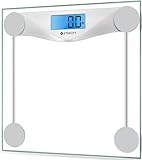
- 𝑹𝒆𝒍𝒊𝒂𝒃𝒍𝒆 𝑷𝒓𝒆𝒄𝒊𝒔𝒊𝒐𝒏: With professional expertise refined over 10 years, our brand design ensures accuracy and reliability through high-precision sensor technology
- 𝑬𝒂𝒔𝒚 𝒕𝒐 𝑼𝒔𝒆: The scale is equipped with an easy-to-read display with automatic on/off, low battery, and overload indications. Choose between 2 units of measurement (lb/kg) for your weighing convenience
- 𝑴𝒊𝒏𝒊𝒎𝒂𝒍 𝑫𝒆𝒔𝒊𝒈𝒏: Never Let a scale ruin your style. Place this scale in your bathroom, bedroom, or living room. It will complement the design of your living space
- 𝑨 𝑫𝒖𝒓𝒂𝒃𝒍𝒆 𝑪𝒉𝒐𝒊𝒄𝒆: The scale’s 6-mm tempered glass platform provides exceptional durability and comfort. Equipped with a supportive frame and anti-skid paddings to prevent slipping, you can rely on the sturdiness of our scale
- 𝑳𝒂𝒓𝒈𝒆 𝑷𝒍𝒂𝒕𝒇𝒐𝒓𝒎: Step onto the scale comfortably with its large 11.9 x 11.9-inch platform
Choose the kind of power before choosing the indicators
A useful scale can draw on several indicator families, but they answer different questions. Domhoff’s methods explainer groups them as who benefits, who governs, who wins, and who has a reputation for power. They should be treated as complementary evidence, not as equivalent units to add without explanation.
Resources: what an actor can bring to bear
Resources might include money, assets, staff, expertise, legal authority, or an established network. They suggest potential capacity; they do not show that an actor can convert that capacity into influence in a particular setting. Current spending is especially easy to misread: high expenditure can reflect overruns, liabilities, or waste rather than increased capability. A stock of resources accumulated earlier may matter more than the current flow.
GDP is commonly used as a proxy for national power, but it does not directly measure power. Nicholas Kitchen’s May 2026 Carnegie Endowment paper notes that Nigeria’s reported GDP rose 89 percent after a 2014 statistical rebasing. That change in the reported figure illustrates how a proxy can shift dramatically without a proportionate change in underlying capability; it is not evidence that Nigeria’s power itself rose by 89 percent.
Outdated Drivers Are Slowing You Down
One free scan finds every outdated or missing driver and matches the right update for your exact hardware.Free scan · exact hardware matchPC Slower Than It Used to Be?
A free scan shows the junk files, broken settings and background clutter dragging Windows down - then fixes them in one click.Free scan · Windows 10 & 11Rank #2

- Large Capacity | Multi-Purpose: Letron digital food scale measures from 0.02 lb up to 33 lb, making it ideal for weighing everything from small ingredients to larger containers. Whether you're baking, cooking, portioning, or handling everyday kitchen tasks, its generous weighing range makes it a practical and versatile addition to any kitchen.
- 7 Units | Backlit LCD Display: Easily switch between g, oz, lb, lb, fl.oz, ml, and milk ml to suit different recipes and ingredients. The clear backlit LCD display makes measurements easy to read, even in low-light conditions.
- Tare & Timing Function: Easily use the Tare function to reset the scale to zero and measure ingredients directly in your container. Then, track your baking or cooking times with the built-in timer, whether you’re managing dough rising, baking cakes, or boiling eggs and pasta. The audible alert will notify you when the time is up, ensuring precise results every time.
- Effortless Cleanup: The glass platform offers a modern, sleek look and is easy to wipe clean after each use, ensuring that your scale stays looking great with minimal maintenance.
- Dual Power Options | Custom Auto-Off: Choose between battery power for portability or USB-C charging for long-lasting use, ensuring you have the flexibility to use your scale anywhere. The adjustable auto shut-off feature (set to 180s, 600s, or 3600s) saves energy when the scale is not in use, reducing the need for constant battery replacements.
Position and access: who can enter consequential arenas
Formal office, board seats, network centrality, or access to decision-makers may indicate opportunity to influence. But holding a position does not prove that its occupant controls decisions. Formal authority can be constrained by rules, coalitions, competing institutions, or other actors’ ability to resist.
Benefits and outcomes: who gains, and who prevails
Tracing who benefits from policy or organizational decisions can reveal whose interests are served. Studying contested decisions can show who prevailed when preferences conflicted. Both approaches are closer to effects than resource counts, but neither is frictionless: benefits may be indirect or unevenly distributed, and decision processes may be hidden, poorly documented, or remembered inaccurately.
Reputation: whom informed observers consider influential
Reputational assessments can capture informal influence that formal charts miss. Their quality depends on who is asked, what they are asked, and how well they can observe the relevant arena. Informant selection and question wording can bias results, so reputation is evidence to triangulate rather than a substitute for observing resources, access, or outcomes.
Rank #3

- Tough enough for the toughest contractor, these tapes feature superior blade extension
- This item belongs to tape-measures
- Item is manufactured in China
- The ideal tape measure for anyone using a metric measuring scale
- Ergonomically designed chrome case
Keep potential power separate from exercised influence
An actor may have the resources or opportunity to influence an outcome but not use them, or may use them and still fail. Organizational research distinguishes potential power from enacted power; a result alone cannot reveal which was present. (Keith G. Provan, “Recognizing, Measuring, and Interpreting the Potential/Enacted Power Distinction in Organizational Research,” Academy of Management Review, published online October 1, 1980.)
This distinction matters in a cross-domain scale. A person’s formal authority, a company’s financial resources, and an institution’s legal mandate may all indicate potential capacity, but their ability to produce an effect depends on issue, opposition, coordination, and constraints. If a scale mixes potential capacity and observed results, it should label those components separately rather than imply that one is a direct measure of the other.
Why company size is not a complete measure of corporate power
Revenue, employees, assets, profits, and market share can describe a company’s economic scale. They do not by themselves measure its political influence, governance quality, internal checks, stakeholder participation, or direct effects on individuals and communities. A large company may be economically substantial while constrained in a particular policy arena; a smaller firm may have leverage in a narrow domain.
Rank #4

- 【Two Power Source】:USB charging or 2 AAA batteries power supply, you can use it more reliably.
- 【Precise Weight】: Accurate, elegant, easy-to-use digital kitchen food scale for your largest and smallest cooking projects . Measuring range: 0.1oz to 33 lbs (3g to 15kg).
- 【Multifunction Scale】: Automatic Unit Button instantly converts between 5 units of measurements (kg g lb:oz fl.oz ml) and displays results on an easy-to-read Lcd screen.
- 【Practical Design】 The food scale is designed with tempered glass for strong bearing, sleek stainless steel top surface for anti-fingerprint and easy clean, with a attached hook for convenient storage.
- 【Zero/Tare Function】: Convenient tare button for tare calculation allows you to subtract the weight of plate or container, making it easy to achieve accurate readouts of ingredients.
Work on corporate power and democracy, and a 2024 framework on corporate influence and the rule of law, both point to the limits of reducing corporate power to size alone. A fuller assessment must state whether it concerns economic reach, influence over public governance, organizational control, social effects, or some defined combination. Without that scope, a company score may quietly reward scale while leaving consequential forms of influence unmeasured.
Build a defensible scale in six steps
- Define the construct. State whether the scale concerns resources, access, the ability to prevail in contested decisions, observed effects, or a bounded combination. Do not use “power” as if its meaning were self-evident.
- Set the unit and comparison. Specify whether the unit is a person, a company, an institution, or a decision-making coalition; name the relevant issue, geography, and time period. Comparisons outside that scope need a separate justification.
- Write the causal account. Explain how each indicator connects to a resource or position, how that capacity could produce influence, and under what conditions or costs. If the link is weak or indirect, label the indicator accordingly instead of treating it as a direct measure.
- Use independent kinds of evidence. Combine indicators that illuminate different parts of the construct where reliable data exist. Convergence among independent indicators can strengthen confidence; several measures that all depend on the same underlying proxy do not provide the same check.
- Make normalization and weighting visible. Explain how indicators with different units are placed on a common scale, how missing or uncertain data are handled, and why each weight is appropriate for the stated purpose. No single set of weights is best independent of the question being asked.
- Test the score against its assumptions. Show whether plausible changes in indicator definitions, weights, time period, or comparison group would change the ranking. If the answer is sensitive to those choices, report that sensitivity rather than presenting a precise-looking score as settled fact.
When a composite score clarifies—and when it conceals
Aggregation is most defensible when the indicators can meaningfully substitute for one another or when there is a coherent theory explaining how they jointly generate effects. If more of one resource can compensate for less of another for the purpose at hand, a composite may be useful. If the indicators represent distinct, non-substitutable forms of influence, adding them can hide the very differences a reader needs to see.
The Tool Desk
Outbyte Driver Updater FREEFix the driver behind crashes, sound loss and screen glitchesFind Drivers →Outbyte PC Repair FREERepair Windows errors before they cause bigger problemsFix Now →For example, access to a decision-maker, control of substantial resources, and a record of winning contested decisions are not automatically exchangeable. A single number could make two actors look equal even when one has access but little demonstrated success and the other has a record of outcomes but limited reach. In that case, publish the domain measures together and treat any composite as a secondary summary.
Best Value
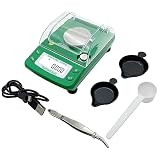
- Dual Powered Supply: Included batteries and USB cable. Our customers find this key feature extremely user-friendly.
- Adjustable Feet & Level Bubble: The legs can be adjusted to level the mg scale on different surfaces. The digital 0.001g accuracy scale can be great as pill scale, medicine scale, supplement scale, powder scale and so on
- Large Backlight Display: Big numbers for easy reading. And the small mg scale with backlit can be used even in dim light
- Value Accessories: TOPWEIGH milligram scale kit comes with 2 x 20g calibration weights, 2 pieces of powder pans, plastic powder scoop, 2 pieces of batteries, etc. These tools are so helpful and improve work efficiency for you
- Please read the user manual prior to the first use. If you have any question about the precison mg scale please contact us first. We will do our best to provide you satisfied solution
Kitchen warns that “Power assessments shape our perceptions of the limits of the possible, but quantitative rankings and dashboards can provide false confidence.” The practical implication is not to avoid numbers; it is to make the assumptions and uncertainty visible alongside them.
What a credible cross-domain result should disclose
- Purpose: the question the scale is meant to answer, rather than a claim to measure power in every sense.
- Scope: the actors, issue, geography, comparison group, and period included.
- Definition: whether each result reflects potential capacity, enacted influence, observed outcomes, or a combination.
- Evidence: the indicators used, their sources, what they miss, and how reliable or visible they are.
- Method: normalization, weights, treatment of missing data, and the rationale for aggregation.
- Uncertainty: how sensitive the scores are to reasonable alternative choices and where comparisons should not be made.
These disclosures turn a ranking from an opaque verdict into a bounded estimate readers can inspect. They also make it possible to see when an apparent cross-domain comparison is really comparing different dimensions under one label.
Is there an established common scale for people, companies, and institutions?
The sources discussed here do not establish a published benchmark that measures individual, corporate, and institutional power on one validated common scale. They provide methodological approaches and cautions, not verification of a particular scale or a first-person account of how one was built. A proposed scale should therefore be presented as an estimate for a stated purpose and context, not as a universal ranking.
Recommended Free Tools
Quick Recap
Product prices and availability are accurate as of the date/time indicated and are subject to change. Any price and availability information displayed on Amazon at the time of purchase will apply.

