
iTechGuides is reader-supported. When you buy through links on our site, we may earn an affiliate commission. As an Amazon Associate I earn from qualifying purchases. Learn more
Managing IoT at scale means controlling device identity, access, configuration, updates and end-of-life across the whole fleet—not just connecting devices. Meeting AI’s power demands is a separate but related infrastructure challenge: data-centre electricity use is rising, but forecasts cover different workloads and geographies, while local grid constraints depend on where and when large loads connect.
How do you manage IoT devices at scale?
Build operations around a device lifecycle: establish what each device is and who supports it, verify its identity and security posture before granting network access, maintain its configuration and software, monitor its condition, and revoke access when it is retired. These steps apply whether a fleet has thousands of devices or more; the right implementation depends on the devices, network, organization and risk.
NIST’s 2025 practice guide, SP 1800-36, demonstrates standards-based approaches using commercially available technology. It describes trusted IP-based network-layer onboarding and lifecycle management. NIST’s publication description says “scalable, automated mechanisms are needed to safely manage IoT devices throughout their lifecycles.” The guide is an implementation reference, not an endorsement of a particular vendor or architecture.
PC Slower Than It Used to Be?
A free scan shows the junk files, broken settings and background clutter dragging Windows down - then fixes them in one click.Free scan · Windows 10 & 11Crashes, No Sound, or Screen Glitches?
Random freezes, missing sound and display glitches usually trace back to one bad driver. Find and replace yours safely.Free scan · under a minute1. Define the baseline before onboarding
Set minimum requirements for each device class, then profile them for their operating context. NIST’s technical capability catalog covers identification, configuration, data protection, logical access, software updates, cybersecurity state awareness and device security. NIST notes that not every capability applies to every situation, so document exceptions and the risk they create rather than assuming every device can meet every control in the same way.
#1 Best Overall

- An RS232/485/422 device data acquisitor/IoT gateway designed for industrial environment. It combines multi functions in one, including serial server, Modbus gateway, MQTT gateway, RS485 to JSON, etc
- The module features RS232/485/422 and Ethernet port with PoE function, uses DC port (outer diameter: 5.5mm, inner diameter: 21mm) and screw terminals for power input. The case with rail-mount support, small in size, easy to install, cost-effective
- Support PoE Ethernet power supply, applicable to IEEE 802.3af PoE standard. Support power supply of terminal block and DC 5.5 power interface, DC 6~36V wide voltage range input. It is suitable for the network upgrade of Modbus and can cooperate with 3D force control modal components
- Support multiple communication modes. Support TCP server/TCP client/UDP mode/UDP multicast. MQTT/JSON to Modbus. More flexible conversion of multiple protocols. Support multi hosts roll polling. Different Network devices will be identified and responded respectively, No more Crosstalk issue while communicating with multi Network devices
- User-Defined Heartbeat/Registration Packet. Easy for Cloud Communication and Device Identification. Support NTP Protocol. Getting Network Time Info for serial output or data Upload. Suitable for applications like data acquisition, IoT gateway, safety & security IoT, and intelligent instrument monitoring
Assess the device alongside its manufacturer or other supporting entity, the network it will use and the organization responsible for it. A technically capable device may still be unsuitable if its support arrangements, network exposure or operational role leave risks unaddressed.
2. Verify identity and posture before granting access
For secure onboarding, establish a trustworthy device identity and check the device’s posture before issuing network credentials. Keep enrollment records tied to the device and its approved role; use those records to decide what network access it receives. This makes onboarding a security gate, not simply a step that adds a device to an inventory.
For a large deployment, make the process repeatable and automated where practical. Test the enrollment path with representative devices first, including failure cases such as an unknown identity or a device that does not meet the required posture. Do not let a failed check silently turn into unrestricted access.
Recommended Free Tools
3. Maintain inventory, configuration and access
Keep an authoritative inventory that connects each device to its identity, owner or support entity, approved configuration, network role and lifecycle status. Use it to spot devices that are missing, unexpectedly present or no longer assigned to a valid owner. Apply configuration changes through controlled processes and limit access to the services and data a device needs for its role.
Rank #2
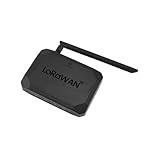
- NO SUBSCRIPTION FEES & PRIVATE LORAWAN NETWORK: Build a local LoRaWAN IoT network with the built-in SIoT server and pre-installed Node-RED. Collect data, create dashboards, and run automation flows locally without required cloud service fees. Suitable for DIY makers, home gardeners, educators, and small IoT prototype projects.
- LOCAL DATA PROCESSING & PRIVACY CONTROL: Sensor data can be processed on the local network through the built‑in MQTT/SIoT server, reducing reliance on third‑party cloud platforms. Local automation rules continue running when internet access is unavailable — suitable for home, garden, greenhouse, and classroom IoT setups.
- 4KM COVERAGE & 8-CHANNEL RELIABILITY: Equipped with the SX1302 8-channel LoRaWAN chip, -140dBm sensitivity, 27dBm max transmit power, and included 5dBi antenna. Supports up to 4km coverage in open environments, helping connect garden sensors, greenhouse nodes, garages, mailboxes, and remote monitoring points.
- NODE-RED DRAG-AND-DROP VISUAL AUTOMATION:Automation rules, data dashboards, and control logic can be built with little to no coding using the pre‑installed Node‑RED. Flows such as reading soil moisture, checking temperature, and sending relay commands are created through a visual interface — reducing setup time for maker, education, and prototype projects.
- EASY SETUP WITH WIFI AP & MQTT INTEGRATION: Configure the gateway via Wi-Fi AP mode using a laptop or mobile device. Built-in MQTT broker supports integration with Node-RED dashboards, and other MQTT-compatible platforms. Designed for indoor residential, educational, and prototyping use; not intended for outdoor installation.
4. Plan updates and monitor security state
Confirm that devices can receive authorized software updates and define how updates are approved, deployed and checked. Monitor available cybersecurity-state information so teams can identify devices that have fallen out of policy or need investigation. If a device cannot be updated or does not report useful state, record that limitation and decide how its exposure will be contained.
5. Revoke access at end of life
When a device is replaced, transferred or retired, remove its network credentials and access, update the inventory and handle its data according to organizational policy. Retirement should be an explicit lifecycle state, not merely an assumption that an inactive device can no longer connect.
How much electricity do AI data centres use?
There is no single global electricity figure for AI data centres in the cited estimates. The International Energy Agency’s 2025 analysis estimates that all data centres consumed about 415 terawatt-hours (TWh), roughly 1.5% of global electricity, in 2024. Its base case projects about 945 TWh of global data-centre electricity consumption in 2030. These are data-centre totals, not AI-only measurements, and the IEA describes substantial uncertainty around future demand. See the IEA’s energy-demand analysis.
For the United States, the Department of Energy reported in December 2024, citing a Lawrence Berkeley National Laboratory report, that data centres used 176 TWh—about 4.4% of U.S. electricity—in 2023. The same announcement reported an LBNL projection range of 325–580 TWh, or about 6.7–12% of U.S. electricity, by 2028. Those 2028 values are a forecast range, not observed consumption. The U.S. figures should not be compared with the global estimates as if they covered the same geography or year. Details are in the DOE’s announcement of the LBNL report.
Rank #3

- OFFICIAL LANTRONIX PRODUCT: IoT Device Gateway - Model SGX5150BKT
- PRODUCT DETAILS: SGX 5150 IoT Device Gateway - dual-band 802.11a/b/g/n/ac Wi-Fi, Ethernet, RS-232/485 serial and USB 2.0 host/device connectivity
- WIRELESS: Dual-band 802.11a/b/g/n/ac Wi-Fi with enterprise-class security
- ENTERPRISE SECURITY: Built-in security with encrypted communications and secure management
- LANTRONIX WARRANTY: Backed by Lantronix limited warranty with professional technical support
Consumption and generation are different measures
The IEA also projects the electricity generation supplying data centres, a different metric from the consumption estimates above. In its 2025 base case, generation rises from 460 TWh in 2024 to more than 1,000 TWh in 2030. The IEA analysis says renewables meet nearly half of the additional data-centre demand over the next five years. These are IEA estimates and projections, not a guarantee of the future supply mix. See its energy-supply analysis.
When comparing figures, check whether they describe a global or national total, an observed year or forecast, consumption or generation, all data-centre workloads or AI-related workloads, and annual energy in TWh or power at a point in time in megawatts (MW). Those distinctions can change the meaning of a headline number.
Independent reader supportYour contribution helps us test, update, and keep practical guides available for everyone.Will data centres put too much strain on the power grid?
Large data-centre demand can create local grid pressure even when its share of global electricity looks modest. The concern is concentrated load: a facility may need substantial power in one location, and delivering it can require grid infrastructure and coordination that are not immediately available.
Free tools Windows power users keep installed
One-click scans. No signup required.
A July 2024 U.S. Department of Energy Secretary of Energy Advisory Board report described hyperscale connection requests in the range of 300–1,000 MW or larger, with 1–3 year lead times, as stretching local grid delivery capacity. Those figures describe the report’s connection-request context; they are not a universal project size or connection timeline. A particular facility’s requirements and interconnection schedule depend on its location, design and utility territory. Read the DOE advisory report.
Rank #4

- V4 Upgraded ESP32-S3 & LoRa SX1262 Development Board: This Lora V4 Development Board features the latest ESP32-S3R2 chip with 2MB PSRAM and 16MB Flash, delivering superior processing for complex IoT applications and Meshtastic projects. This major upgrade from V3 models provides enhanced performance for Meshtastic devices, LoRa development boards, and sophisticated user interfaces, ensuring smooth operation of advanced firmware.
- High Power 27dBm Long-Range LoRa Radio Communication: The Meshtastic device experience exceptional wireless range with 27dBm transmission power and -137dBm sensitivity. Perfect for building reliable Meshtastic nodes, LoRa radio networks, smart home IoT devices, and industrial applications. This LoRa module provides greater communication distance across large properties and urban environments.
- Integrated OLED Display & Complete LoRa Meshtastic Kit: This heltec V4 includes a 0.96-inch OLED display for real-time data visualization without additional hardware. The protective casing features FPC antenna for stable Wi-Fi/Bluetooth and external antenna for enhanced LoRa performance. Provides a complete Meshtastic development board experience ready for immediate deployment.
- Advanced Power Management with Solar & GPS Connectivity: The ESP32 LoRa 32 V4 Designed for outdoor use with optimized battery management and 20μA sleep current. Includes solar panel interface for Meshtastic solar nodes and GNSS port for Meshtastic GPS applications. Type-C interface with voltage regulation ensures reliable operation for asset tracking and remote monitoring.
- Fully Compatible ESP32 LoRa Development Board: The ESP32 Lora V4 Development Board Maintains complete pin compatibility with Heltec LoRa 32 V3 for seamless project migration. Ready for Arduino and PlatformIO development, this versatile board supports LoRaWAN, Wi-Fi, and Bluetooth protocols for smart agriculture, industrial IoT, and wireless security systems.
Annual TWh totals help describe energy use over a year; they do not show whether a specific region can serve a facility’s peak MW demand at the time it needs power. For a real project, the relevant questions are local: available capacity, the required connection date, needed network upgrades and how demand will affect other users.
What can utilities do to handle data-centre power demand?
Utilities and planners need to match large new loads with supply and grid capacity while accounting for where demand is concentrated and when it occurs. The cited figures establish that connection requests can be large and lead times can be significant in the report’s context; they do not prescribe a universal solution for every utility territory.
AI also has a two-sided relationship with electricity systems. Data centres serving AI add demand and may exacerbate congestion, while AI and other digital tools may help grid operators with forecasting, optimisation, situational awareness, resilience and risk management. The IEA discusses these uses in its 2026 report on modernising grids. Digital tools can support grid operations, but they do not by themselves establish that new generation or delivery capacity is available where a particular data centre needs it.
Do these 3 things before closing this tab:
1Clear out junk files and repair common Windows errors2Scan for outdated or missing drivers - takes under a minute3Repair Windows errors before they cause bigger problemsQuick Recap
How to assess an IoT or data-centre deployment
- For an IoT fleet: define the device baseline, verify identity and posture before provisioning network access, and maintain inventory, access controls, updates, monitoring and retirement procedures.
- For data-centre energy claims: identify the geography, year, workload scope, metric and scenario behind each number before using it to plan or compare demand.
- For grid feasibility: evaluate the specific site and utility territory, including connection capacity, timing and the effect of concentrated demand; global annual estimates cannot answer those local questions.
Product prices and availability are accurate as of the date/time indicated and are subject to change. Any price and availability information displayed on Amazon at the time of purchase will apply.

