
Recommended Free Tools
iTechGuides is reader-supported. When you buy through links on our site, we may earn an affiliate commission. As an Amazon Associate I earn from qualifying purchases. Learn more
Yes, a small language model can run on an accelerator drawing a typical 2.5 watts—but that figure is for Hailo-10H, not the entire computer. Hailo says the chip delivers under-one-second first-token latency and more than 10 tokens per second on a variety of 2-billion-parameter language and vision-language models. That makes it a practical option for compact, local AI workloads, not a way to run cloud-scale models on a Raspberry Pi.
What is Hailo-10H?
Hailo-10H is a discrete edge AI accelerator for running generative AI locally, including language models (LLMs), vision-language models (VLMs), and conventional AI workloads. Hailo announced commercial availability on July 22, 2025. Its intended setting is a host device with tight power, thermal, privacy, or network constraints—not a data-center-scale model server. Hailo’s launch announcement describes applications in personal computing, automotive, retail, security, and telecommunications.
The second-generation accelerator uses a structure-driven dataflow architecture. Hailo says it can run generative and conventional AI workloads concurrently. The product brief lists peak compute of 40 TOPS at INT4 and 20 TOPS at INT8. TOPS is a throughput rating, not a direct promise of LLM speed; tokens per second, first-token latency, memory, model format, and workload all matter. The Hailo-10H product brief also lists LPDDR4/4X support and chip-on-board and M.2 module formats.
Quick wins for a faster PC:
Clear out junk files and repair common Windows errorsFree Scan →Fix the driver behind crashes, sound loss and screen glitchesFind Drivers →What does “2.5 watts” mean?
Hailo’s 2.5W figure is typical power consumption for the accelerator. It does not mean an entire Raspberry Pi, PC, display, storage device, or cooling system consumes 2.5W. A complete deployment also draws power for its host and peripherals, and its thermal needs depend on the system design.
#1 Best Overall

- World's first USB edge AI accelerator for both classic AI and generative AI.
- UGen300 features Hailo-10H chipset delivering up to 40 TOPS (INT4) at 2.5 W (typical) and comes with 8GB LPDDR4 Memory
- Provides 150+ pre-trained models (LLM, VLM, Whisper, Vision Network, and more) via the online model zoo
- Supported host architectures: x86, ARM & Supported operating system: Windows, Linux, and Android
- Compatibility with major frameworks: TensorFlow, TensorFlow Lite, Keras, PyTorch, and ONNX
Within that boundary, the figure is relevant: it describes an accelerator aimed at bringing useful inference to power-constrained devices. Hailo reports under one second to the first generated token and more than 10 tokens per second across a variety of 2B language and vision-language model demonstrations. EE Times also discusses operation around 2.5W for 2B models, but these are not controlled cross-platform results. Do not assume the same speed or power for every model, quantization, context length, or application. EE Times’ coverage notes that an earlier 7B-at-5W target was simulated, not a measured launch result.
Which LLMs can run on Hailo-10H?
Hailo’s clearest performance claim covers a variety of 2B-parameter language and vision-language models. The Raspberry Pi AI HAT+ 2 announcement names Llama 3 and Qwen2.5 as local model examples, along with larger Whisper models for audio workloads. These examples establish a practical small-model direction, not a guarantee that every variant, quantization, or software pipeline is supported in the same way. The Hailo Community announcement describes the Raspberry Pi integration and its software path.
Hailo’s product brief lists TensorFlow, TensorFlow Lite, Keras, PyTorch, and ONNX among its supported frameworks, with compiler, runtime, model zoo, and APIs in the software stack. Host support includes x86 and ARM systems, with Linux, Windows, and Android listed. Actual deployment still depends on the model being supported or converted for the Hailo toolchain and on available memory. The brief describes M.2 2242 and 2280 modules, chip-on-board integration, and a development starter kit with PCIe and USB host connections.
Free tools Windows power users keep installed
One-click scans. No signup required.
Rank #2
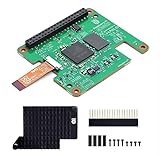
- Hailo-10H AI accelerator delivering 40 TOPS (INT4) inferencing performance.
- Performance for computer vision models comparable to the Raspbery Pi AI HAT+ (26 TOPS).
- Runs generative AI models efficiently using 8GB on-board RAM.
- Fully integrated into Raspbery Pi’s camera software stack.
- Conforms to Raspbery Pi HAT+ specification.
How does Raspberry Pi AI HAT+ 2 fit in?
Raspberry Pi AI HAT+ 2 is a concrete developer product built around Hailo-10H. Announced by the Hailo Team on January 27, 2026, it adds 8GB of dedicated LPDDR4X memory and is compatible with Raspberry Pi 5. The board is rated at 40 TOPS INT4 and integrates with hailo-apps and rpicam-apps, as well as Ollama. The announcement describes local use of Llama 3, Qwen2.5, and larger Whisper models.
The HAT makes the accelerator more approachable for Pi-based prototypes, but the 8GB is dedicated memory on the HAT, not a claim that arbitrary models will fit or run at a specified speed. Hailo highlights uses such as event-triggered processing, logging, indexing, captioning, free-text search, and voice-to-action, including in home automation, security, robotics, and industrial systems. The aim is to interpret or act on local sensor and user data without sending every step to a remote service.
Is Hailo-10H a replacement for cloud AI?
No. The Hailo Team says the Raspberry Pi AI HAT+ 2 “was not designed to be a replacement for cloud inference or large LLMs,” but is a fit for physical and agentic AI at the edge. Small local models can provide privacy, offline availability, lower cloud bandwidth use, and reduced reliance on cloud-service calls. Those benefits matter when a device needs a quick response or must continue working without a dependable connection.
Rank #3

- ✅Powered by 26 Tera-Operations Per Second (TOPS) Hailo-8 AI Processor. 2.5W typical power consumption
- ✅Scalable, enabling simultaneous processing of multi-streams & multi-models
- ✅Enabling real-time, low latency and high-efficiency AI inferencing on the edge devices
- ✅Supports TensorFlow, TensorFlow Lite, ONNX, Keras, Pytorch frameworks
- ✅Supports Linux and Windows. Supports the temperature range of -40°C to 85°C
The trade-off is capability. A small edge model is not equivalent to a large cloud model for complex reasoning, broad knowledge, or demanding generation. Hailo CEO Orr Danon told EE Times that edge users commonly seek workloads in the 1–3 billion-parameter range, citing performance, memory capacity, and cost as factors. The 2B demonstrations place Hailo-10H in that segment rather than in the class of large hosted models.
The Tool Desk
Outbyte PC Repair FREERepair Windows errors before they cause bigger problemsFix Now →Outbyte Driver Updater FREEScan for outdated or missing drivers - takes under a minuteDriver Scan →Where is Hailo-10H being used?
Hailo’s launch announcement names personal compute, automotive, retail, security, and telecommunications as target areas. EE Times reported HP as Hailo-10H’s first publicly identified customer, using an M.2 card in point-of-sale systems. Hailo also says the accelerator is automotive-qualified to AEC-Q100 Grade 2 and targets automotive designs with start of production in 2026; that is a stated product target, not evidence that all automotive deployments are already in production.
Hailo reported more than 10,000 active software-community users per month in 2025. That indicates an established developer ecosystem, but it does not by itself prove that a particular model, host, or application is supported.
Rank #4

- Powered by 26 Tera-Operations Per Second (TOPS) Hailo-8 AI Processor.
- 2.5W typical power consumption
- Enabling real-time low latency and high-efficiency AI inferencing on the edge devices
- Supports TensorFlow TensorFlow Lite, ONNX, Keras, Pytorch frameworks
- Supports Linux and Windows.
What to check before choosing it
For a real deployment, benchmark the exact model and pipeline on the intended host rather than treating TOPS or a vendor demonstration as a universal result. Compare the factors that determine whether a low-power accelerator suits the job:
- Model and quantization: confirm the exact architecture, parameter size, and INT4 or INT8 pathway supported by the software stack.
- End-to-end performance: measure first-token latency and sustained token rate at the context length and workload you expect.
- Memory: account for model weights, runtime needs, and any concurrent vision or audio workload; the Pi HAT’s 8GB is dedicated LPDDR4X memory.
- System power and thermals: measure the host and peripherals as well as the accelerator, and provide cooling appropriate to sustained use.
- Integration: match the M.2 format, host connection, operating system, framework, and application software to your device.
- Offline and privacy needs: decide which tasks must remain local and whether a small model can meet their accuracy and response requirements.
Hailo’s public figures are useful for understanding the intended envelope, but the available sources do not provide a controlled comparison table against competing accelerators. Price, stock, and regional availability can also vary; check current listings and compatibility before buying.
Windows Errors? Fix Them Before They Spread
Repair common Windows errors and clear accumulated junk for a smoother, more stable PC - no reinstall needed.Free scan · no reinstallOutdated Drivers Are Slowing You Down
One free scan finds every outdated or missing driver and matches the right update for your exact hardware.Free scan · exact hardware matchQuick Recap
Product prices and availability are accurate as of the date/time indicated and are subject to change. Any price and availability information displayed on Amazon at the time of purchase will apply.

