
Windows Errors? Fix Them Before They Spread
Repair common Windows errors and clear accumulated junk for a smoother, more stable PC - no reinstall needed.Free scan · no reinstallCrashes, No Sound, or Screen Glitches?
Random freezes, missing sound and display glitches usually trace back to one bad driver. Find and replace yours safely.Free scan · under a minuteiTechGuides is reader-supported. When you buy through links on our site, we may earn an affiliate commission. As an Amazon Associate I earn from qualifying purchases. Learn more
Not quite any ESP32: Leon Böttger’s experimental firmware is documented as working with three board families—ESP32 Dev Module V1, ESP32-CAM and ESP32-C3—and uses Google’s crowdsourced Find Hub Network to report a custom tracker’s location. It is a community project, not an official Google product. Its README warns that it is very experimental, locations cannot be viewed in Google’s app, and the setup has significant privacy and maintenance limitations.
What the ESP32 firmware does
Böttger’s GoogleFindMyTools project reimplements parts of Google’s Find My Device Network, now called the Find Hub Network, and includes tools for registering ESP32- and Zephyr-based trackers. The ESP32 firmware advertises itself as a custom tracker that has already been registered. Nearby participating devices in the network can then contribute location reports.
The setup is a maker workflow: register the tracker with the project’s Python tool, put the resulting advertisement key into the firmware source, then build and flash the firmware with Espressif’s ESP-IDF tools. It is not a plug-and-play conversion of an arbitrary board, nor does the project’s existence establish Google approval or dependable tracking in every setting.
Which ESP32 boards are documented as working?
The firmware README names these as currently known-working boards:
#1 Best Overall

- 2.4GHz Dual Mode WiFi + Bluetooth Development Board
- Support LWIP protocol, Freertos
- SupportThree Modes: AP, STA, and AP+STA
- Ultra-Low power consumption, Compatible with Arduino IDE
- ESP32 is a safe, reliable, and scalable to a variety of applications
- ESP32 Dev Module V1
- ESP32-CAM
- ESP32-C3
The maintainer invites reports about other boards, but that is not the same as confirming compatibility with all Espressif ESP32 models. Check the current firmware README for the maintainer’s board list before choosing hardware.
How registration and flashing work
The project documents a sequence that requires a computer, a supported board, and a USB/UART connection for flashing. These are the project’s documented steps, not independently verified installation instructions:
Rank #2
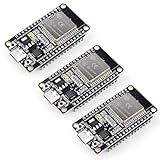
- Dual-Core Performance Up to 240 MHz: Run sensor processing, wireless communication, automation logic and connected-device tasks on a 32-bit dual-core ESP32 platform designed for responsive embedded and IoT projects
- Built-in Wi-Fi and Bluetooth 4.2: Connect to 2.4 GHz Wi-Fi networks or use Bluetooth Classic and BLE for wireless sensors, smart devices, remote controls, home automation and other connected projects
- Flexible Power-Saving Modes: ESP32 power-management features support dynamic clock scaling and low-power operating modes, helping developers reduce energy use in compatible sensing, monitoring and connected-device applications, suitable for battery-powered Internet of Things (IoT) devices.
- USB-C Programming with CP2102: Connect through USB-C for power, sketch uploads and serial monitoring, while GPIO, UART, SPI and I2C interfaces support sensors, displays, motor drivers and other modules (USB-C cable not included)
- Over-the-Air Update Support: Configure OTA functionality through a compatible ESP-32 software framework to update deployed firmware over Wi-Fi without reconnecting the board by USB for every revision
- Prepare the registration environment. The parent project says its Python tool requires an updated Chrome browser and Python. Its registration flow uses Chrome-based authentication.
- Register a tracker. Run the repository’s
main.pytool and follow its registration flow to obtain an advertisement key. - Add the key to the firmware. Insert the generated key into the ESP32 firmware source as the README directs.
- Build and flash. Use Espressif’s ESP-IDF tooling to build the firmware and flash it to the board connected over USB/UART.
- Maintain registration. The firmware README says to run
main.pyevery four days to keep receiving location reports.
The project reports that a new account may display “Your encryption data is locked on your device.” Its suggested account setup involves enabling offline-device network participation or pairing a real tracker where necessary. This is guidance reported by the project, not a Google support guarantee.
Important limitations before using it
It is explicitly experimental
The maintainer says, “Note that the firmware is very experimental.” The README lists missing Fast Pair support, MAC rotation and advertisement rotation. These omissions make it different from a finished consumer tracker.
Rank #3

- Powerful ESP-32 Board: Unlock the world of Internet of Things (IoT) and advanced electronics with the heart of this kit: the ESP-32 board. It features a powerful dual-core processor, integrated Wi-Fi and Bluetooth 4.2, making it perfect for building connected, smart devices that communicate with your phone or the cloud. It's fully compatible with the Arduino IDE for easy programming.
- Super Starter Kit: This kit contains over 35 different modules and electronic components, including sensors, displays, motors, and input devices. From LEDs and buttons to an OLED screen, servo motor, and keypad, you have everything needed to explore a vast range of projects in one box.
- Step by Step Online Tutorial: Jump right in with our detailed, beginner-friendly tutorial. Access 30+ projects with complete code, clear circuit diagrams, and step-by-step instructions. Learn the fundamentals of electronics, coding, and how to utilize the ESP-32's unique capabilities without any prior experience.
- Hands-on Learning for All Skill Levels: Perfect for students, makers, engineers, and hobbyists. Start with basic circuits and coding, then progress to intermediate and advanced IoT applications. Build practical projects like weather stations, smart home controllers, remote-controlled devices, and interactive gadgets. The skills you learn are the foundation for real-world innovation.
- Quality & Great Support: Elegoo is committed to quality. We provide a clear, detailed tutorial guide, refined code, and a well-organized component kit. All modules are carefully selected for reliability and ease of use. Our dedicated technical support team and active online community are ready to help you succeed in your learning journey.
There is no Google app location view for this tracker
According to the project README, ESP32 locations cannot be viewed in Google’s Find My Device app. Reports must instead be retrieved through the project’s Python script.
Privacy and power trade-offs matter
The maintainer states, “No privacy features such as rotating MAC addresses are implemented.” The README also says its advertising settings are oriented toward high reporting and may use more power than necessary. The project does not publish a measured battery-life figure, so actual runtime should not be assumed from the documentation.
Rank #4

- 2.4GHz Dual Mode WiFi + Bluetooth Development Board
- Support LWIP protocol, Freertos;ESP32 is a safe, reliable, and scalable to a variety of applications
- SupportThree Modes: AP, STA, and AP+STA
- Ultra-Low power consumption, Compatible with Arduino IDE
- 1PCS 30Pin ESP32 Development Board 2.4GHz WiFi Dual Cores Microcontroller Integrated with Antenna RF Low Noise Amplifiers Filters
The Python tool has separate constraints
The parent README says the associated tool does not support trackers using the P-256 curve and 32-byte advertisements, and that its authentication process is not supported on ARM Linux. These are constraints reported for the Python tool; they should not be mistaken for a complete list of ESP32 firmware hardware limitations.
What’s actually slowing this PC down?
Pick the symptom - the matching free tool is one click away.
Is it an official Google Find Hub tag?
No. The firmware is a community experiment that imitates parts of the network, not proof that a device is a Google-approved accessory. Google’s partner integration guide says it does not provide a specific SDK or API for integration and directs teams to work with a system-on-chip vendor or system integrator. Its commercial process includes a device proposal and approval, legal agreements, partner onboarding, firmware integration and self-tests, third-party laboratory certification, and activation before shipping. A board running this project’s firmware is not thereby certified or endorsed.
Best Value

- 2.4GHz Dual Mode WiFi + Bluetooth Development Board
- Ultra-Low power consumption, works perfectly with the Arduino IDE
- Support LWIP protocol, Freertos
- SupportThree Modes: AP, STA, and AP+STA
- ESP32 is a safe, reliable, and scalable to a variety of applications
What published tracking measurements do—and do not—show
A 2025 peer-reviewed study in Proceedings on Privacy Enhancing Technologies, “Okay Google, Where’s My Tracker? Security, Privacy, and Performance Evaluation of Google’s Find My Device Network”, reported measurements from two specific routes using ESP32-based experimental devices. Its figures compare Google’s network with Apple’s; they are not a general performance guarantee or an evaluation of Böttger’s exact firmware version.
| Route in the study | Google network | Apple network |
|---|---|---|
| Public transport: locations recorded | 166 | 906 |
| Public transport: median actual location accuracy | 121.79 m | 57.45 m |
| Public transport: average location-date-to-retrieval delay | 72.95 seconds | 1,246.75 seconds |
| Walking: locations recorded | 242 | 1,218 |
| Walking: median actual location accuracy | 49.08 m | 33.13 m |
| Walking: average location-date-to-retrieval delay | 78.05 seconds | 1,244.05 seconds |
The authors characterize the comparison as small-scale. Route, device conditions and study methods are specific, and the measurements concern network behavior in that experiment—not the reliability, privacy or battery life of this firmware across ordinary use.
Who should consider this project?
It may suit a maker who wants to study crowdsourced tracking protocols and is comfortable with ESP-IDF, Python registration, recurring maintenance and an experimental device that lacks identifier rotation. It is a poor fit for someone who needs a dependable everyday tracker, expects to see locations in Google’s app, or wants the privacy protections and formal approval associated with a commercial accessory.
Quick Recap
Product prices and availability are accurate as of the date/time indicated and are subject to change. Any price and availability information displayed on Amazon at the time of purchase will apply.

