
Do these 3 things before closing this tab:
1Scan for outdated or missing drivers - takes under a minute2Clear out junk files and repair common Windows errors3Fix the driver behind crashes, sound loss and screen glitchesiTechGuides is reader-supported. When you buy through links on our site, we may earn an affiliate commission. As an Amazon Associate I earn from qualifying purchases. Learn more
Short answer: A lead-paint swab can screen one accessible painted component, but it cannot prove that an entire home is lead-safe. For a pre-1978 property, renovation planning, a sale, or written documentation, a certified lead inspector or risk assessor using XRF—and, when needed, an NLLAP-accredited laboratory—provides much broader and more defensible information.
EPA recognizes three chemical kits for the Renovation, Repair, and Painting (RRP) rule’s negative-response pathway: Luxfer Magtech LeadCheck, D-Lead, and the Massachusetts kit. Their result is meaningful only when an EPA-trained or certified professional uses the recognized kit exactly as directed and on an eligible substrate. Even then, a negative result applies to the tested component, not automatically to every painted surface, dust deposit, or soil area on the property.
What a lead test kit actually tells you
An EPA-recognized chemical kit creates a localized reaction with the material exposed by the test. The user cuts or otherwise exposes the relevant paint layers, applies the test chemicals, and interprets the prescribed color response. The result is generally a positive or negative screen for regulated lead-based paint at that particular location; it is not a map of the building and does not measure lead in household dust or soil.
Recommended Free Tools
For the RRP framework, EPA lists three recognized products: Luxfer Magtech LeadCheck, D-Lead, and the Massachusetts kit. EPA lists D-Lead for wood, drywall, plaster, and ferrous metal. That substrate listing matters: stucco and non-ferrous metals are outside D-Lead’s listed compliance scope, so a negative result on those materials cannot be treated as an RRP negative determination under that listing.
#1 Best Overall

- Upgraded Formulation for Optimal Lead Testing: NewPos lab specializes in researching the best lead test kit, starting with chemical formulations, we have global formulations of lead testing kits, and after 1,000 experiments, NewPos have upgraded our chemical formulations to make the test results more accurate
- It's the Vinegar-Activated Test that's Most Accurate: The 30 Swabs lead paint test kit must be dipped in vinegar to get accurate results; this is much more accurate than using water; take a bit of vinegar from the kitchen, put a lead test swabs in the vinegar, and wet it all down to test
- Results in 30 Seconds: Dip a lead test kit for dishes into white vinegar for a while, the tip of the lead swab turns orange yellow, then wipe the surface of the object with the tip of the lead swab for 30 seconds; when the swab turns red/purple or pink, it indicates the presence of lead, while Yellow signifies no lead detected
- Suitable for Many Surfaces Containing Lead: Caution is needed if you want to test valuable items such as antiques, as vinegar itself is acidic and can affect solid surfaces; at home lead testing kit are suitable for various painted metal & ceramic surfaces, such as dishes toys pottery jewelry water bottle woodwork cups glazes and plumbing
- Unable to Determine the Results & Any Problems with the Lead Detection Kit Please Contact us ! NewPos are responsible for every lead test strips NewPos produce, no matter there is any problem you can contact us on the packaging, we will help you solve the problem as soon as possible
EPA’s wording is deliberately narrow. It says that an EPA-recognized kit, when used by a trained professional, can reliably determine that regulated lead-based paint is not present by virtue of a negative result. “By virtue of a negative result” does not mean the house is free of lead, that every painted component was tested, or that no exposure risk exists. It means the specified component and layers were tested under the recognized procedure.
How accurate are lead paint swabs?
Accuracy depends on the kit, the substrate, the paint layers exposed, the operator’s technique, and the regulatory performance standard being applied. EPA’s RRP criteria use two concentration benchmarks: 1.0 milligram per square centimeter (mg/cm²) or 0.5 percent lead by weight. For a kit to meet the rule’s performance goals, the maximum false-negative probability is 5 percent at or above the regulated level, and the maximum false-positive probability is 10 percent below it.
EPA states that no recognized lead test kit has met both the negative-response and positive-response performance criteria. That is an important qualification, not a claim that every test is useless. A trained professional following the approved instructions can use a negative result for the limited RRP determination on an eligible component, while a positive or ambiguous result should trigger lead-safe controls or analytical confirmation rather than casual interpretation.
Free tools Windows power users keep installed
One-click scans. No signup required.
Rank #2

- 🧪【RAPID 30S RESULTS & HIGH SENSITIVITY】Empower your home safety with our lead test kit for dishes and paint. Engineered for consumer-friendly accuracy, these lead test swabs provide rapid results in just 30 seconds. The upgraded chemical reagent is highly sensitive, capable of detecting lead on many common household surfaces. Simply watch for the color change: Red/Purple/Pink means lead is present, while Mustard Yellow indicates a no lead detected surface.
- 🚫【MUSTARD YELLOW BASELINE & ACCURATE RESULTS】Tired of confusing results? Our lead paint test kit features a clear color-coded system to eliminate guesswork. Unlike generic lead test strips that might give ambiguous readings, our swabs transform into a vibrant Mustard Yellow immediately after being moistened under water for 2-8 seconds, providing a stable baseline. This ensures you can accurately distinguish between a safe item and a hazardous one without "false positive" frustrations.
- 🏠【VERSATILE HOME APPLICATIONS】A comprehensive lead testing kit for every household's needs. From vintage crockery and pottery to children's toys, jewelry, and metal plumbing, our swabs cover all bases. It is the ideal lead tester pen alternative for inspecting antique furniture, bathtub glazes, and woodwork. Whether you are a homeowner or an antique collector, this kit helps users make informed decisions about household surfaces.
- 📦【30 COUNT VALUE PACK & 2-YEAR SHELF LIFE】Each bottle contains 30 Pcs of high-quality lead check swabs, providing a cost-effective solution for whole-house testing. Designed for longevity, these swabs have a 2-year shelf life, allowing you to keep them on hand for future purchases. Please Note: This product is designed for surface testing only and is not intended for detecting lead in water or other liquids.
- ⚠️【SAFE OPERATION & EXPERT COMPLIANCE】Safety is our priority. These lead swabs are easy to use: Moisten, Shake, and Rub. Designed for adult use (Entry-level skill), the kit requires no complex lab equipment. To ensure accuracy and safety, avoid touching the swab head with your bare hands and never put it in your mouth. Proudly sourced with high-quality standards, AssuTest provides a practical tool for household surface screening in your daily life.
Older independent evidence illustrates why results need context. In a 2007 Consumer Product Safety Commission evaluation, all four test-kit products detected lead in the standard paint sample containing 0.5 percent lead carbonate with no top coat. In the same staff report, XRF correctly identified the presence or absence of lead in 12 of 13 samples. Those findings are historical test results under the stated sample conditions; they are not a guarantee of performance on every paint system, substrate, or field situation today.
Why a negative swab cannot clear a whole house
Painted buildings contain many separate components: walls, trim, doors, windows, stairs, railings, cabinets, radiators, siding, and previously repaired areas. A swab normally samples one small, deliberately selected location. Lead paint can be present on another component, under a later top coat, or in a different substrate. A single negative test therefore cannot establish property-wide absence.
The test also does not answer exposure questions outside the paint film. Friction and impact can create contaminated dust; exterior paint can contribute to soil contamination; and renovation can spread chips and dust even when a particular swab is negative. A home can have no regulated lead-based paint on the tested spot and still require cleaning or controls because of dust or soil lead.
Rank #3

- Due to the drying process, there are slight variations in the shade of the cotton swabs from batch to batch; however, this does not affect the final test results.
- 🧪【RAPID 30S RESULTS & HIGH SENSITIVITY】Empower your home safety with our lead test kit for dishes and paint. Engineered for consumer-friendly accuracy, these lead test swabs provide rapid results in just 30 seconds. The upgraded chemical reagent is highly sensitive, capable of detecting lead on many common household surfaces. Simply watch for the color change: Red/Purple/Pink means lead is present, while Mustard Yellow indicates a no lead detected surface.
- 🚫【MUSTARD YELLOW BASELINE & ACCURATE RESULTS】Tired of confusing results? Our lead paint test kit features a clear color-coded system to eliminate guesswork. Unlike generic lead test strips that might give ambiguous readings, our lead test swabs transform into a vibrant Mustard Yellow immediately after being moistened under water for 2-8 seconds, providing a stable baseline. This ensures you can accurately distinguish between a safe item and a hazardous one without "false positive" frustrations.
- 🏠【VERSATILE HOME APPLICATIONS】A comprehensive lead testing kit for every household's needs. From vintage crockery and pottery to children's toys, jewelry, and metal plumbing, our swabs cover all bases. It is the ideal lead tester swab alternative for inspecting antique furniture, bathtub glazes, and woodwork. Whether you are a homeowner or an antique collector, this kit helps users make informed decisions about household surfaces.
- 📦【30 COUNT VALUE PACK & 2-YEAR SHELF LIFE】Each bag contains 30 Pcs of high-quality lead check swabs, providing a cost-effective solution for whole-house testing. Designed for longevity, these swabs have a 2-year shelf life, allowing you to keep them on hand for future purchases. Please Note: This product is designed for surface testing only and is not intended for detecting lead in water or other liquids.
Surface preparation is another limitation. The recognized procedure may require exposing all relevant layers at a defined location. If the cut misses an older layer, the reaction may not represent the paint that will be disturbed during work. Conversely, contamination on a tool or surface can create an apparent reaction. Training and strict adherence to the product instructions are therefore part of the test’s meaning, not optional extras.
Professional inspection, risk assessment, and XRF
“Professional inspection” can describe different services. Before booking, ask which written service the provider will perform:
- Lead-based-paint inspection: a systematic investigation to identify where lead-based paint is present on components and building materials.
- Risk assessment: an evaluation of lead hazards, including the condition and location of paint and, where applicable, dust or soil exposure pathways, followed by control recommendations.
- Renovation-specific testing: a determination focused on the components that a planned renovation will disturb, often under the RRP rule.
An inspector may use an X-ray fluorescence (XRF) analyzer. XRF testing is non-destructive at the measurement point and can examine many components without cutting each one open. It produces an instrument reading that can be compared with the applicable lead concentration threshold, while a chemical swab generally provides a localized qualitative response. Ask for the instrument model, the areas tested, the readings or classifications reported, and any limitations noted by the provider.
Rank #4
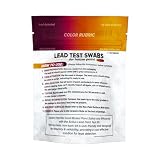
- Batch Traceability & Satisfaction Guarantee – Every swab is part of a rigorously tracked batch for full traceability and quality assurance. If you're not 100% satisfied, we’ll make it right—no questions asked.
- SCIENTIFICALLY FORMULATED: Scitus Labs; lead testing kits offer an exceptionally reliable method for detecting lead on painted surfaces—by using vinegar to activate, our swabs trigger a targeted chemical reaction that specifically identifies lead, ensuring greater consistency and accuracy compared to generic water-activated lead tests.
- MADE IN THE USA: Our lead tests are proudly manufactured in the United States for 100% quality assurance. We take pride in our exceptional product, delivering accurate, fast, and reliable lead testing results for personal and professional use.
- FOR USE ON PAINTED SURFACES: Our convenient lead test swabs are perfect for testing windows, doors, walls, floors, baseboards, ceilings, and any other painted surface in your home or office. Compact, reliable, and easy to use, these lead testing swabs are also perfect for new homeowners, renters, real estate agents, contractors, and anyone wanting to test for lead paint in their environment.
An inspection can create a component-by-component property record. That documentation is valuable when a buyer, landlord, contractor, public agency, or future owner needs to know what was tested and under what conditions. It also reduces the chance that a renovation plan overlooks a painted surface simply because a convenient test spot happened to be negative.
When laboratory analysis is the better answer
Laboratory analysis is appropriate when a paint chip, dust wipe, or soil sample needs analytical confirmation. Use an EPA-recognized National Lead Laboratory Accreditation Program (NLLAP) laboratory. EPA’s directory identifies accredited laboratories, whether they accept commercial samples, and which sample matrices they analyze.
A laboratory sample is only as representative as the collection plan. A single paint chip can confirm the material submitted, but it does not survey the rest of the room. Dust-wipe and soil results likewise describe the collected locations. For a defensible investigation, document the component or area, collection location, date, and chain of custody required by the laboratory or project specification.
Best Value

- 2-in-1 LEAD DETECTION: Safe Home provides the only LEAD COMBO-KIT on the market which includes 10 DIY surface swabs that issue results in 30-seconds to a detection of 5 ppm AND a sample-submission kit for optional in-depth Lead testing at our EPA-certified lab to a detection of 0.006 ppm. All of this…in ONE KIT!
- DIY LEAD SCREENING: Safe Home provides the only Do-It-Yourself Lead screening kit that uses ultra-sensitive ACS (American Chemical Society) Grade Reagents, in our test swabs. This minimizes background interferences and issues more reliable results, than competitive brands. Safe Home costs a bit more, but you can trust the quality of our products.
- OPTIONAL LEAD TESTING AT OUR CERTIFIED LAB: Contractors and discerning homeowners can also use our Lead Sample Submission Kit, for optional testing at our EPA-certified lab. Testing at our laboratory meets EPA, NLLAP, RRP, and PPE guidelines. Our lab results can also be used for disposing of remediated materials to hazardous vs. non-hazardous landfills. NOTE: Lab fees are required for optional testing at our EPA-certified laboratory.
- MULTI-PURPOSE APPLICATIONS: Test for Lead in paint, dust, soil, wood, toys, furniture, metal, plastic, and more. Includes simple instructions for DIY screening and for sample collection and submission to our EPA-certified lab, for testing. MADE in the USA with domestic and international components. *Please Note: If testing surfaces that are sealed like ceramics, only the outer surface will be tested.
- EXPERIENCED CUSTOMER SUPPORT: Before, during, and after DIY screening or LAB testing for Lead, Safe Home provides qualified personnel with 40+ years of experience in testing Lead, to guide you. Reach out any time. We are happy to assist!
Side-by-side comparison
| Method | Typical coverage | Output | Substrate or sample limits | Documentation and regulatory use |
|---|---|---|---|---|
| EPA-recognized chemical kit | One selected painted component or test location | Localized positive or negative response | Depends on the kit; D-Lead is listed for wood, drywall, plaster, and ferrous metal. Stucco and non-ferrous metals are outside that listed scope. | A trained professional’s negative result can support the RRP negative-response pathway for the tested component; it is not a property-wide clearance. |
| XRF inspection | Multiple painted components across a property | Instrument readings or classifications at measurement points | Provider must account for substrate, geometry, access, and instrument limitations. | Can create a component map and written inspection record; appropriate for broad surveys and renovation planning. |
| Paint-chip laboratory analysis | Each submitted chip represents its collection location | Analytical result for the submitted paint sample | Requires correct collection and an NLLAP laboratory that accepts paint samples. | Useful for confirmation when a field result is uncertain or a documented analytical result is required. |
| Dust-wipe or soil laboratory analysis | Each wipe or soil sample represents its sampled area | Analytical result for the submitted dust or soil | Requires an NLLAP laboratory that analyzes the relevant matrix. | Addresses exposure media that a paint swab does not measure. |
Choosing the right option for your situation
Use a kit for a narrow, immediate screen
A kit can be reasonable when you need to screen one accessible painted component, the substrate is within the product’s recognized scope, and a trained user can follow every step. This is the narrowest and least expensive-in-effort path, but its result should stay attached to the exact component and location tested. Do not use a consumer swab as the sole basis for declaring a room or property safe.
Choose an inspection or XRF survey for a purchase or major renovation
When buying or renovating a pre-1978 property, many components may be disturbed. A certified inspection or XRF survey can identify patterns that a handful of swabs miss and can produce the written record needed for project planning. Tell the provider which rooms, exterior areas, and components will be altered so the survey covers the work scope rather than only easily reached surfaces.
Choose laboratory confirmation for a disputed or specific sample
If a swab result conflicts with the paint’s history, if the substrate is outside the kit’s listed scope, or if a contract requires analytical evidence, submit a properly collected sample to an NLLAP-accredited laboratory. For dust or soil concerns, skip the paint-only screen and request the appropriate laboratory sampling service.
Quick wins for a faster PC:
Scan for outdated or missing drivers - takes under a minuteDriver Scan →Clear out junk files and repair common Windows errorsFree Scan →Fix the driver behind crashes, sound loss and screen glitchesFind Drivers →Contact a certified lead professional when paint is deteriorating
Peeling, chipping, chalking, or heavily worn paint presents a different problem from an intact test spot. If renovation will disturb painted surfaces, contact a certified lead professional and follow lead-safe work practices rather than relying on a consumer swab alone. Controls should address containment, dust generation, cleanup, and waste handling as applicable to the project.
How to make a kit result more meaningful
- Identify the question. Decide whether you need an RRP renovation determination, a broad property survey, confirmation of one sample, or an assessment of dust and soil exposure.
- Identify the substrate. Record whether the test area is wood, drywall, plaster, ferrous metal, or another material. Confirm that the specific kit’s recognized listing covers it.
- Select representative locations. Test the component that will be disturbed or the area of concern, not merely the easiest spot to reach. Treat every separate component as a separate question.
- Use the complete procedure. Follow the kit’s instructions for exposing paint layers, applying chemicals, timing, color interpretation, and contamination control. A trained or certified professional is the appropriate operator for an RRP determination.
- Record the result. Note the address, room, component, substrate, exact location, date, kit name, lot information if available, operator, and result. Keep photographs and a sketch when the decision affects a renovation.
- Escalate uncertainty. A positive, inconsistent, damaged, inaccessible, or out-of-scope result should lead to professional evaluation, XRF testing, or NLLAP laboratory analysis—not a second casual swab used to obtain a preferred answer.
Common mistakes and how to avoid them
- Testing only one wall: Lead paint can be limited to trim, windows, doors, stairs, or exterior components. Map the surfaces relevant to the work.
- Ignoring the substrate: A kit recognized for wood, drywall, plaster, and ferrous metal is not automatically recognized for stucco or non-ferrous metal.
- Treating a negative as “lead-free”: The result applies to the tested location and procedure. It does not clear other components, dust, or soil.
- Using an untrained operator for a regulatory decision: EPA’s negative-response language is tied to trained professional use and exact directions.
- Confusing an inspection with a risk assessment: An inventory of painted surfaces and an evaluation of hazards answer different questions. Ask for the service name and deliverables in writing.
- Skipping documentation: Without locations, substrates, methods, and dates, a result is difficult for a contractor, buyer, or future owner to interpret.
- Disturbing paint to test without controls: Cutting or scraping can release chips and dust. Use appropriate lead-safe practices and professional guidance when paint is deteriorated or renovation is planned.
What to ask a professional before hiring
- Are you certified for the inspection, risk assessment, or renovation-related service I need?
- Will you use XRF, paint-chip laboratory analysis, or both?
- Which components and substrates will you test, and how will inaccessible areas be handled?
- Will the report list each location, result, instrument or laboratory method, and limitations?
- If dust or soil may be an exposure source, can you collect samples for an NLLAP-accredited laboratory?
- Does the service address renovation-specific requirements or provide a broader property record?
The practical verdict
Buy a recognized kit only when the question is narrow, the substrate is eligible, and the result will be interpreted within the RRP limits by a trained professional. Hire a certified inspector or risk assessor using XRF when you need coverage across many components, a pre-1978 renovation or purchase survey, or written documentation. Use an NLLAP-accredited laboratory when a paint, dust, or soil sample needs analytical confirmation. None of these choices turns one negative swab into proof that an entire home is safe; the right method is the one that matches the decision you must make and the areas that could create exposure.
Quick Recap
Product prices and availability are accurate as of the date/time indicated and are subject to change. Any price and availability information displayed on Amazon at the time of purchase will apply.

