
iTechGuides is reader-supported. When you buy through links on our site, we may earn an affiliate commission. As an Amazon Associate I earn from qualifying purchases. Learn more
Students tend to be more motivated and achieve more in classrooms where teachers report higher wellbeing, and students tend to do worse where teachers experience burnout, stress, or low mood. That is the central finding of a 2026 synthesis of 186 studies, described by its author, Theresa Dicke, in an explainer published by The Conversation and republished by Phys.org on October 8, 2026. Whether improving teacher wellbeing would cause better student outcomes is a separate question, and the answer is not established by this work.
What the synthesis covered
The study pooled 186 studies and data from more than 350,000 teachers worldwide. It covered elementary, secondary, and combined schools in 33 countries, and the included studies were published between 1977 and 2023. The linked journal article has the DOI 10.1007/s10648-026-10216-6. The figures in this article come from the author’s explainer and have not been checked against the full journal paper, so readers who need exact methods or statistics should consult that paper directly.

Two sides of teacher wellbeing
The synthesis treats teacher wellbeing and teacher illbeing as two related conditions rather than the absence of one another. The table below summarizes what each covers and the association the author reports with student outcomes.
Recommended Free Tools
| Teacher condition | What it includes | Reported association with students |
|---|---|---|
| Wellbeing | Self-efficacy, job satisfaction and commitment, work motivation, positive mood, and the capacity to cope with demands | Reliably linked to higher student motivation and achievement |
| Illbeing | Burnout, stress, depression, anxiety, and other psychological strain | Opposite association, described as somewhat weaker than the wellbeing link |
The student side is defined in two parts. Achievement means grades, test scores, and similar measures. Motivation means interest in learning, academic goals, and beliefs about one’s own ability.
How strong the links are
- Size: The author characterizes the associations as small to moderate. The explainer does not report exact pooled effect sizes, so this article does not give a number. Those values belong to the journal paper.
- Consistency: The author describes the wellbeing link as reliable across the reviewed studies.
- Illbeing: The negative association is present but somewhat weaker than the positive wellbeing association.
Why the pattern appears stronger in high schools
The wellbeing association was stronger in high schools than in elementary schools. The author suggests a possible explanation: older students are more independent and rely on teachers for academic guidance, so a teacher’s state of mind may matter more to them. This mechanism was not tested directly in the synthesis, so it should be read as a hypothesis. The same school-level difference did not appear for teacher illbeing.
Why correlation does not settle causation
The synthesis is correlational. It shows that teacher wellbeing and student outcomes move together, not that one drives the other. Shared causes could influence both. School leadership and academic culture are the obvious candidates: a well-run school may support teachers and students at the same time. As the author puts it, “The evidence is also correlational.” A reader should therefore treat the findings as a reason to take teacher wellbeing seriously, not as proof that a particular intervention will raise test scores.
Where schools might focus, and what is not proven
The explainer points to three practical areas where schools can support teachers:
What’s actually slowing this PC down?
Pick the symptom - the matching free tool is one click away.
- Workload manageability: how demands on teachers’ time and attention are set and distributed.
- Support from school leadership: how leaders respond to teachers’ needs and shape the working environment.
- Quality of collegial relationships: the day-to-day working relationships among staff.
The synthesis does not rank these areas or measure how much each one contributes to student results. Presenting any of them as a proven route to better achievement would go beyond the evidence.
Rank #3
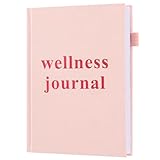
- 90 DAY HEALTH AND SELF CARE LOG: This Wellness Journal covers various aspects of physical and mental health, including dietary habits, sleep, goal setting, self-care, motivation, and self reflection. It will help you regulate your physical and mental health and develop self-care habits.
- SET hEALTH GOALS: It is a 13 week health planning log that can help you care more about your own health in daily life. The connotative diet plan and open-ended questions help you easily achieve your health goals.
- SIZE AND QUALITY: The size of this health log is A5 (8.27 inches * 5.23 inches), made of linen material, and is a deluxe edition. The thickness is 100gsm, providing a comfortable and sufficient space for writing.
- SUITABLE FOR PEOPLE OF ALL AGES: This health journal is a great choice. It will help you establish a long-term life goal, allowing you to maintain a comfortable and healthy lifestyle at all times.
- PERFECT GIFT: Our health journal would be a perfect gift, give them a gift they use every day.
Workforce context
A separate OECD press release from September 2026, titled “Teacher shortages are putting pressure on education systems across the OECD,” reports that staffing is under strain. The organization states: “It is getting harder to recruit, retain and deploy qualified teachers where they are most needed.” That release describes the workforce situation across member countries. It is not part of the student-outcome synthesis, but it explains why teacher retention and working conditions are attracting attention from policymakers.
Quick Recap
Best Value

- DAILY SELF-CARE CHECK-INS - The Teravon self-care journal includes guided daily pages to record feelings, self-care actions, small wins, reminders, and personal notes.
- WEEKLY REFLECTION AFTER 7 DAYS - After every 7 daily check-ins, a guided weekly reflection page helps users review their week, notice patterns, and write down what supported them.
- MOOD & HABIT TRACKING PAGES - Designed with mood trackers, habit trackers, and simple wellness check-ins to help organize daily routines in an easy, visual way.
- LET-IT-OUT WRITING SPACE - Includes open writing pages and reminder sections for recording thoughts, personal reflections, weekly notes, and things to remember.
- SPIRAL BOUND PRINTED JOURNAL - A practical physical self-care journal with a minimal layout, easy writing space, and guided pages for home, office, journaling, or daily routines.
Product prices and availability are accurate as of the date/time indicated and are subject to change. Any price and availability information displayed on Amazon at the time of purchase will apply.

