
iTechGuides is reader-supported. When you buy through links on our site, we may earn an affiliate commission. As an Amazon Associate I earn from qualifying purchases. Learn more
5G antennas do more than transmit radio signals from a tower. Many 5G base stations use arrays of antenna elements and signal processing to shape transmissions toward connected devices. That helps explain why antennas are central to 5G radio access networks—but antenna design is only one part of performance, alongside spectrum, frequency, radio equipment, site layout, and deployment choices.
How do 5G antennas work?
A radio access network (RAN) connects wireless devices to the mobile network. At a base station, antennas transmit and receive radio signals. In some 5G deployments, the antenna system combines multiple elements with processing that can adjust how signals are sent, rather than relying only on broad, fixed coverage patterns.
The specific design varies by network and site. A 5G network is not defined by a single antenna type, and the antenna alone does not determine coverage or speed.
PC Slower Than It Used to Be?
A free scan shows the junk files, broken settings and background clutter dragging Windows down - then fixes them in one click.Free scan · Windows 10 & 11Outdated Drivers Are Slowing You Down
One free scan finds every outdated or missing driver and matches the right update for your exact hardware.Free scan · exact hardware matchWhat is massive MIMO?
Massive MIMO means using a large array of antenna elements at a base station. The International Telecommunication Union’s 2022 Supplement 16 gives 64 or 512 elements as examples of possible configurations; those figures are examples in the document, not a universal specification for every 5G base station.
#1 Best Overall
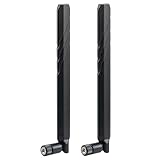
- WIDE FREQUENCY RANGE: Supports frequencies from 600MHz to 6000MHz, making it compatible with various cellular networks and wireless applications
- HIGH GAIN PERFORMANCE: Features 10dBi gain for enhanced signal strength and improved reception quality in weak signal areas
- UNIVERSAL COMPATIBILITY: SMA male connector design ensures broad compatibility with most routers, modems, and cellular devices
- DUAL ANTENNA SYSTEM: Package includes two identical antennas for optimal signal coverage and MIMO technology support
- NETWORK SUPPORT: Compatible with multiple network types including 4G LTE, 5G, and CBRS bands for versatile connectivity options
With multiple elements and suitable signal processing, a base station can serve more simultaneous connections and shape its transmissions. The practical result depends on the radio system and deployment, not simply on the element count.
Why does 5G use beamforming and beam steering?
Beamforming and beam steering use signal processing to direct radio energy toward users and devices, instead of sending it equally in every direction. As the ITU-T puts it in Supplement 16, section 7.2: “Beam steering and beamforming is a technology that allows the mMIMO base station antennas to direct the radio signal to the users and devices rather than in all directions.”
Rank #2

- WIDE COMPATIBILITY: Supports all major carriers including Verizon, AT&T, and T-Mobile, perfect for 4G LTE and 5G networks in RV and home internet setups, Enhances the connection quality and speed of compatible routers, gateways, and mobile hotspot devices;
- 4X4 MIMO TECHNOLOGY: Features advanced Multiple-Input Multiple-Output capability for enhanced signal strength and faster data transmission speeds, Low-profile antenna captures signals from all directions, eliminating the need for precise positioning or adjustment;
- Frequency Range: 698-6000MHz; Gain: 5dBi; Direction: Omni-directional; Impedance: 50 ohm; Waterproof: Rainning Proof; Feature: Fixed Wall Mount; Cable Length: 3m/10 feet RG174 Cable; Antenna Cable Connector: SMA Male;
- We recommend installing the antenna in an open area without obstructions, such as near a window or under an eave;
- Any questions regarding the product and after-sales service only require an email from you, and we will resolve and reply within 24 hours;
This directional approach can help a base station make use of its array and support connections in different directions. The beam pattern can vary with user location and activity, so it is not necessarily a fixed shape throughout operation.
How do macro cells and small cells fit together?
Macro cells provide broader-area coverage, while small cells serve more limited areas. Their roles can complement one another; they are not interchangeable solutions with a single winner.
Rank #3
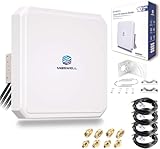
- Ultra-Wide Compatibility: Enhance your signal stability with Maswell’s patented 4x4 MIMO cross-polarization design. Covering an expansive frequency range of 600-8000 MHz, it supports 5G NR, WiFi 6E/7, and global LTE standards. Compatible with all global carriers, including Verizon, AT&T, and T-Mobile, as well as EE, Vodafone, O2, and Deutsche Telekom etc., it is the ultimate signal enhancement solution for hotspots, routers, and industrial gateways
- Versatile Deployment & Pro-Installation Support: Fit for residential homes, RVs, and IoT terminals. For optimal results, we recommend testing RSRP at multiple outdoor locations (avoiding points ≤ -120dBm) and enabling "External Antenna Mode" on your router settings after connection. Each kit includes a full set of robust mounting hardware (brackets and screws) and is backed by Maswell’s professional 24/5 technical support
- High-Gain Performance: This high-performance Maswell 5G panel antenna delivers a powerful 10dBi maximum gain while maintaining a standard 60-80° directional beamwidth. It combines the superior signal strength of a directional antenna with the installation ease of an omni-directional model; simply point it generally toward the signal tower to achieve peak data speeds and reliable connectivity in challenging coverage areas
- Premium Low-Loss Cables & Universal Adapters: Quality defines performance—avoid high-loss RG58 or RG174 cables. This kit includes four 6.5ft (2m) professional-grade, low-loss LMR240-equivalent cables. To ensure a seamless connection with nearly any network device, we provide three interface options (SMA-Male, TS9, and RP-SMA adapters), making it widely compatible with a variety of 4-port cellular and WiFi devices
- IP66 Rated Durability & All-Weather Protection: Engineered for the harshest environments, the housing is crafted from UV-resistant ASA material. Dual-certified to IP66 dustproof and waterproof standards (China & Europe), it ensures stable performance during extreme heat, heavy rain, or snow. Equipped with heavy-duty brackets and weighing a solid 4.4 lbs (2kg), the structure is built to withstand high winds and long-term outdoor exposure
| Network layer | Coverage role | Frequency and range context | Antenna approach |
|---|---|---|---|
| Macro cell | Broader-area coverage | Depends on the deployed frequency and site design; 5G is not limited to mmWave. | May use conventional sector antennas or multi-element massive-MIMO and active arrays. |
| Small cell | Localized coverage that can complement macro coverage | ITU-T highlights use in some mmWave deployments, where connection range is short; clustered small cells can support continuous connection. | Depends on the radio equipment and deployment; no single antenna configuration is established for all small cells. |
ITU-T’s discussion of small cells concerns particular higher-frequency deployments. It does not mean every 5G network uses mmWave or requires a dense small-cell layout.
What engineering trade-offs come with active antenna systems?
Active antenna systems integrate antenna arrays with radio components and processing. ITU-T identifies higher beam-forming gain as a benefit that can help address the greater path loss associated with higher frequencies. Integration also brings engineering work: ITU-T K.Sup.26 addresses electromagnetic compatibility requirements and test methods for 5G active antenna system base stations.
Rank #4

- COMBO 7-in-1 ANTENNA - 4x 5G LTE MIMO, 2x Wi-Fi and 1x GNSS Antenna; Screw mount; Cable length 3 meters (10ft).
- IP67 WATERPROOF- Outdoor Roof Type, water and dust-resistant for ultimate outdoor reliability.
- GLOBAL 5G LTE RANGE - Supports 4x4 MIMO; Works in most countries in the world with frequency range: 617~960MHz/ 1710~2690MHz/ 2900~3800MHz; 4x SMA Male Connector.
- DUAL BAND Wi-Fi - Supports 2x2 MIMO; Frequency range: 2400~2483.5MHz/ 4900~5925MHz; 2x RP-SMA Male Connector.
- GNSS ANTENNA - Frequency range: 1561.098~1575.42MHz; 1x SMA Male Connector.
These considerations are part of designing and assessing network infrastructure. They do not establish one best array for every frequency, site, or operator.
Do these 3 things before closing this tab:
1Repair Windows errors before they cause bigger problems2Fix the driver behind crashes, sound loss and screen glitches3Clear out junk files and repair common Windows errorsHow are 5G antenna exposure and compliance assessed?
ITU-T publications treat radiofrequency electromagnetic-field exposure and compliance as assessment topics. Supplement 16 discusses exposure assessment for 5G networks; K.153 provides guidance on determining compliance boundaries, or exclusion zones, for radio transmitter installations. These are engineering and compliance matters, not evidence for a blanket claim that exposure is either harmless in every circumstance or inherently dangerous.
Best Value
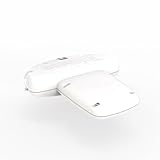
- Premium Amplified UHF/ High VHF Reception – Attic/Outdoor directional antenna optimized for High VHF and UHF broadcast TV signals with a built-in preamplifier to boost weak signals without external components.
- TForce Intelligent Gain Control – Proprietary BOSS-Tech system automatically adjusts amplification independently by band (29 dBi High VHF, 34 dBi UHF) to maintain a stable output even when signal conditions fluctuate, preventing both weak reception and overload.
- Integrated FM / LTE / 4G / 5G Filtering – Built-in filtering helps reduce interference from nearby cellular and FM radio sources for clearer TV reception.
- Directional UHF Yagi-Style Design – 7-element UHF Microstrip array plus High VHF elements focuses reception toward broadcast towers to improve signal quality and reduce noise.
- Weather-Resistant Radome Housing – High-quality ABS plastic radome with Zamak mounting components shields internal electronics from rain, humidity, and outdoor exposure. No assembly required.
Can you add a “5G antenna” to improve your phone’s carrier signal?
This discussion is about carrier network infrastructure, not a consumer accessory recommendation. The cited ITU-T material does not establish that a generic household antenna can be bought or installed to improve a phone’s connection to a carrier’s 5G network. Antenna systems are designed for specific network equipment and deployment conditions; a product should not be assumed compatible or effective based on a 5G label alone.
Quick Recap
Product prices and availability are accurate as of the date/time indicated and are subject to change. Any price and availability information displayed on Amazon at the time of purchase will apply.

