
iTechGuides is reader-supported. When you buy through links on our site, we may earn an affiliate commission. As an Amazon Associate I earn from qualifying purchases. Learn more
Eight gigabytes of system RAM can launch some PC games, but only at the level publishers label as the minimum. For modern gaming it is a tight starting point, not a reliable target. Current PC requirements from Epic Games and Activision, and Intel’s general PC building guidance, all place 16GB as the recommended or practical level, and one demanding Activision configuration asks for 32GB.
Minimum and recommended are different answers
Most game listings give at least two tiers of system memory. The minimum is the lowest configuration the publisher says can start the game. The recommended tier describes what it expects for a smoother experience at a stated target, such as a frame rate and graphics preset. Meeting the minimum tells you the game may run. It does not tell you how well it will run.
Two publishers’ PC requirement pages, checked in October 2026, show this split:
Windows Errors? Fix Them Before They Spread
Repair common Windows errors and clear accumulated junk for a smoother, more stable PC - no reinstall needed.Free scan · no reinstallOutdated Drivers Are Slowing You Down
One free scan finds every outdated or missing driver and matches the right update for your exact hardware.Free scan · exact hardware match| Game (PC) | Minimum system RAM | Recommended system RAM | Higher tier |
|---|---|---|---|
| Fortnite (Epic Games) | 8GB | 16GB or higher | Not stated as a separate tier |
| Call of Duty: Modern Warfare 4, desktop (Activision) | 8GB | 16GB, for 90 FPS multiplayer on High settings | 32GB, for the ray-tracing specification |
Activision states that its Modern Warfare 4 specifications are valid for launch and may be updated, so check the live page before you buy or install.
#1 Best Overall

- Capacity: 16GB(2 x 8GB)
- Tested Frequency Profile 1: PC5-48000 (6000MT/s)
- Tested Timings: 36-46-46-110
- Feature Overclock: XMP 3.0 & EXPO overclocking supported
- On-Die ECC
Other publisher listings show the same spread
PlayStation’s PC support listings
PlayStation’s PC support page lists 8GB minimums for some titles and a 16GB minimum for Horizon Zero Dawn Remastered. The same memory level can therefore mean different things from one game to the next, which is why a single answer for “gaming” does not hold.
Why 16GB is the usual baseline
Intel’s guidance
Intel’s PC building guide says, “For modern gaming, you’ll need at least 16GB of RAM.” It adds that simultaneous processes such as streaming or heavy modding call for more. This is general vendor guidance. It does not guarantee that a particular game needs exactly 16GB, and it does not promise a fixed frame-rate gain from adding memory.
Rank #2
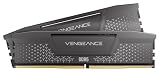
- Disclaimer: Maximum Speed requires overclocking/PC BIOS adjustments. Maximum speed and performance depend on system components, including motherboard and CPU
- AMD EXPO & Intel XMP 3.0 Compatible Only: Dual memory profiles allow you to easily select optimized settings for your platform, whether you’re running an AMD or Intel processor
- Onboard Voltage Regulation: Enables easier, more finely-tuned, and more stable overclocking through CORSAIR iCUE software than previous generation motherboard control
- Maximum Bandwidth and Tight Response Times: Optimized for peak performance on the latest AMD and Intel DDR5 motherboards
- Hand-Sorted, Tightly-Screened Memory Chips: Ensure consistent high-frequency performance with aggressive timing options
Microsoft’s general memory advice
Microsoft’s memory support article says more memory lets a device handle more at once without slowdowns. It recommends 8GB for keeping a general-purpose device running well over the long term, and 16GB or more for high-performance work. That is computing advice, not a gaming requirement, but it points the same way: 8GB is a floor, not headroom.
The Tool Desk
Outbyte PC Repair FREEClear out junk files and repair common Windows errorsFree Scan →Outbyte Driver Updater FREEScan for outdated or missing drivers - takes under a minuteDriver Scan →Where 8GB still works
An 8GB system can run titles that list 8GB as their minimum, particularly older or lighter games, at lower settings, and when little else is running. Whether a specific game is playable on your hardware depends on its settings, your processor and graphics card, and what runs in the background. The publisher listings establish minimums; they do not provide frame-rate results for 8GB systems. For that, look for recent benchmark coverage of the exact game on hardware like yours.
Rank #3

- Disclaimer: Maximum Speed requires overclocking/PC BIOS adjustments. Maximum speed and performance depend on system components, including motherboard and CPU
- AMD EXPO & Intel XMP 3.0 Compatible Only: Dual memory profiles allow you to easily select optimized settings for your platform, whether you’re running an AMD or Intel processor
- Dynamic RGB Lighting: Individually addressable RGB lighting delivers vibrant effects through a sleek, understated panoramic diffuser
- Onboard Voltage Regulation: Onboard voltage regulation for reliable power at high frequencies
- Maximum Bandwidth and Tight Response Times: Optimized for peak performance on the latest AMD and Intel DDR5 motherboards
Three memory numbers that get confused
- System RAM. The memory installed in your motherboard or laptop. The minimum and recommended lines in game requirements refer to this figure.
- Video memory (VRAM). The memory on your graphics card. Activision lists it as a separate requirement from RAM. An 8GB VRAM figure is not an 8GB system RAM recommendation.
- Windows 11 minimum. Microsoft’s Windows 11 minimum hardware requirement is 4GB of RAM. It describes whether the operating system installs, not whether a PC is suited to gaming.
When 8GB is most likely to fall short
The pressure usually comes from what runs alongside the game: streaming or recording while you play, many browser tabs, voice chat and overlay tools, and mods. Intel’s guidance names these simultaneous processes as the reason to go beyond the basic figure.
To check your own usage, press Ctrl+Shift+Esc, open the Performance tab, and select Memory while the game and your usual apps are running. If memory use sits close to the installed capacity, extra RAM is a likely fix. If the game stutters while memory use stays well below capacity, the limit is more likely the processor, graphics card, storage, or temperatures, and more RAM will not change that.
Rank #4

- Disclaimer: Maximum Speed requires overclocking/PC BIOS adjustments. Maximum speed and performance depend on system components, including motherboard and CPU
- AMD EXPO & Intel XMP 3.0 Compatible Only: Dual memory profiles allow you to easily select optimized settings for your platform, whether you’re running an AMD or Intel processor
- Dynamic RGB Lighting: Individually addressable RGB lighting delivers vibrant effects through a sleek, understated panoramic diffuser
- Onboard Voltage Regulation: Onboard voltage regulation for reliable power at high frequencies
- Maximum Bandwidth and Tight Response Times: Optimized for peak performance on the latest AMD and Intel DDR5 motherboards
Checking whether an upgrade is practical
- Note the game’s minimum and recommended RAM on the publisher’s current requirements page, along with the resolution and frame rate it targets.
- Open Task Manager (Ctrl+Shift+Esc), select Performance, then Memory. Read the installed capacity, the number of slots used, and the form factor, which indicates the module type.
- Look up your motherboard or laptop manufacturer’s memory support page for the maximum capacity, the supported memory generation (such as DDR4 or DDR5), and the number of slots.
- Confirm whether the memory is soldered to the board. Soldered memory cannot be expanded, so a 16GB target on that machine means a different computer or a memory-limited compromise.
- Buy a kit that matches the supported generation, speed, and module count. If one 8GB module sits in a dual-channel board with a free slot, a matching second module is the usual route to 16GB. Matching modules generally perform best in dual-channel setups. Use the manufacturer’s memory configuration tool if one is offered, because compatibility is specific to each device.
A RAM upgrade addresses capacity. It does not change the processor, graphics card, or storage speed, so check those too if performance remains weak after the upgrade.
Quick Recap
Product prices and availability are accurate as of the date/time indicated and are subject to change. Any price and availability information displayed on Amazon at the time of purchase will apply.

