
Quick wins for a faster PC:
Scan for outdated or missing drivers - takes under a minuteDriver Scan →Clear out junk files and repair common Windows errorsFree Scan →iTechGuides is reader-supported. When you buy through links on our site, we may earn an affiliate commission. As an Amazon Associate I earn from qualifying purchases. Learn more
The iPhone 2G is Apple’s first-generation iPhone, introduced on January 9, 2007, and released in the United States on June 29, 2007. “2G” describes its GSM cellular technology, not a second iPhone generation. In 2026, the iPhone 2G is mainly a collector’s item or offline media device, not a dependable everyday phone.
Apple originally marketed the device simply as iPhone. The terms “iPhone 2G,” “original iPhone,” and “iPhone 1” were adopted later to distinguish the first model from the iPhone 3G and newer generations.
Key takeaways
- The iPhone 2G is the first-generation iPhone, not the second iPhone model; “2G” refers to GSM, GPRS, and EDGE cellular technology.
- Apple introduced the iPhone on January 9, 2007, launched it in the United States on June 29, 2007, and initially priced the 4GB and 8GB versions at $499 and $599.
- The original iPhone has a 3.5-inch multitouch display, a 2-megapixel rear camera, Wi-Fi, Bluetooth 2.0 EDR, a 30-pin connector, and no GPS, 3G, LTE, 5G, or front camera.
- The original iPhone’s commonly documented final software version is iPhone OS 3.1.3, so modern apps, websites, authentication systems, and Apple services should not be expected to work.
- Whether an iPhone 2G can make calls in 2026 depends on the country, carrier, remaining GSM network coverage, SIM, lock status, and the condition of the phone’s radio and battery.
- An iPhone 2G makes sense as a historical collectible or display piece, but it is a poor choice for daily use, emergency communication, navigation, streaming, or modern apps.
What is the iPhone 2G?
The iPhone 2G is the first-generation iPhone released by Apple in 2007. The “2G” name refers to the phone’s second-generation GSM cellular connection, including GPRS and EDGE data; the device itself is the first iPhone generation.
Apple’s original January 9, 2007 iPhone announcement presented the product as three devices combined into one: a mobile phone, a widescreen iPod, and an Internet communications device.
#1 Best Overall

- This phone is unlocked and compatible with any carrier of choice on GSM and CDMA networks (e.g. AT&T, T-Mobile, Sprint, Verizon, US Cellular, Cricket, Metro, Tracfone, Mint Mobile, etc.).
- Tested for battery health and guaranteed to have a minimum battery capacity of 80%.
- Successfully passed a full diagnostic test which ensures like-new functionality and removal of any prior-user personal information.
- The device does not come with headphones or a SIM card. It does include a generic (Mfi certified) charging cable.
- Inspected and guaranteed to have minimal cosmetic damage, which is not noticeable when the device is held at arm's length.
The original iPhone is commonly identified by model number A1203. Buyers should verify the model from the device and its markings instead of trusting a listing title alone, because old phones can have replacement housings, mismatched boxes, repaired parts, or incorrect seller descriptions.
Why is it called the iPhone 2G?
The iPhone 2G is called “2G” because it uses second-generation GSM cellular technology. The name does not mean that Apple released an earlier “iPhone 1” and then made this the second iPhone.
| Term | Meaning |
|---|---|
| iPhone | Apple’s official name for the original device at launch |
| iPhone 2G | Later shorthand referring to its GSM/GPRS/EDGE cellular technology |
| Original iPhone | Another name for Apple’s first-generation iPhone |
| iPhone 3G | The second iPhone generation, released in 2008 with 3G and GPS |
Why did the original iPhone matter?
The original iPhone mattered because Apple combined a finger-driven multitouch interface, a smartphone operating system, a web browser, an iPod-style media player, and a phone into one relatively simple product. Touchscreens existed before 2007, but the iPhone tied capacitive multitouch gestures to software designed around direct manipulation.
Apple’s launch material emphasized gestures such as flicking through lists and pinching to zoom. The interface also replaced the physical numeric keypad with a dynamic on-screen keyboard and reduced the number of physical controls to a Home button, sleep/wake button, volume controls, and a mute switch.
How did the iPhone’s multitouch interface change phones?
The iPhone’s capacitive display let users control content directly with their fingers. Scrolling, zooming, typing, selecting items, and moving around web pages were handled by software gestures rather than a stylus, trackball, or physical keyboard.
The historical significance was the combination of hardware and software rather than the mere presence of a touchscreen. Apple designed the browser, photo viewer, maps interface, music player, and other built-in applications around touch interaction.
What three products did Apple say the iPhone combined?
Apple described the original iPhone as a mobile phone, a widescreen iPod, and an Internet communications device. The three-part description explained the product’s intended role more accurately than calling it only a phone.
- Mobile phone: Voice calls, contacts, visual voicemail, and text messaging.
- Widescreen iPod: Locally synchronized music and video on a 3.5-inch display.
- Internet device: Safari web browsing, email, Google Maps, Wi-Fi, and EDGE data.
What were Safari and Visual Voicemail like?
The original iPhone included a mobile version of Safari that could display ordinary web pages, zoom into page sections, and scroll with touch gestures. Apple described the browser as “desktop-class” in its launch messaging, but that was a launch-era positioning claim, not a statement that the browser has modern desktop-browser security or compatibility.
Visual Voicemail presented messages in a list so users could choose which message to hear instead of calling voicemail and listening sequentially. Apple described Visual Voicemail as an industry first in its launch announcement, but the feature depended on carrier support and did not necessarily work identically on every network or in every country.
When was the iPhone 2G released, and how much did it cost?
Apple introduced the original iPhone on January 9, 2007, and released it in the United States on June 29, 2007. The phone initially required a carrier service plan in the United States.
| Date | Event |
|---|---|
| January 9, 2007 | Apple introduced the iPhone at Macworld San Francisco. |
| June 29, 2007 | The original iPhone went on sale in the United States. |
| September 5, 2007 | Apple discontinued the 4GB model and reduced the 8GB model from $599 to $399. |
| 2007–2008 | Apple expanded iPhone availability beyond the United States. |
| July 2008 | The iPhone 3G replaced the original iPhone in Apple’s lineup. |
| 2010 | The original iPhone reached its commonly documented final broadly available software version, iPhone OS 3.1.3. |
According to Apple’s January 9, 2007 announcement, launch pricing was $499 for 4GB and $599 for 8GB. According to Apple’s September 5, 2007 price announcement, Apple later discontinued the 4GB version and set the 8GB model at $399 for the holiday season.
What’s actually slowing this PC down?
Pick the symptom - the matching free tool is one click away.
Rank #2
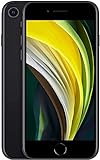
- This phone is unlocked and compatible with any carrier of choice on GSM and CDMA networks (e.g. AT&T, T-Mobile, Sprint, Verizon, US Cellular, Cricket, Metro, Tracfone, Mint Mobile, etc.).
- Please check with your carrier to verify compatibility.
- When you receive the phone, insert a SIM card from a compatible carrier. Then, turn it on, connect to Wi-Fi, and follow the on screen prompts to activate service.
- The device does not come with headphones or a SIM card. It does include a generic (Mfi certified) charging cable.
- Tested for battery health and guaranteed to have a minimum battery capacity of 80%.
The 4GB and 8GB configurations were the launch models. Later historical references identify a 16GB version, but readers should not describe 16GB as a launch-day configuration.
What are the iPhone 2G specifications?
The original iPhone combined a 3.5-inch widescreen multitouch display with quad-band GSM cellular connectivity, Wi-Fi, Bluetooth, and a 2-megapixel rear camera. The following table separates the principal hardware and software specifications from modern features the phone never had.
| Specification | Original iPhone detail |
|---|---|
| Model number | A1203 |
| Display | 3.5-inch widescreen multitouch display |
| Cellular network | Quad-band GSM |
| Mobile data | GPRS and EDGE |
| Wi-Fi | 802.11b/g |
| Bluetooth | Bluetooth 2.0 EDR |
| Rear camera | 2 megapixels |
| Front camera | None |
| Storage at launch | 4GB or 8GB |
| Later historical capacity | 16GB is listed in later references, not Apple’s launch announcement |
| Connector | Apple 30-pin connector |
| SIM | Full-size/mini-SIM-era GSM format |
| Sensors | Accelerometer, proximity sensor, and ambient-light sensor |
| Headphones | 3.5mm headphone jack |
| GPS | None |
| Operating system | iPhone OS, later renamed iOS; final commonly documented version was iPhone OS 3.1.3 |
| App Store | Not present at the original launch |
Apple’s launch announcement confirms the original iPhone’s 3.5-inch display, 2-megapixel camera, quad-band GSM radio, EDGE, Wi-Fi, Bluetooth 2.0 EDR, multitouch interface, and three built-in sensors. Apple’s support archive for the original iPhone preserves an iPhone User Guide for iOS 3.1, documenting the device’s early software era.
What features does the iPhone 2G lack?
The iPhone 2G lacks the cellular, camera, navigation, and security features that people normally expect from a modern smartphone.
Do these 3 things before closing this tab:
1Repair Windows errors before they cause bigger problems2Fix the driver behind crashes, sound loss and screen glitches3Clear out junk files and repair common Windows errors- No 3G, LTE, 5G, or VoLTE.
- No dedicated GPS receiver.
- No front-facing camera.
- No stock video recording capability.
- No removable battery.
- No expandable storage.
- No Lightning or USB-C connector.
- No modern biometric authentication.
- No current iOS support.
- No modern App Store compatibility.
The original iPhone could provide location-related features using Wi-Fi and cellular positioning, but the original iPhone did not contain the dedicated GPS hardware found in later iPhone models. Google Maps on the iPhone 2G therefore should not be treated as equivalent to navigation on a modern GPS-equipped iPhone.
What is the difference between the iPhone 2G and iPhone 3G?
The iPhone 2G is the first iPhone, while the iPhone 3G is the second iPhone generation. The iPhone 3G added faster 3G cellular data and GPS, making it substantially more useful as a connected phone.
| Category | iPhone 2G | iPhone 3G |
|---|---|---|
| Product generation | First iPhone generation | Second iPhone generation |
| Cellular data | GPRS and EDGE | 3G |
| GPS | No dedicated GPS | GPS added |
| App Store timing | Not included at launch; later software era introduced App Store support | Released alongside the App Store era |
| Back design | Aluminum body with black plastic section | Curved plastic back |
| Practical significance | Introduced Apple’s phone platform | Improved network speed and navigation capability |
The iPhone 3G was not simply a cosmetic revision. Its 3G radio and GPS addressed two of the original iPhone’s largest practical limitations. Neither model should be confused with current LTE- or 5G-capable phones.
What software can the iPhone 2G run?
The original iPhone shipped with iPhone OS 1.0 and later received major updates through the iPhone OS 3 era. The commonly documented final broadly available version is iPhone OS 3.1.3, and Apple’s archived documentation covers the device’s iOS 3.1 software period.
PC Slower Than It Used to Be?
A free scan shows the junk files, broken settings and background clutter dragging Windows down - then fixes them in one click.Free scan · Windows 10 & 11Crashes, No Sound, or Screen Glitches?
Random freezes, missing sound and display glitches usually trace back to one bad driver. Find and replace yours safely.Free scan · under a minuteThe original iPhone did not launch with the App Store. The App Store arrived during the later iPhone OS 2 era, but the device’s software ceiling means that current applications, modern websites, contemporary security certificates, and current Apple services should not be expected to work.
Restoration is also more complicated than connecting the phone to a current computer and selecting a normal update. Activation state, firmware compatibility, baseband behavior, legacy computer software, certificates, and device condition can all affect the result. A phone that boots normally, a phone stuck at activation, a passcode-locked phone, a carrier-locked phone, and a jailbroken phone are different problems.
Community restoration and jailbreaking tools may help enthusiasts experiment with historical firmware, but those tools are unofficial and can cause data loss, firmware incompatibility, baseband errors, unstable software, broken activation, and security exposure. Community reports about downgrading or modifying old iPhones should be treated as enthusiast experience, not Apple-approved instructions. Legacy-jailbreak community discussion illustrates why restoration outcomes should not be guaranteed.
Rank #3

- This phone is unlocked and compatible with any carrier of choice on GSM and CDMA networks (e.g. AT&T, T-Mobile, Sprint, Verizon, US Cellular, Cricket, Metro, Tracfone, Mint Mobile, etc.).
- Tested for battery health and guaranteed to have a minimum battery capacity of 80%.
- Successfully passed a full diagnostic test which ensures like-new functionality and removal of any prior-user personal information.
- The device does not come with headphones or a SIM card. It does include a generic (Mfi certified) charging cable.
- Inspected and guaranteed to have minimal cosmetic damage, which is not noticeable when the device is held at arm's length.
Can the iPhone 2G still work in 2026?
The iPhone 2G can still perform some offline functions in 2026, but cellular service is conditional and modern online use is severely limited. The practical answer depends on the phone’s country, carrier, SIM, lock status, battery, radio, and software state.
Free tools Windows power users keep installed
One-click scans. No signup required.
Can the iPhone 2G still make calls?
The iPhone 2G can make calls only where a carrier still operates compatible GSM service and permits the device to connect. The phone cannot connect to LTE or 5G by itself and cannot use VoLTE.
Before buying or relying on an original iPhone, check all of the following with the intended carrier:
- Whether compatible 2G GSM service still operates in the specific location.
- Whether the carrier allows the device and its legacy technology on the network.
- Whether the phone is carrier-unlocked.
- Whether the SIM and account work with the phone’s older GSM format and network requirements.
- Whether the phone’s supported frequency bands match the local network.
- Whether the phone is blacklisted or has a defective radio or antenna.
An “unlocked” label is not enough. Back Market’s carrier-compatibility guidance explains that unlocked status and network compatibility are separate questions. An unlocked iPhone 2G remains a GSM/EDGE-only phone.
Will an iPhone 2G work in the United States?
The original iPhone is not a viable mainstream U.S. phone in 2026. U.S. legacy GSM availability has changed over time, and compatibility varies by carrier and location; therefore, no blanket “yes” or “no” is safe without checking a specific carrier’s current policy.
The Tool Desk
Outbyte Driver Updater FREEScan for outdated or missing drivers - takes under a minuteDriver Scan →Outbyte PC Repair FREERepair Windows errors before they cause bigger problemsFix Now →Verizon and other CDMA-oriented networks were not suitable for the original GSM-only iPhone. A claimed working setup should be verified with the intended carrier, location, SIM, and account before purchase. Do not buy an iPhone 2G as a dependable U.S. emergency phone.
Can the iPhone 2G connect to Wi-Fi?
A functioning iPhone 2G can connect to compatible Wi-Fi independently of cellular service, but Wi-Fi does not turn the phone into a modern cellular device. Old security protocols, certificates, browser limitations, failed servers, and obsolete applications can still prevent useful Internet access.
Can the iPhone 2G still be used as an iPod?
The iPhone 2G can potentially play locally synchronized music and display locally stored photographs, making it useful as an iPod-like offline device. The experience is not plug-and-play in 2026 because the 30-pin cable, a compatible legacy synchronization workflow, a functioning battery, and suitable computer software may be required.
Streaming services should not be expected to work. The 4GB, 8GB, and later 16GB storage capacities are also extremely small by current standards.
Recommended Free Tools
Can it browse the modern web or run WhatsApp?
The iPhone 2G cannot reliably browse the modern web or run current applications such as WhatsApp. Its final software era predates current app requirements, security standards, authentication systems, and many of the servers that modern applications depend on.
Basic built-in applications may open, and historical software may be interesting to experiment with, but modern messaging, two-factor authentication, streaming, navigation, banking, and social-media apps should be considered unavailable.
Rank #4

- 6.1" Super Retina XDR display. 5G Superfast downloads, high?quality streaming
- Cinematic mode in 1080p at 30 fps. Dolby Vision HDR video recording up to 4K at 60 fps. 2X Optical zoom range
- A15 Bionic chip. New 6-core CPU with 2 performance and 4 efficiency cores. New 4-core GPU. New 16-core Neural Engine
- Up to 19 hours video playback. Face ID. Ceramic Shield front. Aerospace-grade aluminum
Can the iPhone 2G make emergency calls?
The iPhone 2G should not be treated as a dependable emergency phone. Emergency calling depends on a compatible active network, local rules, carrier support, radio condition, battery condition, and the phone’s ability to connect; those conditions cannot be assumed for a 2007 GSM/EDGE device.
What should you check before buying an iPhone 2G?
Buy an original iPhone as a collectible first and a phone second. The following checklist helps separate an authentic, usable display piece from a damaged, locked, modified, or inaccurately described listing.
- Confirm the model. Look for the first-generation A1203 device, not an iPhone 3G, iPhone 3GS, clone, or replacement-housing build.
- Confirm storage. Verify whether the phone is 4GB, 8GB, or a claimed later 16GB model. Do not assume every capacity was available at launch.
- Compare identifiers. Request clear photographs of the serial number and IMEI, and check that identifiers are consistent where possible.
- Check activation. Confirm that the phone boots past activation and is not stuck waiting for a previous owner or an unavailable legacy activation process.
- Assume the battery is aged. A 2007 battery may have severely reduced capacity even when the phone powers on.
- Inspect the display. Test for dead pixels, touchscreen dead zones, yellowing, cracks, and lifting caused by battery swelling.
- Inspect the housing. Look for dents, corrosion, replacement panels, mismatched serial labels, and wear inconsistent with the claimed condition.
- Test the controls. Check the Home button, Sleep/Wake button, volume controls, and mute switch.
- Test the ports and audio. Confirm that the 30-pin connector accepts a cable and charges, and test the microphone, earpiece, loudspeaker, camera, and 3.5mm headphone jack.
- Test Wi-Fi and Bluetooth. Wireless functionality is useful evidence of hardware condition, but it does not prove that cellular service will work.
- Check the carrier situation. Determine whether the phone is locked and whether the intended carrier supports the required GSM technology in the intended location.
- Evaluate accessories separately. A box, cable, or original-looking packaging can add collector interest but does not prove that the phone is authentic or functional.
- Prefer a meaningful return policy. Old batteries, radios, screens, and ports can fail after shipping or after extended use.
What does “unlocked” mean on an iPhone 2G?
“Unlocked” generally means the phone is not restricted to one carrier, but an unlocked iPhone 2G still supports only its original GSM-era cellular technologies. An unlocked label does not guarantee compatible network bands, an accepted SIM, current carrier support, a working radio, or service in a particular country.
Back Market’s explanation of unlocked phones that fail on a carrier is relevant to this distinction: carrier compatibility can fail even when a device is advertised as unlocked.
How can you identify a genuine original iPhone?
Check the model number, back-cover markings, serial and IMEI consistency, physical design, connector, buttons, and software information. A replacement back cover or screen can make an old phone appear more valuable than it is.
Collectors should inspect the port and screw condition, wear around the buttons, the relationship between the box and device identifiers, and whether the housing appears excessively glossy, newly printed, or incorrectly labeled. Originality, provenance, condition, and packaging can matter more than a seller’s use of the word “rare.”
Is an iPhone 2G valuable in 2026?
An iPhone 2G’s value depends on condition, originality, storage capacity, packaging, accessories, provenance, software history, battery condition, and whether the phone works. There is no single reliable 2026 value for every original iPhone.
Active marketplace listings show seller expectations, not completed-sale prices. The eBay category for Apple 2G and unlocked phones includes listings described as unlocked GSM, AT&T-only, working, damaged, and refurbished, but listing condition and functionality vary substantially. Compare completed sales for the same storage capacity and condition instead of treating an active asking price as market value.
| Phone condition | Likely buyer interest | What matters most |
|---|---|---|
| Sealed or unusually well-preserved | Collectors and Apple-history enthusiasts | Seal authenticity, provenance, packaging, storage capacity, and housing condition |
| Clean, working, original unit | Collectors, display buyers, and hobbyists | Original parts, battery safety, activation status, accessories, and return policy |
| Worn but functional unit | Experimenters and nostalgia buyers | Price, working screen, ports, buttons, battery, and realistic offline expectations |
| Locked or nonfunctional unit | Repairers and parts buyers | Housing, screen, logic board, originality, and repair feasibility |
| Heavily damaged or replacement-shell unit | Usually limited collector interest | Parts value rather than “rare” marketing claims |
An unopened iPhone 2G may attract collector interest, but “unopened” does not automatically establish a high value. Packaging can be mismatched, seals can be altered, and asking prices can exceed actual completed-sale prices.
Who should buy an iPhone 2G?
The right buyer is someone who values the device as an object of technology history and accepts that cellular and online functions may not work. The wrong buyer is someone seeking a cheap, reliable modern phone.
| Buyer goal | Verdict | Reason |
|---|---|---|
| Apple-history collection | Consider it | The original iPhone is a significant Apple product and design artifact. |
| Museum, classroom, or design display | Consider it | The hardware demonstrates the transition to multitouch smartphone interfaces. |
| Nostalgia or hobby project | Consider it with caution | Offline music, photos, historical software, and hardware experimentation may still be enjoyable. |
| Daily phone | Do not buy it | GSM/EDGE limitations, obsolete software, battery age, and carrier uncertainty make it unreliable. |
| Emergency phone | Do not buy it | Compatible network service and emergency calling cannot be assumed. |
| Modern apps, maps, streaming, or authentication | Do not buy it | The software, security, radio, GPS, and storage limitations are fundamental. |
If the goal is an inexpensive working iPhone rather than a historical artifact, a newer LTE-capable refurbished model is a more practical direction. Back Market’s refurbished-phone marketplace is more relevant for comparing newer devices with clearer carrier and return expectations than for finding a genuine original iPhone 2G. AT&T’s certified pre-owned phone category likewise focuses on substantially newer devices rather than the original iPhone.
Best Value

- This phone is unlocked and compatible with any carrier of choice on GSM and CDMA networks (e.g. AT&T, T-Mobile, Sprint, Verizon, US Cellular, Cricket, Metro, Tracfone, Mint Mobile, etc.).
- Tested for battery health and guaranteed to have a minimum battery capacity of 80%.
- Successfully passed a full diagnostic test which ensures like-new functionality and removal of any prior-user personal information.
- The device does not come with headphones or a SIM card. It does include a generic (Mfi certified) charging cable.
- Inspected and guaranteed to have minimal cosmetic damage, which is not noticeable when the device is held at arm's length.
What should you do if the battery is swollen?
Do not charge, press, bend, or continue using an iPhone 2G with a visibly separating display or distorted housing. A lifted screen or warped back can indicate battery swelling.
Battery replacement requires opening a very old device and handling a potentially hazardous lithium-ion battery. Use a qualified repair technician or an experienced repairer with appropriate tools, safety procedures, a compatible replacement, and a clear understanding that replacement parts and repair quality vary.
What are the main iPhone 2G failure modes?
| Symptom | Likely possibilities | Practical response |
|---|---|---|
| No cellular service | 2G network shutdown, carrier restriction, incompatible SIM, wrong bands, blacklist, or failed radio | Check the specific carrier and location before blaming the unlock status; test hardware separately. |
| Phone stuck at activation | Changed activation systems, legacy software, certificates, connectivity, or device modification | Separate activation from passcode and carrier-lock problems; avoid assuming a simple restore will fix it. |
| Phone will not hold a charge | Aged or failed battery, charging port problem, cable failure, or board fault | Inspect for swelling and use a safe repair path rather than repeatedly charging a damaged device. |
| Screen lifting | Possible swollen battery | Stop charging and seek qualified repair. |
| Restore fails | Firmware mismatch, baseband issue, legacy computer incompatibility, or jailbreaking complication | Back up data when possible and treat community restoration tools as unofficial and risky. |
| Wi-Fi works but cellular does not | Wi-Fi is independent of the GSM radio; the cellular network may be unavailable or the radio may be defective | Do not treat Wi-Fi connectivity as proof of cellular compatibility. |
Can the iPhone 2G be restored to its original software?
Some enthusiasts attempt historical firmware restoration, downgrading, or jailbreaking, but success is not guaranteed. Early firmware compatibility, activation state, baseband behavior, production revision, computer software, and the phone’s condition can all affect the outcome.
Restoration can erase data or leave the phone unstable or unable to activate. Use community documentation only when the risks are acceptable and the phone is not needed for dependable communication. Apple’s archived documentation is useful for historical software information, but Apple does not provide a normal modern support path for restoring an iPhone 2G to current software.
Frequently Asked Questions
Is the iPhone 2G the first iPhone?
Yes. The iPhone 2G is Apple’s first-generation iPhone, introduced on January 9, 2007. “2G” refers to the phone’s GSM cellular technology, not its position as Apple’s second iPhone generation.
Does the iPhone 2G work with modern SIM cards?
Usually not without significant compatibility uncertainty. The iPhone 2G uses older GSM-era SIM technology and supports only GSM, GPRS, and EDGE, so a modern SIM may not work even if the phone is unlocked. Carrier policy, network availability, SIM format, and local frequency support must all be checked.
Does the iPhone 2G have GPS?
No. The original iPhone has no dedicated GPS receiver. Location features could use Wi-Fi and cellular positioning, but Google Maps on the iPhone 2G is not equivalent to navigation on a modern GPS-equipped iPhone.
Recommended Free Tools
Can the iPhone 2G use the App Store or WhatsApp?
The original iPhone did not launch with the App Store, and its final software era cannot run current App Store applications such as WhatsApp. Modern websites, authentication systems, streaming services, and Apple services should also not be expected to work.
Should you buy an iPhone 2G as a daily phone?
No. The iPhone 2G is a poor daily phone in 2026 because it lacks 3G, LTE, 5G, VoLTE, GPS, modern software, and reliable current-carrier compatibility. Buy one for collecting, display, nostalgia, or offline experimentation instead.
The Bottom Line
Bottom line: The iPhone 2G is historically important because it introduced Apple’s first iPhone and popularized a tightly integrated multitouch smartphone experience. In 2026, its strongest use is as a collectible, display object, or offline media and software-history project. Its GSM/EDGE radio, aged battery, obsolete software, lack of GPS, and uncertain carrier support make it unsuitable as a dependable everyday or emergency phone.
Quick Recap
Product prices and availability are accurate as of the date/time indicated and are subject to change. Any price and availability information displayed on Amazon at the time of purchase will apply.

