
iTechGuides is reader-supported. When you buy through links on our site, we may earn an affiliate commission. As an Amazon Associate I earn from qualifying purchases. Learn more
Intel’s iAPX 432 was a clean-sheet 32-bit architecture introduced in 1981, designed to put capabilities for managing complex software systems—such as objects, protection and multiprocessing—into the architecture itself. Gordon Moore later called it an “aggressive shot” at a new microprocessor and said its expanding feature set hurt performance. Intel pursued a more conventional 16-bit processor in parallel: the 8086 and its companion 8088. The 432’s story is therefore not just one of an elaborate instruction set; it is also a cautionary attempt to move more of the operating system’s and software’s work into hardware.
What was the Intel iAPX 432?
The iAPX 432 was Intel’s ambitious 32-bit architecture for building large, reliable software systems. Intel introduced it in 1981, according to the IT History Society’s historical entry, which describes it as the company’s first 32-bit microprocessor design and says Intel intended it to become a main product line for the 1980s. Those launch and product-line characterizations come from that secondary historical source.

Intel’s August 1981 Introduction to the iAPX 432 Architecture and its February 1984 iAPX 432 General Data Processor Architecture Reference Manual explain the project’s technical ambition: make the processor architecture do more than execute conventional instructions. The design aimed to support software organization, protection and system functions directly, rather than leaving all of that work to operating-system software.
Calling it a “32-bit CISC” captures only part of the story. The 432’s defining ambition was its architecture for objects, protected access and concurrent system activity—not simply a large or complex instruction set. “Gordon Moore’s gamble” is a useful description of the clean-sheet risk he later recalled, not a formal Intel project name or a claim that Moore designed the processor alone.
#1 Best Overall
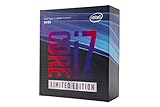
- Special Limited Edition
- Max Turbo Frequency 5.0 GHz
- 6 Cores/12 Threads
- Unlocked for overclocking
- Commemorative Packaging
What did Intel hope the architecture would do?
Represent software objects in hardware
Intel’s launch-era manual framed the 432 as a response to the rising cost and reliability problems of large software systems. It presented object-oriented methods and abstract data types as ways to organize software, and argued that conventional architectures did not support them efficiently without architectural assistance.
In this context, an object is a software entity that combines data with the permitted operations on that data. The 432’s architecture used system objects and controlled access to support that style of organization. Intel’s February 1984 reference manual describes the object model as a bridge between conventional hardware and high-level software concepts. These documents establish what Intel designed and claimed the system could support; they do not, by themselves, establish how well the implementation performed in practice.
Build protection into the system
The architecture also aimed to make protection a structural feature. Intel’s manuals describe protection domains and mechanisms for controlling access to objects. The intended benefit was to help isolate software components and restrict which operations they could perform, rather than relying exclusively on programming conventions or operating-system checks.
Do these 3 things before closing this tab:
1Fix the driver behind crashes, sound loss and screen glitches2Clear out junk files and repair common Windows errors3Scan for outdated or missing drivers - takes under a minuteRank #2

- Used Book in Good Condition
This was part of the same design choice as the object model: put more rules about software structure and access into the machine’s architecture. The trade-off was that software and hardware became more closely tied to the system’s particular model.
Support concurrency and multiprocessing
Intel’s documentation described support for process concurrency and tightly coupled multiprocessing, including system functions intended to be transparent to software. A contemporary 1983 paper by M. van Rumste, published in Microprocessing and Microprogramming, likewise presented the 432’s object-oriented approach alongside mechanisms for high-level languages, process communication and multiprocessor systems. Together, these sources show that the project’s goals were presented publicly at the time, not reconstructed only in later accounts.
The 1984 reference manual also specifies 32-bit integer and ordinal arithmetic and floating-point operations intended to support the proposed IEEE standard. Those specifications describe architectural provisions, not proof of a particular application-level speed or of successful adoption.
Why did the iAPX 432 disappoint?
Moore’s later oral-history interview is the clearest direct account in the sources here of how Intel’s executives viewed the project’s scope and outcome. Looking back, he described the 432 as “a very aggressive shot at a new microprocessor.” He recalled telling designers, after the 8080 was completed, that Intel had “one more chance to start over and do this right”—a chance to design without compatibility constraints.
Moore said the project accumulated so many advanced features that Intel had to remove elements related to performance to make a product. In his assessment, the resulting chips delivered the intended functionality but performed far below conventional microprocessors and failed to find a market. He summed up the overreach with the retrospective judgment, “So, we took way too big a step.” These are Moore’s recollections and interpretation, not an independently quantified engineering postmortem.
Moore also argued that the 432’s close integration of hardware and software fit poorly with a market moving toward open systems. That helps explain the strategic risk: the architecture’s special mechanisms could be valuable only if software, tools and customers embraced its model. The sources available here do not establish how much the commercial result was caused by implementation performance, system software, compiler quality, price or market timing individually.
Rank #4

- 6 Cores / 12 Threads
- 4.00 GHz up to 5.00 GHz Max Turbo Frequency / 12 MB Cache
- Compatible only with Motherboards based on Intel 300 Series Chipsets
- Intel Optane Memory Supported
- Intel UHD Graphics 630
How did the iAPX 432 differ from Intel’s 8086 and 8088?
Moore said Intel developed a conventional 16-bit processor in parallel with the 432, preferably compatible with the 8080. He connected that parallel effort to the 8086 and its companion 8088, the processors underlying the first IBM PC. This was a different product path, not a continuation of the iAPX 432 instruction architecture.
| Comparison | iAPX 432 | Parallel 8086/8088 path |
|---|---|---|
| Processor approach | 32-bit clean-sheet architecture, introduced in 1981 (IT History Society historical entry). | Conventional 16-bit processor effort developed alongside the 432 (Moore’s retrospective interview). |
| Software and system ambition | Architectural support for objects, protection, system functions and multiprocessing (Intel’s 1981 and 1984 manuals). | Moore described the effort as plain and ordinary by comparison; the cited interview does not attribute the 432’s object model to it. |
| Compatibility and continuity | Designed without the compatibility constraints Moore recalled for Intel’s earlier processors. | Moore said Intel preferred compatibility with the 8080. |
| Performance account | Moore later said the feature scope compromised performance; the sources here provide no independently verified benchmark comparison. | No directly comparable performance figure is established by the cited sources. |
| Historical outcome | Described as commercially unsuccessful by the IT History Society; Moore said it failed to reach a market. | Moore connected the 8086 and 8088 to the path underlying the first IBM PC. |
The contrast is not simply “advanced” versus “basic.” The 432 attempted to encode more of the software system’s organization and protection into the architecture. The parallel 16-bit effort retained a more familiar, compatibility-minded approach. Moore’s account suggests Intel needed both bets: one aimed at a new software future, and another at a conventional processor market.
The Tool Desk
Outbyte Driver Updater FREEFix the driver behind crashes, sound loss and screen glitchesFind Drivers →Outbyte PC Repair FREEClear out junk files and repair common Windows errorsFree Scan →Was the iAPX 432 Gordon Moore’s project?
Moore’s account supports describing the architecture as a gamble he encouraged: he recalled urging a fresh start after the 8080 and later acknowledged that the project went too far. But that does not make the 432 a formal “Gordon Moore project” or establish that he alone led its design. The technical manuals and contemporary paper describe an Intel architecture developed by the company; Moore’s interview is evidence of his retrospective view of the strategic decision and its outcome.
Best Value

- Get ultra-efficient with Intel Core Ultra desktop processors that improve both performance and efficiency so your PC can run cooler, quieter, and quicker.
- Core and Threads 24 cores (8 P-cores plus 16 E-cores) and 24 threads. Integrated Intel Graphics included
- Performance Hybrid Architecture Integrates two core microarchitectures, prioritizing and distributing workloads to optimize performance
- Performance Unlocked Up to 5.7 GHz unlocked. 40MB Cache
- Compatibility Compatible with Intel 800 series chipset-based motherboards
What can—and can’t—be concluded about its failure?
The broad conclusion is well supported: the iAPX 432 was a commercially unsuccessful product, and Moore later blamed its excessive feature scope and weak performance for failing to reach a market. Intel’s manuals show why the company thought the architecture mattered; Moore’s recollections explain why he believed the product fell short.
The sources cited here do not provide a verified sales total, market-share figure, development cost, controlled benchmark comparison or precise discontinuation date. They therefore support neither a numerical measure of the 432’s failure nor a single, independently established cause. The clearest lesson is narrower: sophisticated architectural support for software concepts did not guarantee a practical, competitive product.
Quick Recap
Product prices and availability are accurate as of the date/time indicated and are subject to change. Any price and availability information displayed on Amazon at the time of purchase will apply.
Free tools Windows power users keep installed
One-click scans. No signup required.

