
iTechGuides is reader-supported. When you buy through links on our site, we may earn an affiliate commission. As an Amazon Associate I earn from qualifying purchases. Learn more
Intel’s hiring strategy points to a push to grow its custom ASIC business for external customers. The clearest commercial move is the appointment of former Marvell executive Dean Jarnac to lead sales; alongside it, Intel has assigned engineering leadership to build custom silicon capabilities. These appointments show strategic intent—not proof that the business has already reached the revenue trajectory reported by CRN.
What Intel’s hiring strategy signals
Intel is building both sides of a custom-silicon business: the engineering capacity to design chips for outside customers and the sales organization to win and serve those customers. CRN reported on October 8, 2026, that Intel hired former Marvell executive Dean Jarnac to lead sales, linking his remit to stronger ASIC customer relationships and go-to-market execution. CRN’s report
Separately, Intel announced on September 8, 2025, that Srini Iyengar would lead horizontal engineering functions and build a custom silicon business for external customers. Intel said the business would serve “a broad range of external customers.” Intel’s leadership announcement
Free tools Windows power users keep installed
One-click scans. No signup required.
How the commercial and engineering moves fit together
| Strategic component | Intel’s move | What it is meant to address |
|---|---|---|
| Commercial execution | Dean Jarnac, a former Marvell executive, was hired to lead sales, according to CRN’s October 8, 2026 report. | Customer relationships and go-to-market execution for ASICs, as described by CRN. |
| Engineering capacity | Srini Iyengar was assigned horizontal engineering leadership and the task of building a custom silicon business, in Intel’s September 8, 2025 announcement. | Developing custom silicon for external customers. |
| Stated business objective | Intel’s 2025 Form 10-K says the company aims to develop ASICs and design services for a broad range of external customers. | Offering more than chip manufacturing alone: design services are also part of the stated objective. |
Taken together, the roles address a practical challenge in custom silicon: engineering expertise must be matched with customer discovery, commercial coordination, and delivery. Intel’s filings and announcements establish this as a company goal; they do not establish that every element is already operating at scale. Intel 2025 Form 10-K
#1 Best Overall

- The best way to get started with FPGAs: Using a simple board with projects that build on eachother, now anyone can get started with FPGA development!
- Fun peripherals available: With 4 LEDs, 4 push-buttons, 7-segment display, USB connector, a VGA connector, and a PMOD (for expansion) you can have dozens of fun projects available to you out of the box!
- Works with Verilog and VHDL: No matter which programming language you want to get started with, the Go Board will work for you!
- No extra device required: Simply plug the Go Board into a USB port and go! Getting started with FPGAs has never been easier.
- Works with all operating systems: Windows, Mac, Linux
Why ASICs matter to Intel’s stated plans
An application-specific integrated circuit (ASIC) is designed for a particular application or workload rather than serving as a general-purpose processor. Intel has described demand for purpose-built silicon in AI, networking, and cloud workloads. Those are areas where customers may seek designs tailored to their performance, power, integration, or system requirements. The earnings-call comments describe demand and strategic interest, not a guarantee of contracts or revenue. Intel earnings-call materials
For Intel, external ASIC design work is also distinct from simply selling its own standard products. A customer may engage a provider to help develop silicon suited to the customer’s needs; Intel’s stated plan includes design services as well as ASICs. Intel’s 2025 Form 10-K frames the objective as serving a broad range of external customers, but does not, in the materials cited here, quantify the opportunity by workload or customer.
Rank #2

- LGA 1150 Socket: The gaming motherboard supports Intel 4th gen processor (Core i7/i5/i3/Pentium/Celeron/E3 series) with LGA 1150 CPU socket, e.g. i5 4570, i5 4690k, i7 4790, i7 4790k, etc.
- Dual-channel DDR3: The Intel LGA1150 motherboard supports dual-channel DDR3 desktop memory, 1333/1600/1866MHz frequency type, the maximum memory capacity is 32GB (4*8GB)
- High-speed Interface: The computer motherboard supports M.2 protocol, NVME and SATA mode automatic switching. And it is equipped with 1 RJ45 gigabit network, 1 PCIe x16 3.0, 1 PCIe x1 2.0, 2 PCI, 3 SATA 3.0, and VGA, DVI, HDMI-compatible high-definition multimedia transmission interface
- Stable Power Supply: 4-phase power supply, all-solid-state capacitor design, fine workmanship, professional stability. And the LGA 1150 M-ATX placa madre is equipped with 24+8 pin power interface (at least 500w brand power supply)
- High Performance Motherboard: The Intel DDR3 motherboard is equipped with B85 chipset. And the 8-layer PCB design effectively extends its service life. Heat dissipation armor protection, with strong heat dissipation, to ensure stable bus communication
What the reported revenue figures do—and do not—show
CRN reported that Intel CFO David Zinsner said in July that the company’s ASIC business was approaching a $2 billion run rate and might reach $4 billion in the “not-too-distant future.” These are company-business figures attributed by CRN to Zinsner, not estimates of the overall ASIC market. CRN’s report does not clarify the exact time horizon for the $4 billion figure, and the official materials reviewed do not independently define or verify the figures’ basis. CRN’s report
A run rate is not the same as a reported full-year result: it generally expresses a current pace of business as an annualized figure. The reported numbers therefore should be read as management’s indication of scale and ambition, not as confirmation that Intel has already recorded $2 billion or achieved $4 billion in annual revenue. The hiring news reinforces the strategic direction, but does not by itself demonstrate that the figures will be reached.
Rank #3

- [Alder Lake-N N100 X86 CPU Processor] youyeetoo K1 x86 Single Board Computer uses the latest Alder Lake-N N100 CPU(4 cores, 4 threads / 3.4 GHz Turbo Boost), base speed of 750Mhz with a burst speed up to 3.4GHz. Ideal for AI IoT Edge computing, industrial control device, industrial Gateway, Embedded Development, office work and home entertainment device and so on, which is more convenient than traditional sbc.
- [Large Capacity Memory & Storage] youyeetoo K1 x86 Single Board Computer SBC is prebuilt with 4GB/8GB/16GB LPDDR5 RAM, 0GB/64GB/128GB/256GB eMMC. You can optional external PCIe 3.0 M.2 2280 NVMe SSD or SATA3.0 SSD Hard Drive. Youyeetoo K1 x86 sbc boots up in seconds, work on multiple browser tabs, software applications and quickly transfers files.
- [Core Board Independent Operation] youyeetoo K1 x86 Alder Lake-N N100 CPU Core Board measures only 82×71 mm(card size), integrating power, display, and communication interfaces, it can operate independently without a baseboard. It can connect directly to peripherals via an adapter board, or achieve dual network ports, multiple USB ports, M.2 SSD expansion, and other functions through an extended baseboard, meeting different size and functional requirements.
- [Rich Interface Expand] youyeetoo K1 x86 Windows 10 11 Single Board Computer is equipped with USB 3.0*2, USB2.0*2, HDMI(4K 60Hz)×2, MIPl/eDP multi-display x1. 3.5mm Audio Jack. Supports WiFi 6 & BT 5.2, 2x Gigabit Ethernet RJ45 network connectivity. This Mini PC supports multiple device connection and can be used with servers, monitoring equipment, office equipment, displays, projectors, televisions, etc.
- [Industrial-Grade Expansion Capabilities] youyeetoo K1 x86 single board computer features extensive interface options and powerful industrial-grade expansion capabilities. In addition, it offers 12 types of IoT industrial interfaces such as GPIO, I2C, SPI, MIPI,USB SPK, PWM and UART, which can directly connect to and control various hardware devices like lidar sensors and servos.
How to judge whether the strategy is working
The appointments and stated objectives show investment in the ingredients of an external custom-silicon business. Evidence of execution would require more than leadership announcements or broad demand statements. Relevant indicators include:
- Named customer engagements or design wins, with clarity about whether they are agreements, active projects, or products in production.
- Reported ASIC and design-services revenue with a clear definition, reporting period, and indication of whether growth is recurring.
- Evidence that engineering work is moving from design into customer delivery and production, rather than remaining a stated capability.
- Updates on the business’s workload focus and customer base that distinguish Intel’s own products from services delivered to external customers.
The available official statements establish Intel’s intended direction and the workloads it says are driving interest. They do not, on their own, establish the results of the hiring strategy.
Quick Recap
Best Value

- Processor Socket: LGA1155 Socket; Compatible Processors: Core i5, Core i3, Core i7
- Memory: Max Supported Memory - 32 GB; Supported RAM Technology - DDR3 SDRAM; Supported RAM Speed - 1333 MHz, 1066 MHz; Supported RAM Integrity Check - Non-ECC; Supported RAM (Registered or Buffered) - Unbuffered; RAM Features - Dual channel memory architecture
- Audio: HD Audio (8-channel) Realtek ALC888S High Definition Audio
- LAN: Network Controller - Intel 82579LM; Network Interfaces - Gigabit Ethernet
- Storage Interfaces: Serial ATA-300 - connector(s): 2 x 7pin Serial ATA - 2 device(s) - RAID 0 / RAID 1 / RAID 10 / RAID 5 ¦ Serial ATA-600 - connector(s): 2 x 7pin Serial ATA - 2 device(s) - RAID 0 / RAID 1 / RAID 10 / RAID 5
Rank #4
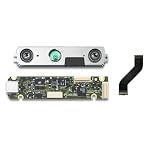
- Depth Field of View (FOV): 87° x 58°
- Depth Stream Output Resolution: Up to 1280 x 720
- Depth Stream Output Frame Rate: Up to 90 fps
- Minimum Depth Distance (Min-Z): 0.1m
- Sensor Shutter Type: Global Shutter
Product prices and availability are accurate as of the date/time indicated and are subject to change. Any price and availability information displayed on Amazon at the time of purchase will apply.
Quick wins for a faster PC:
Scan for outdated or missing drivers - takes under a minuteDriver Scan →Clear out junk files and repair common Windows errorsFree Scan →Fix the driver behind crashes, sound loss and screen glitchesFind Drivers →
