
iTechGuides is reader-supported. When you buy through links on our site, we may earn an affiliate commission. As an Amazon Associate I earn from qualifying purchases. Learn more
An early Geekbench 5 submission for Intel’s 56-core Xeon w9-3495X scored 1,284 in single-core and 36,990 in multi-core testing. Those figures came from a pre-launch Supermicro system, not a controlled retail review—and the submission displayed 56 threads even though Intel’s final specification lists 112. Treat it as an early data point, not a definitive measure of the processor’s performance.
What the early Xeon w9-3495X benchmark reported
HotHardware reported on January 26, 2023, that a Geekbench 5 result for the w9-3495X had appeared in the benchmark database. The submission identified a Supermicro Super Server with an X13SWA-TF motherboard and recorded 1,284 single-core points and 36,990 multi-core points. It showed a 1.9 GHz base frequency and a maximum frequency of 4.6 GHz. HotHardware’s report noted both the unusually low single-core result and the missing Hyper-Threading indication.
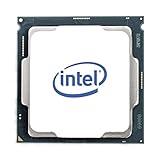


KitGuru’s January 27, 2023 coverage described the same early benchmark context: a Supermicro X13SWA-TF system with 128 GB of DDR5-4800 memory, reported as having 56 cores and 56 threads. That is useful context about the system and the thread-count discrepancy, but it is not a second independent, controlled review. KitGuru’s coverage likewise concerns the early submission.
Recommended Free Tools
Why the thread count changes how to read the score
Intel’s product specification lists the w9-3495X with 56 cores and 112 threads, while the early Geekbench entry was reported as 56 cores and 56 threads. That conflict leaves uncertainty about whether the sample, firmware, operating system, or benchmark system exposed all expected threads. The submission does not establish how a fully configured production system would score.
#1 Best Overall
For that reason, the multi-core result should not be read as a settled ceiling or a reliable prediction for every workstation workload. Nor does a single-core score from one early sample establish typical single-thread performance. A Geekbench submission measures a particular run and configuration; it does not by itself predict rendering, compiling, simulation, gaming, or energy efficiency.
Geekbench 5 and Geekbench 6 scores are not interchangeable
The 1,284 and 36,990 figures are from Geekbench 5. The Geekbench Browser page for the w9-3495X showed a user-submitted Geekbench 6 aggregate of 2,049 single-core and 31,477 multi-core when accessed in 2026. That live aggregate can change as new runs are submitted. Geekbench Browser’s w9-3495X page is not an updated result from the 2023 Geekbench 5 run; the versions use different scoring, so their numbers should not be compared as if they were one continuous scale.
Rank #2

- THINKSTATION & THINKPAD | P SERIES WORKSTATION FAMILY Fostering creativity for professionals
- THINKSTATION & THINKPAD | P SERIES WORKSTATION FAMILY Fostering creativity for professionals
When comparing processors, use the same Geekbench version and compare single-core with single-core and multi-core with multi-core. Check whether the compared systems have all expected threads active, and account for motherboard, memory configuration, and power settings. The early result does not provide a controlled head-to-head comparison against competing CPUs.
Do these 3 things before closing this tab:
1Scan for outdated or missing drivers - takes under a minute2Clear out junk files and repair common Windows errors3Fix the driver behind crashes, sound loss and screen glitchesWhat Intel’s final specifications say
Intel classifies the w9-3495X as a workstation processor in the Sapphire Rapids family. Its current product specification lists 56 cores, 112 threads, 105 MB of Intel Smart Cache, a 1.90 GHz base frequency, and up to 4.80 GHz maximum turbo frequency. It uses an FCLGA4677 package. Intel’s product specifications are the authoritative source for those current listed figures.
The chip is designed for a substantial workstation platform: Intel lists 350 W processor base power and 420 W maximum turbo power. Those figures make power delivery, cooling, chassis design, and sustained operating conditions important build considerations—not incidental details when interpreting performance.
Platform requirements matter as much as the CPU
In its February 15, 2023 launch material for the W-3400 family, Intel described support for up to 4 TB of eight-channel DDR5 RDIMM memory, ECC and RAS technologies, and up to 112 CPU PCIe Gen 5 lanes. These are platform capabilities, not a guarantee that every motherboard supports every capacity or configuration. Intel’s W-3400 launch announcement said systems would begin availability in March 2023.
Before choosing parts, confirm the exact CPU support, BIOS revision, memory type, capacity, channel population rules, and qualified modules with the motherboard manufacturer. Intel’s compatible-products information is a starting point, not a substitute for the board’s current documentation. The X13SWA-TF named in the early benchmark identifies that reported test platform; it does not establish universal compatibility.
The Tool Desk
Outbyte PC Repair FREERepair Windows errors before they cause bigger problemsFix Now →Outbyte Driver Updater FREEFix the driver behind crashes, sound loss and screen glitchesFind Drivers →What the benchmark can—and cannot—tell you
- It can show: one pre-launch system’s Geekbench 5 score as reported in January 2023.
- It cannot establish: production performance across applications, a definitive ranking against other processors, or the score a correctly configured 112-thread system will achieve.
- For a useful comparison: match benchmark version, thread availability, workload, memory configuration, and power settings, and consider platform cost and cooling needs alongside score.
Intel also claimed generation-over-generation improvements of up to 28% in single-thread performance and up to 120% in multithread performance in its 2023 launch materials. Those are Intel’s claims, not results demonstrated by the early Geekbench submission, and should not be treated as independent measurements.
Quick Recap
Product prices and availability are accurate as of the date/time indicated and are subject to change. Any price and availability information displayed on Amazon at the time of purchase will apply.

