
Free tools Windows power users keep installed
One-click scans. No signup required.
iTechGuides is reader-supported. When you buy through links on our site, we may earn an affiliate commission. As an Amazon Associate I earn from qualifying purchases. Learn more
The verdict of this Intel Core i9-10980XE Review: 18-Core Cascade Lake-X Battles AMD is conditional: the 18-core/36-thread chip was a major value improvement over the Core i9-9980XE, but AMD led many workstation workloads. In 2026, the 10980XE makes the most sense as a heavily discounted used upgrade for an existing X299 system—not as the foundation of a new workstation.
Intel launched the Core i9-10980XE in 2019 as the flagship of its Cascade Lake-X high-end desktop family. The processor retained Intel’s 14 nm design and LGA2066/X299 platform, but brought more PCIe lanes, faster official memory support, improved boost behavior, and a launch price roughly half that of its predecessor.


Key takeaways
- The Core i9-10980XE has 18 cores, 36 threads, a 3.0 GHz base clock, up to 4.8 GHz Turbo Boost Max 3.0, 48 PCIe 3.0 lanes, quad-channel DDR4-2933 support, and a 165 W rated TDP.
- The Core i9-10980XE launched at approximately $979 in 2019, compared with $1,999 for the previous Core i9-9980XE, making Intel’s HEDT platform substantially better value than before.
- The 4.8 GHz specification is a peak light-load boost, not a sustained 18-core frequency; AVX2 and AVX-512 workloads operate at lower clocks.
- AMD’s Ryzen 9 3950X generally offered better efficiency and lower platform cost, while Threadripper 3960X and 3970X offered more cores, PCIe 4.0, and higher workstation throughput.
- In 2026, the i9-10980XE is defensible mainly when an existing X299 owner can buy the processor cheaply and verify BIOS support, cooling capacity, and motherboard condition.
What is the Intel Core i9-10980XE?
The Intel Core i9-10980XE is an 18-core, 36-thread enthusiast desktop processor based on Cascade Lake-X. The processor uses the LGA2066 socket and Intel’s X299 chipset rather than a mainstream desktop socket, has no integrated graphics, and was designed for systems needing high CPU throughput, quad-channel memory, and more expansion bandwidth than mainstream platforms typically provided.
Intel lists a 3.0 GHz base frequency, up to 4.6 GHz Turbo Boost 2.0, up to 4.8 GHz Turbo Boost Max 3.0, 24.75 MB of cache, 48 PCIe 3.0 lanes, DDR4-2933 memory support, and a 165 W TDP on its official Core i9-10980XE specifications page. Intel’s current product listing also displays a recommended customer price of $1,076–$1,086, but that figure is not a verified 2026 street price, stock indication, or sensible used-market valuation.
#1 Best Overall

- Processor Base Frequency: 3.00 GHz, Max Turbo Frequency: 4.60 GHz, Cache: 24.75 MB Intel Smart Cache, Bus Speed: 8 GT/s DMI3, Intel Turbo Boost Max Technology 3.0, Frequency 4.80 GHz, TDP: 165 W
- Sockets Supported: FCLGA2066
- Lithography: 14 nm
- Model number: BX8069510980XE
What did Cascade Lake-X change?
Cascade Lake-X was an evolutionary refinement of Intel’s Skylake-X family rather than a wholly new desktop architecture. Intel continued using a mature 14 nm process, but improved the product’s platform specifications and pricing. The most important generational change was not the core count: the 10980XE still had 18 cores and 36 threads, just like the 9980XE.
| Specification | Core i9-9980XE | Core i9-10980XE |
|---|---|---|
| Cores / threads | 18 / 36 | 18 / 36 |
| Base clock | 3.0 GHz | 3.0 GHz |
| Maximum Turbo Boost 2.0 | 4.5 GHz | 4.6 GHz |
| Turbo Boost Max 3.0 | Not the same 4.8 GHz rating | 4.8 GHz |
| L3 cache | 24.75 MB | 24.75 MB |
| PCIe connectivity | 44 PCIe 3.0 lanes | 48 PCIe 3.0 lanes |
| Official memory support | DDR4-2666 | DDR4-2933 |
| Rated TDP | 165 W | 165 W |
| Launch price | $1,999 | Approximately $979 |
The clock, cache, lane, memory, and TDP specifications come from Intel and contemporary platform coverage; the launch prices are historical figures reported in the 2019 Tom’s Hardware Core i9-10980XE review. The price reduction was the defining improvement. Intel cut the flagship’s launch price by roughly half without cutting its core and thread count.
How does the i9-10980XE’s boost behavior work?
The Core i9-10980XE’s 4.8 GHz figure applies to a limited light-thread workload, not to all 18 cores simultaneously. Tom’s Hardware’s documented turbo behavior shows that the processor can reach up to 4.8 GHz on one or two cores with SSE instructions, up to 4.0 GHz with AVX2 on one or two cores, and up to 3.8 GHz with AVX-512 on one or two cores.
| Workload condition | Reported maximum on one or two active cores | What to expect |
|---|---|---|
| SSE | Up to 4.8 GHz | Best-case lightly threaded boost |
| AVX2 | Up to 4.0 GHz | Lower clock because of heavier vector workload |
| AVX-512 | Up to 3.8 GHz | Lower still, with high thermal density |
| Heavy all-core load | Below the peak boost figures | Frequency depends on load type, power limits, cooling, and silicon |
The turbo ratios and instruction-set-specific behavior are documented in Tom’s Hardware’s boost and power analysis. Readers should not interpret “4.8 GHz” as an expected sustained all-core clock. Long rendering, encoding, AVX2, and AVX-512 workloads place very different demands on the processor than a short single-threaded benchmark.
Which platform does the Core i9-10980XE require?
The Core i9-10980XE requires an LGA2066 motherboard with the Intel X299 platform. The processor is not compatible with mainstream LGA1151 or LGA1200 boards, and it is not compatible with newer Intel desktop sockets. The processor also requires a separate graphics card because the chip has no integrated GPU.
Many existing X299 boards can support Cascade Lake-X after a BIOS update, but support is board-specific. Some revised X299 motherboards were released to accommodate the processor’s additional four PCIe lanes. Before buying a used chip, check the motherboard manufacturer’s CPU support list, required BIOS version, memory QVL, and PCIe slot wiring.
| Platform characteristic | Core i9-10980XE / X299 | Practical implication |
|---|---|---|
| Socket | LGA2066 | Requires an X299-era motherboard |
| Memory | Quad-channel DDR4-2933; up to 256 GB reported in contemporary comparisons | Four matched DIMMs are preferable for bandwidth-sensitive work |
| Expansion | Up to 48 PCIe 3.0 lanes | Useful for multiple GPUs, storage devices, capture cards, or accelerators |
| Graphics | No integrated graphics | A discrete GPU is required |
| ECC | No standard ECC support | Not the right assumption for workloads requiring platform-level ECC |
| Upgrade context | Mature, discontinued-era platform | Board condition, firmware, accessories, and replacement availability matter |
The 256 GB capacity figure and platform-level expansion details come from contemporary Tom’s Hardware platform comparisons. Maximum capacity is not the same as optimal configuration: a two-DIMM setup may work, but populating memory symmetrically across all four channels generally makes more sense for a high-end desktop workload that depends on bandwidth.
What’s actually slowing this PC down?
Pick the symptom - the matching free tool is one click away.
How does the i9-10980XE compare with the Core i9-9980XE?
The Core i9-10980XE is a modest architectural and specification improvement over the Core i9-9980XE, but its launch price made the upgrade far more significant economically than technically. Both processors have 18 cores, 36 threads, a 3.0 GHz base frequency, 24.75 MB of L3 cache, and a 165 W rated TDP.
Rank #2
The 10980XE adds four PCIe 3.0 lanes, raises official memory support from DDR4-2666 to DDR4-2933, and improves the listed boost behavior. Those changes help users with complex expansion layouts or memory-sensitive workloads, but an 9980XE owner should not expect a transformative generational performance jump from the same core count and process technology.
The strongest reason to choose the 10980XE over the 9980XE was historical launch pricing. Intel’s approximately $979 2019 launch price was dramatically below the 9980XE’s $1,999 launch price, according to Tom’s Hardware’s launch coverage. In 2026, however, the relevant comparison is the complete used-platform cost, not either historical launch price.
How does the i9-10980XE compare with the Ryzen 9 3950X?
The Ryzen 9 3950X was the more economical high-end desktop alternative, while the i9-10980XE offered more memory channels and expansion resources. AMD’s processor had 16 cores, 32 threads, a 3.5 GHz base clock, up to 4.7 GHz boost, 64 MB of L3 cache, a 105 W TDP, and a $749 launch price.
Windows Errors? Fix Them Before They Spread
Repair common Windows errors and clear accumulated junk for a smoother, more stable PC - no reinstall needed.Free scan · no reinstallCrashes, No Sound, or Screen Glitches?
Random freezes, missing sound and display glitches usually trace back to one bad driver. Find and replace yours safely.Free scan · under a minute| Characteristic | Core i9-10980XE | Ryzen 9 3950X |
|---|---|---|
| Cores / threads | 18 / 36 | 16 / 32 |
| Base / boost | 3.0 GHz / up to 4.8 GHz Turbo Boost Max 3.0 | 3.5 GHz / up to 4.7 GHz boost |
| L3 cache | 24.75 MB | 64 MB |
| Rated TDP | 165 W | 105 W |
| Memory arrangement | Quad-channel DDR4-2933 | Dual-channel desktop memory platform |
| Launch price | Approximately $979 | $749 |
| Best fit | Existing X299 systems, high I/O needs, AVX-512-sensitive software | High-end general productivity, gaming, and lower-cost workstation builds |
Core count alone does not determine performance. The 3950X used AMD’s newer Zen 2 design and a 7 nm process, and it could match or exceed the Intel processor in some multithreaded applications despite having two fewer cores. Tom’s Hardware found that the 3950X often offered better performance per watt and could be faster in selected workloads, while the Intel platform provided more memory bandwidth and PCIe resources.
The practical decision is straightforward: choose the 3950X-class platform when the workload mainly needs strong CPU performance without a large number of expansion devices. Choose the X299 platform when four-channel memory and additional directly available PCIe connectivity have measurable value.
How does the i9-10980XE compare with Threadripper 3960X and 3970X?
AMD’s Threadripper 3960X and 3970X were higher-end workstation processors, not ordinary like-for-like core-count competitors. Threadripper provided more cores, a larger PCIe budget, and PCIe 4.0, but required the expensive TRX40 platform and substantial cooling.
| Processor | Cores / threads | Base / boost | L3 cache | Rated TDP | PCIe | Historical launch price |
|---|---|---|---|---|---|---|
| Core i9-10980XE | 18 / 36 | 3.0 / 4.8 GHz | 24.75 MB | 165 W | 48 PCIe 3.0 | Approximately $979 |
| Ryzen Threadripper 3960X | 24 / 48 | 3.8 / 4.5 GHz | 128 MB | 280 W | 64 PCIe 4.0 | $1,399 |
| Ryzen Threadripper 3970X | 32 / 64 | 3.7 / 4.5 GHz | 128 MB | 280 W | 64 PCIe 4.0 | $1,999 |
The specifications and historical prices in this table come from Tom’s Hardware’s contemporary comparison coverage. The 3960X was closer to the 10980XE in price class, while the 3970X was a flagship-versus-flagship comparison with a much larger core-count advantage.
Tom’s Hardware reported that the Threadripper 3970X led the i9-10980XE in workstation, Adobe, rendering, encoding, compression, and general productivity tests. Intel retained advantages in some individual tests and carried a lower rated power figure, but the 3970X was the stronger choice for software that scaled efficiently beyond 18 cores.
Rank #3
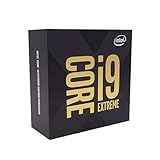
- 939.70
- Discrete graphics required
- Compatible with Intel x299 Chipset based motherboards
- Supports Intel Optane Memory
- Cascade Lake, CLX, 10th, Generation, Desktop, CPU, Ci9, Core, 165W, i9-10980XE, enthusiast, creator, Content Creation, LGA, 2066, 200 series, X299, X299-Made To Create, 14C, 24T
PCIe generation matters as much as lane count. The i9-10980XE supplies up to 48 PCIe 3.0 lanes; Threadripper supplies 64 PCIe 4.0 lanes. PCIe 4.0 provides more bandwidth per lane, so Threadripper’s expansion advantage is not simply a difference between 48 and 64.
Which workloads favor the i9-10980XE?
The i9-10980XE is strongest in workloads that reward Intel’s single-threaded behavior, high light-load boost, AVX-512 support, or an existing X299 investment. The advantage is application-specific rather than universal.
- Lightly threaded and latency-sensitive work: High boost clocks and Intel’s latency characteristics can make the 10980XE competitive in selected single-threaded and lightly threaded tasks.
- AVX-512 software: Applications specifically optimized for AVX-512 may benefit substantially, but AVX-512 is not a universal performance multiplier and can reduce operating frequency.
- Selected scientific workloads: Tom’s Hardware found the stock 10980XE particularly competitive in some NumPy and SciPy tests.
- Selected workstation and Adobe tests: Tom’s Hardware reported that the stock 10980XE led the Ryzen 9 3950X and Ryzen Threadripper 2970WX in its selected SPEC workstation and Adobe testing.
- Existing X299 upgrades: An owner who already has a suitable motherboard, memory, and cooling system may gain performance without replacing the entire platform.
These findings come from the SPEC workstation and Adobe results and the application, compression, and single-threaded testing. Benchmark results from late 2019 remain historical evidence; current software versions can change the balance.
Which workloads favor AMD?
AMD generally wins when an application scales across many cores, benefits from a newer architecture, or can use the Threadripper platform’s additional PCIe 4.0 bandwidth. CPU rendering, video encoding, compression, batch processing, large software builds, and simulation are common examples of workloads where more parallel throughput matters.
The Ryzen 9 3950X can be the better value when 16 strong cores are sufficient and the system does not need HEDT-level I/O. Threadripper 3960X and 3970X are more appropriate when the workload scales beyond 18 cores or when multiple high-bandwidth devices require PCIe 4.0 connectivity.
Comparisons should separate absolute throughput from efficiency and value. The 10980XE’s 165 W figure is Intel’s rated TDP, not a guaranteed package-power limit, wall-power measurement, or complete cooling requirement. AMD’s lower or higher rated figures likewise do not establish efficiency without a defined workload and measurement method.
Is the i9-10980XE good for gaming?
The i9-10980XE is competitive in gaming, but gaming alone is not a good reason to buy an X299 system. High boost clocks and Intel’s generally strong latency characteristics help the processor remain capable, yet most games do not use 18 cores efficiently and mainstream desktop processors usually offer a more sensible cost structure.
Do these 3 things before closing this tab:
1Fix the driver behind crashes, sound loss and screen glitches2Clear out junk files and repair common Windows errors3Scan for outdated or missing drivers - takes under a minuteThe Ryzen 9 3950X performed impressively in the gaming comparisons reported by Tom’s Hardware. Threadripper requires more careful configuration because some games do not benefit from its full core count; contemporary testing sometimes used a game-focused mode that disabled part of the processor’s available threaded capacity.
A workstation owner who also games can reasonably use the 10980XE, especially when the X299 system already exists. A new gaming-first build should normally prioritize a newer mainstream Ryzen or Core platform instead of paying for HEDT memory and expansion features that games may not use.
How much cooling and power does the i9-10980XE need?
The i9-10980XE needs serious cooling for sustained all-core or AVX workloads. Intel rates the processor at 165 W and does not include a stock cooler, but sustained package power and heat can exceed what a casual interpretation of the TDP figure suggests.
A high-end air cooler may be adequate for some stock configurations if the case airflow, motherboard power limits, and workload permit it. A large liquid cooler is more appropriate for sustained rendering, heavy encoding, or AVX-intensive work. A capable X299 motherboard with robust VRMs is also important because an 18-core processor can place prolonged electrical and thermal stress on the board.
The Tool Desk
Outbyte PC Repair FREEClear out junk files and repair common Windows errorsFree Scan →Outbyte Driver Updater FREEFix the driver behind crashes, sound loss and screen glitchesFind Drivers →Tom’s Hardware achieved 4.8 GHz on all cores on its test sample at 1.2 V Vcore and 2.1 V VCCIN using custom water cooling. That result is an attributed sample result, not a guaranteed setting. Overclocking depends on silicon quality, cooling, motherboard design, voltage, workload, and safe long-term limits; AVX offsets may still be necessary.
What should a proper i9-10980XE benchmark disclose?
A credible review should disclose enough detail to separate processor behavior from platform tuning. Results are not directly comparable when one system is stock and another uses motherboard-enhanced power limits or an overclock.
- Motherboard model and BIOS version.
- Memory capacity, speed, timings, and whether two or four channels are populated.
- Cooling system, fan or pump settings, and ambient temperature.
- Power limits and whether vendor enhancement settings are enabled.
- Operating system, drivers, and benchmark versions.
- Stock, manual-overclocked, or automatically enhanced CPU settings.
- Whether Intel XTU, Windows Game Mode, or topology-aware game settings were enabled.
- Whether an application is CPU-only or GPU-accelerated.
- Long-duration temperature and power behavior, not only short benchmark bursts.
- The measurement method for package power or wall power.
These disclosures matter especially when comparing the i9-10980XE with Threadripper. Threadripper game testing can change significantly with topology or game-focused modes, while long AVX workloads can produce very different clock speeds and power behavior from short general-purpose tests.
Independent reader supportYour contribution helps us test, update, and keep practical guides available for everyone.What are the main risks of buying a used X299 system?
The main risk is not the processor alone; it is finding a healthy, compatible X299 platform at a reasonable complete-system cost. X299 motherboards are from a discontinued-era ecosystem and may be scarce, expensive, or missing accessories.
- Verify BIOS support: Confirm the exact motherboard model and BIOS version required for the 10980XE before buying the CPU.
- Inspect the socket: Damaged LGA2066 pins can cause missing memory channels, unstable PCIe devices, or failure to boot.
- Check PCIe wiring: A board may support the CPU while sharing or disabling slots in particular configurations. Do not assume every board exposes all 48 lanes to every slot combination.
- Test all memory channels: A faulty DIMM, socket pin, or board trace can make a four-channel system operate in reduced bandwidth mode and look like a CPU-performance problem.
- Check VRM and M.2 hardware: Used boards can have degraded components, damaged slots, missing heatsinks, or missing M.2 and PCIe accessories.
- Budget the complete platform: Include motherboard, cooler, memory, power supply capacity, shipping, and buyer-protection costs. A cheap CPU can become poor value after those additions.
- Prefer a return window: Avoid a heavily overclocked or delidded used processor without a practical return policy unless the buyer can test it thoroughly.
Should existing X299 owners upgrade to the i9-10980XE?
Existing X299 owners are the clearest audience for the i9-10980XE. An upgrade can make sense when the motherboard is healthy, BIOS support is confirmed, the cooler can handle the additional sustained load, and the used CPU price is substantially below the cost of replacing the platform.
Best Value
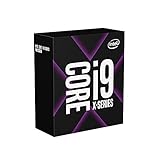
- Up to 4 8 GHz unlocked
- Discrete graphics required
- Compatible with Intel x299 Chipset based motherboards
- Supports Intel Optane Memory
- Cascade Lake CLX 10th Generation Desktop CPU Ci9 Core 165W i9-10980XE Enthusiast Creator Content Creation LGA 2066 200 Series X299 X299-Made to Create 18C 36T
The upgrade is less compelling when the current processor already meets the workload, when the board cannot expose the desired PCIe layout, or when the 10980XE costs nearly as much as a newer complete platform. The 10980XE adds four PCIe lanes and faster official memory support over the 9980XE, but the same 18-core count and 14 nm lineage limit the size of the generational performance gain.
Is the i9-10980XE worth buying for a new workstation in 2026?
The i9-10980XE is generally not the right foundation for a new 2026 workstation. A new buyer gives up PCIe 4.0, newer platform features, current motherboard availability, and modern upgrade paths, while AMD’s Threadripper-class processors offer substantially more parallel capacity for strongly scaling workloads.
A new build can still be rational in a narrow case: the buyer finds a complete, tested X299 bundle at an unusually low cost; the workload benefits from AVX-512 or Intel’s specific performance characteristics; the system needs 48 PCIe 3.0 lanes but not PCIe 4.0; and the buyer accepts the age and support limitations of the platform.
Quick wins for a faster PC:
Scan for outdated or missing drivers - takes under a minuteDriver Scan →Clear out junk files and repair common Windows errorsFree Scan →Fix the driver behind crashes, sound loss and screen glitchesFind Drivers →| Buyer situation | Recommendation | Reason |
|---|---|---|
| Already own X299 | Consider a discounted 10980XE | May provide a useful upgrade without replacing the motherboard, memory, and storage layout |
| Building an affordable high-end desktop | Compare a Ryzen 9-class platform | Usually better efficiency and lower platform cost when HEDT I/O is unnecessary |
| Rendering, encoding, simulation, or compilation | Compare Threadripper-class systems | More cores and PCIe 4.0 can deliver higher absolute workstation throughput |
| Gaming-first build | Use a newer mainstream platform | HEDT cores and expansion features are often underused in games |
| ECC-required professional workload | Choose a platform with explicitly verified ECC support | The 10980XE/X299 combination should not be assumed to provide standard ECC support |
Final verdict
The Core i9-10980XE repaired Intel’s HEDT value proposition but did not restore Intel’s performance leadership. The 18-core processor was a substantial value improvement over the $1,999 Core i9-9980XE because Intel launched it at approximately $979, and the 10980XE still offers useful PCIe capacity, quad-channel memory, strong light-threaded performance, and AVX-512.
AMD nevertheless offered the stronger new-system choices for most buyers. The Ryzen 9 3950X delivered strong performance with lower platform cost and better efficiency in many workloads, while Threadripper 3960X and 3970X provided more cores, PCIe 4.0, and higher throughput for heavily threaded workstation software.
In 2026, buy or keep the i9-10980XE when a compatible X299 system already exists and the upgrade is genuinely inexpensive. Avoid building around it when the CPU, scarce motherboard, cooler, memory, and power requirements approach the cost of a newer platform.
Frequently Asked Questions
Does the Core i9-10980XE work with every X299 motherboard?
The Core i9-10980XE uses LGA2066 and requires an X299 motherboard with appropriate BIOS support. Existing X299 boards may need a firmware update, and PCIe lane access depends on the specific board and slot configuration.
Recommended Free Tools
Is 4.8 GHz an all-core speed for the i9-10980XE?
No. The 4.8 GHz figure is a peak Turbo Boost Max 3.0 frequency for limited light-threaded conditions. Tom’s Hardware documented lower maximums for AVX2 and AVX-512 and substantially lower clocks under heavy all-core workloads.
Is the i9-10980XE faster than the Ryzen 9 3950X?
The answer depends on the application. The i9-10980XE has two more cores, quad-channel memory, more PCIe lanes, and AVX-512, but the Ryzen 9 3950X can match or beat it in some workloads while offering lower platform cost and better efficiency in many tests.
Is the i9-10980XE still worth buying in 2026?
The i9-10980XE is worth considering mainly as a substantially discounted used upgrade for an existing X299 owner. The processor is usually a poor starting point for a new workstation unless a complete tested X299 platform is unusually inexpensive and the workload specifically benefits from Intel’s features.
The Bottom Line
Bottom line: The i9-10980XE was Intel’s best-value HEDT flagship of its generation, but it was not the fastest workstation processor. In 2026, its strongest case is an inexpensive, verified X299 upgrade; new workstation builders should compare the complete platform against Ryzen 9 and Threadripper alternatives rather than judging the CPU by its historical launch price.
Free tools Windows power users keep installed
One-click scans. No signup required.
Quick Recap
Product prices and availability are accurate as of the date/time indicated and are subject to change. Any price and availability information displayed on Amazon at the time of purchase will apply.

