
iTechGuides is reader-supported. When you buy through links on our site, we may earn an affiliate commission. As an Amazon Associate I earn from qualifying purchases. Learn more
Infineon’s EDT3 silicon IGBTs are designed for electric vehicles with 400 V or 800 V electrical systems, while its newly highlighted 1200 V RC-IGBT is aimed specifically at 800 V systems. The key distinction is that vehicle system voltage and a chip’s voltage-blocking class are related but not interchangeable. Infineon claims lower losses for EDT3 and higher current density for its RC-IGBT, but its public announcement does not provide the test detail needed to turn those claims into a predicted driving-range gain.
What Infineon announced
In an April 16, 2025 release, Infineon Technologies introduced its third-generation Electric Drive Train chip family, EDT3, for 400 V and 800 V vehicle systems, along with a 1200 V reverse-conducting IGBT (RC-IGBT) targeted at 800 V systems. The release says samples were available at launch; that is not confirmation of current stock, production supply, pricing, or eligibility to buy in October 2026. Infineon’s product release
Infineon Vice President for Automotive High Voltage Chips and Discretes Robert Hermann described the company’s aim as delivering “outstanding performance and reliability.” That is the manufacturer’s positioning, not independent evidence of either performance or reliability.
Recommended Free Tools
System voltage is not the same as chip voltage class
A vehicle’s 400 V or 800 V system describes the nominal voltage architecture of its high-voltage electrical system. A semiconductor’s voltage class describes its ability to block voltage in the inverter; it is not a label for the vehicle’s system voltage. Designers select devices with the system’s operating conditions, voltage transients, inverter topology and design margins in mind, rather than matching the two labels one-for-one.
#1 Best Overall

- You can place an order according to the model you need
- IGBT Module Equivalent to circuit switch,Has stabilized control voltage,Strong voltage resistance and other hot spots
- A channel is formed by adding a positive gate voltage,Provides base current to PNP (originally NPN) transistors,to make the IGBT conductive. Conversely, adding reverse gate voltage eliminates the channel and cuts off the base current, making the IGBT turn off.
- IGBTs are widely used in industrial applications (e.g., inverter systems and uninterruptible power supplies (UPS)), consumer applications, motor controllers, and more!
- If you have any questions, please contact us in time.
| Device or family | Vehicle system target stated by Infineon | Voltage class stated by Infineon |
|---|---|---|
| EDT3 IGBT chips | 400 V and 800 V | 750 V and 1200 V |
| RC-IGBT highlighted in the release | 800 V | 1200 V |
These are the combinations Infineon identifies for the announced products, not a universal conversion rule. The required blocking class depends on the complete inverter design.
How an IGBT differs from an RC-IGBT
IGBT basics
An insulated-gate bipolar transistor (IGBT) is a power switch that combines the high-voltage, high-current handling of a bipolar transistor with MOSFET-like capacitive gate control. In an inverter, switches and diodes manage the flow of power between the vehicle’s battery and motor.
Rank #2

- IGBT
- STK412-240 STK412-240M Module
What “reverse-conducting” changes
In a conventional separate-chip arrangement, an IGBT handles switching and a diode provides a path for current in the opposite direction. An RC-IGBT integrates the IGBT and diode functions on one die. Infineon says this arrangement increases current density relative to separate IGBT-plus-diode chipsets and reduces assembly effort. The announcement does not quantify a vehicle-level size, cost, weight, or efficiency saving.
What Infineon’s efficiency and density figures do—and do not—show
EDT3’s “up to 20%” loss claim
Infineon says EDT3 delivers up to 20% lower total losses at high loads than EDT2 while maintaining low-load efficiency. This is the company’s comparison: the launch release does not detail the test conditions or provide independent validation. It is not a measured percentage improvement in vehicle range, and it should not be applied to every drive cycle or inverter.
Rank #3

- IGBT TRANSISTOR MODULE
- Transistor
- Semiconductors
A separate 1200 V comparison
In a separate December 2025 technical-paper overview, Infineon reports 22% lower inverter losses and up to 34% higher power density for its latest 1200 V technologies versus the prior generation. Those are company-reported figures for a different comparison; they should not be combined with, or treated as another statement of, EDT3’s “up to 20%” claim. Infineon’s 1200 V technical-paper overview
Temperature and module power figures
Infineon lists a maximum virtual junction temperature of 185°C for EDT3. This is a chip specification, not a guarantee that an entire module or vehicle can operate continuously at that temperature. The release also gives a power range of up to 250 kW for HybridPACK Drive G2 in 750 V and 1200 V classes; that is a module-family figure, not a promise that a particular vehicle will deliver 250 kW.
Rank #4

- Transistors
- 1PCS 300A 1200V CM300DY-24H Power Transistor IGBT Power Module Electric Power Electronic Components Electronics Parts
Who these chips are for, and how they fit into a module
EDT3 and the highlighted RC-IGBT are bare-die technologies intended for customers developing custom power modules, rather than finished parts for vehicle owners to install. Infineon says EDT3 can be supplied with custom layouts and optional on-chip temperature and current sensors; metallization for sintering, soldering or bonding is available on request.
What’s actually slowing this PC down?
Pick the symptom - the matching free tool is one click away.
Infineon says its HybridPACK Drive G2 module family incorporates EDT3 technology. Its release also describes optional next-generation phase-current sensor integration and on-chip temperature sensing for the module implementation. Module design, sensor options and die configuration matter to the finished inverter, so the chip headline alone does not specify a complete drive system.
Best Value
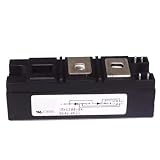
- Model:RKV300-04 VSKV300-04, 82-0546 IGBT Module
- Brand LRJJPCB
- Manufacturer LRJJPCB
What to compare when choosing an inverter semiconductor
There is no universal ranking of EDT3, an RC-IGBT, other silicon IGBT arrangements and silicon carbide (SiC) devices in the cited material. An engineering comparison needs matched conditions and the full inverter context. Useful factors include:
- Vehicle bus and blocking class: Confirm the system voltage, expected transients and the device class required by the chosen inverter design.
- Duty cycle and losses: Compare high-load and low-load behavior across the vehicle’s actual operating profile, not just one headline efficiency figure.
- Switching and topology: Evaluate switching frequency and inverter topology, since both affect device losses and system design.
- Thermal and lifetime requirements: Account for the full module’s cooling, thermal limits and durability targets, rather than treating a chip temperature specification as a system operating guarantee.
- Packaging and integration: Consider whether the diode is integrated, as well as module power, sensing, assembly steps and the customer’s packaging process.
- Qualification and supply: Verify qualification evidence for the specific component and application, along with current part numbers, availability and sourcing terms.
The materials cited here do not provide an independent, matched-condition comparison across these device options, current prices, or production inventory. A conclusion about which technology is best for a vehicle therefore requires application-specific data beyond the announcement.
Market context and what the announcement does not establish
Infineon estimated that EVs would account for around 45% of production by 2030, compared with 20% in 2024. This is the company’s forecast, not a realized result or an independent forecast. It helps explain the company’s focus on drivetrain components, but does not establish demand for any particular chip.
The announcement establishes launch-time sampling and outlines the intended applications and performance claims. It does not confirm October 2026 inventory, prices, production volumes, access eligibility, or results from independent vehicle testing.
Quick Recap
Product prices and availability are accurate as of the date/time indicated and are subject to change. Any price and availability information displayed on Amazon at the time of purchase will apply.

