
What’s actually slowing this PC down?
Pick the symptom - the matching free tool is one click away.
iTechGuides is reader-supported. When you buy through links on our site, we may earn an affiliate commission. As an Amazon Associate I earn from qualifying purchases. Learn more
Marvel’s closest match to the idea in this headline was Razorline, a 1993 comics line created with British horror and fantasy writer Clive Barker. Barker built it around a shared setting called the Barkerverse, but he described the books as mainstream Marvel comics—not as a mature-readers imprint or a formal attempt to copy DC’s Vertigo.
What was Marvel’s Razorline?
At Marvel’s Sixth Annual Capital City Sales Conference in New York in May 1993, Barker introduced a new line of comics called Razorline. He presented its four initial titles as part of one shared world, which he called the Barkerverse. The first collected publication listed in Barker’s official bibliography, Razorline: The First Cut, Vol. 1 No. 1, was published by Marvel in September 1993.

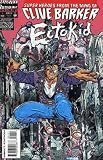

Barker framed the project as a collaboration between his ideas and Marvel’s comics operation. “This is a marriage of minds; it’s called the Barkerverse but they are very much Marvel comics,” he said in his presentation. His official bibliography also preserves his description of a larger concept, the “Decamundi”: ten new worlds populated by characters he had created.
Why compare it with Vertigo?
The comparison makes sense as shorthand: both names suggest comics that could move beyond familiar superhero formulas and give creators room to pursue distinctive ideas. Barker promised complex characters and mythologies, and said writers and artists would develop his initial concepts. That makes Razorline a creator-led, unconventional initiative inside Marvel.
#1 Best Overall
But the available record does not show that Marvel formally designed Razorline as a Vertigo counterpart. Nor does it establish that Razorline was a mature-readers line. In 1993, Barker explicitly called the books “mainstream comics reflecting a passion that I have for mainstream comics.” The fair distinction is that Razorline aimed for imaginative complexity while remaining, in its creator’s stated framing, mainstream Marvel.
How far did Barker’s plan go?
Barker’s original vision extended beyond the four titles introduced at the conference. In a 2022 Looper interview, archivist and co-author Phil Stokes recalled that ten series were planned and four were published; he said the other six were expected in late 1993 or early 1994. Stokes attributed their absence to a contraction in the comics industry and sales problems. That is his retrospective assessment, not an independently audited account of Razorline’s sales or cancellation.
The sources cited here do not establish Razorline’s circulation, audience size, or sales figures, and they do not provide a comparable market study against Vertigo. The reported counts—ten planned and four published—are the clearest measure of the gap between the ambition and what reached readers.
Where can readers find the comics now?
Barker’s bibliography verifies Razorline: The First Cut as a Marvel publication from 1993. It is best approached as a collectible back issue rather than a currently published series. Current inventory and prices vary, and no current marketplace listing is established here.
Quick Recap
Rank #4

- Written by Frank Lovece
- Illustrated by Anthony Williams
Rank #3

- Written by Elaine Lee, Frank Lovece
- Illustrated by Anthony Williams, Max Douglas
Product prices and availability are accurate as of the date/time indicated and are subject to change. Any price and availability information displayed on Amazon at the time of purchase will apply.

