
iTechGuides is reader-supported. When you buy through links on our site, we may earn an affiliate commission. As an Amazon Associate I earn from qualifying purchases. Learn more
Validate an image upload in layers: check its decoded filename and extension, compare its declared MIME type with independently detected content, inspect the actual image format and dimensions, and enforce a byte-size limit before parsing. These are early rejection gates—not proof that an accepted image is safe. Request labels are controlled by the uploader, and image files can contain untrusted embedded metadata and malicious content.
What “metadata” means in image uploads
Upload validation involves two different kinds of metadata. Request metadata includes the filename, extension, and declared Content-Type header. The client supplies these values, so they can be misleading. Embedded image metadata includes fields such as EXIF, XMP, and text chunks stored inside the image. These can expose private information or contain data your application should not trust.
Use request metadata for inexpensive policy checks, but verify the bytes themselves with a maintained image library. OWASP cautions that “There is no silver bullet in validating user content.” Its File Upload Cheat Sheet and ASVS 5.0 file-handling requirements support a defense-in-depth approach.
Four checks to reject unsuitable uploads early
1. Decode and validate the filename and extension
Decide which image formats the application actually needs, then allowlist only their extensions. Decode the filename before validating it, and reject malformed or unsafe filename forms as well as extensions that do not match your policy. Handle path separators and other filename tricks according to the application’s storage rules; do not use an uploaded filename as a trusted filesystem path.
#1 Best Overall

- Scanner type: Document
- Connectivity technology: USB
- With Auto Scan Mode, the scanner automatically detects what you're scanning
- Digitize documents and images
An extension is only a policy gate. A file named photo.jpg is not necessarily a JPEG, and a valid image may have been given a misleading name. Keep the original name separate from any server-generated storage name if the application needs to display or audit it.
2. Compare declared MIME type with independent detection
The request’s Content-Type header is supplied by the client and can be spoofed. Use an allowlist of MIME types your endpoint accepts, then compare the declared type with a server-side detection result derived from the file content. Reject unsupported or contradictory combinations according to your policy; never treat the header alone as proof of type.
OWASP’s Web Security Testing Guide discusses testing uploads of malicious files, including the weakness of relying on a client-provided type. Content detection is another signal, not a substitute for parsing and decoding the image.
Quick wins for a faster PC:
Repair Windows errors before they cause bigger problemsFix Now →Scan for outdated or missing drivers - takes under a minuteDriver Scan →Rank #2
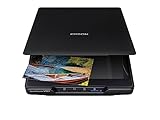
- Amazing image clarity and detail — 4800 dpi optical resolution (1), ideal for photo enlargements
- Epson ScanSmart software included (4) — easily scan photos, artwork, illustrations, books, documents and more
- One-touch scanning (2) — scan in fewer steps with easy-to-use buttons (2)
- Restore color to faded photos — with one click, Easy Photo Fix technology makes it simple
- Scan books and photo albums — high-rise, removable lid
3. Parse the bytes, allow only intended formats, and cap dimensions
Use a maintained image library to inspect and decode the uploaded bytes. Restrict the parser to the formats your service intends to accept, and reject parse failures, formats outside that allowlist, and images whose width, height, or total pixel count exceed documented application limits.
Pillow’s security documentation states that Image.open() detects format by magic bytes, not file extension or MIME type. In Pillow, pass an explicit format allowlist when opening images rather than letting the application accept every format the library happens to support. Keep this check independent of the filename and request header.
Set pixel and dimension limits based on the work your service must perform and the resources it can safely allocate. There is no universal threshold suitable for every application; document the chosen limit and enforce it consistently.
Rank #3
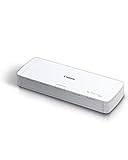
- STAY ORGANIZED – Easily convert your paper documents into digital formats like searchable PDF files, JPEGs, and more.Power Consumption : 2.5W or less (Energy Saving Mode: 0.7W). Suggested Daily Volume : 500 scans..Does it contain liquid: no
- CONVENIENT AND PORTABLE –lightweight and small in size, you can take the scanner anywhere from home offices, classrooms, remote offices, and anywhere in between
- HANDLES VARIOUS MEDIA TYPES – Digitize receipts, business cards, plastic or embossed cards, reports, legal documents, and more
- FAST AND EFFICIENT – No technical hurdles or complicated setups here; easily scan both sides of a document at the same time, in color or black-and-white, at up to 12 pages-per-minute, and with a 20 sheet automatic feeder
- BROAD COMPATIBILITY – Works with both Windows and Mac devices, be it laptop or computer
4. Enforce the upload byte limit before parsing
Reject a request that exceeds the application’s maximum upload size before handing its contents to an image parser. This bounds the amount of compressed input your endpoint accepts, but it does not bound the cost of decoding it: a relatively small compressed image can expand substantially in memory.
What’s actually slowing this PC down?
Pick the symptom - the matching free tool is one click away.
Use separate controls for decoded pixel count, memory, and processing time. Pillow recommends retaining pixel limits, treating decompression-bomb warnings as errors, sandboxing image processing, and constraining CPU and memory. Exact byte, pixel, and time limits depend on your workload and service capacity; the OWASP and Pillow sources do not establish a universal number. Pillow’s runtime defaults can vary by version, so check the documentation for the version you deploy.
What to do with embedded image metadata
Fields embedded in an image are not trustworthy merely because the image parser can read them. EXIF, XMP, and text metadata may include GPS coordinates, author names, software version strings, or ICC profiles. If the public image does not need these fields, strip unnecessary metadata when generating the output users will access. If your application does need particular fields, validate and sanitize them before storing or rendering them.
Rank #4

- Enjoy high speed scanning in as fast as 8 seconds, with the included USB Type-C cable. With USB Type-C the Cano scan lied 400 has one cable for data and power.
- Preserve detailed photos and images thanks to 4800 x 4800 dpi resolution, and with image enhancements, such as color restore and dust removal, Your photos will continue to look great.
- Enjoy ease of use with 'EZ' Buttons. With auto scan mode, the Scanner automatically detects what you are scanning; built-in PDF buttons, scan and save multi-page pdf's that are editable and searchable
- Paper size: 8.27 x 11.69, 8.50 x 11.69
OWASP recommends decoding and re-encoding images to an allowed format and removing unnecessary metadata, while warning that rewriting is not guaranteed to remove every malicious element. Treat re-encoding as one layer in a broader design, not as a safety guarantee.
Independent reader supportYour contribution helps us test, update, and keep practical guides available for everyone.Make the checks part of a defense-in-depth pipeline
- Apply request limits first. Enforce the endpoint’s byte-size limit before expensive parsing.
- Validate request labels. Decode and check the filename and extension, then allowlist and compare the declared MIME type with independent content detection.
- Inspect and decode with constraints. Use a maintained parser restricted to allowed formats, enforce dimension and pixel limits, and reject failures.
- Process in a constrained environment. Sandbox image work and cap CPU, memory, and processing time.
- Normalize output where appropriate. Re-encode to an allowed format and strip unneeded embedded metadata before public delivery.
- Keep the controls maintainable. Track parser dependency updates and log rejection reasons without exposing sensitive image contents in logs.
OWASP’s upload guidance emphasizes layered validation because no single check is sufficient. The precise allowlist and resource limits should reflect the formats the product needs and the capacity of the service that processes them.
Quick Recap
Product prices and availability are accurate as of the date/time indicated and are subject to change. Any price and availability information displayed on Amazon at the time of purchase will apply.

