
iTechGuides is reader-supported. When you buy through links on our site, we may earn an affiliate commission. As an Amazon Associate I earn from qualifying purchases. Learn more
A $1,000 investment in Sherwin-Williams (NYSE: SHW) made at the October 7, 2011 close would have grown to about $11,864 by the October 7, 2026 close, using split-adjusted prices. That figure is price appreciation only. It excludes dividends, fees, and taxes, so it is a starting point for the calculation, not a complete account of what an investor would have kept.
The calculation, step by step
The estimate uses two closing prices, one for each end of the 15-year window. The October 7, 2026 close is the most recent settled close available when this article was prepared. The October 8, 2026 session was still trading at the time of the source check, so its figure is not used.


| Date | SHW price used | Source | Role in the calculation |
|---|---|---|---|
| October 7, 2011 | $26.55 (split-adjusted) | FinanceCharts historical price data | Starting price for the $1,000 investment |
| October 7, 2026 | $315.00 (settled close) | StockAnalysis historical price data | Ending price |
| October 8, 2026 | $320.67 | Intraday observation | Not used; not a settled closing price |
- Divide the ending price by the starting price. $315.00 ÷ $26.55 ≈ 11.864.
- Multiply the $1,000 by that ratio. $1,000 × 11.864 ≈ $11,864.
- Read the implied gain. The $1,000 investment grew by about 1,086% on a price basis.
- Check the share count, if you want it. $1,000 ÷ $26.55 ≈ 37.67 shares at the 2011 adjusted price. Real purchases may use whole shares, fractional shares, or a different execution price, so treat the share count as an approximation.
The result is rounded. Small differences in the exact purchase time, execution price, or price source will change the final number by a few dollars.
Why the 2021 stock split matters
Sherwin-Williams completed a three-for-one stock split effective March 31, 2021. Its 2021 annual report states that all prior-year share and per-share information was retroactively adjusted for that split. The prices used here are adjusted for the split, so both endpoints are on the same basis.
#1 Best Overall
The split changes the nominal share price, not the company’s value. A pre-split quote from 2011 cannot be compared directly with a post-split quote from 2026. Doing so would make the stock appear to have fallen by roughly two-thirds when, on an adjusted basis, it did not.
What the $11,864 figure leaves out
The estimate covers price movement only. Three factors would change the result for a real investor.
Rank #2

- Show your trading spirit with this cool trader design. Perfect for those who love to trade stocks, bonds, and any other financial instruments.
- Anyone who loves trading stocks will surely rejoice in this trading design. Perfect for all stockbrokers, investors or anyone who loves the trading market.
- Hardcover journal with 240 line-ruled pages (120 sheets)
- Built-in elastic closure and ribbon bookmark
- Includes an expandable inner storage pocket and a pen holder
- Dividends. Sherwin-Williams pays dividends, and its 2025 annual report says a dividend reinvestment program is available to common shareholders. Dividend income would add to the total, and reinvesting it would compound the effect. The price-only calculation does not include either.
- Fees and commissions. Brokerage costs, fund expenses, and any account charges reduce the ending balance. They vary by provider and account type.
- Taxes. Dividends and gains may be taxable in the year they occur, depending on the account type and the investor’s jurisdiction. Tax treatment is not modeled here.
A dividend-inclusive figure requires an adjusted-close series for both dates. Yahoo Finance describes its adjusted close as reflecting stock splits and dividend or capital-gain distributions. The price history checked for this article did not include a verified matched pair of dividend-adjusted closes for October 7, 2011 and October 7, 2026, so this article does not state a dividend-reinvested ending value.
How to calculate a dividend-inclusive result yourself
- Pull an adjusted-close history for SHW. Use a historical price source that labels its data as adjusted for splits and dividends, and confirm the labeling before using it.
- Find the two adjusted closes. Use the close for the purchase date and the close for the end date. Use the same convention for both.
- Divide the ending adjusted close by the starting adjusted close. Multiply the result by your investment amount.
- Subtract costs you actually paid. Deduct commissions, account fees, and estimated taxes, using your own brokerage statements.
When comparing against an index or another stock, use the same convention for each: price return against price return, or total return against total return. Mixing the two overstates the difference.
Company context
Sherwin-Williams describes itself as a global leader in the manufacture, development, distribution, and sale of paints, coatings, and related products for professional, industrial, commercial, and retail customers. Its common stock trades on the New York Stock Exchange under the symbol SHW. That background describes the business; it does not explain why the stock rose over this period, and this article does not attribute the move to any single cause.
Independent reader supportYour contribution helps us test, update, and keep practical guides available for everyone.What this number can and cannot tell you
The calculation looks backward. It shows what a single purchase on one date would have returned by another date. It does not show what the stock will do next, and it does not reflect the experience of an investor who bought at a different time, added money along the way, or sold before 2026. Individual stock prices move substantially over shorter periods, and a 15-year gain can coexist with long stretches of decline. This article is general information, not personalized investment advice.
Quick Recap
Rank #4
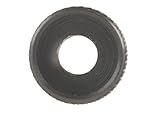
- Williams Gun Sight Company Regular Peep Aperture R-3/8" x .150"
- "Buckbuster" Line Standard Peep Aperture Model 51104
- Standard Thread Size Peep Aperture Is Compatible With Redfield, Lyman, & Other Brands Of Peep Sights
- Knurled Grip Makes Changing Peep Apertures Easy (Other Apertures Available Separately)
- Made In U.S.A.
Product prices and availability are accurate as of the date/time indicated and are subject to change. Any price and availability information displayed on Amazon at the time of purchase will apply.
Recommended Free Tools

