
The Tool Desk
Outbyte Driver Updater FREEFix the driver behind crashes, sound loss and screen glitchesFind Drivers →Outbyte PC Repair FREERepair Windows errors before they cause bigger problemsFix Now →iTechGuides is reader-supported. When you buy through links on our site, we may earn an affiliate commission. As an Amazon Associate I earn from qualifying purchases. Learn more
An AI agent that succeeds when every tool call returns instantly has not yet demonstrated that it can handle real network conditions. To evaluate latency, timeouts, retries, and incomplete responses, record each tool call and run the same evaluation locally and from a separate host. That tests whether the agent waits and recovers as intended—not whether its final answer is correct.
Why an instant local tool call can mislead
When a tool runs as an in-process function call, it can return without exercising the delays and failures associated with a remote request. A green local run therefore may not show what happens when a real call waits, times out, needs a retry, or returns only part of a response.
Emery Chen frames the problem bluntly: “If your eval never blocked on I/O, you do not have an eval. You only have a unit test of prompt text.” That is the author’s characterization, not a formal testing standard. The useful distinction is between checking prompt behavior and checking how the agent behaves when tools have to wait.
Outdated Drivers Are Slowing You Down
One free scan finds every outdated or missing driver and matches the right update for your exact hardware.Free scan · exact hardware matchPC Slower Than It Used to Be?
A free scan shows the junk files, broken settings and background clutter dragging Windows down - then fixes them in one click.Free scan · Windows 10 & 11What to record for each tool call
Capture enough information to distinguish a quick local return from a delayed request, an abort, a retry, or a truncated response. Chen proposes a structured event for every call with these fields:
#1 Best Overall
![Arduino® UNO™ Q 4GB [ABX00173]- Hybrid Board, Qualcomm Dragonwing QRB2210 microprocessor (MPU) & STM32U585 Microcontroller(MCU), AI Vision, Voice, IoT, Robotics, Linux Debian OS, Wi-Fi 5, USB-C](https://m.media-amazon.com/images/I/51cl4xygwGL._SL160_.jpg)
- Dual-Brain Hybrid Power: Combines the Qualcomm Dragonwing QRB2210 MPU (Quad-core Arm Cortex-A53 @ 2.0 GHz CPU, Adreno GPU, AI acceleration) and the real-time, low-power STM32U585 MCU for advanced applications like object recognition, voice commands, and motion detection.
- AI & Linux Capabilities: Unlocks AI-powered vision and sound solutions; runs Linux Debian OS for coding in Python and supports the Arduino ecosystem with libraries and Sketches; quick start with Arduino App Lab.
- Advanced Features: Equipped with 4 GB LPDDR4 RAM, 32 GB eMMC built-in storage, ideal for single-board computer (SBC) mode, running multiple simultaneous high-level processes, more complex AI or ML models, extensive logs. Dual-band Wi-Fi 5 (2.4/5 GHz), Bluetooth 5.1, and high-speed headers for vision, audio, and display peripherals.
- Seamless Expansion & Connectivity: Features the classic UNO form factor for shields compatibility, an 8x13 LED matrix, and a Qwiic connector for easy expansion with Modulino nodes; power and connect via the USB-C connector.
- Intended Use & Development: The perfect platform for prototyping robotics or IoT projects, empowering innovators with a unified development experience to mix Arduino Sketches, Python scripts, and containerized AI models in a single interface.
- Tool identity: the tool name or identifier.
- Attempt: which attempt this is for the operation.
- Timing: monotonic start and end times, so elapsed duration can be calculated without relying on wall-clock adjustments.
- Budget and outcome: the timeout budget, whether the call was aborted, and whether it was retried.
- Response evidence: bytes received before parsing, plus the HTTP status or transport error when applicable.
These fields make a trace useful for diagnosis: a failed request with no bytes is different from a connection that delivers part of a body before failing, and both differ from a successful response that returns suspiciously quickly.
Compare a local trace with a separate-host trace
Run one trace from the developer’s laptop process and another from a host that was not manually bootstrapped as that laptop. Compare elapsed waits, aborts, attempt counts, and the tools the agent chose. The purpose is to expose differences in execution location and failure handling, not to treat one timing number as a universal benchmark.
Rank #2
- Dual-Brain Hybrid Power: Combines the Qualcomm Dragonwing QRB2210 MPU (Quad-core Arm Cortex-A53 @ 2.0 GHz CPU, Adreno GPU, AI acceleration) and the real-time, low-power STM32U585 MCU for advanced applications like object recognition, voice commands, and motion detection.
- AI & Linux Capabilities: Unlocks AI-powered vision and sound solutions; runs Linux Debian OS for coding in Python and supports the Arduino ecosystem with libraries and Sketches; quick start with Arduino App Lab.
- Advanced Features: Equipped with 2 GB LPDDR4 RAM, 16 GB eMMC built-in storage, ideal to develop in PC-connected mode, running the OS, Python scripts, and basic network services (SSH) without a demanding GUI or heavy multitasking; great for lightweight AI and memory-optimized TinyML applications, needing local storage for basic OS and core libraries. Dual-band Wi-Fi 5 (2.4/5 GHz), Bluetooth 5.1, and high-speed headers for vision, audio, and display peripherals.
- Seamless Expansion & Connectivity: Features the classic UNO form factor for shields compatibility, an 8x13 LED matrix, and a Qwiic connector for easy expansion with Modulino nodes; power and connect via the USB-C connector.
- Intended Use & Development: The perfect platform for prototyping robotics or IoT projects, empowering innovators with a unified development experience to mix Arduino Sketches, Python scripts, and containerized AI models in a single interface.
Chen’s example uses 20 ms as an illustrative cutoff for flagging a successful call that may have been in-process. It is not a standard or production policy; the author recommends tuning it from collected traces. The sample harness also uses an 8.0-second timeout budget, and its comparison script includes a 0.2-second value. Those are example code values, not recommended defaults or measured results.
Free tools Windows power users keep installed
One-click scans. No signup required.
Keep unlike waits separate. A short cutoff meant to detect in-process behavior does not describe a multisecond DNS delay. Record the actual conditions and interpret each wait in its context rather than collapsing all latency into one assertion.
Rank #3
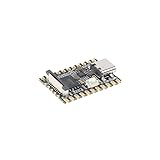
- Single core ARM Cortex-A7 32-bit core, integrated with NEON and FPU
- Built in Micro's self-developed 4th generation NPU, with high computational accuracy and support for mixed quantization of int4, int8, and int16. Among them, int8 has a computing power of 0.5 TOPS and int4 has a computing power of up to 1.0 TOPS
- Built in self-developed 3rd generation ISP3.2, supports 4 million pixels, and supports various image enhancement and correction algorithms such as HDR, WDR, and multi-level denoisin
- It has powerful encoding performance, supports intelligent encoding, adapts to save bit rates according to the scene, and saves more than 50% of the bit rate compared to conventional CBR mode, making the captured images high-definition, smaller in size, and doubling the storage space
- The design with built-in RISC-V MCU supports low-power fast startup, 250ms fast capture, and simultaneous loading of AI model library, enabling facial recognition to be completed within 1 second
Exercise three distinct failure cases
Deadline miss
Cause a tool call to exceed its timeout budget and check that the agent aborts instead of hanging. Then inspect whether it selects a fallback. The point is to verify the deadline and recovery path, not merely that a timeout can occur.
Retry storm and mutation safety
Test a first attempt that fails followed by a retry of a mutating request, such as a POST. Without idempotency protection, repeating the request may repeat its side effect—for example, charging twice. A retry of a mutation should reuse an idempotency key so the operation is not accidentally applied again.
Rank #4

- 【POWERFUL ESP32‑S3 CONTROLLER】Built‑in Xtensa 32‑bit LX7 dual‑core processor, 512KB SRAM, 8MB PSRAM, 16MB Flash for stable AI voice computing and multitask processing.
- 【Preloaded Dual AI Platforms】Comespre-installed with complete Deepseek and OpenAI voice dialogue projects.Experience intelligent voice interaction instantly. (Note: OpenAI functionality requires your own API key.)
- 【STABLE WIRELESS & CLEAR AUDIO】Integrated 2.4GHz Wi‑Fi + Bluetooth 5 (LE); dedicated audio decoding module for natural, responsive voice interaction.
- 【USER‑FRIENDLY VISUAL & PLUG‑AND‑PLAY】2” TFT‑SPI color screen shows real‑time chat; modular design, no extra wiring, ready to use after setup.
- 【FULL LEARNING SUPPORT】45 programmable GPIOs, rich interfaces, online web tutorials, free technical support for beginners & developers.
Partial response body
Test a response where some bytes arrive before the connection fails. The parser must not treat a truncated object as a successful, complete result. Log the bytes received before parsing and the transport outcome so this case can be distinguished from a clean error or a complete response.
What’s actually slowing this PC down?
Pick the symptom - the matching free tool is one click away.
What this evaluation can—and cannot—show
A trace can show that the agent was forced to wait and reveal how it handled deadlines, retries, and partial bodies. As Chen puts it, “This harness does not prove task correctness. It only proves the agent was forced to wait.” It does not establish that the task was solved correctly, rank models, or apply unchanged to every architecture.
The approach may add little when an agent has no tools and only writes text, when tests already inject delays, or when evaluations already run in an isolated remote job with real deadlines. It may also be unsuitable if policy forbids sending traces or prompts off the laptop. Choose a test setup that matches the actual deployment and data constraints.
Source and scope
This article explains Emery Chen’s proposed evaluation method in “If the Round Trip Was Instant, You Cheated,” published on DEV Community on September 23, 2026. The article discloses that it was prepared as part of MonkeyCode’s product outreach; any mention of its model access or server option should be understood in that context, not as independent verification of current availability or terms. No population statistic or externally published benchmark result is presented.
Quick Recap
Product prices and availability are accurate as of the date/time indicated and are subject to change. Any price and availability information displayed on Amazon at the time of purchase will apply.

