
What’s actually slowing this PC down?
Pick the symptom - the matching free tool is one click away.
iTechGuides is reader-supported. When you buy through links on our site, we may earn an affiliate commission. As an Amazon Associate I earn from qualifying purchases. Learn more
On 19 January 2014, IBM announced that Suzhou PowerCore Technology intended to license IBM’s POWER architecture, POWER8-related intellectual property and chip-design tools to develop and market server processors in China. The announcement described a commercial plan, not a launched processor. IBM’s 2014 annual report, published in 2015, still described the relationship as an intention and strategic partnership; the available sources do not establish that PowerCore later taped out, manufactured, shipped or continues to sell a processor.
What IBM and Suzhou PowerCore announced
IBM, Suzhou PowerCore Technology Company and the Research Institute of Jiangsu Industrial Technology said the two Chinese organizations would join the OpenPOWER Foundation. PowerCore planned to use IBM’s POWER architecture for customized chip-design solutions aimed at server innovation in areas such as big data, cloud computing and next-generation data centers.

The concrete licensing description covered three elements:
Outdated Drivers Are Slowing You Down
One free scan finds every outdated or missing driver and matches the right update for your exact hardware.Free scan · exact hardware matchWindows Errors? Fix Them Before They Spread
Repair common Windows errors and clear accumulated junk for a smoother, more stable PC - no reinstall needed.Free scan · no reinstall- IBM’s POWER architecture
- Intellectual property related to POWER8
- IBM chip-design tools
PowerCore’s stated business objective was to develop and market processors for servers in China. IBM described PowerCore at the time as a recently formed company in Suzhou National New & Hi-Tech Industrial Development Zone, created through a Jiangsu information-technology ecosystem initiative and working with Chinese chip-design teams. Those descriptions apply to the January 2014 announcement, not necessarily to the company today.
#1 Best Overall
Who was supposed to do what?
| Organization | Role described in the announcement |
|---|---|
| Suzhou PowerCore Technology | Pursue processor design and commercialization using licensed POWER architecture, POWER8-related IP and design tools. |
| Research Institute of Jiangsu Industrial Technology | Promote POWER development and help build an ecosystem in Jiangsu Province and across China. |
| IBM | Provide access to the POWER architecture, related intellectual property and chip-design tools through the proposed licensing relationship. |
The institute’s announced assignment was ecosystem coordination and promotion. It was not identified as the organization responsible for commercializing the proposed processors.
What “POWER technology” means here
IBM POWER is a processor architecture used in enterprise and high-performance computing systems. In this announcement, “using POWER” did not mean buying an IBM-branded server CPU off the shelf. It referred to a proposed licensing and design arrangement under which PowerCore could build a customized processor solution for Chinese servers, using IBM’s architectural technology, POWER8-related IP and development tools.
The release connected that approach with workloads IBM expected to matter to Chinese businesses, including banking, communications, retail and transportation. Those were IBM’s stated target applications and rationale, not independent evidence that the resulting chips delivered a particular performance level or gained market adoption.
Quick wins for a faster PC:
Repair Windows errors before they cause bigger problemsFix Now →Scan for outdated or missing drivers - takes under a minuteDriver Scan →Clear out junk files and repair common Windows errorsFree Scan →Rank #2

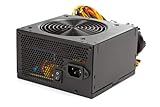
- 1725 WATT AC POWER SUPPLY
What joining OpenPOWER meant in 2014
IBM presented OpenPOWER as an open development alliance based on the POWER microprocessor architecture. In this context, “open” meant that hardware and software could be made available for collaborative development and that POWER intellectual property could be licensed to other manufacturers. It did not mean that every POWER implementation, design file or commercial product was free to use.
IBM said the foundation had been announced in August 2013 by IBM, Google, Nvidia, Mellanox and Tyan. In its 2014 annual report, IBM said the consortium had more than 80 members, including 14 in greater China, and that several member offerings based on POWER had appeared. Those figures describe the alliance as IBM reported it in 2014; they are not a current membership count.
Why IBM said the proposal mattered
Bradley McCredie, IBM vice president and IBM Fellow in the Systems & Technology Group, framed the collaboration as a way to give Chinese IT users more POWER-based processor choices and support server innovation:
Rank #3

- IBM BladeCenter H Server Power Supply
- FRU: 39Y7409
- Astec Model: AA23920L
- Max Output: 2880W
- Includes Fan Pack- FRU: 43V7099
“The proposed collaboration between Suzhou PowerCore, the Research Institute of Jiangsu Industrial Technology and IBM will benefit those innovative businesses in China that are aggressively taking advantage of Big Data and cloud computing to capture growth in such industries as banking, communications, retail and transportation,” said Bradley McCredie, Vice President and IBM Fellow, IBM Systems & Technology Group.
Special offer. See more information about Outbyte and uninstall instructions. Please review EULA and Privacy policy.
IBM also reported that its Beijing POWER Linux development center, opened in May 2013, had helped create more than 550 new applications for POWER. That was IBM’s own 2014-reported figure for applications created since the center opened, not an independently audited count.
How this model differed from a closed processor platform
| Question | OpenPOWER-style model described by IBM | Closed, vertically controlled platform |
|---|---|---|
| Architecture and IP access | Partners could obtain architecture and selected IP through licensing. | Architecture and core IP generally remain controlled by one vendor. |
| Customization | A member such as PowerCore could design a tailored processor solution. | Customization is usually limited to the platform owner’s product roadmap and approved partners. |
| Ecosystem | Multiple companies and institutions could participate in hardware and software development. | Development, validation and support are more centrally managed. |
| Execution responsibility | The licensee still has to complete design, manufacturing, software integration, sales and support. | The platform owner typically coordinates more of those functions itself, though manufacturing may still be outsourced. |
The announcement established the intended access and collaboration model. It did not provide comparable benchmarks, manufacturing details, pricing, production volumes or adoption data.
Rank #4
Did Suzhou PowerCore ever release a processor?
The available IBM sources do not answer that question. IBM’s 2014 annual report, published after the January announcement, continued to describe PowerCore’s intention and the relationship as a strategic partnership. It does not confirm a tape-out, fabricated chip, commercial launch, volume shipment or current corporate activity.
Accordingly, the defensible conclusion is limited: PowerCore announced an intention to use licensed IBM POWER technology for Chinese server processors, but subsequent commercial execution and the company’s present status remain unverified in the cited record.
Key dates and evidence
- August 2013: IBM said it announced the OpenPOWER Foundation with Google, Nvidia, Mellanox and Tyan.
- May 2013: IBM opened its Beijing POWER Linux development center.
- 19 January 2014: IBM announced the proposed Suzhou PowerCore collaboration and intended licensing arrangement.
- 2014 report, published 2015: IBM’s annual report still described PowerCore’s intention and reported more than 80 OpenPOWER members, including 14 in greater China.
The primary materials are IBM’s 19 January 2014 announcement distributed by PR Newswire and IBM’s 2014 Annual Report, published in 2015. Neither source establishes what happened after the reported intention.
Best Value

- 3Y Power Technology YM-2721A YM-2721AB02R 9YA7200107 1757003824 YM-2721ACR Rated 720W 2U Server 80 Plus Bronze Hot-Swappable Redundant Power Supply Unit PSU
- DC Output : Total 720W, +12V 58.75A, +5Vsb 3A; AC Input: 100V-240Vac 50-60Hz 10-5A
- Package include: 1 x 3Y POWER 720W IBM YM-2721A YM-2721AB02R
Frequently Asked Questions
Was Suzhou PowerCore an IBM subsidiary?
The announcement described Suzhou PowerCore Technology as a Chinese company and proposed licensing and strategic cooperation with IBM; it did not identify PowerCore as an IBM subsidiary.
Was POWER8 itself a finished PowerCore product?
No. POWER8-related intellectual property was part of the proposed licensing scope. The sources do not confirm that PowerCore produced a POWER8-based commercial processor.
Quick Recap
Product prices and availability are accurate as of the date/time indicated and are subject to change. Any price and availability information displayed on Amazon at the time of purchase will apply.
Free tools Windows power users keep installed
One-click scans. No signup required.

