
Recommended Free Tools
iTechGuides is reader-supported. When you buy through links on our site, we may earn an affiliate commission. As an Amazon Associate I earn from qualifying purchases. Learn more
Fedora Everything is the version of Fedora’s installer that lets you choose your software during setup instead of accepting a fixed default set. That makes it the most direct route to a Linux desktop with fewer preinstalled apps, but how lean the result is depends on the packages and desktop components you select, and on what you consider bloat.
What Fedora Everything actually is
Fedora publishes two installation paths for its desktop-oriented releases. The standard download is an offline installer with a predefined set of software. Fedora Everything is its online installer, and the official download page explains that it allows you to select packages during installation. The page also states that Fedora Everything requires a working internet connection or a local Fedora mirror, because Fedora has too much software to bundle into the installer itself (Fedora Project, Fedora Everything download page).
The practical difference is clearest when the two are set side by side:
| Question | Standard Fedora download | Fedora Everything |
|---|---|---|
| Installer type | Offline installer | Online (network) installer |
| Software chosen during install | Built into the release’s predefined set; the official page describes it as offline rather than selection-driven | Packages are selected during installation |
| Network needed during install | Not described as required on the download page | Yes: a working internet connection or a local Fedora mirror |
| Best fit | Working desktop with defaults and no setup decisions | Choosing a base and desktop components yourself |
Availability changes with each release. When this article was checked on 7 October 2026, the official page listed Fedora Everything 44 network installation images for x86_64, aarch64, ppc64le, and s390x. Use the official page for the current release and architecture rather than a version number copied from an older guide.
#1 Best Overall

- Fedora Linux 43 Latest Bootable USB Flash Drive – 64-Bit Live Installer | Plug & Play | Fast, Secure, and Modern Linux Operating System for PC and Laptop
- 🔥 Latest Fedora Linux 43 Release: Enjoy the newest and most advanced version of Fedora Linux, built for speed, performance, and reliability — powered by cutting-edge open-source technology.
- 💻 Plug & Play Installation: Boot directly from the included USB drive — no setup or downloads required. Try Fedora live or install it permanently on your system with ease.
- 🔒 Secure & Trusted Build: Professionally prepared using the official Fedora 43 ISO, verified and tested to ensure authenticity, security, and stability.
- ⚙️ Ideal for Developers & Power Users: Fedora 43 includes the latest software packages, GNOME desktop, and developer tools — perfect for programming, testing, or daily computing.
What you need before you start
- A network connection during installation, or access to a local Fedora mirror. Without either, the installer cannot retrieve the packages you select.
- A USB flash drive to hold the installation image. Use one you can erase completely, because the writing step overwrites everything on it.
- A machine with a supported architecture. Match the image to your hardware: x86_64 for most Intel and AMD PCs, and aarch64 for 64-bit ARM systems.
- Time to make decisions. The installer asks you to choose a base and components, so a rushed install usually means a result you later have to clean up.
Verify the download before you write it
Fedora recommends verifying a downloaded image. The verification has two parts: the checksum of your file must match the published checksum, and the checksum file must carry a valid signature from a Fedora OpenPGP certificate (Fedora Project, Fedora Everything download page).
- Download the Fedora Everything image for your architecture, along with the checksum file offered next to it on the official page.
- Compute the checksum of the ISO with the tool your system provides. On most Linux systems that is
sha256sum, and the command takes the ISO filename as its argument. - Compare the output with the value in the checksum file. If they differ, download the image again rather than trying to use it.
- Check the signature on the checksum file using Fedora’s published keys, following the verification instructions on the official page.
Write the image to a USB drive
Once the image checks out, write it to the flash drive with a tool that handles ISO images correctly. Fedora Media Writer is one option; a plain image copy with a command such as dd is another, but it will erase the target device without asking twice, so confirm the device name first with lsblk. Boot the target computer from the drive, typically by selecting the USB device in its firmware boot menu.
Rank #2

- ✅For beginners, refer image-7, its a video boot instruction, and image-6 is "boot menu Hot Key list"
- ✅16-IN-1, 64GB Bootable USB Drive 3.2 , Can Run Linux On USB Drive Without Install, All Latest versions.
- ✅Including Windows 11 64Bit & Linux Mint 22.3 (Cinnamon)、Kali 2026.02、Ubuntu 26.04、Zorin Pro 18、Tails 7.8.1、Debian 13.5.0、Garuda 2026.03、Fedora Workstation 44、Manjaro 25.06、Pop!_OS 22.04、Solus 2026.04、Archcraft 26.05、Neon 2026.06、Fossapup 9.5、Sparkylinux 8.3, All ISO has been Tested
- ✅Supported UEFI and Legacy, Compatibility any PC/Laptop, Any boot issue only needs to disable "Secure Boot"
Choose your software during installation
The installer’s software step is where the result is decided. The exact screen names change between releases, so compare the steps below with the documentation for your release. The Fedora Installation Guide that is currently linked from Fedora’s documentation is for Fedora 35 and should be treated as general background on media and booting, not as a guide to current screens (Fedora Documentation Project, Installation Guide (Fedora 35)).
The Tool Desk
Outbyte Driver Updater FREEScan for outdated or missing drivers - takes under a minuteDriver Scan →Outbyte PC Repair FREEClear out junk files and repair common Windows errorsFree Scan →- Start the installer from the USB drive and select the option to install Fedora.
- Pick your language and keyboard layout, then open Software Selection.
- Choose a base environment. A minimal base gives you the smallest starting point, and a desktop environment is then added as a separate component.
- Select only the desktop environment and add-ons you intend to use. Leave optional groups unchecked unless you know you need them.
- Open Network & Host Name and confirm the connection works before you begin installation, since package retrieval depends on it.
- Set up the installation destination and user account, then start the installation.
Pick a minimal base, then add only the desktop you want
Selecting a minimal base is not the same as getting an empty desktop. A working system still needs enough packages to boot, manage the network and provide the desktop environment you chose. Expect a minimal selection to install more than the bare operating system, and do not judge it by the package count alone.
Rank #3

- 🚀Experience cutting-edge Linux with the newest Fedora release, featuring the latest kernel, GNOME desktop, and developer tools.
- 🔥 Latest Fedora Linux 44 Release: Enjoy the newest and most advanced version of Fedora Linux, built for speed, performance, and reliability — powered by cutting-edge open-source technology.
- 💻 Plug & Play Installation: Boot directly from the included USB drive — no setup or downloads required. Try Fedora live or install it permanently on your system with ease.
- 🔒 Secure & Trusted Build: Professionally prepared using the official Fedora 44 ISO, verified and tested to ensure authenticity, security, and stability.
- ⚙️ Ideal for Developers & Power Users: Fedora 44 includes the latest software packages, GNOME desktop, and developer tools — perfect for programming, testing, or daily computing.
Leave out optional groups you cannot justify
Every group you check adds packages and their dependencies. A reasonable rule is to add a group only when you can name the task it serves, such as printing, multimedia codecs or development tools. You can always install those later.
Add applications after the installation
Choosing software during installation is separate from installing applications afterward. Fedora’s documentation describes Fedora-packaged RPM software and the updates repository as the main sources, with optional Fedora Flatpaks, EPEL and test repositories alongside them. That page applies to Fedora 36 and newer and was last reviewed on 14 May 2024 (Fedora Documentation Project, Finding and installing Linux applications).
Rank #4
- 🚀Experience cutting-edge Linux with the newest Fedora release, featuring the latest kernel, GNOME desktop, and developer tools.
- 🔥 Latest Fedora Linux 44 Release: Enjoy the newest and most advanced version of Fedora Linux, built for speed, performance, and reliability — powered by cutting-edge open-source technology.
- 💻 Plug & Play Installation: Boot directly from the included USB drive — no setup or downloads required. Try Fedora live or install it permanently on your system with ease.
- 🔒 Secure & Trusted Build: Professionally prepared using the official Fedora 44 ISO, verified and tested to ensure authenticity, security, and stability.
- ⚙️ Ideal for Developers & Power Users: Fedora 44 includes the latest software packages, GNOME desktop, and developer tools — perfect for programming, testing, or daily computing.
- RPM packages are installed with
sudo dnf install <package>, and they are the natural choice for system tools and libraries. - Flatpaks keep many desktop applications separate from the base system, which helps you add only the apps you actually use.
Remove what you do not want
If something arrived through a desktop group that you did not intend to keep, you can remove it after the first boot. Check what a transaction changed before undoing it.
- Remove one package:
sudo dnf remove <package> - Remove a package group:
sudo dnf group remove "<group name>". Rundnf group listfirst to get the exact group name. - Review recent changes:
dnf history, thensudo dnf history undo <id>to reverse a specific transaction.
Removing a desktop component can take other packages with it, so read the list dnf prints before you confirm.
Best Value
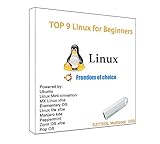
- 1. 9-in-1 Linux:32GB Bootable Linux USB Flash Drive for Ubuntu 24.04 LTS, Linux Mint cinnamon 22, MX Linux xfce 23, Elementary OS 8.0, Linux Lite xfce 7.0, Manjaro kde 24(Replaced by Fedora Workstation 43), Peppermint Debian 32bit (being replaced by MX Linux 32bit) for older PC, Pop OS 22, Zorin OS core xfce 17. The versions you received might be latest than above as we update them to latest/LTS when we think necessary.
- 2. Try or install:Before installing on your PC, you can try them one by one without touching your hard disks.
- 3. Easy to use: These distros are easy to use and built with beginners in mind. Most of them Come with a wide range of pre-bundled software that includes office productivity suite, Web browser, instant messaging, image editing, multimedia, and email. Ensure transition to Linux World without regrets for Windows users.
- 4. Support: Printed user guide on how to boot up and try or install Linux; please contact us for help if you have an issue. Please press "Enter" a couple of times if you see a black screen after selecting a Linux.
- 5. Compatibility: Except for MACs,Chromebooks and ARM-based devices, works with any brand's laptop and desktop PC, legacy BIOS or UEFI booting, Requires enabling USB boot in BIOS/UEFI configuration and disabling Secure Boot is necessary for UEFI boot mode. Packing: The bootable USB drive comes in a colored PET/CPP zipper bag with instructions on how to get started. The box pictured is not included.
Common problems and how to handle them
- The installer cannot reach the package repositories. Check the network connection on the Network & Host Name screen, or point the installer at a reachable local mirror.
- The checksum does not match. The file is incomplete or corrupted. Download it again and repeat the comparison before writing it to the drive.
- The desktop installs more than expected. That is usually a group selection rather than a fault. Use
dnf historyto see which transaction added it, then remove the group as described above. - The drive does not boot. Confirm the image was written completely, then select the USB device in the firmware boot menu.
Where this route fits
Fedora Everything is a sound choice if you want to decide what goes onto the system and you have a network connection for the installation. It is less suitable if you want a fully configured desktop without making any decisions, because the standard download is designed for that. What counts as bloat is personal, and so is the result: the packages that appear depend on your release, architecture, hardware and the groups you select, so your installation may end up leaner or heavier than the one described here.
Quick Recap
Product prices and availability are accurate as of the date/time indicated and are subject to change. Any price and availability information displayed on Amazon at the time of purchase will apply.

