
iTechGuides is reader-supported. When you buy through links on our site, we may earn an affiliate commission. As an Amazon Associate I earn from qualifying purchases. Learn more
For an HVAC installation in Los Angeles, first confirm which building department serves your address, then verify the installer’s California C-20 license and get a written, itemized scope that covers permits, inspections, equipment and any rebate paperwork. The City of Los Angeles, LADWP and California programs have different boundaries and eligibility rules, so a rebate or permit path that fits one property may not fit another.
Which agency handles your property and permit?
“Los Angeles” can mean the City of Los Angeles or another city or unincorporated area in Los Angeles County. The property address determines the permitting authority. The Los Angeles Department of Building and Safety (LADBS) directs property owners to confirm jurisdiction and zoning; if the address does not appear in ZIMAS, it may be outside the city and subject to a county or other local department. Use the address-specific instructions from the correct authority rather than assuming LADBS serves every Los Angeles-area home.
California Energy Commission (CEC) guidance says a building permit is required to install a space-conditioning appliance other than a plug-in room appliance. LADBS guidance also identifies installation or modification of heating and cooling systems as permit work. Confirm the exact application, documentation and inspection requirements with the authority serving the property, since the requirements can depend on the project and compliance path.
What code and inspection requirements may apply?
The CEC’s 2025 Energy Code guidance covers single-family new construction, additions and alterations. The applicable requirements vary with the type of work and the compliance approach. New HVAC systems require load calculations. Field verification and diagnostic testing are mandatory for newly constructed single-family homes and prescriptively required for most HVAC additions and alterations; where applicable, the Certificate of Compliance identifies the requirements and the project must coordinate with an ECC-Rater.
#1 Best Overall

- CERTIFIED ACiQ SELLERS: Everything you need for reliable HVAC solutions!
- HEATING & COOLING: High-efficiency single-stage compressor with a factory-installed filter drier for dependable, long-lasting heating and cooling performance.
- EVAPORATOR COIL: Built with rifled copper tubing and enhanced aluminum fins for excellent durability, heat transfer, and corrosion resistance.
- INSTALLATION KIT: The unit includes a safety sensor, line set, gauge whip, disconnect switch, thermostat, equipment pad, and fitting coupling kit set.
- WARRANTY TERMS: A duration of 10 years parts when installed by a tech and registered online with the manufacturer at no additional charge.
When replacing an old system, refrigerant recovery must be performed by a technician with EPA 608 Type II or Universal certification. Ask the contractor to explain how the project will meet applicable recovery, permit, testing and inspection requirements, and who is responsible for scheduling and closing out the permit.
How to check an HVAC contractor before signing
- Verify the license. Search the contractor through the California Contractors State License Board (CSLB). CSLB advises homeowners to confirm an active C-20 Warm-Air Heating, Ventilating, and Air-Conditioning license in good standing before work starts.
- Confirm permit responsibility. Have the quote identify who obtains the permit, arranges inspections and provides the final approved permit documentation. Check that the named authority matches the property address.
- Ask how the system was sized. Request the capacity basis and load-calculation information for a new system, rather than relying only on the size of the existing equipment.
- Get the complete equipment identity. Request make, model and efficiency ratings for the proposed indoor and outdoor components, plus the AHRI-rated combination if applying for an LADWP heat-pump rebate.
- Define the full scope in writing. Identify whether duct repairs or sealing, electrical work, equipment removal, refrigerant recovery, testing, inspection closeout and rebate documents are included.
Correct installation and sealed ducts affect system operation and expected efficiency, so ask what duct work is proposed and how it will be verified. A general California C-20 license is distinct from any additional contractor qualification required by a rebate program.
Rank #2

- CERTIFIED ACiQ SELLERS: Everything you need for reliable HVAC solutions!
- WIDE AREA COVERAGE: This ductless mini split AC/heating system provides enough heating and cooling for rooms up to 1500-2000 square feet in size.
- HIGH EFFICIENCY SEER2: This mini split heat pump system is designed to operate within a cooling range of 5°F to 127°F and a heating range of -4°F to 75°F outdoor temperatures.
- INSTALLATION KIT INCLUDED: The unit includes a 16 ft. line set, remote control with mount, power cable, indoor mounting plate, outdoor rubber feet, plastic wrap, wall cap, drain elbow and line, plasticene, and screws with anchors.
- WARRANTY TERMS: A duration of 4 year parts and 6 year compressor when installed by a tech and registered online with the manufacturer at no additional charge.
How to compare HVAC bids and system types
Common configurations include central ducted systems, split systems, mini-splits and multi-splits. LADWP’s listed heat-pump rebate program includes central, split, mini-split and multi-split systems, but excludes packaged terminal heat pumps. The suitable choice depends on the home’s layout, existing ductwork and electrical scope; compare systems only after confirming they are viable for the property.
The Tool Desk
Outbyte Driver Updater FREEScan for outdated or missing drivers - takes under a minuteDriver Scan →Outbyte PC Repair FREEClear out junk files and repair common Windows errorsFree Scan →| Compare | What to check in each written bid |
|---|---|
| Configuration | Central ducted, split, mini-split or multi-split; whether existing ducts are suitable and what modifications are included. |
| Equipment and efficiency | Exact model combination, quoted SEER2 and HSPF2 ratings, and matching AHRI certificate when needed for a rebate. |
| Compliance and scope | Load calculations, permit and inspection responsibility, duct work, electrical work, refrigerant recovery and applicable testing. |
| Incentive paperwork | Utility-account eligibility, equipment criteria, contractor qualification, permit status, required documents and reservation timing. |
| Total installed cost | Itemized local quotes with labor, equipment, modifications, permits and any exclusions clearly identified. |
The official sources cited here do not establish a current Los Angeles installed-price range. For a meaningful comparison, get multiple itemized quotes for the same scope and equipment class rather than treating an unsupported online average as a local price.
Rank #3
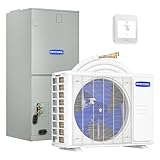
- Includes 35-foot pre-charged line set with Quick Connect technology, streamlining professional installation process and eliminating the need for vacuum procedures during setup.
- Premium energy efficient operation with 15.2-18.8 SEER2 rating (depending on model) and DC inverter technology, delivering superior temperature control while significantly reducing monthly utility costs compared to conventional systems.
- Advanced multiposition installation capabilities supporting upflow, downflow, and horizontal configurations, making it ideal for various space requirements and ensuring versatile mounting options for optimal performance in any setting.
- Innovative R454B refrigerant system featuring lower pressure levels and reduced environmental impact, providing enhanced coefficient performance and improved cooling capacity for sustainable operation.
- Integrated smart thermostat compatibility with filter reminder function and self-diagnostic capabilities, enabling simplified maintenance and efficient system monitoring for peak performance.
What LADWP rebates may apply?
The LADWP Consumer Rebate Program lists $100–$120 per ton for qualifying HVAC systems and up to $2,500 per ton for qualifying heat-pump HVAC. Heat-pump rebate tiers depend on SEER2 and HSPF2 ratings. These are program figures, not guaranteed payments: check the live program page and application for current tiers, requirements and availability before signing a contract.
For the listed heat-pump rebate, LADWP requires active residential electric service with LADWP and an application after purchase and installation, submitted within 12 months of purchase. The utility may inspect and verify the installation before issuing a rebate. Listed minimum ratings are 15.2 SEER2 and 7.7 HSPF2. The required submission includes:
Rank #4
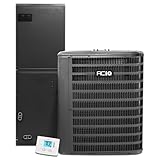
- CERTIFIED ACiQ SELLERS: Everything you need for reliable HVAC solutions!
- HEAT PUMP CONDENSER: Offers efficient heating and central air conditioner unit, ensuring year-round comfort. Its simple installation and energy-saving design make it a cost-effective, hassle-free choice.
- AIR HANDLER: Features cost-effective performance with its ECM blower motor and durable design, along with an all-aluminum evaporator and a factory-installed TXV kit that contribute to overall efficiency, often surpassing the paired condenser's tonnage.
- FREE THERMOSTAT: 2 Heat / 1 Cool non-programmable thermostat with memory retention, compressor protection, and adjustable limits. Device runs on hardwire or 2 AAA batteries (not included).
- CERTIFIED SAFETY: AHRI Certified and ETL Listed, featuring a high-pressure switch, ground lug connection, and extended-life capacitors for long-term performance and reliability.
- A paid, itemized invoice showing make and model and the matching AHRI certificate reference.
- An AHRI certificate whose components match the installed equipment.
- A final approved building and safety permit.
New construction and accessory dwelling units (ADUs) are ineligible under the listed heat-pump program terms. Confirm every condition with LADWP; do not subtract a potential rebate from the project budget until eligibility and documentation requirements are clear.
Quick wins for a faster PC:
Scan for outdated or missing drivers - takes under a minuteDriver Scan →Repair Windows errors before they cause bigger problemsFix Now →Could HEEHRA help pay for a heat pump?
California’s HEEHRA Phase I single-family program may offer an income-qualified homeowner up to $4,000 or $8,000 toward eligible heat-pump HVAC, depending on household income relative to area median income (AMI). The CEC says the program applies to qualifying homeowners who live in the home, or rent it to an income-qualified household, and are replacing an existing non-heat-pump space-heating source. The listed rebate is up to $4,000 for households at 80%–150% of AMI and up to $8,000 for households below 80% of AMI.
Best Value

- CERTIFIED ACiQ SELLERS: Everything you need for reliable HVAC solutions!
- INVERTER TECHNOLOGY: This inverter ductless air conditioner and heat pump adjusts power based on demand, providing precise temperature control, lower energy bills, and quieter operation compared to single stage systems.
- HEATING & COOLING: Enjoy powerful AC and heat pump with cooling operation from 5°F – 125°F and heat pump heating from 5°F – 75°F, with optional electric backup heat for colder conditions.
- SYSTEM INCLUDED: In addition to the split AC and heating system, it includes a smart thermostat and a backup heat kit of your choice.
- WARRANTY TERMS: A duration of 4 year parts and 6 year compressor when installed by a tech and registered online with the manufacturer at no additional charge.
Unlike an incentive applied for after installation, HEEHRA requires an approved rebate reservation before work begins. The homeowner must use a TECH-certified and HEEHRA-trained contractor; projects started without preapproval will not be funded. Funding is limited and varies by region, so confirm current availability, income eligibility, contractor status and eligible equipment with the program before committing. HEEHRA rebates are not retroactive to purchases or installations made before an approved reservation.
CEC guidance also states that, beginning January 1, 2026, eligible residential air-conditioning and heat-pump systems must use refrigerants with a global warming potential (GWP) of 700 or lower. Confirm that any proposed equipment satisfies current program rules.
Which tax credit or incentive dates matter in 2026?
The CEC program guidance says the federal 25C tax credit applies only to heat pumps placed into service by December 31, 2025. That deadline has passed, so it should not be counted as available for a new 2026 installation. Utility rebate terms and HEEHRA funding can change; verify the current requirements directly with LADWP or the HEEHRA program before ordering equipment.
Quick Recap
Product prices and availability are accurate as of the date/time indicated and are subject to change. Any price and availability information displayed on Amazon at the time of purchase will apply.

