
iTechGuides is reader-supported. When you buy through links on our site, we may earn an affiliate commission. As an Amazon Associate I earn from qualifying purchases. Learn more
Start with a child in mind, not a prompt. Choose the intended age range and whether the book will be read aloud or independently, then use AI only in ways your intended publisher or platform permits. Treat generated text as a draft: a person must shape the story, check its language and emotional fit, verify its facts, and review originality, privacy, and rights before sharing or submitting it.
Define the reader and the story before using AI
Choose a specific age range and reading context first. A story for a child hearing it read aloud can use rhythm, repetition, and language that an adult can explain in the moment; a story for an independent reader needs to make its action and meaning clear on the page. Also consider what the reader already knows about the subject and what emotional experience you want the story to offer.


Age bands are useful starting points, not precise reading-level measurements. Children develop at different paces, as Google notes in its Building for Kids content guidance. A child’s age alone does not tell you exactly which words, themes, or situations will work.
Write down the story promise in a sentence: who the main character is, what they want, what gets in the way, and what kind of emotional journey the story offers. Keep that premise and the important character and plot decisions under your control. If your venue permits AI support, a bounded request—such as asking for several outline possibilities or flagging sentences that may be unclear—keeps the author responsible for choosing what belongs in the book.
#1 Best Overall
Check whether AI use is allowed where you plan to publish
There is no single policy across the sources cited here. SCBWI and Elsevier illustrate substantially different organization-specific approaches; neither should be treated as a universal rule for children’s publishing.
| Organization | What its policy says | What to do |
|---|---|---|
| SCBWI | Its policy, updated September 14, 2026, states: “Therefore, we are opposed to any use of text-prompted generative AI in writing, illustrating, translating, or other aspects of creating children’s books.” SCBWI says its traditional publishing standard does not encourage or include GenAI-created text, translated text, or illustrations; its policy addenda apply to members across traditional, hybrid, and self-publishing contexts. | Read SCBWI’s current Generative AI Policy if it applies to you, including its guidance about process evidence and competitions. |
| Elsevier | Its policy allows responsible AI and AI-assisted use for covered book authors and commissioned content, subject to human oversight and other conditions. It says: “These tools must never be used as a substitute for human critical thinking, expertise and evaluation.” | For work covered by Elsevier’s Generative AI Policies for Books and Commissioned Content, follow its requirements, including a separate submission declaration identifying the tool, purpose, and extent of human oversight. |
Before drafting or submitting, check the current rules of the specific publisher, contest, fellowship, agent, or self-publishing service you intend to use. Check what tasks are allowed—such as ideation, editing, rewriting, translation, or illustration—whether disclosure or process records are required, and what information may be entered into tools. Save drafts and revision history when the venue may ask for evidence of how the work was made.
Rank #2
Revise the language for the child, not just a reading score
Google’s age cues are designed for children’s digital content, not a validated book-reading rubric or a publishing standard. They can help prompt questions, but use them cautiously rather than treating them as rules.
Do these 3 things before closing this tab:
1Fix the driver behind crashes, sound loss and screen glitches2Repair Windows errors before they cause bigger problems3Scan for outdated or missing drivers - takes under a minute| Age cue in Google’s guidance | What it suggests for revision |
|---|---|
| Ages 5 and under | Children are beginning communication and social skills and may have difficulty managing emotions. The guidance recommends simple, common words in its vocabulary section. |
| Ages 6–8 | School and friendships become more prominent. The guidance suggests limited text with some complex vocabulary. |
| Ages 9–12 | Friendships and identity are prominent. The guidance suggests brief, useful text with some complex vocabulary and language elements. |
Use Google’s guidance as one set of prompts, then assess the whole reading experience. Shorter sentences and familiar words can help, but replacing every vivid or unfamiliar word may flatten a story. Keep a challenging word when context makes its meaning understandable and the word earns its place.
Rank #3
- Clarity: Can a child follow what is happening and understand what the character wants and why? Look for long or tangled sentences, unclear pronouns, and explanations that depend on knowledge the intended reader may not have.
- Read-aloud flow: If the book is intended to be read aloud, read it aloud yourself. Notice where rhythm stumbles, a phrase is hard to say, or repetition helps the listener keep track.
- Emotional fit: Consider whether conflict, frightening scenes, humor, and consequences will make sense to the intended reader or risk confusing or distressing them. A story can address difficult feelings; handle their causes and consequences with care.
- Meaning beyond vocabulary: Check the plot, relationships, implied messages, and resolution. Easy words do not make a story age-appropriate if its emotional intensity or underlying message is a poor fit.
- Representation: Look for subtle stereotypes as well as overt ones. Google warns that these can affect children’s sense of themselves and others; aim for respectful, specific characters rather than relying on stock traits.
Review facts, originality, privacy, and rights yourself
Do not treat generated facts or citations as verified. Check names, factual claims, quotations, and permissions against reliable sources. Review whether any material resembles existing work or uses third-party content in a way you cannot authorize. The evidence presented here does not settle jurisdiction-specific copyright questions, so consult the applicable rules or qualified advice when those questions matter.
Before entering a manuscript or personal information into an AI tool, review its terms and privacy practices. Elsevier’s policy for its covered authors specifically calls for attention to privacy, tool rights, accuracy, impartiality, and human review; it also says authors remain responsible for the work and must thoroughly review and adapt generated material so the work reflects their own original contribution.
A 2023 paper, “On the Automatic Generation and Simplification of Children’s Stories”, reported that the language models tested in its experiments did not yet reliably limit vocabulary to levels suitable for younger age groups. That result applies to those tested models and methods at that time; it does not establish how every current tool performs. It is a reason to review generated language, not a current scorecard for all AI systems.
Use a final human-review checklist
- Does the story make sense to the child rather than only to an adult?
- Can the reader follow what the character wants, why they want it, and what changes?
- Does the language support the story instead of interrupting it?
- Are emotionally difficult moments handled with care for the intended reader?
- Can unfamiliar terms be understood from context or a clear explanation?
- Is the representation respectful and specific?
- Have a person checked names, facts, quotations, and permissions?
- Have you checked the intended venue’s AI policy and completed any required disclosure?
UNICEF’s December 2025 Guidance on AI and children, Version 3.0 provides broader child-rights context on safety, privacy, fairness, transparency, development, and well-being. It addresses AI systems rather than how to write a children’s book, but those concerns reinforce why a human review should consider more than word choice.
Quick Recap
Best Value

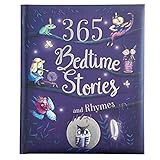
- 6.5 x 9.5 Inch
- 420 Full-Color Pages
- Hardcover
- Gold Foil Title and Accents
- Attached Ribbon Page Marker
Product prices and availability are accurate as of the date/time indicated and are subject to change. Any price and availability information displayed on Amazon at the time of purchase will apply.

