
Free tools Windows power users keep installed
One-click scans. No signup required.
iTechGuides is reader-supported. When you buy through links on our site, we may earn an affiliate commission. As an Amazon Associate I earn from qualifying purchases. Learn more
Gaming fans commonly get louder as the CPU and graphics card work harder. Noise alone does not prove a fault. Investigate when fans stay loud at idle, temperatures remain unusually high for your exact hardware, performance drops or stutters, or the PC crashes or shuts down. Start with workload, airflow, and safe inspection before considering replacement parts.
First, tell normal fan ramp-up from a cooling problem
Compare the PC at idle with a repeatable gaming session. Note when the fans get louder, CPU and GPU temperatures, and whether the game loses performance, stutters, crashes, or the system shuts down. GPU fans may speed up as the card heats under load; some models intentionally stop their fans at low temperatures or loads. Check the manufacturer’s fan policy for your exact graphics card rather than treating a stationary fan as a defect. ASUS explains that GPU fan speed responds to temperature and that behavior depends on the card and operating conditions: ASUS GPU fan behavior and troubleshooting.
There is no single temperature that means every gaming CPU or GPU is overheating. Temperature depends on the component, cooler, case airflow, room temperature, settings, and workload. Use the specifications and support guidance for the exact processor and graphics card. AMD’s CPU guidance specifically directs users to processor specifications and notes that operating temperature varies with the cooling solution and conditions: AMD CPU temperature guidance.
Quick wins for a faster PC:
Repair Windows errors before they cause bigger problemsFix Now →Fix the driver behind crashes, sound loss and screen glitchesFind Drivers →Pay particular attention to sustained high fan speeds at idle, worsening temperatures, performance loss, repeated crashes, or shutdowns. Intel describes CPU thermal throttling as reducing clock speed when the processor reaches its thermal limit. A drop in clocks or stuttering under load can therefore be a useful clue, although it does not by itself identify the cause: Intel: processor thermal throttling.
#1 Best Overall

- Whisper-Quiet Operation: Enjoy a noise-free and interference-free environment with super quiet fans, allowing you to focus on your work or entertainment without distractions.
- Enhanced Cooling Performance: The laptop cooling pad features 5 built-in fans (big fan: 4.72-inch, small fans: 2.76-inch), all with blue LEDs. 2 On/Off switches enable simultaneous control of all 5 fans and LEDs. Simply press the switch to select 1 fan working, 4 fans working, or all 5 working together.
- Dual USB Hub: With a built-in dual USB hub, the laptop fan enables you to connect additional USB devices to your laptop, providing extra connectivity options for your peripherals. Warm tips: The packaged cable is a USB-to-USB connection. Type C connection devices require a Type C to USB adapter.
- Ergonomic Design: The laptop cooling stand also serves as an ergonomic stand, offering 6 adjustable height settings that enable you to customize the angle for optimal comfort during gaming, movie watching, or working for extended periods. Ideal gift for both the back-to-school season and Father's Day.
- Secure and Universal Compatibility: Designed with 2 stoppers on the front surface, this laptop cooler prevents laptops from slipping and keeps 12-17 inch laptops—including Apple Macbook Pro Air, HP, Alienware, Dell, ASUS, and more—cool and secure during use.
Work through the likely causes in order
1. Check what is using CPU or GPU resources
Open Task Manager and look for processes consuming more CPU or GPU resources than you expect, especially when the noise or heat occurs. Close or investigate unexpected programs. If the symptoms began after installing software, changing BIOS or fan settings, changing hardware, or overclocking, undo that change temporarily and compare the same workload again. AMD recommends testing CPU performance and temperature in a stock configuration and disabling nonessential background applications during diagnosis.
2. Give the case room to breathe
Place a desktop tower on a hard, open surface rather than carpet or inside a closed cabinet. Keep clearance around intake and exhaust openings. Check for dust, lint, blocked vents, cables near fan blades, or components obstructing airflow. Intel’s boxed-processor guidance calls for adequate chassis airflow with balanced intake and exhaust; ASUS also recommends checking case ventilation and ambient conditions.
Rank #2
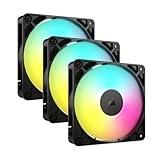
- Streamlined Fan Connections: Daisy-chain multiple fans together and control them all through just one 4-pin PWM connector and one +5V ARGB connector.
- Lighting Made Easy: Eight LEDs per fan shine bright with customisable lighting through your motherboard’s built-in ARGB control (requires compatible motherboard).
- Precise PWM Speeds: Set your fan speeds up to 2,100 RPM while providing up to 72.8 CFM airflow to your system.
- CORSAIR AirGuide Technology: Anti-vortex vanes direct airflow at your hottest components for concentrated cooling, pushing air in the direction you need when mounted to a radiator or heatsink.
- High Static Pressure: RS fans work well as radiator fans with a static pressure of 2.8mm-H2O to push through obstructions.
A brief side-panel comparison can help isolate airflow: ASUS suggests checking whether GPU temperature drops noticeably when the panel is open. If it does, investigate case or room airflow. Treat this only as a diagnostic clue, not a permanent fix; removing the panel changes the intended airflow and leaves components more exposed to debris.
Do these 3 things before closing this tab:
1Repair Windows errors before they cause bigger problems2Scan for outdated or missing drivers - takes under a minute3Clear out junk files and repair common Windows errors3. Inspect fans with the PC powered off
Shut down the computer before inspecting accessible fans. Look for dust, obstructions, damaged blades, and loose cables. Do not reach into a powered system. Once the PC is closed up, observe fan operation from a safe distance during normal use. Grinding, knocking, or ticking may indicate a fan problem. A GPU fan that is stopped at low load is not necessarily broken; check the card maker’s model-specific behavior.
Rank #3

- 9 Super Cooling Fans: The 9-core laptop cooling pad can efficiently cool your laptop down, this laptop cooler has the air vent in the top and bottom of the case, you can set different modes for the cooling fans.
- Ergonomic comfort: The gaming laptop cooling pad provides 8 heights adjustment to choose.You can adjust the suitable angle by your needs to relieve the fatigue of the back and neck effectively.
- LCD Display: The LCD of cooler pad readout shows your current fan speed.simple and intuitive.you can easily control the RGB lights and fan speed by touching the buttons.
- 10 RGB Light Modes: The RGB lights of the cooling laptop pad are pretty and it has many lighting options which can get you cool game atmosphere.you can press the botton 2-3 seconds to turn on/off the light.
- Whisper Quiet: The 9 fans of the laptop cooling stand are all added with capacitor components to reduce working noise. the gaming laptop cooler is almost quiet enough not to notice even on max setting.
4. Check the CPU cooler and recent hardware changes
For a self-built PC, confirm the CPU cooler is compatible with the exact processor, socket, and case clearance, and is firmly mounted. Check that its fan or pump is connected and that any protective film was removed from a newly installed cooler. Intel recommends a cooler thermal solution that meets or exceeds the CPU’s processor base power needs for high-intensity use such as gaming. AMD likewise advises checking that the cooler meets the processor’s default requirements and is mounted and working correctly. Do not use a generic wattage rule in place of checking the exact CPU and cooler specifications.
If a liquid-cooling pump may have failed, fluid is leaking, the mount is loose, or hardware appears damaged, stop troubleshooting by guesswork. Follow the cooler or system maker’s instructions or use a repair professional. Inspection procedures vary by manufacturer. If the PC is a prebuilt or OEM desktop, contact its manufacturer about persistent overheating; Intel directs OEM users to the computer maker for this issue: Intel boxed-processor cooling and troubleshooting guidance.
Rank #4

- 【Perfect Match】The PC fan can be used not only as a case fan, but is also suitable for use with a cpu cooler to create a cooling effect together, which can take away the dry heat from the case and the high temperature generated by the CPU in operation, allowing for maximum cooling; Ideal for cases, radiators and CPU coolers.
- [Excellent LED light] The high-brightness LED atomizing argb fan blade can effectively reflect the light, making the ARGB lighting effect softer, and it matches the cooler and case more perfectly. Up to 17 modes of light effects with ARGB support, color can be managed and synchronized through the port on motherboard.
- 【High Performance Cooling Fan】 Automatic speed control of the motherboard through the 4PIN PWM fan cable interface, which can determine the speed according to the temperature of the motherboard, with a maximum speed of 1550RPM. Configured with up to 55cm of cable for PWM series control of fans, ideal for cases and CPU coolers.
- 【Silent Fan Size】 Model: TL-C12C-S X3, Size: 120*120*25mm, Speed: 1550RPM±10%, Noise ≤ 25.6dBA Connector: 4pin pwm, Current: 0.20A, Air Pressure: 1.53mm H2O, Air Flow: 66.17CFM, Higher air flow for improved cooling performance.
- 【Quality Bearings】The carefully developed quality S-FDB bearings solve the problem of pc cooling fan blade shaking in lifting mode, keeping fan noise to a minimum while providing maximum cooling performance when needed and extending the life of the fan.
5. Clean dust safely
Shut down the PC and unplug it before cleaning. For graphics-card vents, ASUS recommends a commercial compressed-air can or suitable blower, held at a distance; do not invert the can. Avoid strong airflow such as an air compressor, and do not disassemble the GPU thermal module to clean it. Follow the system maker’s instructions for laptops and prebuilts because access and maintenance procedures differ. See ASUS instructions for cleaning a graphics card.
The Tool Desk
Outbyte PC Repair FREEClear out junk files and repair common Windows errorsFree Scan →Outbyte Driver Updater FREEFix the driver behind crashes, sound loss and screen glitchesFind Drivers →Choose a fix that matches the cause
| What you find | Reasonable next step | Important limitation |
|---|---|---|
| Dust or lint blocking vents | Power down, unplug, and clean according to the system or component maker’s instructions. | Do not use an air compressor or disassemble a GPU thermal module contrary to ASUS guidance. |
| Obstructed intake or weak case airflow | Move the tower to an open location, clear obstructions, and assess case ventilation. | A case fan only helps if airflow is the problem; check compatibility and placement. |
| CPU temperature or performance issue with a loose, unsuitable, or faulty cooler | Verify mounting, fan or pump connection, and compatibility for the exact CPU and case. | Coolers are not interchangeable; verify socket, clearance, and cooling requirements. |
| Damaged, noisy, or nonworking fan; suspected pump failure or leak | Use the manufacturer’s service instructions or a repair professional. | GPU fan or cooler replacement is model-specific and can risk hardware damage or affect warranty coverage. |
Do not replace parts solely because fans are loud. Identify the likely fault first, then weigh compatibility, cooling capacity for the actual workload, noise, installation difficulty, and service or warranty implications. A graphics-card cooler is generally a model-specific service question, not a generic upgrade.
Quick Recap
Best Value
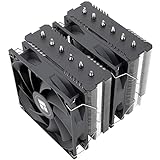
- [Brand Overview] Thermalright is a Taiwan brand with more than 20 years of development. It has a certain popularity in the domestic and foreign markets and has a pivotal influence in the player market. We have been focusing on the research and development of computer accessories. R & D product lines include: CPU air-cooled radiator, case fan, thermal silicone pad, thermal silicone grease, CPU fan controller, anti falling off mounting bracket, support mounting bracket and other commodities
- [Product specification] Thermalright PA120 SE; CPU Cooler dimensions: 125(L)x135(W)x155(H)mm (4.92x5.31x6.1 inch); heat sink material: aluminum, CPU cooler is equipped with metal fasteners of Intel & AMD platform to achieve better installation, double tower cooling is stronger((Note:Please check your case and motherboard for compatibility with this size cooler.)
- 【2 PWM Fans】TL-C12C; Standard size PWM fan:120x120x25mm (4.72x4.72x0.98 inches); fan speed (RPM):1550rpm±10%; power port: 4pin; Voltage:12V; Air flow:66.17CFM(MAX); Noise Level≤25.6dB(A), leave room for memory-chip(RAM), so that installation of ice cooler cpu is unrestricted
- 【AGHP technique】6×6mm heat pipes apply AGHP technique, Solve the Inverse gravity effect caused by vertical / horizontal orientation, 6 pure copper sintered heat pipes & PWM fan & Pure copper base&Full electroplating reflow welding process, When CPU cooler works, match with pwm fans, aim to extreme CPU cooling performance
- 【Compatibility】The CPU cooler Socket supports: Intel:115X/1200/1700/17XX AMD:AM4;AM5; For different CPU socket platforms, corresponding mounting plate or fastener parts are provided(Note: Toinstall the AMD platform, you need to use the original motherboard's built-in backplanefor installation, which is not included with this product)
When to stop troubleshooting yourself
- Contact the PC maker if a prebuilt or OEM system continues to overheat after basic airflow and software checks.
- Seek component-specific instructions or repair help for a suspected pump failure, coolant leak, damaged hardware, or fan that does not operate as expected.
- Use the exact CPU and GPU support information when temperatures are concerning; general online thresholds cannot account for every model and setup.
Product prices and availability are accurate as of the date/time indicated and are subject to change. Any price and availability information displayed on Amazon at the time of purchase will apply.

