
iTechGuides is reader-supported. When you buy through links on our site, we may earn an affiliate commission. As an Amazon Associate I earn from qualifying purchases. Learn more
To make past incidents useful during the next response, capture a blameless review soon after resolution, turn findings into owned and verifiable actions, and store the record with consistent details people can search. The goal is not a polished document for its own sake; it is organizational learning that can inform future decisions.
How do you write an incident postmortem?
Begin the write-up promptly after the incident is resolved, while responders can still recall decisions, handoffs, and sequence of events. Google’s Incident Management Guide recommends immediately beginning a write-up after resolution. A quick initial record can be refined after participants check the facts.


Use a blameless approach: describe the system, process, and information conditions that shaped what happened, rather than assigning fault to individuals. As the guide puts it, “Blaming individuals for unintended consequences during the response, does not aid the learning process so instead, we focus on how we can improve our systems, procedures, and training to make them more resilient.”
Build a factual account before drawing lessons
Start with a timestamped timeline and evidence. Record when the incident began, how it was detected, key decisions and changes, mitigation, recovery, and when normal service returned. Link to the original telemetry or incident data when using metrics so readers can inspect the context rather than relying on an unexplained number.
#1 Best Overall
Then examine more than the immediate technical failure. Consider detection, mitigation, coordination, and communications, along with what worked and what could improve. Separate observed facts from interpretations, and identify contributing conditions and triggers without treating any single event as proof of a complete root cause.
A practical postmortem record
The following is a useful schema synthesized from Google’s guidance, not a universal mandated template. Adapt it to the incident and your organization’s access and review practices.
- Identification: incident identifier, date, severity, and affected services.
- Impact: who or what was affected, for how long, and how impact was assessed.
- Detection: alert, report, or other signal that surfaced the incident.
- Timeline and response: timestamps, response roles, significant decisions, coordination, and communications.
- Mitigation and recovery: actions taken, outcome, and evidence that service recovered.
- Learning: contributing conditions and triggers, what went well, and what could improve.
- Follow-up: action type, priority, owner, tracking reference, and a measurable completion condition.
- Record management: review status, intended audience, access classification, and searchable tags.
What should an incident postmortem include?
Include enough context for someone who was not on the response to understand the incident and evaluate the proposed changes. A list of timestamps without impact or decisions is hard to interpret; a narrative without evidence is difficult to verify. Connect the sequence, impact, response, and lessons, and preserve links to relevant source data.
Recommended Free Tools
Make the review accurate before making it elegant. Check the timeline with participants and incident records, distinguish what is known from what remains uncertain, and ensure the action list addresses more than the final technical fix. Google’s Postmortem Practices for Incident Management discusses templates and emphasizes retaining context for data presented in a review.
How do you make postmortem actions measurable and hard to forget?
Translate each finding into a specific change with an owner, priority, tracking location, and testable end state. “Improve monitoring” is not verifiable. A stronger action identifies what signal or alert will change, who will implement it, where progress is tracked, and what evidence will demonstrate completion.
Balance preventive work with mitigation. Not every contributing condition can be eliminated, so actions may also reduce impact, speed detection, or make recovery safer. Google’s workbook warns that items without ownership or a formal tracking process are more likely to remain unresolved. In a Google SRE podcast, guest Ayelet Sachto says follow-up actions “need to be concrete. And those need to be assigned, and ideally with an ETA.” Teams do not need one universal workflow; they do need a dependable way to ensure actions are followed through.
Rank #4
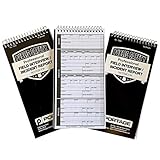
- THE IDEAL SIZE - The field interview and incident report notebook is a slim 3.75” x 6” pocket sized police notebook that fits easily and comfortably in a uniform pocket
- TAKE NOTES ON THE GO - This professional reporter’s notebook makes it easy taking notes in the field. we use a .75mm thick cover, twice as rigid as most competitors. The extra stability provides a sturdy writing surface, so you are always prepared
- FORM KEEPS YOU ORGANIZED - This notebook includes a simple, yet comprehensive form for recording key notes, ensuring you don’t miss important details. Each report has individual sections for case numbers, time, date, location, etc
- DURABLE CONSTRUCTION - Our appointment planners are made with extra thick covers, bound with coated spiral bindings, and rounded page corners, that make for a professional and durable notebook that stands the test of time. Portage is built to last
- TRIED AND TESTED DESIGN - Our Notepads have been tested and perfected by the professionals that use them daily. This notebook has been designed to keep all cases and information organized and accessible
- Write the action as an observable change. State what will be different, not just the desired aspiration.
- Assign accountability. Name one owner responsible for moving it forward; involve additional contributors as needed.
- Set priority and track it. Put it in the team’s established work-tracking system and connect the item to the incident record.
- Define completion evidence. Specify a check, test, deployed change, or other observable condition that shows the action is done.
- Review status. Keep open items visible until they meet the stated condition or are explicitly reconsidered.
How can teams find lessons from past incidents?
A repository supports hindsight only when records are reviewed, shared with people who can learn from them, and findable later. Google’s SRE book describes adding reviewed postmortems to a team or organization repository, while the workbook recommends broad sharing and machine-readable tags for analysis.
What’s actually slowing this PC down?
Pick the symptom - the matching free tool is one click away.
Consistent metadata can make searching and comparison easier. As a practical design choice, use stable service names, incident dates, symptoms, and action status as tags or searchable fields. These are useful retrieval aids, not an official required schema. Apply access controls appropriate to sensitive operational details while ensuring the intended learning audience can reach the record.
Publication delay can cost teams context. In one example in Google’s workbook, a postmortem appeared four months after an incident and a recurrence occurred in the interim. That is a specific case-study sequence, not evidence of a general recurrence rate or a guarantee that faster publication prevents another incident.
How should teams choose a postmortem workflow or tool?
Choose the lightest process that reliably preserves the record and closes the loop on actions. Whether the workflow uses a shared document, incident platform, or dedicated postmortem tool, evaluate it against the work the team needs to do:
- Can responders capture a useful account promptly, without excessive overhead?
- Can the record preserve timeline and impact evidence, including links to original data?
- Can future readers search by service, date, symptoms, and other consistent metadata?
- Does the process support review, action ownership, tracking, and completion checks?
- Can teams examine patterns across records?
- Does it fit existing incident communications and telemetry, with suitable access controls?
Google’s workbook names PagerDuty Postmortems, Morgue by Etsy, and VictorOps as examples of third-party tools that can help create, organize, and analyze postmortems. Those examples are not endorsements or confirmation of current availability, feature sets, or comparative performance. No universal template or single follow-up workflow is established by this guidance; adapt the structure to your team while keeping the record factual, findable, and actionable.
Quick Recap
Product prices and availability are accurate as of the date/time indicated and are subject to change. Any price and availability information displayed on Amazon at the time of purchase will apply.

