
Recommended Free Tools
iTechGuides is reader-supported. When you buy through links on our site, we may earn an affiliate commission. As an Amazon Associate I earn from qualifying purchases. Learn more
To stop the artificial, overly smooth look in movies, turn off your TV’s motion-interpolation setting for the affected picture mode and input. If movement still looks uneven afterward, the remaining issue may be film judder or display stutter—not motion smoothing—and it may need a different fix. The exact controls vary by TV model, year, picture mode, and source, so no single menu path works for every set.
How do I turn off motion smoothing on my TV?
Look in the picture settings for a motion or picture-clarity control. Brands use different names, and settings may be stored separately for different picture modes, inputs, or signal formats. On Samsung TVs, the documented path is Settings > Picture > Expert Settings > Auto Motion Plus Settings (also called Picture Clarity Settings). The default may be Auto, which can turn the feature on or off depending on the program. Select Off to disable it, or choose Custom to inspect the separate controls.
Samsung lists Blur Reduction, Judder Reduction, and LED Clear Motion as distinct controls. They do not all perform the same job: interpolation settings affect how frames are generated or processed, while LED Clear Motion is a separate motion-clarity option. If your menu labels or steps differ, Samsung advises consulting the TV’s manual because features and instructions vary by model and year. Samsung’s motion settings instructions cover its terminology and menu route.
Do these 3 things before closing this tab:
1Clear out junk files and repair common Windows errors2Fix the driver behind crashes, sound loss and screen glitches3Repair Windows errors before they cause bigger problemsFor another brand, search the TV’s picture settings for terms such as motion interpolation, motion smoothing, motion clarity, judder reduction, or a brand-specific motion control. Change one control at a time and test the same scene on the same input. If you need exact steps, the TV’s model number and the source you are watching—such as a built-in streaming app, HDMI device, or Blu-ray player—matter.
#1 Best Overall

- 4k Ultra HD (2160p resolution): Enjoy breathtaking HDR10 4K movies and TV shows at 4 times the resolution of Full HD, and upscale your current content to Ultra HD-level picture quality.
- High Dynamic Range: Provides a wide range of color details and sharper contrast, from the brightest whites to the deepest blacks.
- All-in-one: Get right to your good stuff. With Fire TV, you can enjoy a world of entertainment from apps like Prime Video, Netflix, Disney+, Hulu, and HBO Max. Plus, stream for free with Fire TV Channels, Pluto TV, Tubi, and more. Access over 1.8 million movies and TV episodes. Subscriptions may be required. Feature and content availability may vary.
- Smart Home: Your smart home hub. Pair Fire TV with compatible smart home devices to see live camera feeds, use AirPlay, control your lighting and thermostat, and more.
- Free Content: Stream for free. Access over 1 million free movies and TV episodes from popular ad-supported streaming apps like Fire TV Channels, Tubi, and Pluto TV. Subscriptions may be required. Feature and content availability may vary.
Why does my TV look like a soap opera?
Motion interpolation creates or processes frames to make movement appear smoother and can reduce some blur or judder. Applied strongly to film, it can make a movie look unnaturally fluid, an effect commonly called the soap-opera effect. Switching interpolation off is the direct way to remove that look, but it does not guarantee that every kind of uneven motion will disappear.
Filmmaker Mode can be a useful starting point if your TV offers it. Samsung says the mode presents a movie or TV show without changing its picture settings and notes that it may look darker. It is not a guarantee that motion processing is disabled on every brand, model, or input; check the motion controls for the selected mode and source. Samsung notes that feature availability varies by TV model and year.
Rank #2
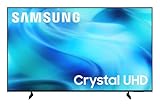
- CRYSTAL PROCESSOR: Powerful processor enhances colors and sharpens details for a vibrant 4K viewing experience. Experience every shade of color as it was meant to be seen in dazzling 4K. Plus, make your movies, TV shows, games and sports look even better with powerful 4K upscaling.
- ENDLESS FREE CONTENT: Watch 2,700+ free streaming options, including 750+ subscription-free channels on Samsung TV Plus. Enjoy news, sports, movies, kids' shows and reality TV — all without a subscription. Discover endless entertainment with new content added regularly, tailored to your mood and interests.*
- MOTION XCELERATOR: Experience clear picture and smooth motion in games and sports. Enjoy smooth motion and clear visuals with technology that estimates and adjusts frame transitions in real time. Whether gaming or watching sports, enjoy up to 4K 60Hz performance that brings every play, move and scene to life with realistic clarity and motion.
- COLOR BOOSTER: Supercharge your color. From fiery reds to sparkling blues, make every color come to life with intensity. Color Booster transforms your content into a visual masterpiece.
- 4K UPSCALING: Upgrades what you watch to crisp 4K clarity. Upgrade your favorite shows, movies and more. Experience incredible details and clarity in every frame, even from lower-quality sources, with advanced upscaling technology.
Why does motion still look choppy with motion smoothing off?
Several different motion artifacts can look like choppiness, but they have different causes. Turning off interpolation may remove the soap-opera effect while leaving judder or stutter visible.
Judder: uneven film cadence
Film and other low-frame-rate material can show judder when a TV holds frames for uneven durations during display. This is a cadence issue, not necessarily evidence that interpolation is still on. A separate Film, Cinema, or Theatre judder-removal control may help, if your TV has one.
Rank #3

- Breathtaking picture: Sharp 4K brings out rich detail on our 55" flat screen TV, while the QLED screen and HDR10 create bright, accurate colors. Roku Smart Picture cleans up incoming TV signals, optimizes them, and chooses the right picture mode.
- Seamless streaming: With fast Wi-Fi and apps that launch in a snap, Roku Select Series TVs get you to your entertainment quickly. You get excellent picture quality, clear sound, automatic updates, and more. It’s simple to use. Hard to outgrow.
- TV, simplified: With setup that only takes minutes, a simple-to-navigate Home Screen, and an uncluttered remote control that does all you need—Roku makes it easier to watch the TV you love.
- A world of free entertainment: Enjoy a huge selection of free live TV, news, sports, movies, shows, and much more—all just a click away.
- More streaming, less searching: With personalized picks right on your Home Screen, quick access to the sports and entertainment you watch most, and fast and easy search in one place—the days of endless scrolling are over.
Stutter: frames held on screen
On a fast-response display, low-frame-rate content can look stuttery because each frame remains visible longer. Interpolation can reduce that impression, but increasing it may bring back the artificial smoothness you wanted to avoid. There may be a trade-off between a more natural film presentation and smoother-looking movement.
Blur and judder controls are not interchangeable
TVs may offer separate controls for blur reduction, judder reduction, or motion clarity. Changing a blur or clearness setting is not the same as changing film-cadence judder removal. Identify the specific control before adjusting it, and avoid assuming that a single “motion” slider addresses every artifact.
Rank #4

- A treat for the eyes: Sharp 4K brings out rich detail on our 43" flat screen TV, while colors pop off in lifelike clarity with HDR10. Roku Smart Picture cleans up incoming TV signals, optimizes them, and chooses the right picture mode.
- Seamless streaming: With fast Wi-Fi and apps that launch in a snap, Roku Select Series TVs get you to your entertainment quickly. You get excellent picture quality, clear sound, automatic updates, and more. It’s simple to use. Hard to outgrow.
- TV, simplified: With setup that only takes minutes, a simple-to-navigate Home Screen, and an uncluttered remote control that does all you need—Roku makes it easier to watch the TV you love.
- A world of free entertainment: Enjoy a huge selection of free live TV, news, sports, movies, shows, and much more—all just a click away.
- More streaming, less searching: With personalized picks right on your Home Screen, quick access to the sports and entertainment you watch most, and fast and easy search in one place—the days of endless scrolling are over.
How can I improve film motion without bringing back the soap-opera effect?
Try the TV’s film-cadence control
If interpolation is off but film still judders, check for a distinct Film, Cinema, or Theatre judder-removal setting. The available approach is model-specific. RTINGS’ guidance for 2025 models describes, for certain 60p or interlaced sources on Sony TVs, using CineMotion with Motionflow Custom and Clearness and Smoothness at minimum; it also reports that behavior differs across LG, Samsung, Hisense, and TCL models. Treat that as model-dependent guidance, not a universal recipe. RTINGS’ 24p motion guidance explains the differences and model-specific examples.
PC Slower Than It Used to Be?
A free scan shows the junk files, broken settings and background clutter dragging Windows down - then fixes them in one click.Free scan · Windows 10 & 11Outdated Drivers Are Slowing You Down
One free scan finds every outdated or missing driver and matches the right update for your exact hardware.Free scan · exact hardware matchCheck whether your player can match the content’s frame rate
A streaming box or player that matches its output frame rate to the video can help a TV display film cadence without relying on interpolation. For example, Apple TV’s Match Frame Rate can output 24p or 25p for film content. Whether this helps depends on the player, the content, the connection, and the TV’s handling of that signal; it is not a guaranteed fix for every combination.
Change black-frame insertion only if it is involved
Some TVs use black-frame insertion (BFI) or backlight strobing to improve motion clarity. RTINGS notes that some OLED judder-removal approaches interact with BFI. Do not change BFI just because motion looks uneven: first confirm that the feature is enabled and relevant to the artifact you are seeing.
How to test changes without losing track
- Choose one scene and one source. Use the same movie scene, TV input, and playback device for each comparison.
- Record the current picture mode and motion settings. Note the input and signal format too, since settings can vary by mode or source.
- Turn off the interpolation control. On Samsung, use Settings > Picture > Expert Settings > Auto Motion Plus Settings or Picture Clarity Settings, then select Off.
- Watch for the specific change. Check whether the soap-opera look is gone, then separately assess whether film cadence judder or stutter remains.
- If needed, test one separate film or clarity control. Change only one setting at a time so you can tell which one affected the picture.
- Repeat on the other source you use. A built-in app, HDMI streaming box, and Blu-ray player may behave differently or use different stored settings.
A calibration disc is optional for broader picture setup; it is not required to turn off motion smoothing.
Quick Recap
Product prices and availability are accurate as of the date/time indicated and are subject to change. Any price and availability information displayed on Amazon at the time of purchase will apply.
Free tools Windows power users keep installed
One-click scans. No signup required.

