
Do these 3 things before closing this tab:
1Scan for outdated or missing drivers - takes under a minute2Clear out junk files and repair common Windows errors3Fix the driver behind crashes, sound loss and screen glitchesiTechGuides is reader-supported. When you buy through links on our site, we may earn an affiliate commission. As an Amazon Associate I earn from qualifying purchases. Learn more
You can fill in a PDF, add your signature on a computer or phone, save the finished file, and send it back without printing or scanning anything. Whether that signature will hold up depends less on the method than on three things: the law that governs the document, the kind of transaction it records, and whether the signer clearly intended to sign and can be linked to the mark. In the United States, a typed name, a drawn mark, or an inserted signature image can be a legally recognized electronic signature for many everyday agreements. There are exceptions, and some documents carry their own signing rules.
How to sign a PDF without printing it
The basic workflow is the same in most PDF tools: open the file, place a signature, save, and return it. The menu names differ between applications, so treat the steps below as the general sequence rather than exact button labels.

Step-by-step: a simple electronic signature
- Open the PDF in an editor or e-signature application that supports form filling and signing. Most desktop PDF readers and many phone apps offer this.
- Complete any fillable fields first. If the document has a dedicated signature field, click it. If it does not, place the signature where the sender’s instructions say it belongs.
- Choose how to create the signature: type your name, draw it with a mouse, finger, or stylus, or insert an image of a signature you have already created. The US General Services Administration’s Section508.gov guidance on electronic signatures lists typing, drawing, and inserting an image as the ways to supply a signature in a PDF form.
- Review the whole document before you commit, because the signed version is the one you will send.
- Save or export the signed PDF under a new name, and keep a copy in your own records.
Step-by-step: a certificate-based digital signature in Acrobat
A digital signature uses a digital ID (a certificate) rather than a drawn or typed mark. Adobe’s help page “Add digital signatures to PDFs in Acrobat” (last updated September 23, 2025) documents this workflow. Menu labels can change between Acrobat versions, so check your version’s help if the names differ.
PC Slower Than It Used to Be?
A free scan shows the junk files, broken settings and background clutter dragging Windows down - then fixes them in one click.Free scan · Windows 10 & 11Outdated Drivers Are Slowing You Down
One free scan finds every outdated or missing driver and matches the right update for your exact hardware.Free scan · exact hardware match- Open the PDF in Adobe Acrobat.
- Choose All tools, then Use a certificate.
- Choose Digitally sign.
- Select an existing Digital ID, or configure one if you do not have one yet.
- Sign the document and save it.
- If you want the document protected from further edits after signing, use the option to lock the document after signing.
Accessibility checks for signature forms
If the form is one you are completing for an agency or employer, confirm that it can be used without a mouse. Section508.gov describes accessible PDF signature forms as ones that support keyboard-only users, follow a logical tab order, and give clear instructions and cues. If a form lacks those features and you cannot complete it, ask the sender for an alternative.
#1 Best Overall

- Instant E-Signatures, One Click Away – Seamlessly send your handwritten signature to your computer with just one tap. Fully compatible with PDF, Word, Excel, JPG, PNG, and TIFF formats.
- Your Paperless Office Hero – Sign quotes, contracts, insurance forms, and internal approvals without ever printing a page. Complete documents quickly and securely—100% digitally.
- Built-in Timestamp & Printed Name – Every signature includes a timestamp and your printed name for enhanced credibility and traceability—ideal for business and legal use.
- Smart Sticky Notes, Digitally Delivered – Jot down memos and upload them instantly to your Outlook Calendar or desktop. Your personal assistant for smart, organized scheduling.
- Effortless Visual Collaboration – Sketch workflows, wireframes, or brainstorm ideas in real time. Perfect for teams that move fast and think visually.
What counts as a valid signature?
Validity is a legal question, and the answer depends on where the document is governed and what it does. The points below apply to United States law. Rules in other countries, including EU rules, are outside the scope of this article.
The federal baseline: the ESIGN Act
The federal Electronic Signatures in Global and National Commerce Act (ESIGN) is codified at 15 U.S.C. Chapter 96, Subchapter I. Its central rule, in 15 U.S.C. § 7001(a)(1), reads: “a signature, contract, or other record relating to such transaction may not be denied legal effect, validity, or enforceability solely because it is in electronic form.” Section 7001(a)(2) adds that a contract may not be denied legal effect solely because an electronic signature or electronic record was used in its formation.
Rank #2
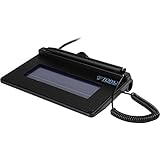
- USB interface, (Non-Backlit)
- Cost Efficient
- High-Quality Capture Techniques
- This model series shows the signature on the computer screen.
- Compatibility: T-S460-HSB-R, T-S460-BSB-R, T-S460-B-R
Two limits matter. First, the rule applies to a transaction in or affecting interstate or foreign commerce. Second, the rule says electronic form cannot be the only reason to deny effect. It does not make every electronic signature sufficient for every document, and it does not override the statute’s own exceptions. The quoted text is from the 2023 edition of the United States Code published by the US Government Publishing Office.
What the law means by “electronic signature”
An electronic signature is not defined by how it looks. Under ESIGN, it is an electronic sound, symbol, or process that is attached to or logically associated with a contract or record and is adopted with the intent to sign it. That is why a scanned signature and a typed name can both qualify in principle, and why the signer’s intent is the part that carries the most weight. A signature added to a document by accident, or without any intention to sign, is a weak position to defend.
Rank #3

- 【Signature tool 1】: SMAJAYU electronic signature pad works with “SMAJAYU document(s) Signer” a Sign Tool for pdf,word,excel documents digital signature. Pdf,Excel,word documents will be save as pdf after signature on sign tool.
- 【Signature tool 2】: Second sign tool named “demo tool” which is for getting signature picture to past on excel,word.edited files.
- 【Signature tool 3】: 430S SDK is available to integrate with programmable flatform, like website, app. Contact SMAJAYU support team for support.
- 【Apply Windows OS】SMAJAYU Signature pad and Signer tool only compatible with Windows OS, Windows 7,8,10,11, don’t support apple PC.
- 【How to sign documents】Install “ SMAJAYU document(s) Signer” on computer, run this app and create certification for first installation which for signature encryption and safety. Then insert Signature pad by USB and open files to start sign.
State law
Most states also follow the Uniform Electronic Transactions Act (UETA). Adobe’s legal overview “Electronic Signature Laws & Regulations – United States” (last updated August 12, 2025) reports that UETA has been adopted in 49 states, the District of Columbia, Puerto Rico, and the US Virgin Islands. It also notes that New York uses a separate approach under its Electronic Signatures and Records Act (ESRA). Adobe’s overview is a vendor summary, not a legal opinion, so check the current law of the state that governs your document before relying on it.
Common signature types compared
| Signature type | What it is | Strongest evidence it provides | Main limitation |
|---|---|---|---|
| Typed name | Your name entered in a signature field or text box | Intent to sign, if the surrounding workflow shows it | Little evidence of who typed it unless the process records it |
| Drawn mark | A signature drawn with a mouse, finger, or stylus | A personal mark that is clearly tied to the signer by context | Easy to copy or misplace; identity still depends on surrounding evidence |
| Inserted image | An image of a handwritten signature added to the PDF | Familiar appearance to the recipient | The image itself can be reused without the signer’s involvement |
| Identity-verified e-signature | A signing platform confirms who is signing before the signature is applied | Stronger attribution to a specific person | Depends on the platform’s checks and its audit record |
| Certificate-based digital signature | A digital certificate from a trust service provider or certificate authority is cryptographically bound to the document | Identity linked to the document, and a way to detect later changes | Requires a digital ID and software that can validate it |
Adobe’s help page “Types of signatures for e-signing documents” (last updated April 1, 2026) describes basic, identity-verified, and certificate-based categories along these lines. A simple electronic signature is usually enough for a routine agreement. A certificate-based signature is more useful when the workflow needs a stronger link between the signer and the document. Software does not decide legal sufficiency on its own; the transaction and the governing law still do.
Rank #4

- Support English: The software download for this pad is not only in Chinese, you can change it into English by setting.
- Provide SDK for enterprise to integrate into OA system
- Pay Attention: If you need to use it on Mac OS, please contact us in advance
- Sign directly on PDF, Word, Excel, and PowerPoint files with precision—no printing, scanning, or hassle required. You can also choose that each signature is automatically stamped with the date and your printed name for added professionalism and record-keeping
- Instant E-Signatures, One Click Away – Seamlessly send your handwritten signature to your computer with just one tap.Fully compatible with PDF, Word, Excel, PowerPoint
Exceptions and special rules
ESIGN does not make every paper form electronically signable in every setting. Adobe’s overview of US law identifies exclusions for wills, codicils, testamentary trusts, adoption, divorce, and other family-law matters. Those categories are not a complete list of exclusions. State statutes, agency rules, court rules, contract terms, and the recipient’s own requirements can add more.
Consumer disclosures
When a consumer transaction requires written disclosures, ESIGN adds consent conditions. The consumer must affirmatively consent to receive records electronically. The consumer must be told about the option to receive paper and about any right to withdraw consent. The consumer must also receive disclosures about the access and retention requirements, and must confirm electronically that they can access the records in that format. If you are the one collecting these signatures, these steps are not optional extras.
Best Value
Retention and reproduction
Where a law requires a record to be kept, ESIGN requires the electronic record to accurately reflect the information in it and to remain accessible for later reference. A required written record may be denied effect if it cannot be retained and accurately reproduced for later reference by the parties entitled to it. In practice, save the signed PDF in a form that opens, displays the signature, and can be reproduced later, and keep it.
IRS e-signatures for Forms 8878 and 8879
The Internal Revenue Service sets its own rules for e-signing authorization forms. For Forms 8878 and 8879 used in IRS e-file, the signature is captured through an Electronic Return Originator (ERO) using software that verifies the signer’s identity. IRS guidance in its “Frequently Asked Questions for IRS efile Signature Authorization” says the electronic record must be tamper-proof, and it lists the records the ERO must capture. This is an agency-specific procedure. It does not describe how to sign ordinary PDFs.
Choosing a method
When more than one method is available, compare them on the points below. The right choice is usually the one the recipient or agency will accept without follow-up.
Quick wins for a faster PC:
Fix the driver behind crashes, sound loss and screen glitchesFind Drivers →Repair Windows errors before they cause bigger problemsFix Now →- Recipient acceptance and legal requirements: Follow the form issuer’s instructions, and check whether the document or jurisdiction has special rules.
- Evidence of identity and intent: A typed or drawn mark can be enough for a routine agreement. Where the workflow calls for it, an identity-verified signature or a certificate-based digital signature gives stronger proof of who signed.
- Integrity and audit record: Check whether the completed file is tamper-evident, whether it keeps a signing record, and whether you can retain and reproduce it.
- Accessibility and ease of use: Confirm that fields and signature controls work with the keyboard and provide clear cues.
If the recipient will not accept an electronic signature
- Ask the sender which methods they accept before you sign. Many issuers specify a method on the form itself.
- If the form is governed by a special rule, such as an IRS signing requirement, use the method that rule describes.
- If the sender insists on a wet signature, you can print the signed-ready file only at that point. Otherwise, a signed PDF with a documented method is the usual alternative.
- Keep the final signed file, the sender’s instructions, and any confirmation message together so you can show what was signed and how.
Bottom line
A PDF can be signed and returned without printing, and a typed, drawn, or inserted signature can count as an electronic signature under US federal law when the transaction is covered and the signer intended to sign. Validity still depends on the document type, the governing state law, and the recipient’s requirements, so check those before you rely on a particular method.
Quick Recap
The Bottom Line
“”
Product prices and availability are accurate as of the date/time indicated and are subject to change. Any price and availability information displayed on Amazon at the time of purchase will apply.

