
iTechGuides is reader-supported. When you buy through links on our site, we may earn an affiliate commission. As an Amazon Associate I earn from qualifying purchases. Learn more
To set up a separate IoT network, use your router’s IoT network or guest network feature if it has one, and confirm that it blocks IoT devices from reaching the computers and phones on your main network. If the router supports VLANs and firewall rules, you can build a more controlled version of the same separation. Either way, the test that matters is isolation: a second Wi-Fi name by itself does not keep devices apart.
Why separate smart-home devices from your main network
Many smart plugs, cameras, speakers, and sensors run software that is rarely updated and has known weaknesses. If one of them is compromised, a flat home network lets the attacker reach the laptop that holds your banking session or the phone that stores your photos. A separate segment limits that path.
NIST’s guidance on home and small-business networks recommends keeping IoT devices with known security risks on a segment apart from everyday computing devices. In NIST’s words, “Home and small-business network owners should segment their networks where possible.” That statement comes from the project documentation for NIST SP 1800-15. It describes containment: a problem that starts on a device is less likely to spread to the rest of the house.
The Tool Desk
Outbyte Driver Updater FREEScan for outdated or missing drivers - takes under a minuteDriver Scan →Outbyte PC Repair FREERepair Windows errors before they cause bigger problemsFix Now →Segmentation reduces exposure. It does not make a network invulnerable, and it does not replace updating devices or removing ones you no longer use. The sections below treat it as one layer of protection.
#1 Best Overall

- Wi-Fi 6 Mesh Wi-Fi - Next-gen Wi-Fi 6 AX3000 whole home mesh system to eliminate weak Wi-Fi for good(2×2/HE160 2402 Mbps plus 2×2 574 Mbps)
- Whole Home WiFi Coverage - Covers up to 6500 square feet with seamless high-performance Wi-Fi 6 and eliminate dead zones and buffering. Better than traditional WiFi booster and Range Extenders
- Connect More Devices - Deco X55(3-pack) is strong enough to connect up to 150 devices with strong and reliable Wi-Fi
- Our Cybersecurity Commitment - TP-Link is a signatory of the U.S. Cybersecurity and Infrastructure Security Agency’s (CISA) Secure-by-Design pledge. This device is designed, built, and maintained, with advanced security as a core requirement
- More Gigabit Ports - Each Deco X55 has 3 Gigabit Ethernet ports(6 in total for a 2-pack) and supports Wired Ethernet Backhaul for better speeds. Any of them can work as a Wi-Fi Router
Check what your router can already do
Start with the router’s manual or its management app. Look for any of these labels:
- IoT network or IoT mode
- Guest network or guest Wi-Fi
- VLAN or multiple network segments
- Client isolation, AP isolation, or “access to local network” controls
Menu names and behavior differ between brands and between firmware versions, so a label on one model may not mean the same thing on another. NIST’s 2024 router profile sets out security outcomes and requirements for consumer-grade routers. It is not a list of compatible models, so it will not tell you whether your specific router offers these features.
Rank #2

- A New Way to WiFi: Deco Mesh technology gives you a better WiFi experience in all directions with faster WiFi speeds and strong WiFi signal to cover your whole home.
- Better Coverage than traditional WiFi routers: Deco S4 three units work seamlessly to create a WiFi mesh network that can cover homes up to 5, 500 square feet. No dead zone anymore.
- Seamless and Stable WiFi Mesh: Rather than wifi range extender that need multiple network names and passwords, Deco S4 allows you to enjoy seamless roaming throughout the house, with a single network name and password.
- Incredibly fast 3× 3 6 Stream AC1900 speeds makes the deco capable of providing connectivity for up to 100 devices.
- With advanced Deco Mesh Technology, units work together to form a unified network with a single network name. Devices automatically switch between Decos as you move through your home for the fastest possible speeds.
CISA’s 2024 federal guidance on mobile workplace security makes a practical point that applies at home: segmentation may be as simple as turning on a guest Wi-Fi option. More elaborate arrangements need instructions written for the specific router.
What’s actually slowing this PC down?
Pick the symptom - the matching free tool is one click away.
Compare the available approaches
| Approach | When it fits | What to check |
|---|---|---|
| Guest Wi-Fi | The router has a guest network that can block access to the local network. This is often the quickest option. | Confirm that guest clients cannot reach the main LAN, then test whether the devices you need still work from your phone. |
| Dedicated IoT network | The router has a mode designed for IoT devices, sometimes with its own subnet and settings. | Check whether the network shares the main subnet by default and whether you can switch to a dedicated subnet. |
| VLANs and firewall rules | The router or firewall supports several networks and explicit rules. This suits households that need tightly controlled access between networks. | Confirm that wireless and wired IoT devices are assigned to the intended VLAN and that the default inter-network policy blocks traffic you do not want. |
| Second physical router | Consider this only if your current equipment cannot provide the separation you need and you can maintain another device. | Not established by the NIST or ASUS guidance reviewed for this article. Check the routing and firewall behavior in the second router’s documentation before assuming it isolates anything. |
When you compare options, weigh five things: how strong the isolation is, whether your devices need local discovery or control, whether you need wired as well as wireless support, how much setup work it takes, and whether the router continues to receive firmware updates.
Rank #3
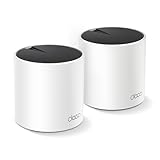
- Wi-Fi 6 Mesh Wi-Fi - Next-gen Wi-Fi 6 AX3000 whole home mesh system to eliminate weak Wi-Fi for good(2×2/HE160 2402 Mbps plus 2×2 574 Mbps)¹²
- Whole Home WiFi Coverage - Covers up to 4500 square feet with seamless high-performance Wi-Fi 6 and eliminate dead zones and buffering. Better than traditional WiFi booster and Range Extenders¹
- Connect More Devices - Deco X55(2-pack) is strong enough to connect up to 150 devices with strong and reliable Wi-Fi¹
- Our Cybersecurity Commitment - TP-Link is a signatory of the U.S. Cybersecurity and Infrastructure Security Agency’s (CISA) Secure-by-Design pledge. This device is designed, built, and maintained, with advanced security as a core requirement
- More Gigabit Ports - Each Deco X55 has 3 Gigabit Ethernet ports(6 in total for a 2-pack) and supports Wired Ethernet Backhaul for better speeds. Any of them can work as a Wi-Fi Router
Step-by-step setup
- Inventory your devices. List every smart device, its brand, and the app that controls it. Note which ones you control from a phone on the main network and which are wired.
- Choose the simplest feature that enforces separation. If the router has a dedicated IoT network or a guest network that blocks local access, use that. If it supports VLANs, create a separate IoT segment and assign the IoT wireless network or the wired ports to it.
- Create a distinct network name and a strong password. Do not reuse your main Wi-Fi password. Neither NIST nor ASUS sets a minimum length in the material reviewed here, so follow the router’s password rules and store the passphrase in a password manager.
- Decide which cross-network access is necessary. The default should be that IoT devices cannot reach the main LAN. If a phone, hub, or controller on the main network must talk to devices on the IoT segment, allow only the access that the device ecosystem requires and only where the router supports it.
- Move the devices and test them. Reconnect each device to the new network and confirm it appears in the router’s device list. Test enrollment, routine control, notifications, and firmware updates from the places you normally use them.
- Keep the network maintained. Install router firmware updates and device updates, remove devices you no longer use, and review the router’s device list and rules from time to time.
Worked example: ASUS routers
ASUS’s support documentation describes an IoT Network feature. It is one example of the general pattern, not a universal recipe.
- Web interface: Sign in to the router, go to Guest Network Pro > IoT Network, enter the settings, and select Apply.
- ASUS Router app: Go to Settings > Guest Network Pro > +, choose IoT Network, enter the settings, and select Apply.
- Firmware: ASUS says the feature requires firmware 3.0.0.6.102_34312 or later. Starting with firmware 3.0.0.6.102_35404, the menu name changes from “Guest Network Pro” to “Network,” so look for that label if your router has the newer firmware.
- Subnet option: “Use same subnet as main network” is enabled by default, which ASUS describes as seamless connectivity. Turning it off creates a dedicated IoT network with its own subnet.
ASUS notes that screens and operations can vary by product and software version. ASUS’s documentation also states the purpose of the feature: “By isolating these devices on a separate network, the IoT Network enhances overall home security and makes it easier to adjust WiFi settings for the rest of the home.”
Rank #4

- 𝐃𝐞𝐜𝐨 𝟕 𝐒𝐮𝐩𝐞𝐫𝐜𝐡𝐚𝐫𝐠𝐞𝐝 𝐰𝐢𝐭𝐡 𝟒-𝐒𝐭𝐫𝐞𝐚𝐦 𝐁𝐄𝟓𝟎𝟎𝟎 𝐃𝐮𝐚𝐥-𝐁𝐚𝐧𝐝 𝐖𝐢𝐅𝐢 𝟕: Delivers up to 4324 Mbps (5 GHz) and 688 Mbps (2.4 GHz) speeds for 4K/8K streaming, AR/VR gaming, and more◇. Performance varies by conditions, distance to devices, & obstacles such as walls.
- 𝐒𝐞𝐚𝐦𝐥𝐞𝐬𝐬 𝐖𝐡𝐨𝐥𝐞-𝐇𝐨𝐦𝐞 𝐂𝐨𝐯𝐞𝐫𝐚𝐠𝐞: Covers up to 6,600 sq. ft. for over 150 devices with the option to expand anytime by adding another Deco router. All Deco routers work together.
- 𝐒𝐢𝐦𝐮𝐥𝐭𝐚𝐧𝐞𝐨𝐮𝐬 𝐖𝐢𝐫𝐞𝐝 & 𝐖𝐢𝐫𝐞𝐥𝐞𝐬𝐬 𝐁𝐚𝐜𝐤𝐡𝐚𝐮𝐥: Wi-Fi 7 and 2.5G Ethernet work together to balance traffic between Deco units for faster, more stable whole-home coverage. Backhaul requires at least two Deco units.§
- 𝐄𝐚𝐬𝐲 𝐒𝐞𝐭𝐮𝐩 & 𝐌𝐚𝐧𝐚𝐠𝐞𝐦𝐞𝐧𝐭: Set up and control your network in minutes with the Deco App. Keep your WiFi performing at its best by keeping the firmware updated through the App. All Wi-Fi routers require a separate modem. ⌂
- 𝐎𝐮𝐫 𝐂𝐲𝐛𝐞𝐫𝐬𝐞𝐜𝐮𝐫𝐢𝐭𝐲 𝐂𝐨𝐦𝐦𝐢𝐭𝐦𝐞𝐧𝐭 - TP-Link is a signatory of the U.S. Cybersecurity and Infrastructure Security Agency’s (CISA) Secure-by-Design pledge. This device is designed, built, and maintained, with advanced security as a core requirement.
Making local control work across the boundary
Isolation is the goal, but some devices depend on a phone, hub, or local controller finding them. A separate segment can interrupt that. Discovery that works on one subnet may not cross into another, and the documentation reviewed here does not promise that every discovery protocol works across segments.
Work through the problem in this order:
- Keep the IoT devices on the isolated network and try to add or control one from your phone on the main network.
- If control fails, check whether your router offers a same-subnet setting or a supported way to allow access to specific devices. Enable only what the device requires.
- If the device uses a hub or controller, put the hub on the network where it can reach both the controller app and the devices it manages, and then restrict the rest.
- If the device still cannot be controlled, accept that it may need to stay on the main network, or replace it with a model that works locally on your chosen layout. Do not disable the network protections for every device to solve one problem.
Limits and cautions
- Do not cut off internet access for all IoT devices. Some devices need vendor cloud services to function or to receive updates. Check each device’s requirements before blocking outbound traffic.
- Expect cloud-dependent devices to behave differently. Features that rely on a local controller may stop working if the controller cannot reach the device.
- Router labels are not standardized. Use the wording in your own router’s documentation.
- Advanced device-level controls are not the same as a guest network. NIST describes Manufacturer Usage Description (MUD), which can limit a device to the traffic its function requires. MUD needs compatible devices and network components, so treat it as an advanced option rather than a requirement for creating a separate Wi-Fi network.
The guidance reviewed for this article does not give a figure for how much risk segmentation removes, so this article does not estimate one.
Quick Recap
Best Value
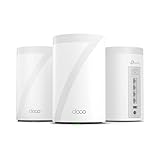
- 𝐅𝐞𝐚𝐭𝐮𝐫𝐞-𝐑𝐢𝐜𝐡 𝐖𝐢-𝐅𝐢 𝐁𝐮𝐢𝐥𝐭 𝐭𝐨 𝐋𝐚𝐬𝐭: Get expansive whole-home coverage, fast Wi-Fi 7 speeds, and a future-ready 10G WAN/LAN port that stays ahead as your network grows. Ideal for both everyday users and performance-focused homeowners.
- 𝗩𝗮𝘀𝘁 𝗠𝗲𝘀𝗵 𝗖𝗼𝘃𝗲𝗿𝗮𝗴𝗲 & 𝗗𝗲𝘃𝗶𝗰𝗲 𝗖𝗮𝗽𝗮𝗰𝗶𝘁𝘆: The 3-pack mesh system covers up to a vast 7,600 sq.ft. and supports over 200 devices without compromising performance, ensuring seamless connectivity.
- 𝐁𝐄𝟏𝟎𝟎𝟎𝟎 𝐓𝐫𝐢-𝐁𝐚𝐧𝐝 𝐖𝐢-𝐅𝐢 𝟕 𝐒𝐩𝐞𝐞𝐝𝐬: Delivers up to 5,188 Mbps (6 GHz), 4,324 Mbps (5 GHz), and 574 Mbps (2.4 GHz) speeds for 4K/8K streaming, AR/VR gaming, and more. Performance varies by conditions, distance to devices, & obstacles such as walls.
- 𝗙𝗼𝘂𝗿 𝟮.𝟱𝗚 𝗪𝗔𝗡/𝗟𝗔𝗡 𝗣𝗼𝗿𝘁𝘀: Includes four 2.5G WAN/LAN ports and a USB 3.0 port, making it an ideal choice for future-proofing your home network.
- 𝐒𝐢𝐦𝐮𝐥𝐭𝐚𝐧𝐞𝐨𝐮𝐬 𝐖𝐢𝐫𝐞𝐝 & 𝐖𝐢𝐫𝐞𝐥𝐞𝐬𝐬 𝐁𝐚𝐜𝐤𝐡𝐚𝐮𝐥: Tri-band Wi-Fi 7 and 10G Ethernet work together to balance traffic between Deco units for faster, more stable whole-home coverage. Backhaul requires at least two Deco units.
Product prices and availability are accurate as of the date/time indicated and are subject to change. Any price and availability information displayed on Amazon at the time of purchase will apply.

