
iTechGuides is reader-supported. When you buy through links on our site, we may earn an affiliate commission. As an Amazon Associate I earn from qualifying purchases. Learn more
Yes, you can screen mirror Windows 10 wirelessly—but the receiver must support Miracast. Turn on the TV or wireless display, enable Wi-Fi on the PC, press Windows + K, select the display, then press Windows + P and choose Duplicate. This shows the same Windows desktop on both screens.
If the TV supports only Google Cast or AirPlay, it will not necessarily appear in the Windows wireless-display list. Use Chrome for Google Cast, an AirPlay receiver for an iPhone, or an HDMI/DisplayPort cable instead.
This guide covers the practical ways to mirror a Windows 10 laptop or desktop to a smart TV, projector, monitor, Chromecast, another Windows PC, or a mobile device. It also explains why a display may be missing, why Windows may extend the desktop instead of duplicating it, and when a cable is the better choice.
What’s actually slowing this PC down?
Pick the symptom - the matching free tool is one click away.
What screen mirroring means in Windows 10
Windows uses several projection modes that are easy to confuse:
| Mode | What happens | Best use |
|---|---|---|
| PC screen only | The built-in PC display is used; the external display is off. | Normal laptop or desktop use. |
| Duplicate | Both screens show the same desktop, including the same windows and pointer. | Presentations, photos, demonstrations, and ordinary screen mirroring. |
| Extend | The external display becomes a second desktop. You can move windows between screens. | Multitasking and using two independent workspaces. |
| Second screen only | The PC display turns off and only the external display is used. | Using a TV or monitor as the only screen. |
To change the mode, press Windows + P and select Duplicate. If the TV shows a different desktop rather than a copy of the laptop screen, the connection is usually working; Windows is simply set to Extend.
#1 Best Overall
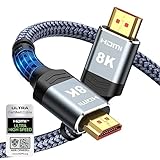
- Top Technology--8K@60HZ: This 8K Ultra-High Speed 2.1 HDMI Cable uses the most cutting-edge technology, which is compatible with 8K@60HZ,4K@240HZ and 4K@120HZ clearly displays every particle, and accurately processes every signal source.
- Upgrade Revolution: Highwings Ultra High Speed HDMI Cable 2.1 8K supports 48Gbps (6GB/s) which can will no longer be stuck or dropped frames when watching video. It is also backward compatible with HDMI 2.0b/2.0a/1.4/1.3/1.2/1.1 versions.
- For Game Enthusiasts: This 8K Ultra High Speed HDMI Cable 2.1 can achieve a super smooth picture of 4K@120HZ. Its latest game mode supports variable refresh rate, maximizes the value of the graphics card and CPU to obtain a smoother and more detailed picture.
- Reinforced high-quality materials: This 8K HDMI Cord uses Highwings' most popular classic style. The tail's anti-bending design has been upgraded to make it more durable. The military grade tensile nylon material also greatly extends its life.
- The ultimate perfectionist: Highwings every parts of the cable has been put through rigorous the performance tests in the laboratory. After we've combined every flawless part into a perfect 8K cable and it can be presented to you.
Identify the type of receiver first
The correct connection method depends on what is receiving the video. A TV being called “smart” does not tell you which wireless-display standard it supports.
| Destination | Use this method |
|---|---|
| Miracast-enabled smart TV | Press Windows + K, then select the TV. |
| Miracast dongle or Microsoft Wireless Display Adapter | Connect the adapter to HDMI and power it, select the adapter’s HDMI input, then use Windows + K. |
| Miracast-enabled projector or monitor | Put the receiver into its wireless-display mode, then connect from Windows. |
| Another Windows 10 PC | Install the Wireless Display optional feature on the receiving PC, configure Projecting to this PC, and launch the Connect app. |
| Chromecast, Google TV Streamer, or Google Cast-enabled TV | Use Google Chrome’s Cast command. This is not the same as Miracast and should not be expected to appear in the normal Windows + K list. |
| AirPlay-only TV or Apple device | Windows 10 has no general built-in AirPlay receiver. Use compatible AirPlay receiver software or hardware, or use a cable. |
| Conventional TV or monitor | Use HDMI, DisplayPort, USB-C video, or an appropriate adapter. |
Check Miracast compatibility before troubleshooting
Windows 10 contains a built-in Miracast software stack, but that does not mean every Windows 10 computer can project wirelessly. The PC’s Wi-Fi adapter, graphics hardware, graphics driver, firmware, and audio support must work together. The destination must also be a Miracast receiver.
Microsoft’s device guidance identifies requirements and relevant capabilities including:
- A Wi-Fi adapter with Wi-Fi Direct or compatible WDI support.
- A compatible graphics driver, including WDDM 2.0-or-later support in Microsoft’s Miracast guidance.
- Hardware-accelerated H.264 video encoding on the sending device.
- Compatible audio support.
- A Miracast-capable TV, projector, monitor, or wireless-display adapter.
A newer dual-band 802.11n or 802.11ac adapter and a relatively clear 5 GHz connection generally provide better conditions than old 2.4 GHz or 1×1 hardware. These are recommended conditions, not a universal minimum for every Miracast device. A desktop can support Miracast if it has compatible Wi-Fi and graphics hardware; ordinary Wi-Fi connectivity alone is not enough.
To check the Windows release, press Windows + R, type winver, and press Enter. Windows 10 version 22H2 was the final general feature release for standard Windows 10 Home and Pro. Standard Windows 10 support ended on October 14, 2025, so those installations no longer receive normal free security updates, feature updates, or technical support. Windows 10 LTSC editions have separate lifecycle dates.
For technical background, see Microsoft’s documentation on Miracast and wireless displays and wireless-projection requirements for PC manufacturers.
The Tool Desk
Outbyte PC Repair FREERepair Windows errors before they cause bigger problemsFix Now →Outbyte Driver Updater FREEFix the driver behind crashes, sound loss and screen glitchesFind Drivers →Mirror Windows 10 to a Miracast TV or wireless display
1. Prepare the TV, projector, or adapter
- Turn on the TV, projector, or monitor.
- Open the manufacturer’s wireless-display feature. It may be called Miracast, Screen Mirroring, Screen Share, Wireless Display, or something similar.
- If you are using a dongle, connect it to an HDMI port and its power source. Select the TV’s HDMI input if necessary.
- Leave the receiver’s pairing or waiting screen open during the connection attempt.
The exact menu name depends on the model. Check the TV or adapter manual if you cannot find a Miracast or screen-sharing mode.
2. Connect from Windows 10
- Turn on Wi-Fi on the Windows 10 PC. The PC can sometimes use a Miracast connection over Wi-Fi Direct or, when supported by the receiver, over a trusted existing Wi-Fi or Ethernet network, but many receivers and manufacturer implementations work best when Wi-Fi is enabled.
- Temporarily pause a VPN during initial discovery if the receiver does not appear. A VPN or managed corporate network can interfere with discovery or wireless projection policy.
- Keep the PC reasonably close to the receiver while pairing.
- Press Windows + K. Windows opens its wireless-display connection panel.
- Select the TV, projector, monitor, or wireless adapter from the list.
- Approve the connection on the receiver if it asks for permission or displays a PIN.
After connecting, press Windows + P and choose Duplicate. Windows may retain a previous projection mode and connect in Extend mode instead.
To disconnect, press Windows + K again and select the connected display, or turn off the receiver’s wireless-display mode.
Rank #2

- IN THE BOX: HDMI cable (A Male to A Male) for connecting 2 HDMI-enabled devices; 6 feet long in Black
- DEVICE COMPATIBLE: Connects Blu-ray players, Fire TV, Apple TV, PS4, PS3, Xbox One, Xbox 360, and computers to TVs, displays, A/V receivers, and more
- SUPPORTS 4K VIDEO: Supports 4K video at 60 Hz, 2160p, 48-bit/px color depth, as well as bandwidth up to 18Gbps, Ethernet, 3D, and Audio Return Channel (ARC)
- EASY CONNECTION: Share an Internet connection among multiple devices (no need for a separate Ethernet cable)
- BACKWARDS COMPATIBLE: Works with earlier versions to allow for use with a wide range of HDMI-enabled devices
Use Settings instead of the keyboard shortcut
If Windows + K is unavailable, try:
- Open Start > Settings > System > Display.
- Under Multiple displays, select Connect to a wireless display or the equivalent wireless-display connection option.
- Choose the Miracast receiver.
- Press Windows + P and select Duplicate.
Some older Windows 10 builds and manufacturer-customized interfaces instead expose the discovery route through Settings > Devices > Bluetooth & other devices > Add Bluetooth or other device > Wireless display or dock. Choose the wireless-display option rather than ordinary Bluetooth pairing. Menu wording can vary by Windows build and PC manufacturer. This is a display connection, not Bluetooth audio pairing.
Make another Windows 10 PC receive the mirrored screen
Using a second Windows 10 computer as the receiver is a separate workflow. The receiving PC needs Microsoft’s Wireless Display optional feature and the Windows 10 Connect app. You do not normally need to install Wireless Display merely to send your Windows 10 desktop to a Miracast TV or adapter.
Set up the receiving PC
- On the target PC, open Start > Settings > System > Projecting to this PC.
- When Windows shows the optional-feature prompt, select Optional features or Add a feature.
- Search for Wireless Display.
- Select it and choose Install.
- Return to Projecting to this PC.
- Configure when the PC is discoverable and whether Windows must ask for permission before allowing a connection.
- Search the Start menu for Connect and launch the Connect app. Leave it open while connecting.
Connect from the sending PC
- On the PC whose desktop you want to share, press Windows + K.
- Select the receiving Windows 10 PC.
- Approve the request on the receiving PC if prompted.
- Press Windows + P and select Duplicate.
Installing Wireless Display cannot add Miracast hardware to an incompatible computer. The receiving PC must itself support receiving Miracast, with compatible Wi-Fi, graphics drivers, firmware, and any required organizational permissions.
Mirror an Android phone or tablet to Windows 10
Android manufacturers use different names for wireless display controls. Depending on the phone, the feature may be called Cast, Smart View, Screen Share, Wireless Display, or a similar term. The phone must provide a compatible Miracast or wireless-display function; not every Android device uses the same protocol.
- On the Windows 10 PC, install the Wireless Display optional feature if it is not already installed.
- Open Settings > System > Projecting to this PC and make the PC discoverable.
- Search for and launch the Windows 10 Connect app.
- On the Android phone or tablet, open its quick settings or display settings and select Cast, Smart View, Screen Share, or the equivalent option.
- Select the Windows 10 PC.
- Approve the request on Windows.
Microsoft documents this Android-to-Windows projection workflow through the Connect and Miracast experience. If the Android device offers only Google Cast, use a Google Cast receiver and Chrome instead.
PC Slower Than It Used to Be?
A free scan shows the junk files, broken settings and background clutter dragging Windows down - then fixes them in one click.Free scan · Windows 10 & 11Outdated Drivers Are Slowing You Down
One free scan finds every outdated or missing driver and matches the right update for your exact hardware.Free scan · exact hardware matchCast Windows 10 to Chromecast or Google Cast
Chromecast, Google TV Streamer, and Google Cast-enabled TVs use Google’s casting system, not Windows 10’s Miracast connection workflow. A Chromecast should not be expected to appear when you press Windows + K.
To cast from Windows 10 using Chrome:
- Install or update Google Chrome.
- Connect the PC and Chromecast or Google Cast receiver to the same Wi-Fi network. Same-network discovery is part of the normal Google Cast setup.
- Open Chrome.
- Select More > Cast, save, and share > Cast.
- To send one browser page, choose the tab and then select the receiver.
- To mirror the whole computer screen, select Sources > Cast screen, then choose the receiver.
Google notes that casting a Chrome tab is generally the better choice when you need the receiver to play the tab’s audio. When casting the entire desktop, audio may continue playing on the computer instead of the TV. Google’s Chrome casting instructions cover the current menu names and receiver requirements.
If you have an iPhone or iPad
An iPhone does not normally mirror directly to the built-in Windows 10 Miracast receiver. Apple’s native screen-mirroring workflow uses AirPlay, targeting an Apple TV, AirPlay-compatible smart TV, or compatible Mac.
For iPhone-to-Windows 10 mirroring, you need one of the following:
Do these 3 things before closing this tab:
1Repair Windows errors before they cause bigger problems2Scan for outdated or missing drivers - takes under a minute3Clear out junk files and repair common Windows errorsRank #3

- 【HDMI 2.1 Certification】Only 1% of HDMI cables on the market have passed HDMI 2.1 certification. Scan with the QR code Scanner app for verification
- 【120Hz/144Hz Gaming Excellence】Elevate your gaming experience with smooth 4K@120Hz gameplay for PS5 and Xbox, and ultra-responsive 4K@144Hz for PC. Whether you’re pushing your console or PC to the limit, enjoy unparalleled performance across all platforms(Requires game to support 4K@120Hz)
- 【Exclusive "E-Braid" Technology】Experience unprecedented durability with our unique double-layer fishnet winding and nylon braiding techniques. Copper cores and ferrite magnetic beads ensure uninterrupted signals, eliminating black screens and flickering
- 【HDMI 2.1-48Gbps Bandwidth】Unleash the full potential of your devices with lightning-fast data transfer rates, ensuring seamless connectivity for all your high-definition needs
- 【Next-Level Resolution Support】Dive into the future with support for mind-blowing resolutions, including 10K 8K@60Hz, 12-bit; 5K@120Hz/90Hz, 12-bit; 4K@144Hz/120Hz, 12-bit; and 2K@240Hz/165Hz
- A third-party AirPlay receiver application installed on Windows.
- Compatible AirPlay receiver hardware.
- A wired or capture solution.
Results vary with the particular receiver, iOS version, Windows build, network, and protected-content restrictions. Windows 10 has no general built-in AirPlay receiver, so do not assume that installing the Miracast Wireless Display feature will make an iPhone appear. Apple’s AirPlay mirroring documentation explains the native destinations and workflow.
Troubleshoot Windows 10 wireless screen mirroring
The TV or projector does not appear under Windows + K
Work through these checks in order:
- Confirm the receiver is actually in Miracast or Screen Mirroring mode, rather than a normal TV input.
- Confirm the exact TV model supports Miracast. Chromecast, Google Cast, AirPlay, and Miracast are different technologies.
- Turn on Wi-Fi on the PC, even if the PC is also connected by Ethernet.
- Restart both the PC and the TV, projector, or adapter.
- Update the PC’s Wi-Fi and graphics drivers from the computer manufacturer’s support page.
- Update the TV or adapter firmware.
- Temporarily disconnect a VPN and test outside a managed corporate network if possible.
- Move the PC closer to the receiver and try again.
- Remove the wireless display from Windows if it was previously paired, then discover and add it again.
- Try HDMI to determine whether the problem is wireless compatibility rather than the TV panel or input.
These checks follow Microsoft’s wireless-display troubleshooting guidance.
Windows says the PC cannot project wirelessly
This normally indicates a hardware, driver, firmware, or policy limitation—not a missing app that can be fixed by downloading a random “Miracast driver.” Possible causes include:
If outdated or incompatible Wi-Fi or graphics drivers are part of the problem, Outbyte Driver Updater is an optional tool for checking and updating drivers; the PC manufacturer’s support page remains another option.
Free tools Windows power users keep installed
One-click scans. No signup required.
- An unsupported Wi-Fi adapter or a desktop with no compatible Wi-Fi hardware.
- A generic, outdated, or incompatible graphics driver.
- Miracast or Wi-Fi Direct disabled by firmware or device policy.
- Hardware that supports ordinary Wi-Fi but not wireless display.
- An organization blocking wireless projection.
Search the Start menu for Connect and open the app. Microsoft says its message can indicate whether the PC supports receiving Miracast. For additional, non-definitive diagnostics:
- Run
dxdiag, select Save All Information, open the saved report, and search forMiracast. The result may identify whether the graphics or Wi-Fi driver is a limiting factor. - Open Command Prompt and run
netsh wlan show drivers. On systems that expose the field, look for Wireless Display Supported. The output may identify a graphics-driver or Wi-Fi-driver limitation.
These commands are useful clues rather than perfect compatibility tests. Update drivers from the PC maker before relying on a negative result. If the hardware remains unsupported, use a wired connection or a receiver with a different casting method.
The display connects but shows a second desktop
Press Windows + P and choose Duplicate. Extend is an intentional mode, not a failed connection. It gives you a second desktop where windows can be moved independently.
The picture is black but the desktop connection works
Test the Windows desktop, a photo, or an unprotected web page. If those appear but one streaming service or video application is black, the issue may be HDCP or DRM rather than Miracast discovery. Microsoft identifies HDCP 2.0 or later as relevant to protected content in its Miracast implementation guidance, but actual behavior depends on the content provider, application, receiver, and display chain.
Quick wins for a faster PC:
Fix the driver behind crashes, sound loss and screen glitchesFind Drivers →Clear out junk files and repair common Windows errorsFree Scan →Scan for outdated or missing drivers - takes under a minuteDriver Scan →Other possible causes include outdated graphics drivers, outdated receiver firmware, an incompatible adapter, or an application that blocks capture or wireless output. Some protected video may refuse wireless playback or show a black screen even though ordinary desktop mirroring works. For DRM-sensitive video, HDMI is usually the more predictable option.
The picture is delayed, choppy, or frequently disconnects
- Prefer 5 GHz Wi-Fi where supported and practical.
- Move the PC and receiver closer together.
- Reduce interference from crowded wireless channels and nearby devices.
- Pause large downloads, cloud synchronization, and other bandwidth-heavy transfers.
- Update Wi-Fi and graphics drivers.
- Update the TV or wireless-adapter firmware.
- Close unnecessary high-CPU or GPU applications.
- Use HDMI or DisplayPort for gaming and other latency-sensitive work.
Wireless projection encodes and transmits the screen in real time, so some latency, compression, dropped frames, or audio delay is normal. A 5 GHz connection and newer Wi-Fi hardware improve the conditions but do not guarantee a perfectly smooth result.
Rank #4

- Superior Display, Swift Connectivity: Elevate your viewing experience to unparalleled clarity with 8K@60Hz, and enjoy smoother visuals and reduced lag with support for 4K@120Hz and 4K@60Hz.
- Quick and Seamless Video Transfer: With the latest HDMI technology, stream or transfer videos without interruptions, and witness the power of up to 48 Gbps in bandwidth, ensuring consistently clear content.
- Lasts Longer, Performs Stronger: This cable is designed to withstand up to 1,000 bends throughout its lifespan, meaning fewer replacements and continuous peace of mind.
- One Cable, Many Solutions: Whether you're connecting tablets, laptops, HDMI devices, projectors, or desktop screens, this cable effortlessly connects them all.
- What You Get: HDMI Cable (6 ft, 8K), welcome guide, 18-month warranty, and our friendly customer service.
The screen appears but there is no sound
After connecting, select the speaker icon in the Windows taskbar and choose the TV or wireless display as the output device. You can also open Start > Settings > System > Sound and select the receiver under the output-device choices.
If the receiver is not offered, restart the connection, update the graphics and audio drivers, and check whether the TV or adapter supports wireless-display audio. Also check the TV’s volume, mute state, and selected input. With Google Cast, remember that full-screen desktop casting can leave audio on the PC; casting a Chrome tab is more likely to send the tab’s audio to the receiver.
Recommended Free Tools
The receiving Windows PC is not listed
On the target PC, verify each of the following:
- Wireless Display is installed under Optional features.
- Projecting to this PC is configured to allow discovery.
- The Connect app is open.
- Wi-Fi is turned on.
- The receiving computer supports Miracast hardware requirements.
- No VPN, firewall rule, enterprise network, or organizational policy is blocking projection.
Installing the feature but leaving the Connect app closed can prevent discovery on Windows 10. If the options are unavailable or disabled, the PC may lack compatible receiving hardware or the Windows installation may be managed by an organization.
Wireless Display is installed, but the options are disabled
Possible explanations include missing or incompatible drivers, unsupported receiving hardware, a restricted Windows image, or a policy that disables projection. Microsoft’s WirelessDisplay policy documentation shows that organizations can disable projection from or to a PC on supported Windows editions, including Windows 10 Pro, Enterprise, and Education.
If this is a work computer, contact the administrator rather than attempting to bypass the policy. On a personal PC, install the manufacturer’s Wi-Fi and graphics drivers and verify Miracast support before reinstalling Windows features.
The TV is listed under Bluetooth, but mirroring does not work
Video projection is not ordinary Bluetooth pairing. A TV can be visible as a Bluetooth device while offering no Bluetooth video capability. Use Windows + K, the Wireless display or dock option, or the TV’s Miracast procedure instead of adding the TV as a normal Bluetooth peripheral.
The PC uses Ethernet instead of Wi-Fi
Ethernet does not automatically make Miracast impossible. Traditional Miracast commonly uses Wi-Fi Direct, while Windows 10 can also use projection over an existing trusted Wi-Fi or Ethernet network when the receiver supports infrastructure projection. However, many TVs and adapters depend on Wi-Fi discovery or impose their own network requirements, so turn on Wi-Fi while testing.
Do not apply the same rule to Google Cast: a Windows PC and Google Cast receiver normally need to be on the same Wi-Fi network for discovery.
A newer Sony TV has no Screen Mirroring option
This can be a model-generation difference rather than a Windows problem. Sony notes that some newer TV models use built-in Google Cast instead of the older Screen Mirroring feature. Check the exact model’s manual. If it supports Google Cast but not Miracast, use Chrome’s More > Cast, save, and share > Cast workflow instead.
Best Value
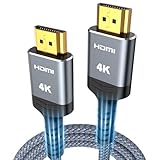
- 4K HDMI UHD Transmission, Stunning Audio & Visual for Home Theater & Gaming: Enhanced with gold-plated connectors for high-speed, interference-free signal transmission. Supports 4K*2K UHD resolution (3840×2160), delivering crystal-clear imagery and full HD stereo sound—perfect for immersive home theater movie nights, gaming marathons and big-screen TV viewing
- High-Speed Bandwidth, Instant Transmission for Real-Time Playback: Fully compliant with High-Speed HDMI cable 2.0 standard for max-speed data transfer. Blazing-fast transmission of audio, video and image files with zero buffering, ideal for 4K streaming, real-time gaming and seamless laptop-to-projector presentations. Plug-and-play design, no driver installation needed for effortless one-step connection
- HDMI 2.0 Standard Compliant, Universal Compatibility for All A/V Devices: Built to fully comply with official HDMI 2.0 standards after rigorous professional quality testing. Featuring broad backward compatibility with HDMI 1.4/1.3/1.2 generations, this cable effortlessly pairs with smart TVs, game consoles, Blu-ray players, projectors, laptops and set-top boxes. Enjoy stable plug-and-play connectivity across every piece of your home audio-visual gear.
- Premium Crafted Material, Ultra Durable for Daily Home Use & Frequent Use: Exclusive SR joint design at both ends to prevent joint cracking at the source. Rigorously lab-tested to withstand over 15,000 bends without performance loss, built to endure daily plug-and-unplug, messy entertainment area setups and regular home use—ensuring long-lasting durability against daily wear and tear hdmi cable
- 100% Component Inspected, Uncompromising Quality for Long-Term A/V Enjoyment: Every single component of the cable undergoes multiple rigorous lab tests for performance and sturdiness. Only flawlessly tested parts are selected for assembly, guaranteeing top-tier product performance and extended service life with strict quality control—reliable for years of home theater, gaming and everyday big-screen use hdmi
When HDMI or DisplayPort is the better choice
Use a cable when reliability, low latency, or protected video matters more than wireless convenience. Wired projection is usually preferable for:
- Gaming.
- Live presentations where a dropped connection would be disruptive.
- Video editing or other timing-sensitive work.
- DRM-protected streaming content.
- PCs and receivers that do not support the same wireless standard.
- Crowded offices, hotels, classrooms, or homes with unreliable Wi-Fi.
Connect the PC to the TV or monitor using HDMI, DisplayPort, USB-C with video support, or an appropriate adapter. Select the correct input on the TV, then press Windows + P and choose Duplicate.
HDMI, DisplayPort, DVI, and VGA are common external-display connections. A USB-C port does not automatically carry video: the PC, cable, and adapter must support DisplayPort Alternate Mode or another compatible video mode. Microsoft’s guides cover external-monitor troubleshooting and USB-C video requirements.
Quick Windows 10 mirroring checklist
- Confirm that the TV, projector, monitor, or adapter supports Miracast.
- Turn on the receiver’s Miracast or screen-mirroring mode.
- Turn on Wi-Fi on the Windows 10 PC.
- Press Windows + K.
- Select the wireless display and approve the request.
- Press Windows + P and choose Duplicate.
- If the receiver is not listed, check the exact wireless standard, drivers, firmware, VPN, and organizational restrictions.
- If the TV uses Google Cast, use Chrome instead. If wireless support is unavailable or latency is unacceptable, use HDMI or DisplayPort.
Frequently Asked Questions
Do I need to install Wireless Display to mirror Windows 10 to a TV?
Usually no. Windows 10 already includes the Miracast sending stack. The Wireless Display optional feature is mainly needed when another Windows 10 PC is acting as the receiver, or when receiving a compatible Android projection.
Why does my Chromecast not appear when I press Windows + K?
Chromecast uses Google Cast rather than Miracast. Connect the PC and receiver to the same Wi-Fi network, open Chrome, and select More > Cast, save, and share > Cast. For the entire desktop, choose Sources > Cast screen.
Do these 3 things before closing this tab:
1Fix the driver behind crashes, sound loss and screen glitches2Clear out junk files and repair common Windows errors3Scan for outdated or missing drivers - takes under a minuteCan I mirror Windows 10 without the same Wi-Fi network?
Traditional Miracast can use Wi-Fi Direct, so the devices do not universally need to be on the same home Wi-Fi network. Some receivers require the same network or use infrastructure projection. Google Cast normally does require the PC and receiver to share a Wi-Fi network.
Will screen mirroring work with Netflix and other streaming services?
It may, but protected content can be affected by HDCP and DRM. If the desktop and ordinary photos mirror correctly but one service shows a black screen, use a supported wired connection or the service’s native TV app.
The Bottom Line
For a Miracast receiver, the essential sequence is: enable the receiver, turn on PC Wi-Fi, press Windows + K, choose the display, then press Windows + P and select Duplicate. If the destination uses Google Cast, use Chrome; if it uses AirPlay, use an AirPlay receiver; and if compatibility or latency is a concern, connect with HDMI or DisplayPort.
Quick Recap
Product prices and availability are accurate as of the date/time indicated and are subject to change. Any price and availability information displayed on Amazon at the time of purchase will apply.
Recommended Free Tools

