
What’s actually slowing this PC down?
Pick the symptom - the matching free tool is one click away.
iTechGuides is reader-supported. When you buy through links on our site, we may earn an affiliate commission. As an Amazon Associate I earn from qualifying purchases. Learn more
“Restore a PST” can mean opening an archive, importing its contents, or repairing a damaged file. Use the matching method: open a healthy PST to view or copy selected items, import it to merge data into another mailbox, and run Microsoft’s Inbox Repair Tool (SCANPST.EXE) when Outlook reports corruption. Before any repair, close Outlook and preserve an untouched copy of the original file.
Choose the right restoration method
| What you are seeing | What to do |
|---|---|
| The PST opens and you need a few old messages or contacts | Open the PST and copy the required items. |
| You want the old folders merged into a current mailbox | Import the PST with Outlook’s Import/Export wizard. |
| Outlook says the file is damaged or cannot be opened | Run SCANPST.EXE against a copy of the file. |
| The PST opens, but folders or items appear missing | Search all mailboxes, inspect archive and Lost and Found folders, then import selectively. |
| Messages were deleted from the PST | Check Deleted Items and backups; deeper recovery may require specialized software. |
| Your Outlook account or password is gone | A PST restores local Outlook items, not the account, credentials, profile, or server mailbox. |
A PST can contain mail, attachments, contacts, calendar appointments, tasks, notes, journal entries, and custom folders. It is a data container, not a complete image of an Outlook installation.

Protect the original PST first
- Close Outlook and any process that may be using the file.
- Make a working copy of the PST on a local drive with adequate free space.
- Keep the untouched original on separate storage. Do not repeatedly repair the only copy.
- If the file is on a network share, USB device, failing disk, or cloud-synced folder, copy it locally before opening or repairing it.
- Confirm that the file is actually a
.pst, not an.ost,.bak,.eml,.msg, or.csvfile.
Microsoft’s repair process creates a backup, but that backup does not replace preserving your original. A damaged drive should be imaged or handled by a data-recovery professional before you keep attempting repairs.
Free tools Windows power users keep installed
One-click scans. No signup required.
Find the correct PST file
In classic Outlook, select File > Account Settings > Account Settings > Data Files and note the path for each listed data file. You can also search Windows for *.pst and check the old computer’s Documents, AppData, archive, backup, and external-drive locations.
#1 Best Overall
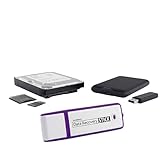
- The Data Recovery Stick requires no technical skills — simply plug it into your Windows computer, click Start, and the software automatically begins scanning and recovering lost files within minutes. Compatible with Windows Vista, 7, 8, 10, & 11, it's designed to be a reliable first step when accidental deletion occurs.
- Recover photos (JPG, BMP, PNG, TIFF), Microsoft Office documents (Word, Excel, PowerPoint, Publisher, Access), Open Office files, MP3 music files, PDFs, RTF documents, AutoCAD files, and HTML web pages. Whether it's personal memories or critical business files, the Data Recovery Stick covers the file types that matter most.
- Works with hard drives, USB drives, SD cards, memory sticks, and other common storage formats that use FAT or NTFS file systems — making it a single solution for hard drive recovery, USB drive recovery, SD card recovery, and more. Note: a media reader is required for micro SD cards and some mass storage devices.
- No Installation Required - The Data Recovery Stick runs entirely from the USB drive with no software installation on your computer — helping prevent new data from overwriting the files you're trying to recover. This also makes it ideal for use across multiple computers or in emergency situations where installation isn't practical.
- Use the Data Recovery Stick on as many computers as often as needed — simply clear the recovered data between uses to free up storage space. Software updates keep the tool compatible with newer systems and devices, backed by 25+ years of data software expertise from Paraben Consumer Software.
Microsoft identifies C:Users<user>DocumentsOutlook Files as a common location for newer Outlook data files and C:Users<user>AppDataLocalMicrosoftOutlook as a common location for older archive files. Actual paths vary by Windows version, profile, account type, and choices made when the file was created. Do not assume that archive.pst is the only relevant file. See Microsoft’s location guidance at Open and find items in an Outlook data file.
Open a PST without importing everything
Opening is the safest first step when you want to inspect an archive or recover only a few items. It leaves the archive separate and avoids an immediate merge that can create duplicates.
- Start classic Outlook.
- Select File > Open & Export > Open Outlook Data File.
- Browse to the PST copy and select Open.
- Expand the new top-level PST in the navigation pane.
- Search its folders, then drag or copy selected messages, contacts, appointments, or folders into the current mailbox.
Use All Mailboxes as the search scope when looking across attached PSTs; a default search may not include every data file. Microsoft documents this open-and-search workflow at Open and find items in an Outlook data file.
Import a PST in Outlook 2016, 2013, or 2010
Use import when the objective is to merge old data into a current mailbox or a new PST. The original PST remains intact; importing creates copies.
- Open Outlook and select File > Open & Export > Import/Export.
- Choose Import from another program or file, then select Next.
- Choose Outlook Data File (.pst) and select Next.
- Browse to the PST and enter its password if Outlook requests one.
- Choose one duplicate policy: Replace duplicates with items imported, Allow duplicates to be created, or Do not import duplicates.
- Select the folders to import and enable Include subfolders when required.
- Choose whether to import into the current folder or into the selected mailbox.
- Select Finish and wait for the operation to complete.
Importing into a Microsoft 365 or Exchange mailbox requires Outlook to connect to that service. A temporary connection interruption can pause the operation. To keep an archive separate, open it instead of importing it; to create an independent archive, create a blank PST and select it as the destination.
Microsoft’s current instructions are at Import email, contacts, and calendar from an Outlook PST file.
Import a PST in Outlook 2007 or 2003
The older versions use different menu wording. Exact labels can vary with Office updates, language, and account configuration.
The Tool Desk
Outbyte PC Repair FREERepair Windows errors before they cause bigger problemsFix Now →Outbyte Driver Updater FREEFix the driver behind crashes, sound loss and screen glitchesFind Drivers →- Open Outlook and select File > Import and Export.
- Choose Import from another program or file, then select Next.
- Choose Personal Folder File (.pst) or Outlook Data File (.pst), depending on the version and installed updates.
- Browse to the PST, choose the duplicate policy, and select the folders to import.
- Enable Include subfolders.
- Select the destination Personal Folders store or mailbox, then select Finish.
Microsoft’s legacy repair documentation describes the older File > Import and Export path and the corresponding newer workflow for later versions at How to repair a personal folder file (.pst).
Repair a corrupt PST with ScanPST
SCANPST.EXE, called the Inbox Repair Tool, is Microsoft’s built-in utility for diagnosing and repairing PST errors. Microsoft’s repair guidance covers Outlook 2016, 2013, 2010, 2007, and 2003.
- Close Outlook.
- Make a second copy of the damaged PST and work only on that copy.
- Search Windows for
SCANPST.EXE. Its location differs between Outlook versions, 32-bit and 64-bit Office, Click-to-Run and MSI installations, and Windows architectures; do not rely on one universal path. - Run the tool and browse to the copied PST.
- Select Start or Scan.
- If errors are reported, select Repair and retain the option to create a backup when offered.
- Open the repaired copy in Outlook using File > Open & Export > Open Outlook Data File.
- Check folders, messages, attachments, contacts, calendars, and any Lost and Found folder. If necessary, import the recovered items into a new PST or mailbox.
ScanPST is not a guaranteed forensic recovery tool. Microsoft states that items not recovered into the repaired file or Lost and Found may not be recoverable through this procedure. The official explanation is at How to repair a personal folder file (.pst).
Try the generated .bak file for additional recovery
When ScanPST creates a backup such as FileName.bak, do not alter that file directly.
- Make another copy of the
.bakfile. - Rename the copied file so it ends in
.pst, for exampleRecovered-Backup.pst. - Open or import the renamed copy.
- Inspect Lost and Found and any recovered folders.
Microsoft cautions that the .bak is the original corrupted file and may contain no more recoverable information than ScanPST extracted. If the renamed copy cannot be opened or imported, some information may be irretrievably lost.
Fix common restoration problems
“Outlook cannot open the data file”
- Confirm Outlook is closed and the file is local.
- Remove read-only status if the file came from optical media or protected storage.
- Run ScanPST against a copy, then open the repaired copy rather than importing immediately.
- Create a new Outlook profile if the problem appears profile-specific.
- Create a blank PST and import recovered folders into it.
The PST appears empty or items are missing
- Expand every top-level folder and search with All Mailboxes.
- Check Deleted Items, Junk Email, Archive, and Lost and Found.
- Search by sender, subject, date, and attachment name.
- Confirm that you selected the correct PST and review the duplicate-handling choice.
- Import one top-level folder at a time if a full import is confusing.
- Check contacts and calendar separately; they may not appear under the same hierarchy as mail.
- Consider whether the missing content was in an OST or on a server rather than in this PST.
The import creates duplicates
Repeat the import into a clean destination using Do not import duplicates, or open the PST and copy only the required folders. Choosing Allow duplicates to be created is useful for testing but rarely desirable for a final mailbox.
A password is requested
Enter the PST’s data-file password. A forgotten password is a separate problem from corruption; ScanPST should not be treated as a reliable password bypass.
The import stops or runs slowly
Large PSTs take longer to copy, scan, import, and index. Work from a local drive with free space, avoid simultaneous heavy synchronization, and import folder-by-folder. If Outlook becomes unstable, split recovered content across smaller PSTs.
New Outlook is different from classic Outlook
Identify the app before following the classic instructions. Microsoft’s current documentation says New Outlook for Windows can open and manage PST email, including moving, copying, and deleting messages and folders. However, bulk importing mail, contacts, and calendar items from a PST into a mailbox is not currently available there, and PST contacts and calendar data are not handled in the same way as in classic Outlook.
For a complete mail, contact, and calendar migration, use classic Outlook for Windows when available. Microsoft also documents limitations for New Outlook’s ARM version and for Safe or Recovery mode. See Microsoft’s PST import guidance and PST opening guidance.
What PST restoration does not restore
Mail exports retain attachments, but a PST is not a complete Outlook installation backup. Microsoft says PST export does not include folder views, folder permissions, AutoArchive settings, message rules, or blocked-sender lists. Importing also does not recreate:
- The email account, password, or Outlook profile.
- Server-side mail that was never exported.
- Signatures, add-ins, Windows credentials, or Microsoft 365/Exchange permissions.
Reconfigure those items separately after the data import.
When paid recovery software is justified
Consider a commercial recovery utility only after preserving the original, trying to open the PST, and running ScanPST. Choose a product that can scan and preview the specific messages or folders you need before payment, and verify compatibility with your Outlook and Windows setup. No vendor can guarantee recovery of every deleted or overwritten item.
Examples of current commercial options
| Product | When it may fit | Important qualification |
|---|---|---|
| Stellar Repair for Outlook | Severely damaged PSTs needing preview-based recovery; its Technician edition also advertises splitting, compacting, and export functions. | US-oriented prices observed August 18, 2026 were promotional: Professional $79 (reduced from $99) and Technician $149 (reduced from $199). Verify current pricing and Windows requirements at the official buying page. |
| SysTools Outlook Recovery | Users seeking a lower-priced commercial option with advertised exports such as PST, EML, MSG, HTML, PDF, or Office 365, depending on edition. | The store showed Outlook Recovery starting at $49 on August 18, 2026. License, region, and promotion can change; confirm the current offer at the official store. |
These tools are poor choices for a healthy PST that opens normally, and they do not restore a missing account or server mailbox. For legally or financially important data, consult a professional data-recovery specialist before repeated repair attempts.
Quick Recap
Verify the restored data
- Compare the names and number of top-level folders with the original.
- Open both recent and older messages and test attachments.
- Check contacts, calendar appointments, tasks, notes, and journal entries separately.
- Search by sender, subject, date, and attachment name with All Mailboxes.
- Confirm recovered folders landed in the intended mailbox or PST.
- Keep the untouched original until verification is complete and a new backup exists.
Product prices and availability are accurate as of the date/time indicated and are subject to change. Any price and availability information displayed on Amazon at the time of purchase will apply.

