
The Tool Desk
Outbyte PC Repair FREERepair Windows errors before they cause bigger problemsFix Now →Outbyte Driver Updater FREEFix the driver behind crashes, sound loss and screen glitchesFind Drivers →iTechGuides is reader-supported. When you buy through links on our site, we may earn an affiliate commission. As an Amazon Associate I earn from qualifying purchases. Learn more
To find out who owns a sports team, trace the club’s named operating entity through state business filings and, if a public company is involved, SEC disclosures. Then distinguish direct legal ownership from parent-company ownership, control, public shareholding, venue property ownership, and minority investment. These records can establish parts of the ownership chain, but they may not identify every private investor or beneficial owner.
What “owns the team” can mean
Before searching, decide which ownership question you are trying to answer. “Owner” may refer to the legal entity holding the club, a parent company, a person who controls that parent, public shareholders, or a minority investor. Those are different roles and may appear in different records.


- Direct legal owner: The company or other entity that holds the team, as established by relevant filings or other primary records.
- Parent company: An entity above the team-holding entity in the corporate chain.
- Controlling person: A person identified as controlling an entity or parent. A public announcement may name that person, but it should be treated as a lead to verify in filings.
- Investor or shareholder: Someone with an interest in a company. Shares in a parent do not necessarily amount to direct legal title to the team.
- Venue owner: The owner of a stadium or other property. Property ownership does not, by itself, establish ownership of the team that plays there.
A strong finding names the entity, record type, jurisdiction, and filing or announcement date, and explains precisely what that record establishes.
Quick wins for a faster PC:
Clear out junk files and repair common Windows errorsFree Scan →Scan for outdated or missing drivers - takes under a minuteDriver Scan →Repair Windows errors before they cause bigger problemsFix Now →A step-by-step public-records workflow
1. Start with the team’s own names and announcements
Write down the exact team name, any announced controlling owner, and the named operating company. Note the date and source of each team or league announcement. Use those names to begin searching, but do not treat a press announcement as a substitute for the legal entity and its filings.
#1 Best Overall

- Author: Willink, Jocko.Babin, Leif.
- Publisher: St. Martin's Press
- Pages: 384
- Publication Date: 2017-11-21
- Edition: 1
2. Search state business registries
Search the state where the relevant entity was formed and any state where it is registered to do business. Try the team name, operating-company name, parent-company name, and spelling variants. Retrieve available formation documents, amendments, annual reports, and other filings.
State records are useful for confirming an entity’s name, jurisdiction, status, and filed documents, but they may not reveal its owners. California’s Secretary of State says its business records portal provides entity filings but that the office does not collect business-entity ownership information or retain operating agreements (California Secretary of State: Business Entity Records). South Carolina’s Secretary of State provides entity and registered-agent searches and document retrieval, while its guidance says beneficial-ownership information is not filed with that office (South Carolina Secretary of State: File and Search Online).
Rank #2

- Keep track of everything from attendance to test scores
- Spiral bound
- Measures 8-1/2" x 11"
Do not describe a registered agent as an owner. The agent is a contact for service of process, not proof of who owns or controls the entity.
3. Check SEC EDGAR when a public company is in the chain
If the team operator or a parent is publicly reporting, search the company’s exact name in SEC EDGAR. Review current and annual reports, proxy statements, and relevant ownership filings, paying attention to the issuer and the entity whose securities are described.
For example, a Madison Square Garden Sports Corp. Form 4 filed on 2026-08-28 is an official filing trail for that issuer (SEC filing detail). An Atlanta Braves Holdings, Inc. Form 4 filed on 2026-02-18 identifies a reporting person and concerns changes in beneficial ownership of securities (SEC filing detail). A Form 4 is not a complete roster of all team investors, and holdings in a parent company are not necessarily direct legal ownership of the team.
4. Follow the entity chain
If a filing names another LLC, limited partnership, corporation, or holding company as an owner, search that entity in the jurisdiction shown on the filing and repeat the process. Keep a working table so each link has a clear evidentiary basis:
| Entity name | Role in the chain | Jurisdiction | Record and date | What it establishes |
|---|---|---|---|---|
| Exact legal name | Team operator, direct owner, parent, or other role | State or other jurisdiction shown in the record | Document type and filing date | The specific fact stated in that document |
If filed material does not identify the next owner, mark that link “not established in public records reviewed.” Do not fill the gap by assuming that a company’s officer, registered agent, or public-facing representative is its owner.
5. Use county records only for the question they can answer
County records can help with specific leads. California Courts’ self-help guide points readers to county fictitious-business-name records for a business’s official name and county property-tax rolls for property-owner names (California Courts: Find a business’ name and address). These records may help identify an operating name or the legal owner of a venue parcel; they do not automatically establish who owns the team.
Best Value
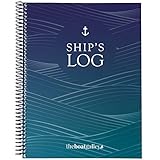
- Five Logbooks In One: Ship’s Log, Cruising Log, Vessel Inventory, Fluid Changes & Fills, Maintenance, Repairs & Upgrades plus a Quick Reference section in an 8" x 10" book - large enough to comfortably write in but still small enough to store conveniently
- Cover every system on board and fulfill navigation, safety, and legal requirements with information organized in 6 sections with 41 subsections; no other logbooks needed; each piece of equipment has its own section so that potential problems are easy to spot
- Pre-departure and change-of-watch checklists to catch problems before they occur
- Long-lasting with a durable waterproof cover that resists tearing off; 164 pages allow for lots of boat use and entries; interior pages are not waterproof
- Find and Record Info Easily: Tabbed sections/subsections let you quickly find the precise information you need; data recording is simple with well-designed pages, heavy paper and lay-flat spiral binding
6. Compare records and date your conclusion
For every record, note the exact legal entity, jurisdiction, document type, filing or effective date, and whether it concerns direct team ownership, parent-company shares, insider securities, control, a registered agent, or venue real estate. When records disagree, explain which is newer and what kind of ownership each one addresses. Verify team-specific claims against the relevant filings and statements rather than assuming a league-wide source resolves them.
Independent reader supportYour contribution helps us test, update, and keep practical guides available for everyone.How to report the result accurately
State what the evidence supports, not a broader claim. A concise conclusion might say that a named company is listed in a particular filing in a given jurisdiction, filed on a specified date, as the direct owner or parent of another named entity. If the record only reports an insider’s securities holdings, say that; do not turn it into a claim about the complete team ownership roster.
Quick Recap
- Name the jurisdiction and the date you checked.
- Separate direct legal ownership, parent ownership, control, and minority stakes.
- Identify whether each source is an agency filing, official agency explanation, team or league announcement, or another type of source.
- Say when private investors or beneficial owners are not identified in the public records reviewed.
Product prices and availability are accurate as of the date/time indicated and are subject to change. Any price and availability information displayed on Amazon at the time of purchase will apply.

