
Recommended Free Tools
iTechGuides is reader-supported. When you buy through links on our site, we may earn an affiliate commission. As an Amazon Associate I earn from qualifying purchases. Learn more
A workplace near miss is a warning about the conditions and safeguards that allowed a harmful event to become possible—not proof that the work was safe because nobody was hurt. Report it, investigate why those conditions existed, choose a durable control, and verify the change works.
What counts as a near miss?
An OSHA-hosted reporting form defines a near miss as a potential hazard or incident where no property was damaged and no one was injured, but a slight shift in time or position could easily have caused injury or damage. Close call and near accident are common alternatives. The form was produced under an OSHA grant and says it does not necessarily reflect Department of Labor views or policies; it is a useful example, not a binding universal definition. OSHA-hosted Near Miss Report Form
A practical reporting policy can include more than injury-free events: unsafe conditions or behavior, situations that could have caused property or environmental damage, and challenged safeguards such as a bypassed machine guard. OSHA-hosted sample policy language is a template, not a regulation. OSHA-hosted Near Miss Reporting Policy
Why report an event that caused no harm?
The outcome describes what happened this time; it does not establish that the setup was safe. A close call can reveal an exposed hazard, a weak or bypassed barrier, an impractical procedure, or a gap in the safety program. OSHA recommends investigating near misses to identify underlying hazards, causes, and program shortcomings—not simply recording the absence of injury. OSHA: Hazard Identification and Assessment
#1 Best Overall

- This essential emergency kit comes packaged in a compact plastic case, making it the ideal first aid kit for a wall mount, or to keep in a vehicle glove compartment.
- The 10 person first aid kit is OSHA compliant, meets ANSI standards and is Type 3, class A. Designed for business, commercial, contractor, and home use.
- This comprehensive kit contains 111 essential first aid supplies, from a wide assortment of gauzes and bandages to burn cream, cotton applicators, gloves, alcohol prep pads, triple antibiotic cream, eye wash, and more
- The first aid kit comes in a durable plastic case with two latches and a comfortable handle with quick and easy emergency access. The case also includes wall mounting tabs for use as a wall mounted first aid kit or on either horizontal or vertical surfaces.
- This OSHA approved first aid kit includes a manual and guide, and can be used indoors and outdoors.
Do not use a fixed near-miss-to-injury ratio to predict the next incident. OSHA’s guidance supports investigating and prioritizing hazards, but it does not establish a universal ratio or a reporting-volume target.
How should a near miss be reported?
Make reporting straightforward and accessible to the people doing the work. A useful report captures enough detail to reconstruct what happened and what could plausibly have happened, without turning the form into a fault-finding exercise.
- Record the date, time, location, task, equipment, and people involved, consistent with your workplace process.
- Describe the sequence of events and the potential injury or damage, not just the eventual outcome.
- Note the hazard, safeguard, or work condition involved, including whether a barrier was missing, ineffective, or bypassed.
- Include relevant conditions such as workload, production pressure, equipment state, visibility, or changes to the task.
- Report promptly through the available channel. An anonymous option can help workers who are uncomfortable identifying themselves.
OSHA’s sample form asks: “Why was an unsafe act committed, or why was the unsafe condition present?” That question directs attention beyond the immediate action to the circumstances that shaped it. OSHA-hosted Near Miss Report Form
Crashes, No Sound, or Screen Glitches?
Random freezes, missing sound and display glitches usually trace back to one bad driver. Find and replace yours safely.Free scan · under a minuteWindows Errors? Fix Them Before They Spread
Repair common Windows errors and clear accumulated junk for a smoother, more stable PC - no reinstall needed.Free scan · no reinstallRank #2

- OSHA Compliant Workplace Safety: Stay prepared and compliant with this large wall mount first aid kit designed for businesses, schools, warehouses, offices, factories, and retail facilities
- Wall Mount or Portable Use: This first aid cabinet includes mounting hardware for quick installation, but can also be removed from the wall or stored in a cabinet for flexible workplace safety solutions
- Organized Storage with Tilting Shelves: Durable hard case first aid kit features tilting shelves that keep emergency medical supplies neat, visible, and easy to access during minor workplace emergencies
- Comprehensive First Aid Supplies: Stocked with bandages, gauze, dressings, tape, gloves, scissors, prep pads, triangular bandages, and CPR masks, this business first aid kit covers a wide range of injuries
- Lightweight and Durable Construction: This workplace first aid kit cabinet is both portable and built to last, giving facilities a trusted solution for group and employee safety in various environments
What should happen after a near-miss report?
- Make the area safe. Address any immediate danger and follow workplace procedures for isolating equipment, stopping work, or warning others.
- Establish the facts. Document what happened, the potential consequence, and the conditions at the time. Separate observed facts from assumptions.
- Involve people who know the work. Include affected workers and, as appropriate, supervisors and safety staff. Those closest to the task can identify constraints and hazards that may not be apparent from a report alone.
- Find contributing and underlying causes. Examine equipment, procedures, training, workload, communication, and safeguards. Ask why a procedure was not followed: was it current, workable, understood, and supported under actual production conditions?
- Select a control and assign ownership. Identify the action, a responsible owner, and a due date. Prefer a change that removes or isolates the hazard rather than one that relies on repeated reminders.
- Close the loop and verify. Tell workers what was decided and why, track completion, and check whether the control works in practice.
OSHA cautions against ending an investigation with “carelessness” or “failure to follow procedure.” Those may describe a triggering action, but not explain why it occurred or what allowed the hazard to remain. The agency recommends objective investigation, root-cause analysis, trained teams that include management and workers, and communication of findings. OSHA: Incident Investigation – Overview
How do you choose a corrective control?
Compare options by how well they control the hazard, how durable they are, whether they introduce another risk, and whether their effectiveness can be checked. OSHA advises employers to select controls that are feasible, effective, and permanent. OSHA: Hazard Prevention and Control
Use the hierarchy of controls
- Elimination: Remove the hazard, where feasible.
- Substitution: Replace the hazardous material, process, or equipment with a safer alternative.
- Engineering controls: Isolate people from the hazard through a physical or equipment-level change.
- Administrative controls and safe work practices: Change how work is organized or performed, using procedures, training, or scheduling.
- Personal protective equipment (PPE): Protect the worker with appropriate equipment.
Higher-level controls generally rely less on an individual remembering to act correctly every time. More than one control may be needed, but a rule or PPE requirement should not automatically substitute for a feasible change that removes or isolates the hazard.
Rank #3
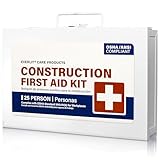
- ✅Commercial-Grade Metal First Aid Kit, Wall-Mountable: Built for demanding environments such as construction sites, contractor workspaces, and DOT trucks or commercial vehicles. The durable metal cabinet is wall-mountable for quick access and meets OSHA workplace first aid requirements for up to 25 people.
- ✅Comprehensive First Aid Coverage: Equipped with 185 essential medical supplies to handle cuts, scrapes, burns, minor wounds, hypothermia, and acute injuries. The kit includes cleansing wipes, assorted adhesive bandages, ointment, gauze pads, burn gel, and a thermal Mylar blanket, along with essential medical tools such as scissors and tweezers for effective on-the-spot care.
- ✅Compact and Easy to Carry: Measuring 11" x 7.5" x 2.5" and weighing only 3.85 lbs, this metal first aid kit is easy to transport and access when needed. It features an integrated carry handle for portability and dual secure latches that keep contents protected while allowing quick, hassle-free opening in emergencies.
- ✅OSHA 1910.151(b) Compliant Safety Within Reach: An essential first aid solution for job sites, commercial trucks, businesses, and industrial environments, ensuring reliable, OSHA-compliant safety and preparedness wherever it is needed.
- ✅Veteran-Owned, California-Based: We stand behind our quality and provide reliable customer support to ensure confidence in every purchase.
Check workability and unintended risks
Discuss proposed controls with the workers who will use them. Confirm the change is practical in the real task and does not introduce a different hazard or encourage workarounds. A control that looks effective on paper but cannot be used consistently needs reconsideration.
Free tools Windows power users keep installed
One-click scans. No signup required.
Verify implementation and continued effectiveness
Name an owner and track the work through completion. After installation, check whether the hazard is controlled under normal operating conditions; review it periodically and when conditions, processes, or equipment change. OSHA’s guidance calls for verification at least annually and after such changes. OSHA: Hazard Prevention and Control
Independent reader supportYour contribution helps us test, update, and keep practical guides available for everyone.How can leaders build a reporting culture?
A reporting system only reveals hazards that workers feel able to report. OSHA recommends prompt reporting and response, anonymous options, regular feedback about action taken, worker involvement in solutions, and a way for workers to request a temporary stop to work they consider unsafe. Fear of retaliation and blame-focused investigations can suppress participation. OSHA: Worker Participation
Rank #4

- 350 Piece First Aid Kit with Essential Supplies: Includes bandages, gauze pads, antiseptic wipes, dressings, wraps, gloves, and tools to handle cuts, scrapes, burns, and minor injuries.
- Wall Mount Hard Case with Dual Layers: Mount in offices, warehouses, classrooms, garages, or job sites for visibility and fast access. Swing-out compartments keep supplies organized and protected.
- Designed for Workplace and Facility Use: Suitable for offices, construction sites, retail stores, warehouses, fleet vehicles, and commercial spaces requiring organized safety supplies.
- Supports Workplace Injury Response: Supplies designed for common incidents including cuts, burns, wounds, and sprains in high-traffic environments.
- Organized Emergency Storage Solution: Durable case keeps medical supplies secure, visible, and easy to locate during urgent situations.
Do not treat the number of reports alone as a safety score. A rise or fall in reporting can reflect participation as well as workplace conditions, and OSHA provides no universal target reporting rate. Avoid incentives tied to low incident counts if they could discourage people from speaking up.
Worker involvement is operationally important, not merely a courtesy. OSHA notes: “Workers are often best positioned to identify safety and health concerns and program shortcomings, such as emerging workplace hazards, unsafe conditions, close calls/near misses, and actual incidents.” OSHA: Worker Participation
The Tool Desk
Outbyte Driver Updater FREEScan for outdated or missing drivers - takes under a minuteDriver Scan →Outbyte PC Repair FREEClear out junk files and repair common Windows errorsFree Scan →What this guidance does—and does not—cover
The cited materials are U.S.-focused OSHA guidance and OSHA-hosted templates. Check the applicable workplace rules in your own jurisdiction. A near miss by itself is not the basis for the serious-injury or fatality notification deadlines described on OSHA’s hazard-identification page; those requirements concern specified injury and fatality events. OSHA: Hazard Identification and Assessment
Quick Recap
Product prices and availability are accurate as of the date/time indicated and are subject to change. Any price and availability information displayed on Amazon at the time of purchase will apply.

