
PC Slower Than It Used to Be?
A free scan shows the junk files, broken settings and background clutter dragging Windows down - then fixes them in one click.Free scan · Windows 10 & 11Outdated Drivers Are Slowing You Down
One free scan finds every outdated or missing driver and matches the right update for your exact hardware.Free scan · exact hardware matchiTechGuides is reader-supported. When you buy through links on our site, we may earn an affiliate commission. As an Amazon Associate I earn from qualifying purchases. Learn more
Salt is removed from saline water by desalination. The two main approaches are distillation, which evaporates water and condenses the vapor, and reverse osmosis (RO), which uses pressure to push water through a semipermeable membrane. A simple solar still can demonstrate distillation and produce a small amount of water; reliable larger supplies require engineered equipment. Neither method, by itself, proves the resulting water is safe to drink.
What does “fresh water” mean?
In its salinity categories, the U.S. Geological Survey (USGS) defines fresh water as having less than 1,000 parts per million (ppm) of dissolved salts. Ocean water contains about 35,000 ppm, according to the USGS. These figures describe salinity, not whether water meets every drinking-water safety standard.
Desalination is already a major water source: the USGS reports an International Desalination Association estimate that more than 300 million people receive water from desalination plants. The USGS also reports that global output was 109.22 million cubic meters per day in 2022, attributing that figure to the association. USGS: Desalination
The Tool Desk
Outbyte Driver Updater FREEFix the driver behind crashes, sound loss and screen glitchesFind Drivers →Outbyte PC Repair FREEClear out junk files and repair common Windows errorsFree Scan →How does distillation remove salt?
Distillation separates water by changing its state. Heat evaporates water from the salty source; most dissolved salts remain behind. The vapor is then cooled so it condenses into liquid water in a separate collection area. The salt is not destroyed: it stays in the source water or in the remaining concentrated residue.
#1 Best Overall
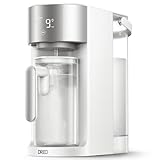
- 𝗘𝗳𝗳𝗶𝗰𝗶𝗲𝗻𝘁 𝗣𝘂𝗿𝗶𝗳𝗶𝗰𝗮𝘁𝗶𝗼𝗻, 𝗣𝗲𝗮𝗰𝗲 𝗼𝗳 𝗠𝗶𝗻𝗱: The DREO 7‑in‑1 RO water filter filters out 99.9% of possible contaminants in water including PFOA, PFOS, chlorine, fluoride and more. It was tested by SGS meeting NSF/ANSI 58 Standards.
- 𝗥𝗲𝗮𝗹-𝗧𝗶𝗺𝗲 𝗧𝗗𝗦 & 𝗙𝗶𝗹𝘁𝗲𝗿 𝗟𝗶𝗳𝗲 𝗠𝗼𝗻𝗶𝘁𝗼𝗿𝗶𝗻𝗴: Check raw water and pure water TDS in real time and get timely filter change reminders for a simple and worry-free maintenance
- 𝗔𝘂𝘁𝗼-𝗙𝗶𝗹𝗹 & 𝗦𝗲𝗹𝗳-𝗖𝗹𝗲𝗮𝗻𝗶𝗻𝗴: The DREO water pitcher features an auto-fill sensor for hands-free refills, while the self-cleaning system auto-flushes internal tubes for consistently pure water
- 𝗘𝗰𝗼-𝗖𝗼𝗻𝘀𝗰𝗶𝗼𝘂𝘀 & 𝗖𝗼𝘀𝘁-𝗦𝗮𝘃𝗶𝗻𝗴: Advanced RO filtration delivers a 3:1 pure-to-drain ratio, reducing water waste and plastic trash. The filter lasts 265 gallons(1000L) of filtered water (about $0.025/bottle) and replaces in seconds with a simple twist-to-install design
- 𝗖𝗼𝗺𝗽𝗮𝗰𝘁, 𝗦𝗽𝗮𝗰𝗲-𝗦𝗮𝘃𝗶𝗻𝗴 𝗗𝗲𝘀𝗶𝗴𝗻: With a slim 14.51" L × 6.73" W × 13.35" H footprint, DREO countertop reverse osmosis system fits easily in kitchens, living rooms, bedrooms, or offices. A 3L tank plus 1.1L pitcher is ideal for daily use by 1 to 2 people
What a solar still can do
A solar still uses sunlight as the heat source. In a basic setup, an enclosure holds the salty water, and a cooler sloped surface lets vapor condense and run toward a collection point. The USGS describes this as a low-tech way to make small amounts of water, not a practical replacement for a household water supply. It describes the concept as using the sun’s heat to make dew form on a surface such as plastic sheeting. USGS: Desalination
A portable solar still may be useful as a small-scale demonstration, but the available evidence does not establish a particular device’s yield, performance, or suitability for routine drinking-water supply. Do not assume that a still’s output is safe simply because salt has been left behind.
Rank #2

- PATENTED DESIGN – The top-mounted fastener allows for easy countertop installation entirely from above, eliminating the hassle of tightening the nut from underneath the sink.
- MINERAL BOOST – The patent-pending natural mineral AK stage delivers spring water with a balanced, healthy pH and multiple essential minerals.
- SEE WHAT’S CAUGHT – The transparent first-stage filter housing makes it easy to monitor contaminant buildup, ensuring timely filter changes.
- NSF 58 CERTIFIED RO SYSTEM – Unlike other brands that lack NSF certification or full system certification, our RCC7AK is certified to NSF/ANSI 58 standards for the entire water filtration system.
- EFFECTIVE FILTRATION – Reduces TDS (93-98%), PFAS (96-99%), Chlorine (95-99%), Asbestos (>99.7%), Barium (>98.4%), Cadmium (>98.8%), Chromium (>99.2%), Copper (>97.8%), Fluoride (>97.4%), Lead (>98.9%), Selenium (>99.0%), and over 1,000 other contaminants.
How does reverse osmosis remove salt?
Reverse osmosis uses pressure to push feedwater through a semipermeable membrane. The membrane allows water to pass while retaining much of the dissolved salt, producing a less-salty water stream and a concentrated brine stream. The brine must be managed; it is not simply eliminated.
RO is widely used, but its operating conditions depend on the feedwater and system design. Saltier water requires more pressure, and sufficiently high salinity can exceed membrane limits. A generic household RO unit should not be assumed to treat untreated seawater. The U.S. Department of Energy explains the pressure-driven membrane process and these salinity constraints. DOE: Desalination Basics
Rank #3

- 𝗘𝗳𝗳𝗶𝗰𝗶𝗲𝗻𝘁 𝗣𝘂𝗿𝗶𝗳𝗶𝗰𝗮𝘁𝗶𝗼𝗻, 𝗣𝗲𝗮𝗰𝗲 𝗼𝗳 𝗠𝗶𝗻𝗱: The DREO 7‑in‑1 RO water filter filters out 99.9% of possible contaminants in water including PFOA, PFOS, chlorine, fluoride and more. It was tested by SGS meeting NSF/ANSI 58 Standards.
Distillation or reverse osmosis: which fits the job?
| Factor | Solar or thermal distillation | Reverse osmosis |
|---|---|---|
| How it works | Evaporates water and collects it after condensation. | Uses pressure to move water through a semipermeable membrane. |
| Scale and output | A simple solar still is low-tech but produces limited amounts; dependable large-scale supply needs engineered systems. | An engineered membrane process used for desalination; output depends on system design and feedwater. |
| Energy and equipment | Solar stills use sunlight; engineered thermal processes require heat. DOE says even efficient thermal desalination typically uses more energy than alternatives such as RO. | Requires pressure and membrane equipment. Feedwater salinity affects the pressure required. |
| Salty residue | Salt remains in the source water and becomes concentrated as water is removed. | Produces a concentrated brine stream that requires management. |
Sources: USGS: Desalination and DOE: Desalination Basics.
Independent reader supportYour contribution helps us test, update, and keep practical guides available for everyone.Does desalinated water automatically become safe to drink?
No. Removing salt is not a guarantee that every chemical or biological hazard has been removed. For a home treatment system, identify the contaminants of concern and check the system label to confirm that it is designed to reduce them. The Centers for Disease Control and Prevention advises choosing treatment based on the contaminants present; its guidance does not treat salt removal alone as a complete safety standard. CDC: About Home Water Treatment Systems
Quick Recap
Best Value

- 6-STAGE ADVANCED FILTRATION WITH UV LIGHT: The Bluevua RO100ROPOT-UV boasts a superior 6-stage filtration system, featuring a 0.0001μm RO membrane, including UV light and an added remineralization filter. Certified by WQA against NSF/ANSI/CAN 372 for lead-free and tested by SGS, this combination effectively reduces TDS, PFOA, PFOS, Chlorine, Fluoride, Arsenic, Lead, and more, while also enriching water with essential minerals, balancing taste and health benefits.
- COUNTERTOP FILTRATION + PREMIUM-QUALITY CARAFE: No plumbing or installation is required for this RO system. Simply plug this portable piece of tech into any power source and you're ready to fill it up and go! Better yet, the water container is constructed of a high borosilicate glass carafe instead of the traditional plastic, reducing the risk of secondary pollution and making this one of the best countertop water filter systems.
- POWER SAVING + WATER SAVING: The water system automatically enters power-saving standby mode when not in use to reduce power consumption. Filters are also designed to help save water with an impressive 2:1 Pure to Drain ratio. Leftover water from a cycle isn't deemed wastewater so more water is saved to use for various household purposes.
- FILTER LIFE MONITOR: The countertop water filters last for a long time between 12-24 months to provide 1-2 years of clean drinking water before needing replacement. Monitor display shows the service life of filters and water quality so you can easily keep track of filter replacement and periodically switch out filter tubes.
- SUSTAINABLE HYDRATION: 1-year limited manufacturer warranty included upon registration. Designed with premium quality components for years of reliable use, our RO system delivers bottled-quality water at home, reducing plastic waste and supporting sustainability efforts with ClimatePartner Certification.
Rank #4

- [Trusted certifications]: Waterdrop G3P600 reverse osmosis system is certified against NSF/ANSI 58 for TDS reduction and NSF/ANSI 372 certified for lead-free material. Also it has been tested and certified against NSF 42 to reduce chlorine, bad taste and odor. The tankless reverse osmosis system is also certified by the Federal Communications Commission. Besides, it meets the EU Standards and UKCA Standards for safety
- [8-stage filtration]: Tested by official third-party laboratory (SGS), the reverse osmosis system can effectively reduce TDS, chromium, PFAS, radium, fluoride, arsenic salt, iron, calcium, particles, chloride, chlorine and radioactive substances in your tap water. And our RO water filter system can reduce chemicals such as vinyl chloride, ethylhexyl acrylate, isobutylene, ethylene glycol, according to the reverse osmosis membrane technical manual
- [Smart display faucet]: The tankless reverse osmosis system is built with a smart display faucet. For instance, the TDS monitor tells you the quality of your filtered water, while the filter life tracker shows how soon you need to replace your filter
- [High capacity, 2:1 low drain ratio]: As an upgraded reverse osmosis system, this reverse osmosis water system produces 600 gallons of filtered water per day. By its low drain ratio, this system can produce only one cup of waste water for every two cups of pure water produced. Furthermore, with a fast and stable water flow rate, this RO system fills a 8 oz cup of water in 8 seconds, which is ideal for drinking and washing vegetables
- [Tankless design]: Waterdrop G3P600 reverse osmosis system has a stylish look. This tankless design saves 70% under sink space. You can change a filter in 3 seconds without moving the system or using any tools. Note: This reverse osmosis system requires under-sink electricity
Product prices and availability are accurate as of the date/time indicated and are subject to change. Any price and availability information displayed on Amazon at the time of purchase will apply.
Free tools Windows power users keep installed
One-click scans. No signup required.

