
What’s actually slowing this PC down?
Pick the symptom - the matching free tool is one click away.
iTechGuides is reader-supported. When you buy through links on our site, we may earn an affiliate commission. As an Amazon Associate I earn from qualifying purchases. Learn more
Reduce the carbon dioxide (CO₂) your household causes by using less energy, choosing lower-emission ways to travel, and making food and waste choices that fit your circumstances. These steps help address the main driver of ocean acidification: excess CO₂ in the atmosphere, some of which the ocean absorbs. No household can control ocean pH on its own, and the size of each household’s contribution depends on how it uses energy, travels, and eats.
How household emissions connect to ocean acidification
Burning fossil fuels and other human activities release carbon dioxide. The ocean absorbs some of that excess atmospheric CO₂, changing seawater chemistry: pH falls and carbonate availability changes. Ocean acidification is the name for this chemical shift; it does not mean the ocean as a whole has become acidic. NOAA notes that seawater remains alkaline, even as it becomes more acidic.
NOAA’s Ocean Acidification Program describes the process this way: “Ocean acidification occurs when the ocean absorbs carbon dioxide. This causes a fundamental and global change in the chemistry of the ocean.” NOAA explains the chemistry and its effects.
Quick wins for a faster PC:
Fix the driver behind crashes, sound loss and screen glitchesFind Drivers →Repair Windows errors before they cause bigger problemsFix Now →Scan for outdated or missing drivers - takes under a minuteDriver Scan →Lower pH and changes in carbonate chemistry can make it harder for some shell-forming organisms to build and maintain shells or skeletons. NOAA calls ocean acidification “an energy problem” because some marine life must spend more energy obtaining the mineral building blocks it needs. Effects on marine organisms can also affect communities that depend on marine ecosystems.
#1 Best Overall
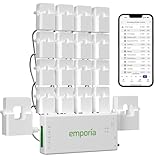
- SAFETY YOU CAN TRUST WITH UL CERTIFICATION: With Emporia Energy, your home energy monitoring is safe, reliable, and certified. The Emporia Vue is UL Listed, meaning it has met rigorous safety standards for electrical products in the U.S. and Canada. This certification ensures that every component has been thoroughly tested to prevent hazards, such as overheating, short-circuiting, or fire, offering you peace of mind as you manage your home’s energy consumption.
- INSTALLS IN CIRCUIT PANEL of most homes with clamp-on sensors. Supports Single phase, Single-split phase, and 2-wire systems. 3-wire systems; 3-phase, 4-wire Wye systems with earthed (TN or TT) neutral (no-Delta) are supported with an additional 200A sensor (sold separately).
- 24/7 ENERGY MANAGEMENT AND MONITORING: Automate, manage and control your home's real power anywhere, anytime to prevent costly repairs, conserve energy, and save costs. Monitor solar / net metering. PROTECTED BY A 1-YEAR WARRANTY.
- LOWER YOUR ELECTRIC BILL: Configure settings in the Emporia Energy App to automate energy management for time of use, peak demand, excess solar, and rewards programs. You can even see live reporting and invaluable savings opportunities instantly. Gauge real-time spending and get actionable notifications and automated energy management to help you reduce costs.
- REAL-TIME ENERGY DATA: REQUIRES 2.4 GHz WIFI WITH AN INTERNET CONNECTION to monitor energy use with iPhone / Android / Web app. Vue sensors collect energy data and are accurate from ±2%. The Vue is UL and CE Listed for your safety. 1 second data is only available in the app (when actively open) and retained 3 hours. Minute and hour data are retained in the cloud. 1 minute data is retained 7 days, 1 hour data is retained indefinitely. Export cloud data whenever you want in the app.
The scale is global. The U.S. Ocean Acidification Interagency Working Group’s 2024 Ocean Acidification Action Plan says the ocean has absorbed nearly one third of human CO₂ emissions. It reports that atmospheric CO₂ rose from 280 parts per million before the industrial revolution to more than 420 ppm, and that average global surface-ocean pH fell 0.1 units—equivalent in the plan to a 26% increase in acidity. A separate figure in the plan reports a 0.071-unit decrease in global ocean pH from 1982 to 2022, an 18% increase in acidity.
NOAA’s ocean acidification education resource gives a rounded estimate that the ocean absorbs about 30% of CO₂ released into the atmosphere and says surface-water pH has fallen 0.1 units since the industrial revolution, approximately a 30% increase in acidity. Those rounded estimates are NOAA’s formulation; they are not interchangeable with the 2024 plan’s 26% figure.
Rank #2

- ⚡ EASY INSTALLATION: Installs in circuit panel of most homes with clamp-on sensors. Supports single-phase up to 240VAC line-neutral; single, split-phase 120/240VAC; and three-phase up to 415Y/240VAC (no Delta). The branch lines can automatically match different phases and have no restrictions in terms of quantity and voltage.Panels with access only to busbars will need flexible sensors available from SEM-Meter.
- ⚡ ENERGY MONITORING ANYTIME, ANYWHERE: Monitor your home's real power anywhere, anytime to prevent costly repairs, conserve energy, and save costs. Monitor solar / net metering. Light commercial 3 phase option available as a separate bundle. Protected by a 1-year warranty.
- ⚡ VARIOUS ELECTRICAL APPLIANCE MONITORING: Comes with 16 50A sensors to accurately monitor your air conditioner, furnace, water heater, washer, dryer, range, etc.
- ⚡ LOWER YOUR ELECTRIC BILL: SEM-Meter measures real-time spending and gets actionable notifications to understand where savings can be made, both to lower your electric bill and to conserve energy and protect the planet’s resources. Be an environmentalist.
- ⚡ REAL-TIME ENERGY DATA: Connect SEM-Meter device via 2.4GHz WiFi to monitor energy usage, with an accuracy range of 1%. View usage in real time through Android/Apple software. Statistics of power usage in now/day/week/month/year format: the validity period of hourly exported data is 90 days, and the exported data of day/month/year data is permanent, available at any time Export from application.
What households can influence—and what they cannot
Household choices can reduce emissions associated with home energy, transportation, and food. The relevant opportunities differ: a household that drives frequently may have more room to change travel habits, while one with inefficient heating may focus first on reducing energy use. The available guidance does not establish a universal ranking or a specific amount of ocean-acidification reduction for any single household action.
Some coastal waters also face local acidification pressures from nutrient and organic-carbon runoff. Reducing fertilizer use and managing runoff can help address those local pressures, but it does not replace reducing CO₂ emissions, which drive global ocean acidification. NOAA’s infographic on ocean acidification distinguishes the global CO₂ process from coastal acidification linked to nutrients from land.
Rank #3

- EM16P MODEL & LOCAL CONTROL & DATA PRIVACY: Access your home energy monitor data locally via Built-in Web UI, Open API, and MQTT without relying on cloud services. Unlike cloud-dependent monitors, Refoss ensures your data stays within your home network. Direct local access protects your privacy while giving you 100% full control of your home energy system.
- NATIVE HOME ASSISTANT & OPENCLAW AI: Experience seamless Native Home Assistant integration right out of the box—no firmware flashing or complex coding required. Featuring ✨NEW✨ OpenClaw Support, it enables AI-driven automation for smarter, real-time energy management and seamless smart home control.
- MAXIMIZE SOLAR & ZERO FEED-IN AUTOMATION: Designed for solar homes, the power monitor works with the Refoss app and Home Assistant to automatically use surplus solar power. Appliances like EV chargers, washing machines, and water heaters are powered during midday peaks, maximizing solar self-consumption and reducing low-value electricity feed-in to the grid. Optimizes usage and reduces bills.
- REAL-TIME MONITORING & ±1% ACCURACY: Monitor voltage, current, active power, and power factor of major appliances. Provides ±1% accuracy (200A: 2–200A; 60A: 1–60A) and ±2% at low current. Daily data stored up to 5 years and exportable. With no subscriptions or hidden fees, you get deep historical insights to help you identify every energy-saving opportunity and save 10–20% on monthly bills.
- SMART ALERTS & CIRCUIT-LEVEL CONTROL: Set usage targets for each individual circuit and receive instant alerts when appliances exceed normal consumption. Refoss app supports automation and peak management to optimize schedules, reduce peaks, and improve efficiency. Real-time electricity usage monitor for circuit-level insights.
Reduce emissions from home energy
Start with measures that suit your existing home and equipment. NOAA’s household guidance recommends energy-efficient appliances and lighting, efficient heating and cooling, regular air-filter changes, thermostat programming, sealing and insulating the home, and supporting clean energy sources.
- Use less heating and cooling where practical. Program the thermostat around your household’s schedule, and change air filters as appropriate for your system.
- Limit drafts and heat loss. Seal and insulate where it makes sense for your home; check compatibility with existing equipment and the local climate before choosing materials or changes.
- Consider efficiency when replacing equipment. Energy-efficient appliances and lighting can reduce energy demand. A purchase is optional, and the cited guidance does not promise a particular payback or quantify household savings.
- Look into cleaner electricity. Supporting clean energy sources can reduce reliance on fossil-fuel energy where those options are available.
Before spending money, check whether a change fits your home and whether your utility or local government offers relevant assessments or incentives. Availability and eligibility depend on location.
Rank #4
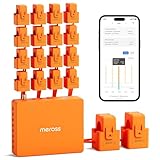
- SAFE & RELIABLE: Meross smart energy consumption monitor is ETL‑certified and compliant with the UL 61010 testing standard, ensuring safe and reliable home energy monitoring. Works with most US homes: single-phase 2-wire systems, single-split phase 3-wire systems, and 3-phase 4-wire Wye systems with earthed (TN or TT) neutral (no Delta). Easy clamp‑on design installs in minutes. Invert CT readings in the app—no physical flipping. PROTECTED BY 2-YEAR WARRANTY for worry-free use.
- TRACK ENERGY & CUT BILLS: Track power, voltage, current, and power factor within ±1% accuracy. Clear power usage and cost charts by minute/hour/day/month/year help you easily understand your energy use. Store up to 5 years of data and export hourly reports for deep analysis. Most users save 10–20% on energy costs by spotting energy hogs and getting accurate insights to cut their bills.
- 24/7 ENERGY MONITORING + SMART ALERTS: Real-time home energy monitoring from anywhere. Set custom alerts for unusual usage spikes and threshold breaches for total peace of mind. Catch issues early with no subscriptions, no cloud lock‑in, and no hidden fees — all built-in. Supports 2 main circuits (200A) + 16 branch circuits (60A), making it perfect for precise, circuit-level energy monitoring.
- MAXIMIZE YOUR SOLAR SAVINGS (HOME ASSISTANT): This solar energy monitor integrates with Home Assistant to detect solar surplus and automatically power EV chargers, water heaters, and other high‑use appliances. Stop wasting solar energy—use it yourself and cut your electricity bill faster. The perfect home energy monitor for solar homes.
- LOCAL DATA, FULL PRIVACY, NO SUBSCRIPTIONS: Connect seamlessly with Home Assistant for advanced energy automation. All energy data stays local—no cloud, no delays, no privacy concerns. Take full control of your home energy, reduce waste, and protect your privacy. Supports Open API and Web Control.
Choose lower-emission transportation when it works for you
NOAA recommends fuel-efficient vehicles and public transportation, as well as biking or walking when practical. You do not have to replace a vehicle to take useful steps:
Do these 3 things before closing this tab:
1Fix the driver behind crashes, sound loss and screen glitches2Repair Windows errors before they cause bigger problems3Scan for outdated or missing drivers - takes under a minute- Use public transit, bike, or walk for trips where those options are safe and workable.
- When driving, avoid idling for more than 30 seconds and keep tires properly inflated, as NOAA advises.
- If you are considering a vehicle, fuel efficiency is one factor to weigh alongside cost, access, and how you actually travel.
Travel options vary with distance, local transit, mobility needs, and other circumstances; choose changes that are realistic for your household.
Best Value
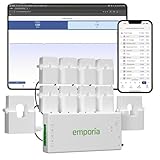
- SAFETY YOU CAN TRUST WITH UL CERTIFICATION: With Emporia Energy, your home energy monitoring is safe, reliable, and certified. The Emporia Vue is UL Listed, meaning it has met rigorous safety standards for electrical products in the U.S. and Canada. This certification ensures that every component has been thoroughly tested to prevent hazards, such as overheating, short-circuiting, or fire, offering you peace of mind as you manage your home’s energy consumption.
- INSTALLS IN CIRCUIT PANEL of most homes with clamp-on sensors. Supports Single phase, Single-split phase, and 2-wire systems. 3-wire systems; 3-phase, 4-wire Wye systems with earthed (TN or TT) neutral (no-Delta) are supported with an additional 200A sensor (sold separately).
- 24/7 ENERGY MANAGEMENT AND MONITORING: Automate, manage and control your home's real power anywhere, anytime to prevent costly repairs, conserve energy, and save costs. Monitor solar / net metering. PROTECTED BY A 1-YEAR WARRANTY.
- LOWER YOUR ELECTRIC BILL: Configure settings in the Emporia Energy App to automate energy management for time of use, peak demand, excess solar, and rewards programs. You can even see live reporting and invaluable savings opportunities instantly. Gauge real-time spending and get actionable notifications and automated energy management to help you reduce costs.
- REAL-TIME ENERGY DATA: REQUIRES 2.4 GHz WIFI WITH AN INTERNET CONNECTION to monitor energy use with iPhone / Android / Web app. Vue sensors collect energy data and are accurate from ±2%. The Vue is UL and CE Listed for your safety. 1 second data is only available in the app (when actively open) and retained 3 hours. Minute and hour data are retained in the cloud. 1 minute data is retained 7 days, 1 hour data is retained indefinitely. Export cloud data whenever you want in the app.
Make food and waste choices that reduce emissions
NOAA recommends reducing meat and dairy, eating local where appropriate, and composting to keep food waste out of landfills. Its infographic also encourages a plant-rich diet and local produce. These are general actions, not a guarantee that every local food choice has a lower lifecycle footprint.
- Try reducing meat and dairy. Make the change in a way that works for your diet, budget, and access to food.
- Prevent avoidable food waste. Use what you buy and compost food scraps where a suitable service or setup is available.
- Consider local food in context. Local produce can be a practical choice, but the guidance cited here does not compare the lifecycle emissions of specific foods or supply chains.
Reduce fertilizer runoff in coastal areas
If your home or community is near coastal waters, fertilizer and other runoff can contribute to local acidification pressures. NOAA recommends reducing fertilizer use and runoff; its infographic also suggests reducing lawn watering or choosing drought-tolerant landscaping.
- Use less fertilizer where possible and avoid allowing it to wash into storm drains or waterways.
- Consider drought-tolerant landscaping or less lawn watering where appropriate for your location.
These actions target local coastal pressures. They complement—not substitute for—cutting CO₂ emissions that contribute to global ocean acidification.
Take part in community options
Some changes are easier when communities provide alternatives. NOAA suggests community-supported agriculture, bike and car shares, public transportation, habitat restoration, and contacting regional Coastal Acidification Networks. Whether any option is available depends on where you live.
Choose actions that fit your household
A practical way to decide what to do is to look at your household’s actual energy use, travel patterns, food habits, budget, and access to alternatives. Prefer steps you can sustain, and distinguish between actions that reduce CO₂ emissions and those that address local runoff. For home upgrades or clean-energy options, your utility or local government energy office may be able to explain local assessments, incentives, and eligibility.
Quick Recap
Product prices and availability are accurate as of the date/time indicated and are subject to change. Any price and availability information displayed on Amazon at the time of purchase will apply.

