
iTechGuides is reader-supported. When you buy through links on our site, we may earn an affiliate commission. As an Amazon Associate I earn from qualifying purchases. Learn more
Ships can reduce underwater noise by combining vessel-specific design and propulsion choices with careful operating practices and maintenance. The most useful measures depend on what is making noise on a particular vessel, how it is propelled, and the conditions in which it must operate. The International Maritime Organization (IMO) revised its guidance in 2023 to help designers, shipbuilders, owners, and operators plan those measures.
What causes underwater noise from ships?
Underwater radiated noise can come from several parts of a vessel, and the dominant source can vary with ship design and operating conditions. The IMO identifies propeller cavitation, engine machinery, and hull movement among the main sources; its earlier guideline work also discusses hull design and onboard machinery. IMO’s SDC 8 meeting summary and its overview of publications supporting global action describe these sources.
Cavitation occurs when pressure changes around a propeller cause bubbles to form and collapse. Machinery and vibration can also transmit sound through the hull into the water. Because these sources interact with the vessel’s design and operating state, a measure aimed at the wrong source may have little effect; diagnosis should guide the choice of intervention.
How can ships reduce underwater noise?
Design or refit the hull, propeller, and propulsion system
For a new build or major refit, evaluate the hull form, propeller design, and how well the propeller is matched to the ship’s wake. Review propulsion settings and how machinery vibration is transmitted through the vessel. These are engineering choices that need to be assessed for the specific ship, rather than universal hardware additions. The IMO’s revised guidelines cover design and operational approaches for stakeholders.
#1 Best Overall

- LOUD UNDERWATER SOUND - the Scuba Choice Tank Rattle Stick produces a clear, loud rattle sound that can be easily heard underwater, ensuring effective communication with your diving buddy during scuba and snorkeling adventures
- COMPACT 4.75" DESIGN - with a length of just 4.75 inches, this rattle stick is lightweight and easy to carry, fitting comfortably in your dive gear bag, BCD, or pocket, making it an essential accessory for any dive
- NOISE-FREE STORAGE COVER - includes a durable cover to prevent accidental noise when not in use, offering quiet, safe storage and ensuring your rattle stick remains ready for action whenever needed
- HIGH VISIBILITY COLOR - available in vibrant orange, this rattle stick is designed for maximum visibility underwater, reducing the risk of misplacement and making it easier for your dive buddy to spot
- IDEAL FOR ALL DIVING SKILL LEVELS - whether you're a beginner or an experienced diver, this signal bell provides peace of mind with reliable, easy-to-use signaling to enhance safety and communication during your dives
Set speed and propulsion according to propeller type
For fixed-pitch propellers, reducing vessel speed, shaft revolutions per minute (RPM), or engine output can reduce cavitation noise. The IMO advises operators to understand a ship’s cavitation inception speed—the speed at which cavitation begins—and, where practicable, operate below it in designated protected areas.
For controllable-pitch propellers, reducing speed by itself may not reduce noise. Shaft speed and propeller pitch may need to be adjusted together. Operators should use ship-specific knowledge or measurements when available, while accounting for safety, operating requirements, and energy efficiency. The IMO guidance does not make one speed setting suitable for every vessel.
Rank #2

- Aquacraft Scuba Diving Underwater Signal Device/Noise Maker
- Lightweight aluminum construction
- 7" overall length - Get your buddies attention underwater with ease!
- shake side to side for loud, effective signaling
- Attached safety lanyard included
Maintain the propeller, hull, and machinery
Keep the propeller and hull in good condition, and maintain moving machinery and vibration-isolation measures so deterioration does not undermine their intended performance. Hull cleaning is one operational or maintenance example identified in the IMO material. The relevant work and intervals depend on the vessel and its maintenance regime.
Optimize trim, draught, handling, and voyage plans
Consider trim and draught—the vessel’s fore-and-aft balance and how deeply it sits in the water—alongside ship handling and voyage planning. An appropriate setup can reduce power demand and associated propeller cavitation noise. Operational adjustments should be assessed in context rather than treated as fixed prescriptions for all routes or loading conditions.
Rank #3

- New generation SEASCOOTER EXPLORER is a superior DPV in the market that is easily accessible to anyone who sees diving as a passion and divers seeking new thrills underwater.
- The top-of-the-line Explorer features a 3-stage seal for waterproof integrity,
- and is outfitted with a new pressure-valve technology
- that allows depressurization of the unit after ascending to the surface.
- Save air and spend more time exploring new dive sites, reefs and wrecks.
How should operators choose among measures?
Compare candidate measures against the vessel’s likely noise sources and operating profile. The IMO does not establish a universal best measure or a comparable cost-effectiveness ranking. Its workshop on energy efficiency and underwater radiated noise considered possible co-benefits and trade-offs, so assess the effects together rather than assuming that every noise measure will also save fuel.
- Expected noise effect: Is the measure aimed at a source known to matter on this vessel, and can the result be assessed?
- Safety and operational feasibility: Can the ship use the measure without compromising safe navigation or essential operating needs?
- Energy and fuel consequences: Could the adjustment increase or reduce power demand under the ship’s actual conditions?
- Implementation burden: What capital work, maintenance, training, or changes to voyage planning would be needed?
Where data are available, use measurements and ship-specific operating knowledge to evaluate outcomes. The reviewed IMO material does not provide a broadly applicable percentage or decibel reduction for these measures, so a general numerical promise would be misleading.
Rank #4

- 【Strong Power】3.7mph, diving depth up to 30m, the underwater electric scooter is a great way to reduce personal energy loss and increase diving time. Satisfy your deep sea curiosity. Great for swimming, diving and water adventures.
- 【Adjustable Speed Underwater Scooter】Magnetic power switch, the propeller is designed with a safety net to prevent accidental finger injuries. 2-speed adjustment, maximum speed: 5-6 km/h. Bring you a wonderful underwater journey
- 【Large Capacity Lithium Battery】The underwater scooter is powered by a 300W/500W lithium battery, about 50 minutes to 1 hour standby (depending on the speed setting). It can indicate the remaining battery power to ensures your safety. Batteries can be replaced in a minute, solving power problems.
- 【Maximum Depth 30m】The underwater scooter has a 300W/500W DC motor for faster speed. The buoyancy is adjustable, suitable for use on the Exterior or at a depth of 30 meters.
- 【WIDE APPLICATION】Not only let kids have fun in the water, but also inspire adults to explore the underwater world. Whether you are diving, snorkeling, swimming or other underwater activities.
What does IMO guidance require?
The IMO’s Marine Environment Protection Committee approved revised Guidelines for the Reduction of Underwater Radiated Noise from Shipping in July 2023; the IMO says they took effect in October 2023. They support action and underwater-noise management planning by stakeholders. The reviewed IMO materials do not establish a universal, enforceable underwater-noise limit for every commercial ship. Check the IMO’s ship-noise overview for the latest implementation status: it describes an experience-building phase running until MEPC 85 in 2026, with a possible two-year extension.
Recommended Free Tools
The IMO’s action plan emphasizes implementation, learning from experience, awareness, and training, along with further work on targets and policy. This makes a ship-specific management plan more useful than treating any single operational change as a complete solution. For additional professional reading, the Institute of Chartered Shipbrokers lists its Underwater Radiated Noise Guide, 1st Edition, which covers measures including speed, propeller improvements, maintenance, voyage planning, trim, ship handling, and a sample noise-management plan.
Best Value
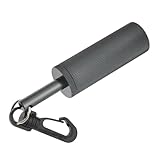
- 1. [Adaptable Diving Tool] This underwater device is the noise-producing tool for catching attention during dives, ensuring clear communication and interaction with your diving partners.
- 2. [High-Quality Material] Crafted from rust-resistant aluminum alloy, this device is designed to withstand underwater conditions while maintaining a polished, sleek look.
- 3. [Convenient and Secure] Features an easy-to-attach fastener and a noiseless storage cover, allowing for easy portability and silent swimming when not in use.
- 4. [Multi-Purpose Use] Ideal for signaling directions, interacting with aquatic life, or unexpected situations by securing the frame in crevices during dives.
- 5. [Small-Sized and Lightweight] Measuring 11.8cm x 2.8cm, this underwater device is compact and fits comfortably in dive gear pockets, making it an essential accessory for all divers.
Why reducing ship noise matters
The IMO describes potential adverse effects of underwater noise on critical life functions in marine mammals, fish, and invertebrates. Noise can also matter to coastal Indigenous communities whose livelihoods and cultures depend on marine life. The IMO outlines this environmental scope in its background on revised guidelines.
Quick Recap
Product prices and availability are accurate as of the date/time indicated and are subject to change. Any price and availability information displayed on Amazon at the time of purchase will apply.

