
iTechGuides is reader-supported. When you buy through links on our site, we may earn an affiliate commission. As an Amazon Associate I earn from qualifying purchases. Learn more
Start by identifying the company’s registered name and jurisdiction, then check its official registry and trace the records to the people or organisations that may hold them: a former director, liquidator, creditor, successor business, cloud provider or archive. Registry filings are not the same as the company’s working files, and there is no single retention period for every record. Your right to request records also depends on what they contain and your relationship to the company.
First establish which company closed and where
Search using the legal entity, not just the brand name you remember. Collect as much of this information as you can:
- Exact registered name, registration number and any former names.
- Country or state where it was registered, plus any trading names or registered address.
- Approximate date it stopped trading or was dissolved.
- What records you need and why—for example, your account history, employment records, invoices, a contract or a filing.
A registry search may reveal the company’s status, filings and former names. The National Archives’ UK guide, “Companies and businesses,” notes that company research can also identify details such as registered office and status. Search the registered entity as well as the name on a product, website or invoice.
Windows Errors? Fix Them Before They Spread
Repair common Windows errors and clear accumulated junk for a smoother, more stable PC - no reinstall needed.Free scan · no reinstallOutdated Drivers Are Slowing You Down
One free scan finds every outdated or missing driver and matches the right update for your exact hardware.Free scan · exact hardware matchSearch the official register, but distinguish filings from company files
For a company registered in England and Wales, begin with the Companies House company information service and its dissolved-company search. These can help establish the entity’s status and locate available filings. They do not necessarily provide the company’s own invoices, correspondence, customer files, contracts or accounting records.
#1 Best Overall

- PORTABLE SCANNER FOR USE ON-THE-GO — The fastest and lightest mobile single-sheet-fed compact document scanner in its class¹
- QUICK DOCUMENT SCANNING ― This Epson ultra-fast scanner scans a single page as quickly as 5.5 seconds²; Windows and Mac compatible
- VERSATILE PAPER HANDLING ― Portable scanner scans documents up to 8.5 x 72 in; Also easily digitizes receipts and ID cards to make accounting, bookkeeping, and organizing simpler
- INTUITIVE, HIGH-SPEED SOFTWARE — Epson ScanSmart Software³ is a smart tool allowing you to easily scan, review, and save; Stay organized easily with the help of this Epson scanner
- EASY SETUP — USB-powered connect to your computer for quick and simple scanning; No batteries or external power supply required to operate portable document scanner; Standard Connectivity: USB 2.0
In a notice published on 12 May 2026, Companies House said dissolved-company records were retained for 20 years before selected records were transferred to the appropriate Public Records Office. The notice also said destruction and transfer were paused while the retention period was under review; searches and requests for records not available online could continue, with a fee for the latter. Treat those details as the position described in that notice, not a guarantee that the pause or schedule remains unchanged. Check Companies House’s live services before making a request.
If the company was registered elsewhere, use that jurisdiction’s official company register and relevant national, state or local archive. The UK procedures and retention examples below do not establish the rules for other jurisdictions.
Rank #2

- FAST SPEEDS - Scans color and black and white documents a blazing speed up to 16ppm (1). Color scanning won’t slow you down as the color scan speed is the same as the black and white scan speed.
- ULTRA COMPACT – At less than 1 foot in length and only about 1. 5lbs in weight you can fit this device virtually anywhere (a bag, a purse, even a pocket).
- READY WHENEVER YOU ARE – The DS-640 mobile scanner is powered via an included micro USB 3. 0 cable allowing you to use it even where there is no outlet available. Plug it into you PC or laptop and you are ready to scan.
- WORKS YOUR WAY – Use the Brother free iPrint&Scan desktop app for scanning to multiple “Scan-to” destinations like PC, Network, cloud services, Email and OCR. (2) Supports Windows, Mac and Linux and TWAIN/WIA for PC/ICA for Mac/SANE drivers. (3)
- OPTIMIZE IMAGES AND TEXT – Automatic color detection/adjustment, image rotation (PC only), bleed through prevention/background removal, text enhancement, color drop to enhance scans. Software suite includes document management and OCR software. (4)
Trace the records according to how the business closed
Closure route is a useful clue to custody, but it does not guarantee that a particular file still exists or that you are entitled to receive it. The National Archives’ “Companies and businesses” guide describes several possible custody routes:
Free tools Windows power users keep installed
One-click scans. No signup required.
| Closure route | Likely place to ask | What to bear in mind |
|---|---|---|
| Solvent voluntary winding up | Former directors | The National Archives says the company’s own records remain the property of former directors. Ask whether the specific records still exist and whether they can be shared with you. |
| Insolvency | Insolvency practitioner, liquidator, receiver or creditor | The National Archives says the books and papers become the property of creditors and that a registered company is represented by a receiver or liquidator. An office-holder may know where records were collected or transferred. |
| Merger, sale or continuing business | Successor business or purchaser | Ask whether it received the particular records you need. A sale of assets does not, by itself, establish who controls every category of record. |
| Records deposited or preserved for historical reasons | National, local or county archive | The company’s own files may have been deposited there, but an archive may hold only government registration or dissolution material—or may point to another repository. |
| Hosted or cloud records | Service provider and, where relevant, the former account administrator or office-holder | A lapsed subscription does not necessarily mean immediate deletion, but the provider’s retention period varies. Authority to request account data depends on who is asking and what the data contains. |
The records may also have been destroyed. The National Archives notes that some company records are destroyed, so a registry result or a contact with one likely custodian is not proof that all working records survive.
Rank #3
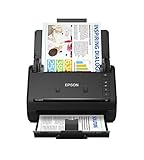
- FAST DOCUMENT SCANNING — Document scanner with feeder allows you to speed through stacks with a 50-sheet Auto Document Feeder (ADF); Efficient office scanner to help you scan more productively
- INTUITIVE, HIGH-SPEED SOFTWARE — Quickly scan with this desktop document scanner; Epson ScanSmart Software lets you easily preview scans, email files, upload to the cloud, and more; Plus, automatic file naming saves even more time
- SEAMLESS INTEGRATION — Easily incorporate your data into most document management software with the included TWAIN driver; Office document scanner integrates seamlessly with business workflows
- EASY SHARING — Duplex scanner allows you to scan straight to email or popular cloud storage2 services like Dropbox, Evernote, Google Drive, and OneDrive for simple storage and sharing
- SIMPLE FILE MANAGEMENT — Scanner allows the creation of searchable PDFs with Optical Character Recognition (OCR) and convert scans to editable Word or Excel files effortlessly; Designed for home and office document scanning
If an official receiver or insolvency practitioner was involved
Ask who currently has custody of the relevant material, whether it still exists, what process applies to requests, and whether the custodian requires proof of identity, authority or payment of a fee. The Insolvency Service’s technical guidance for Official Receivers, “16. Accounting and other records” (updated 20 April 2026), describes official receivers identifying the nature and whereabouts of records and arranging custody or collection. That guidance explains the official receiver’s work; it does not give every former customer or employee an automatic right to obtain company records.
Request records from a cloud or hosted service promptly
Look for the provider in account notices, invoices, domain records, bookkeeping software references, backup notifications or messages to former administrators. Then contact the provider through its official support or account-recovery route and explain the company’s closure, the records sought and your connection to the company.
Rank #4

- Scanner type: Document
- Connectivity technology: USB
- With Auto Scan Mode, the scanner automatically detects what you're scanning
- Digitize documents and images
The Insolvency Service says a provider may retain data after a subscription lapses, but the retention period varies and is not known from its guidance. It advises contacting the provider at the earliest opportunity to discuss restoring or continuing service if data has not been downloaded or preserved. Be prepared to show that you have authority to make the request. Do not use credentials that are not yours or attempt to bypass access controls.
Ask an archive when its holdings are a plausible fit
Search the relevant national archive catalogue and local or county archives, particularly for a long-established, locally significant or historically important business. Ask the archive whether it holds the company’s own records, government material about registration or dissolution, or only a catalogue reference to another repository. The National Archives says company records may be deposited with a public record office or local county archive; its own company holdings often concern registration and dissolution rather than the company’s day-to-day operations.
Best Value

- OUR MOST ADVANCED SCANSNAP. Large touchscreen, fast 45ppm double-sided scanning, 100-sheet document feeder, Wi-Fi and USB connectivity, automatic optimizations, and support for cloud services. Upgraded replacement for the discontinued iX1600
- CUSTOMIZABLE. SHARABLE. Select personalized profiles from the touchscreen. Send to PC, Mac, mobile devices, and clouds. QUICK MENU lets you quickly scan-drag-drop to your favorite computer apps
- STABLE WIRELESS OR USB CONNECTION. Built-in Wi-Fi 6 for the fastest and most secure scanning. Connect to smart devices or cloud services without a computer. USB-C connection also available
- PHOTO AND DOCUMENT ORGANIZATION MADE EFFORTLESS. Easily manage, edit, and use scanned data from documents, receipts, photos, and business cards. Automatically optimize, name, and sort files
- AVOIDS PAPER JAMS AND DAMAGE. Features a brake roller system to feed paper smoothly, a multi-feed sensor that detects pages stuck together, and skew detection to prevent paper damage and data loss
Preserve any records you lawfully obtain
Keep the records in the condition in which you received them. The Insolvency Service’s official-receiver guidance says not to annotate paper records or alter digital records. For sensitive material or anything that could matter in a dispute or investigation, make working copies and record who accessed or downloaded the files.
- Log what you received: note the custodian, date, format, any stated restrictions and the files or boxes provided.
- Keep an access history: record downloads, copies and people given access where a reliable audit trail matters.
- Protect important digital files: keep more than one protected copy, including a separate backup where appropriate.
- Limit disclosure: do not circulate employee, customer, financial or medical information more widely than necessary. Check the applicable privacy and confidentiality rules before transferring or publishing it.
- Pause before changing or disposing of possible evidence: if records relate to litigation, an investigation or regulated duties, ask the responsible office-holder, regulator, lawyer or records professional before modifying, destroying or disclosing them.
The FTC’s “Protecting Personal Information: A Guide for Business” recommends a written retention policy that identifies what information must be kept, how it will be secured, how long it will be kept and how it will be disposed of securely. That is useful security-planning guidance, not a complete legal rule for every jurisdiction or type of company record.
Retention periods depend on the record and the jurisdiction
Do not use one company’s registry schedule or one tax rule as the answer to how long all records survive. The examples below concern different records and legal regimes:
Do these 3 things before closing this tab:
1Scan for outdated or missing drivers - takes under a minute2Clear out junk files and repair common Windows errors3Fix the driver behind crashes, sound loss and screen glitches| Records and jurisdiction | What the cited guidance says | Scope and qualification |
|---|---|---|
| Dissolved-company registry records, England and Wales | Companies House stated a 20-year retention period before selected records are transferred to the appropriate Public Records Office. | Companies House’s notice of 12 May 2026 also said destruction and transfer were paused during a review. Check current services and policy before relying on the stated schedule. |
| Certain VAT records after deregistration, UK | HMRC’s VAT Traders’ Records Manual describes a general six-year limit for deregistered traders’ records. | This concerns VAT records and has exceptions, including transfer of a going concern and liquidation. It is not a general retention period for a company’s files. |
| Certain employee medical and exposure records, United States | An OSHA interpretation dated 17 February 1999 describes transfer to a successor employer or, where there is no successor, transfer to NIOSH or advance written notice of intended disposal in circumstances covered by the cited requirement. | This is a specific employee-record context, not a rule for other company documents. Confirm the current regulation and whether the rule applies before acting. |
The applicable rule can turn on where the company operated and was registered, the type of record, the way the business closed and who has authority over the material. For a regulated file or a decision to destroy or disclose records, check the current rule with the responsible regulator or a qualified adviser.
Quick Recap
A practical request checklist
- Identify the entity: write down its legal name, registration number, jurisdiction, former names and approximate closure date.
- Check the registry: save the company’s status and available filing information, and note whether you need a registry record or an original company file.
- Follow the closure route: contact the relevant former director, office-holder, creditor, successor business, provider or archive.
- Describe a focused request: specify the record category and period you need, explain your connection to the company, and ask about access requirements, fees and whether the material still exists.
- Preserve what arrives: retain the original files unchanged, document their source and receipt date, and control access to sensitive information.
Product prices and availability are accurate as of the date/time indicated and are subject to change. Any price and availability information displayed on Amazon at the time of purchase will apply.

