
iTechGuides is reader-supported. When you buy through links on our site, we may earn an affiliate commission. As an Amazon Associate I earn from qualifying purchases. Learn more
A dependable Windows file system should make files easy to find, keep active work separate from reference material, and give you a way to recover from mistakes. Use File Explorer for daily organization, search from a deliberate location, and choose backup based on whether you need cross-device access, version history, or a one-time transfer.
Build a folder system around your work
There is no single folder taxonomy that suits every profession. A useful starting point is to separate work by how you use it, rather than creating a new top-level folder for every file type:
- Active projects: Current work, grouped by client, project, or team.
- Reference: Materials you consult but do not regularly edit, such as approved templates or research.
- Archive: Completed work you need to retain but rarely access.
Choose names that make the order and subject obvious, and apply the same pattern across projects. For example, a project folder might contain Working, Deliverables, and Reference. That is a practical convention, not a Windows requirement. Avoid relying on an elaborate hierarchy: if staff cannot predict where a file belongs, the structure is too complicated.
The Tool Desk
Outbyte PC Repair FREERepair Windows errors before they cause bigger problemsFix Now →Outbyte Driver Updater FREEFix the driver behind crashes, sound loss and screen glitchesFind Drivers →Use a consistent naming convention that identifies a file without requiring you to open it. Include a project or client name and a meaningful description; add a date or version only when it helps distinguish revisions. Keep a single authoritative working copy where possible, rather than creating ambiguous duplicates such as “final,” “final-new,” and “final-final.”
#1 Best Overall
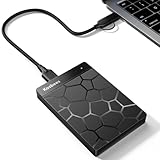
- 【Plug-and-Play Expandability】 With no software to install, just plug it in and the drive is ready to use in Windows(For Mac,first format the drive and select the ExFat format.
- 【Fast Data Transfers 】The external hard drives with the USB 3.0 cable to provide super fast transfer speed. The theoretical read speed is as high as 110MB/s-133MB/s, and the write speed is as high as 103MB/s.
- 【High capacity in a small enclosure 】The small, lightweight design offers up to 500GB capacity, offering ample space for storing large files, multimedia content, and backups with ease. Weighing only 0.35 Lbs, it's easy to carry "
- 【Wide Compatibility】Supports PS4 5/xbox one/Windows/Linux/Mac and other operating systems, ensuring seamless integration with game consoles,various laptops and desktops .
- Important Notes for PS/Xbox Gaming Devices: You can play last-gen games (PS4 / Xbox One) directly from an external hard drive. However, to play current-gen games (PS5 / Xbox Series X|S), you must copy them to the console's internal SSD first. The external drive is great for keeping your library on hand, but it can't run the new games.
Use File Explorer for daily navigation
File Explorer is the main place to browse folders, create directories, rename files, and move or copy items. Microsoft’s Windows keyboard-shortcut guidance lists these useful commands; behavior can vary with keyboard layout and the app in focus. See Microsoft’s Windows keyboard shortcuts.
| Task | Shortcut |
|---|---|
| Open File Explorer | Windows+E |
| Create a folder | Ctrl+Shift+N |
| Rename the selected item | F2 |
| Go to the parent folder | Alt+Up |
| Return to the previous location | Alt+Left |
| Open another File Explorer window | Ctrl+N |
| Focus the search box | Ctrl+E or Ctrl+F |
To organize files, select the item, use the keyboard or context menu to copy or cut it, navigate to the destination, and paste. When moving a file into a shared or synced folder, confirm that the destination is correct before deleting any other copy. File Explorer’s preview features can help inspect supported file types without opening a separate app, but preview availability depends on the file type and installed software.
Rank #2

- 【Versatile Storage Expansion – For Gaming, Work & Everyday Use】 Running out of space on your PS5 or Xbox Series X/S? This external hard drive lets you store and play PS4 / Xbox One games directly, instantly freeing up your console’s internal storage for next‑gen titles. At the same time, it handles work file backups, media libraries, and cross‑device data transfers with ease. One drive, all your needs. *(Note: PS5 / Xbox Series X|S games cannot be run or stored directly from the external hard drive. However, by offloading your PS4 / Xbox One games, you can free up valuable space for newer titles.)*
- 【Patented Silicone Sleeve – Data Protection You Can Count On】 Worried about drops? We’ve got you covered. The patented built‑in silicone sleeve acts like a shock‑absorbing armor, cushioning your drive against bumps and falls. Whether it’s important work documents, precious family photos, or hard‑earned game saves, your data deserves this level of protection.
- 【Plug & Play, Compatible with Computers & Consoles】 No complicated setup—just plug in and go. Works seamlessly with Windows, Mac, and Linux computers, as well as PS4, PS5, Xbox One, and Xbox Series X/S. Process files at the office, back up data at home, or enjoy gaming in your downtime—one drive handles all your devices, simply and hassle‑free.
- 【USB 3.0 Ultra‑Fast Transfer – No More Waiting】 Tired of watching progress bars crawl? With USB 3.0 speeds up to 5Gbps, large files transfer in seconds. Whether you’re moving work documents, transferring hundreds of gigs of games, or backing up a year’s worth of photos, you get more done in less time.
- 【Sleek, Lightweight, and Ready to Go】 Weighing just 0.16 kg—lighter than a can of soda—this compact drive features a stylish mirror‑and‑frosted finish. Toss it in your bag and go, whether you’re heading to the office, visiting a friend for a gaming session, or giving a presentation on the road.
Search from the right location
If you do not know which folder contains a file, search from the Windows taskbar or from File Explorer. Windows Search can return results from the PC and OneDrive. File Explorer search uses its current context: starting at Home searches broadly, while opening a drive or folder first limits the search to that location. Microsoft explains the options in Find your files and apps in Windows.
Quick wins for a faster PC:
Clear out junk files and repair common Windows errorsFree Scan →Scan for outdated or missing drivers - takes under a minuteDriver Scan →Repair Windows errors before they cause bigger problemsFix Now →- Choose a scope. Use taskbar search or File Explorer Home when you are unsure where the file lives. Open a particular drive or folder first when you want a narrower search.
- Search for a distinctive term. Try a project name, client, or part of the filename. If you get too many results, refine the term or search within a more specific location.
- Check the result’s location. Before editing or moving a match, verify its folder path and whether it is a local file or a OneDrive item.
Choosing the location before typing is often the simplest way to avoid searching a broad set of files when you already know the likely folder.
Rank #3

- Plug-and-play expandability
- SuperSpeed USB 3.2 Gen 1 (5Gbps)
Understand OneDrive sync before using it as storage
OneDrive sync keeps a local OneDrive folder connected to the cloud account. It is two-way: edits and deletions made in the synced folder are reflected on OneDrive online, and changes made online sync back to connected devices. Sync provides access across devices, but it is not the same as an independent backup if the same change or deletion propagates. Microsoft describes the behavior in Sync your computer’s files and folders with OneDrive.
Use Files On-Demand intentionally
Files On-Demand lets you see cloud files in File Explorer without downloading every file to the PC. This can conserve local disk space, but a file that is cloud-only needs a connection to download before use. Mark files or folders for offline availability when you need them without internet access; use selective sync to control which folders are kept on a particular device.
Rank #4

- 【Upgraded version】 - The mirror logo strip is combined with the striped non-slip design. The rounded corners of the shell are more suitable for holding. The strips play a heat dissipation function to ensure a stable and fast transmission process.
- 【Ultra-thin and quiet】 - The motherboard adopts JMicron 578 noise-free solution, giving you a quiet working environment. Lightweight and portable size designed to fit in your pocket for easy portability.
- 【Ultra-Fast Data Transfers】 - Pairing this external hard drive with JMicron 578 solution USB 3.0 and USB 2.0 interfaces enables blazing-fast data transfer. It boasts theoretical read speeds of up to 125MB/s and write speeds of up to 103MB/s.
- 【Plug and Play】 - With no software to install, just plug it in and the drive is ready to use.The hard disk chip is wrapped with an aluminum anti-interference layer to increase heat dissipation and protect data.
- 【What You Get】 - 1 x Portable Hard Drive, 1 x USB 3.0 Cable, 1 x User Manual, Gift-type shell packaging ,Three-year manufacturer's warranty and free technical support services.
Know what folder backup changes
OneDrive folder backup can redirect standard folders such as Desktop, Documents, and Pictures into OneDrive. Review which folders are selected before enabling it. If you later stop backup, existing files remain in OneDrive; stopping the setting does not automatically put them back into the original local folders. Find the files in OneDrive and move them manually if you want local copies there. See Microsoft’s folder-backup instructions.
Do these 3 things before closing this tab:
1Fix the driver behind crashes, sound loss and screen glitches2Repair Windows errors before they cause bigger problems3Scan for outdated or missing drivers - takes under a minuteFor shared work, OneDrive also supports adding shortcuts to shared folders so they appear in your OneDrive files. The available permissions and the folder owner’s settings determine what you can do with shared content; consult Microsoft’s guidance on shared-folder shortcuts.
Best Value

- High capacity in a small enclosure – The small, lightweight design offers up to 6TB* capacity, making WD Elements portable hard drives the ideal companion for consumers on the go.
- Plug-and-play expandability
- Vast capacities up to 6TB[1] to store your photos, videos, music, important documents and more
- SuperSpeed USB 3.2 Gen 1 (5Gbps)
Choose a backup method for the job
Cloud sync, versioned file backup, and a one-time file transfer solve different problems. Decide whether you need access from several devices, recovery of an earlier file version, or simply a copy on another PC. Also consider internet access, available cloud storage, file volume, local disk use, and whether the backup should run continuously.
| Option | Best suited to | Important trade-off |
|---|---|---|
| OneDrive and Windows Backup | Access to selected files across devices and cloud retrieval; Windows Backup uses OneDrive for selected folders. | Cloud use requires internet and sufficient account storage. Microsoft’s Windows Backup app is currently aimed at consumer devices using personal Microsoft accounts; it does not work with work or school accounts. Microsoft says a free Microsoft account includes 5 GB of storage. Details: Windows Backup guidance and Windows backup options. |
| File History to an external drive | Periodic copies of personal files and recovery of earlier versions. | Requires a connected external drive or a configured network location. Restoring a prior version can replace the current file and cannot be undone. See File History instructions. |
| File History to a network location | Versioned file copies stored on accessible network storage. | Depends on network storage access and configuration. Microsoft also notes network storage as an option when large or numerous files make cloud upload less suitable. See File History instructions and Windows backup options. |
| External storage for a one-time transfer | Moving files to another Windows PC without relying on cloud transfer. | The device must be connected, and transfer time depends on the amount of data. Microsoft identifies USB drives, SD cards, and external hard drives as possible devices. See Microsoft’s transfer instructions. |
Windows Backup and File History are not interchangeable. Windows Backup is a consumer-oriented cloud-backed option; File History is for periodic personal-file copies to external or network storage and version recovery. A recovery USB is different again: it helps restore Windows and does not include personal files. Use a personal-file backup method for documents and other data.
Set up File History and restore carefully
File History can save versions of personal files to an external drive or network location. Connect the drive or configure the network destination, then turn on File History in Windows settings. The exact navigation labels can vary between Windows releases, so use Microsoft’s current File History setup and restore instructions for the version installed.
Recommended Free Tools
- Connect the external drive or make the intended network location available.
- Open File History settings, select the destination, and enable the feature.
- Allow a backup to run, then confirm that the files you care about appear in the backup.
- To recover an earlier version, use File History’s previous-versions interface and select the file or folder and the version you need.
Restoring a previous version can overwrite the current file, and Microsoft warns that this replacement cannot be undone. When the interface offers a restore-to-different-location choice, use it if you want to inspect or compare the old copy before replacing anything.
Quick Recap
Make recovery part of the routine
- Verify important files are actually present in the chosen backup destination; do not assume that selecting a folder means every file has completed syncing or backup.
- Make offline-availability choices for files needed without an internet connection.
- Practice restoring a noncritical file or use a different-location restore before relying on the process for important work.
- For a new-PC move, distinguish copying files to external storage from maintaining an ongoing backup. Microsoft’s external-storage transfer guide covers that one-time workflow.
Product prices and availability are accurate as of the date/time indicated and are subject to change. Any price and availability information displayed on Amazon at the time of purchase will apply.

