
Do these 3 things before closing this tab:
1Fix the driver behind crashes, sound loss and screen glitches2Clear out junk files and repair common Windows errors3Scan for outdated or missing drivers - takes under a minuteiTechGuides is reader-supported. When you buy through links on our site, we may earn an affiliate commission. As an Amazon Associate I earn from qualifying purchases. Learn more
Monitor Cisco’s current security advisories and software fixes, review the relevant Manager and control-component logs, and validate suspicious records against your known system IPs, peer roles, approved changes, and normal network activity. A matching log entry is a reason to investigate—not proof by itself that an appliance is compromised.
Cisco now calls vManage Manager, vSmart Controller, and vBond Validator. Older names may still appear in documentation and deployments. This guide uses the current names, with the older terms where they help identify a component or log event.
What to monitor first
Use three layers of checks together: advisory and software status, component-specific logs and peering events, and contextual validation. A single signal may be ambiguous; reviewing the control plane as a whole helps you assess whether an event fits your deployment.
- Advisories and releases: identify whether your software train is affected and whether Cisco has published a fixed release.
- Logs and peers: look for the patterns Cisco calls out in Manager web and application logs, authentication logs, scripts logs, and control-connection peering events.
- Context and response: compare events with known IPs, expected peer roles, change records, and user activity; preserve diagnostics and involve Cisco TAC when needed.
As of October 3, 2026, Cisco reports active exploitation of CVE-2026-76504, the Catalyst SD-WAN Manager API Authentication Bypass Vulnerability. Details such as indicators and fixed releases can change; check Cisco’s live advisory before relying on them or making a change.
#1 Best Overall

- Cisco Catalyst 9130AX Series
- Part of Cisco's high-performance Catalyst 9130AX series
- Wi-Fi 6 certified, offering higher data rates, increased capacity, and improved performance in dense environments
- Manufactured by Cisco, a global leader in networking technology
- B Domain
Track advisories and software fixes
Check Manager’s advisory inventory
For Catalyst SD-WAN Manager releases 26.x and later, Cisco’s Monitoring Guide documents Monitor > Advisories, including a Scan now action. The guide says advisory collection is enabled when Cloud Services is activated and interval scanning runs weekly by default. Confirm that these settings and labels apply to your installed release; the guide covers 26.x and later.
Use Scan now when a new control component is added or you need to evaluate a new advisory promptly. Manager can mark devices Affected or Potentially Affected. Treat the latter as requiring detailed analysis rather than as a confirmed finding.
Rank #2
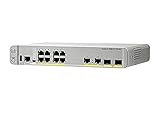
- CISCO REFRESH: Remanufactured is the Cisco certified, pre-owned equipment business. Refresh (-RF) carries the same warranty and access to software updates as with new products. To guarantee product direct from Cisco on Amazon; Ships From, Sold By Amazon
- ETHERNET PORT CONFIGURATION: 8 10/100/1000 Gigabit Ethernet (GbE) ports; 8 PoE+ output ports; 2 1G SFP uplinks; 2 1G copper uplinks
- POWER CONSUMPTION: 24.4W at 100% throughput
- FANLESS DESIGN: Silent operation
- DEFAULT SOFTWARE: IP Base (IP Services with RTU License); PEACE OF MIND: Enhanced limited lifetime warranty
Compare your software train with the advisory
Cisco’s Manager API Authentication Bypass Vulnerability advisory, CVE-2026-76504, was first published September 30, 2026, and last updated October 2, 2026. Cisco reports active exploitation in September 2026 and recommends moving to the first fixed release for the relevant software train. The advisory lists:
| Software train | First fixed release listed by Cisco |
|---|---|
| 20.9 | 20.9.10.1 |
| 20.12 | 20.12.8.2 |
| 20.15 | 20.15.6.1 |
| 20.18 | 20.18.4.1 |
| 26.1 | 26.1.2.1 |
| 26.2 | 26.2.1 |
These are the first fixed releases Cisco lists in that advisory, not a substitute for checking the current advisory and your deployment’s compatibility. Cisco says releases earlier than 20.9 must migrate to a fixed release. The advisory assigns CVE-2026-76504 a CVSS base score of 9.8; that is a vulnerability severity score, not a measure of how often compromise occurs or the probability that a particular deployment is compromised.
Rank #3

- Cisco catalyst 3650 24 port PoE 4x1g uplink ip services - Standalone with optional stacking 24 10/100/1000 Ethernet PoE+ and 4x1g uplink ports, with 640Wac power supply, 1 ru, ip services feature set
- Design that delivers high availability, scalability, and for maximum flexibility and price/performance
- Made in China
Cisco describes a Live Protect shield as temporary, partial coverage with limitations. It is not a complete fix: the advisory says upgrading to a fixed release is the only way to remediate the vulnerability.
Build a baseline before investigating alerts
Keep an authoritative record of the information you will need to decide whether an event is expected:
Rank #4

- This Certified Refurbished product is tested and certified to look and work like new. The refurbishing process includes functionality testing, basic cleaning, inspection, and repackaging. The product ships with all relevant accessories, a minimum 90-day warranty, and may arrive in a generic box. Only select sellers who maintain a high performance bar may offer Certified Refurbished products on Amazon.com
- Product Type- Layer 3 Switch
- Total Number of Network Ports- 12
- Form Factor- Rack-mountable
- Manager, Controller, and Validator system IPs;
- expected component roles and peer types;
- approved management-access source addresses;
- normal maintenance windows; and
- approved configuration changes and relevant user activity.
Compare source addresses against the configured System IPs shown in Manager’s Devices view. A familiar address is not by itself proof that an event is legitimate, but an unfamiliar or unauthorized source needs explanation against your baseline and change records.
What’s actually slowing this PC down?
Pick the symptom - the matching free tool is one click away.
Review logs and peer events across the control plane
Use the Cisco advisories relevant to your deployment to choose the patterns to inspect. The paths and examples below are indicators Cisco discusses, not a complete detection catalogue.
Best Value

- [New in Original Box]
- [New in Original Box]
- [New in Original Box]
- Cisco Aironet AIR-AP1562I-B-K9 Wireless Access Point w/ Mounting Kit [Antennas Not Included] [New in Original Box]
| Where to look | What to review | How to interpret it |
|---|---|---|
Control-component authentication: /var/log/auth.log |
Accepted publickey for vmanage-admin events, especially from unknown or unauthorized IP addresses. |
Compare the source with configured system IPs and expected management access. Investigate unexplained sources. |
| Control-connection peering events | Peer type, source address, timing, and whether the event fits your expected architecture; pay particular attention to vManage peer types. | Cisco says all control-connection peering events in its logs require manual validation. Correlate repeated or unexpected events with authentication logs, changes, and user activity. |
Manager service-proxy access: /var/log/nms/containers/service-proxy/serviceproxy-access.log |
Suspicious j_security_check requests from unknown or unauthorized addresses, including encoded path forms. |
For CVE-2026-76504, Cisco’s example is a POST to /%6a_security_check with a 200 response and an unknown or unauthorized client IP. Do not rely only on that exact encoded character or sample: Cisco says other encoded characters may be used. |
Manager server: /var/log/nms/vmanage-server.log |
Requests corresponding to suspicious authentication paths and unexpected user names beginning viptela-reserved-; for Cisco’s arbitrary-file-write advisory, suspicious WAR uploads. |
Correlate with service-proxy records and surrounding activity. Cisco says its examples are not exhaustive and some patterns can occur in normal operations. |
Manager application server: /var/log/nms/vmanage-appserver.log |
Deployment activity related to suspicious WAR uploads. | Check whether the upload and deployment match an approved operation; investigate unexplained activity in context. |
Scripts log: /var/log/scripts.log |
Patterns identified in Cisco’s June 2026 privilege-escalation advisory. | Use the advisory-specific patterns and validate against normal operations; a match alone does not establish compromise. |
For the October 2026 API bypass advisory, Cisco describes a Manager server-log entry showing the encoded request path associated with a user whose name begins viptela-reserved-. Treat that as a lead to correlate with the service-proxy access record, source address, and surrounding authentication activity—not as a stand-alone verdict.
Validate a suspicious record before declaring compromise
- Confirm the source and component. Identify which Manager, Controller, or Validator recorded the event and compare the address with your configured system IPs and authorized access sources.
- Check role and timing. For peering events, verify the peer type and whether the address and timing fit the intended control-plane architecture.
- Correlate related activity. Compare nearby authentication records, Manager web and application logs, user activity, and repeated events rather than interpreting one line in isolation.
- Check operational context. Match uploads, deployments, scripts, access, and configuration activity to maintenance windows and approved change records.
- Escalate uncertainty. If the origin or meaning of a record remains unclear, preserve the evidence and contact Cisco TAC for assessment.
Cisco explicitly warns that some indicator patterns may occur during standard operations. In its October 2026 advisory, Cisco says: “In September 2026, the Cisco PSIRT became aware of active exploitation of this vulnerability.” The advisory also says its log examples are not exhaustive, so matching the sample alone is not a reliable test for compromise.
Preserve diagnostics and plan remediation
For the June 2026 remediation process, Cisco directs operators to collect admin-tech files from all applicable Controllers, Managers, and Validators before an upgrade or configuration change so diagnostic data is retained. Cisco specifies log and tech options and says not to collect multiple vSmart admin-tech bundles simultaneously. Follow the applicable advisory’s collection instructions and TAC guidance for your deployment.
Free tools Windows power users keep installed
One-click scans. No signup required.
For CVE-2026-76504, Cisco asks for a Manager admin-tech bundle and a Severity 3 TAC case referencing the CVE. For the June 2026 advisories, provide TAC the collected diagnostics and follow its directions if an indicator is identified. Cisco warns that upgrading alone does not resolve a confirmed compromise; do not treat installing a fixed release as proof that a prior intrusion has been cleared.
Where possible, retain logs outside the affected environment, as Cisco recommends external log storage for investigation retention. That can help preserve records for correlation and assessment.
Quick Recap
Product prices and availability are accurate as of the date/time indicated and are subject to change. Any price and availability information displayed on Amazon at the time of purchase will apply.

