
Quick wins for a faster PC:
Repair Windows errors before they cause bigger problemsFix Now →Fix the driver behind crashes, sound loss and screen glitchesFind Drivers →Clear out junk files and repair common Windows errorsFree Scan →iTechGuides is reader-supported. When you buy through links on our site, we may earn an affiliate commission. As an Amazon Associate I earn from qualifying purchases. Learn more
You can measure color reproducibly, but no instrument can capture exactly how one particular person sees every color in every setting. Colorimetry measures light or an object’s spectral reflectance and converts the result using agreed human color-matching data and defined viewing conditions. It models typical human color matching—not your individual vision.
What a color measurement can—and cannot—tell you
Color depends on both the light and the viewing conditions. A painted wall or fabric reflects light, so its apparent color can change with the illumination. A lamp or display emits light directly and must be measured as an emitting source. A useful measurement therefore starts by identifying what you are measuring and documenting the conditions.
Colorimetry uses standard color-matching functions to express measured light on a common basis. The CIE 1931 standard observer is based on color-matching data for defined conditions and is generally used for viewing fields of roughly 1° to 4° at photopic adaptation. The CIE 1964 standard observer applies to larger fields under its specified conditions. These are agreed models, not measurements of your own eyes; individual vision and perception can differ. See the ISO/CIE 11664-1:2019 standard observer specification.
Choose the instrument for the target
| Instrument | What it measures | Best suited to | Key limitation |
|---|---|---|---|
| Spectroreflectometer or spectrophotometer configured for reflectance | A surface’s spectral reflectance under a specified measurement setup | Paint, fabric, paper, and other reflective samples | The reported color depends on illuminant, observer, geometry, sample, and calculation. |
| Spectroradiometer | Spectral irradiance or radiance from an emitting source | Lamps and displays; displays are commonly measured as radiance | Choose a setup appropriate to the source and measurement conditions. |
| Tristimulus colorimeter | Three broad channels intended to approximate human color response | Fast, economical checks, including some display workflows | Spectral mismatch can limit absolute accuracy across a broad range of colors. |
Compare instruments by target type, spectral response, documented uncertainty, sample aperture, geometry, calibration and traceability, speed, and cost. A three-channel meter can be practical when checking small differences in a known workflow; it is not automatically interchangeable with a spectral instrument for absolute measurements across varied colors. NIST’s practical guide describes the underlying measurement trade-offs: NIST, CIE Colorimetry: Part 2: CIE Standard Observers.
#1 Best Overall

- SPECIFICATIONS: Monitor calibration colorimeter with Easy 1 2 3 software workflow, USB C connection, compact body approx. 34mm tall x 37mm diameter, adjustable counterweight for screen placement, supports up to 2 displays, brightness target selection including Native or Photo with before and after check.
- EASY SETUP: Guided 1 2 3 workflow makes calibration fast and approachable, helping photographers and creators achieve more accurate color without complicated settings, so you can edit with confidence and trust what you see on screen.
- COLOR ACCURACY: Corrects common monitor color shifts to deliver truer tones and more reliable contrast, improving consistency across editing sessions and helping your images look closer to final output on other screens and devices.
- DUAL DISPLAY SUPPORT: Calibrates up to 2 monitors for matching color across a multi screen workspace, ideal for photo editing, video work, and creative setups where consistent viewing on both displays matters.
- BEFORE AFTER CHECK: Built in comparison view lets you instantly see the difference after calibration, making it easy to confirm improved accuracy and maintain consistent results by repeating the process on a regular schedule.
Set the conditions before measuring a surface
For an object, the reading depends on the illumination and the geometry: how the instrument illuminates the sample and collects reflected light. CIE and NIST describe four commonly recommended object-color geometries: 45/0, 0/45, d/0, and 0/d. Different geometries can produce different readings, especially for samples whose gloss or texture affects reflection. CIE’s current listed colorimetry report is CIE 015:2018, Colorimetry, 4th Edition.
- Identify the sample. Confirm it is a reflective surface and use an instrument intended to measure spectral reflectance.
- Specify the observer and illuminant. Select the standard observer and illumination required by the application. D65 and Illuminant A are familiar CIE examples; a print workflow may specify another standard illuminant.
- Record geometry and sample handling. Note the instrument geometry, sample preparation, aperture, and relevant surface or texture constraints.
- Calibrate or verify the instrument. Follow its validated procedure and prescribed reference standard; retain the instrument and calibration details.
- Record the result and its limits. Save the color coordinates, the comparison formula if relevant, and measurement uncertainty or the instrument’s documented limits.
This workflow is a practical outline, not a replacement for an applicable industry standard or the instrument manufacturer’s validated procedure.
Rank #2

- SPECIFICATIONS: Photo workflow kit includes Display Pro HL high luminance monitor calibration colorimeter plus ColorChecker Passport Photo 2, supports custom camera profiles for RAW still workflows and accurate monitor calibration for photo editing on modern display technologies including mini LED OLED and Apple XDR, and includes Calibrite PROFILER software.
- COMPLETE WORKFLOW: Combines camera profiling and monitor calibration to create a consistent capture to edit process, helping photographers reduce color guesswork and maintain reliable results across sessions, locations, and changing lighting.
- MONITOR CONFIDENCE: Display Pro HL calibrates and profiles modern laptop and desktop displays for photo editing, supporting mini LED OLED and Apple XDR panels so what you see while editing is closer to final output.
- CAPTURE ACCURACY: Passport Photo 2 enables custom camera profiles for RAW workflows and supports consistent white balance and exposure reference, improving repeatability and reducing unwanted shifts before grading or retouching.
- PRO EDIT CONTROL: Calibrite PROFILER software provides presets and customizable targets such as white point and gamma, helping you start from a neutral baseline and refine creative color with greater confidence and consistency.
Understand the reported color values
- CIE XYZ: Three tristimulus values calculated using standard color-matching functions.
- CIELAB: L* represents lightness; a* and b* represent opposing color directions. Values are calculated relative to a specified white point.
- ΔE: A color-difference value whose formula must be named. CIE 1976 ΔEab is the Euclidean distance between two CIELAB points; CIEDE2000 is a distinct standardized formula. CIE lists the latter in ISO/CIE 11664-6:2022. A universal threshold for a visible or acceptable difference cannot be assumed: it depends on the task, samples, viewing conditions, and evaluation method.
For lamps, chromaticity and correlated color temperature (CCT) can help describe white light. CCT alone does not fully describe how well a source renders colors.
Account for uncertainty, not just the device specification
A manufacturer’s accuracy specification does not guarantee that two instruments or measurement setups will agree on every sample. Uncertainty can reflect calibration traceability, measurement geometry, wavelength performance, noise, sample properties, and environmental or viewing conditions. NIST’s 2000 guide gives a specific example: in the measurement context it describes, bandwidths greater than 10 nm can contribute significant errors, and a 20 nm bandwidth can cause errors of up to two to three CIELAB units for saturated colors. That example is not a universal estimate for every instrument or sample. The guide also explains why spectral performance matters when measuring color: NIST’s colorimetry guide.
Rank #3

- SPECIFICATIONS; Includes Calibrite Display 123 colorimeter for monitor calibration plus ColorChecker Passport Video 2 for video and photo capture control, designed for exposure reference, white balance setup, and consistent color workflow from capture through edit.
- CAPTURE CONTROL; Passport Video 2 helps set accurate white point, verify exposure, and match multiple cameras on set, giving filmmakers and hybrid shooters a reliable reference for consistent footage in changing or mixed lighting conditions.
- MONITOR CALIBRATION; Display 123 provides an easy monitor profiling workflow so photographers and creators can trust on-screen color when editing, grading, designing, or delivering work that must remain consistent across displays.
- CREATIVE CONFIDENCE; Built for content creators who want dependable color management, this kit reduces trial-and-error corrections, improves workflow efficiency, and supports accurate results for both still photography and professional video production.
- PRO CREATOR WORKFLOW; Ideal for videographers and photographers who require consistent color standards across multiple cameras, monitors, and software platforms, helping maintain professional results from on-set capture through final post-production.
When documenting a result, include enough context for another person to interpret or reproduce it: target type, instrument, geometry, illuminant, standard observer, coordinates, ΔE formula if used, calibration information, and uncertainty or known limitations.
Quick Recap
Best Value
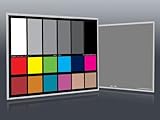
- Professional version of our popular DKK Card with n-Chrome coated color targets
- The color patches are 100% coated with DGK's n-Chrome process, allowing for a much higher level of color saturation, luminance, and accuracy, while getting rid of metamerism.
- Includes 2 DKC-Pro Cards - Each with Precision 12% and 18% Gray reference for white balance plus 18-Color patches for superior digital color correction
- For use with software such as Adobe Photoshop and Lightroom
Rank #4

- SPECIFICATIONS; Includes Calibrite Display Plus HL colorimeter measuring up to 10,000 nits plus ColorChecker Passport Video 2 for capture reference, designed for monitor calibration, white balance setup, exposure control, camera matching, and consistent color workflow.
- CAPTURE ACCURACY; Passport Video 2 helps set correct white point, verify exposure, and match cameras on set, delivering reliable reference for consistent footage and stills in changing or mixed lighting conditions.
- HIGH LUMINANCE CALIBRATION; Display Plus HL profiles mini-LED, OLED, and Apple XDR panels with extreme brightness capability, ensuring accurate color representation for professional photo editing and video grading workflows.
- EDITING CONFIDENCE; Built for creators who demand trustworthy color management, this kit reduces trial-and-error corrections, improves workflow efficiency, and supports accurate results from capture through final delivery.
- PRO CREATOR WORKFLOW; Ideal for videographers and photographers who require consistent color standards across multiple cameras, monitors, and software platforms, helping maintain professional results from on-set capture through final post-production.
Product prices and availability are accurate as of the date/time indicated and are subject to change. Any price and availability information displayed on Amazon at the time of purchase will apply.

