
Quick wins for a faster PC:
Fix the driver behind crashes, sound loss and screen glitchesFind Drivers →Repair Windows errors before they cause bigger problemsFix Now →iTechGuides is reader-supported. When you buy through links on our site, we may earn an affiliate commission. As an Amazon Associate I earn from qualifying purchases. Learn more
Choose a laptop for programming and game development by starting with your engine, target platform, project size, and rendering features—not by searching for one universally “best” configuration. Unity, Unreal Engine, and Visual Studio publish different requirements for different workloads; those figures are useful baselines, not a combined laptop specification. For a demanding Unreal workflow, large projects, or several tools open at once, prioritize memory, graphics capability, and sustained CPU performance. For lighter coding or smaller Unity projects, compatibility and a balanced configuration may matter more than workstation-class hardware.
Start with the workload you need the laptop to handle
Before comparing laptops, identify the heaviest task you expect to perform on them. A laptop that is comfortable for writing code and running a small Unity project may be a poor fit for Unreal Engine development with demanding real-time lighting, large assets, and local builds.
- Engine and release: Check the requirements for the exact version you plan to use. The current documentation discussed here covers Unity 6.5 and Unreal Engine 5.8.
- Target platform and operating system: Confirm that the engine, graphics APIs, drivers, compiler, and development tools support your operating system and processor architecture.
- Project scale: Larger scenes, assets, and codebases can demand more memory and storage than a small learning project.
- Rendering features: Decide whether you will use GPU-sensitive features such as Unreal Engine’s Lumen or path tracing, and check their specific graphics requirements.
- Build location: Consider whether you will compile locally or use distributed builds. Local compilation can make CPU core count more important.
These checks help you avoid treating an engine’s minimum, an IDE’s recommendation, or a powerful workstation reference as a single laptop-buying rule.
What do the published requirements actually say?
The figures below refer to different products and workflows. They are not interchangeable and should not be added together as if they defined a single universal development laptop.
#1 Best Overall
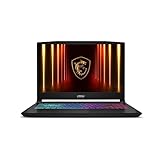
- Intel Core i9 HX Power for Elite Gaming: Dominate demanding titles with the Intel Core i9-14900HX and its 24-core hybrid architecture, delivering fast load times, high FPS, and smooth multitasking.
- GeForce RTX 5070 With Ray Tracing & DLSS 4: Powered by NVIDIA Blackwell, the RTX 5070 delivers stronger ray tracing, higher FPS, faster AI upscaling, and more responsive gameplay—ideal for competitive and cinematic gaming.
- QHD 165Hz, 100% DCI-P3 for Ultra-Clear Combat: The QHD 165Hz display reveals more detail, reduces motion blur, and boosts visibility in fast-paced games while delivering richer, more accurate colors.
- Cooler Boost 5 for Sustained Performance: Dual fans and a 5-heat-pipe share-pipe design keep the CPU and GPU cool, maintaining stable frame rates during long gaming marathons.
- 4-Zone RGB Keyboard + Full Game-Ready Ports: Customize your setup with a 4-zone RGB keyboard and highlighted WASD keys. Includes USB-C Gen 2, HDMI up to 8K, multiple USB-A ports, RJ45, Wi-Fi 6E & Hi-Res Audio.
| Software or guidance | Published memory guidance | CPU, storage, and compatibility context |
|---|---|---|
| Unity 6.5 Editor | Unity recommends at least 8 GB of RAM; it says required memory depends on project size and complexity. | Unity supports laptop-form-factor Editor use. Its documented OS and graphics support varies by platform, version, and driver. |
| Unreal Engine 5.8 development on Linux | Epic recommends 32 GB of RAM. | Epic lists Ubuntu 22.04, a quad-core Intel or AMD processor at 2.5 GHz or faster, a GeForce 2080, and at least 8 GB of graphics memory in its Linux development guidance. These are Linux-specific recommendations. |
| Visual Studio 2026 | Microsoft recommends 16 GB for typical professional solutions and describes 64 GB as best-performing. | Microsoft says Visual Studio works best with a CPU with 16 or more cores; quad-core or better is recommended. Typical installations require 20–50 GB free, and Microsoft recommends installing Windows and Visual Studio on an SSD. |
| Unreal Engine local compilation | Not stated as a combined laptop RAM requirement in this guidance. | Epic describes 12–16 CPU cores as a practical local-compilation baseline when distributed builds are not used. This is performance guidance, not a required laptop specification. |
Unity’s 8 GB figure is an Editor recommendation, Visual Studio’s figures concern the IDE, and Epic’s 32 GB recommendation is for Unreal development on Linux. A combined workflow can run an IDE, engine editor, browser, assets, and build jobs simultaneously, so choose memory for the heaviest work you will do concurrently rather than assuming any one published number covers everything.
Choose a GPU for the engine features, not the word “gaming”
A discrete GPU can help with real-time editor viewports and graphics-heavy workflows, but the right capability depends on the engine, project, rendering features, and target platform. Unity’s requirements specify supported graphics APIs, operating systems, and drivers; they do not prescribe one universal discrete-GPU tier. Check the exact Unity version’s graphics support for your platform.
Rank #2

- Brilliant display: Go deeper into games with a 16” WQXGA 120Hz display with 300 nits brightness.
- Game changing graphics: Step into the future of gaming and creation with NVIDIA GeForce RTX 5050 Laptop GPUs, powered by NVIDIA Blackwell and AI.
- Innovative cooling: A newly designed Cryo-Chamber structure focuses airflow to the core components, where it matters most.
- Comfort focused design: Alienware 16 Aurora’s streamlined design offers advanced thermal support without the need for a rear thermal shelf.
- Dell Services: 1 Year Onsite Service provides support when and where you need it. Dell will come to your home, office, or location of choice, if an issue covered by Limited Hardware Warranty cannot be resolved remotely.
For Unreal Engine 5.8 on Linux, Epic recommends a GeForce 2080 and at least 8 GB of graphics memory for development. It also names graphics generations for specific rendering features: Lumen Global Illumination, Lumen Reflections, and MegaLights list NVIDIA RTX 2000-series or newer, AMD RX 6000-series or newer, or Intel Arc A-Series or newer, with SM6 enabled. For path tracing, Epic lists NVIDIA RTX 2000-series or newer and AMD RX 6000-series or newer, also with SM6 enabled. These are Linux and feature-specific details; do not assume they apply unchanged to every operating system or workflow. See Epic’s Unreal Engine 5.8 Linux development requirements.
Use the relevant engine documentation to verify support, then compare candidate laptops’ actual GPU and graphics-memory specifications. Do not infer real-time rendering performance from a laptop’s “gaming” label alone.
Rank #3

- Powered by the latest AMD Ryzen 5 7535HS processor (6 cores, 12 threads, up to 4.55GHz) and 8GB of high-speed DDR5 RAM. Whether you are live-streaming your gameplay, editing 4K video, or running complex data analyses, this powerhouse ensures fluid multitasking with zero lag, giving you a competitive edge.
- Dive into your game library with the blazing-fast 256GB PCIe NVMe SSD, drastically reducing load times so you spend less time waiting and more time playing. The visuals come to life on the 15.3" WUXGA (1920x1200) IPS anti-glare display, boasting crisp details and vibrant colors that make both AAA titles and design projects look their best.
- Don't let the slim profile fool you. Equipped with integrated AMD Radeon 660M graphics, this laptop punches above its weight, delivering smooth frame rates for popular online games like Fortnite, Valorant, and CS2, as well as handling GPU-accelerated creative tasks in Photoshop and Premiere Pro.
- Built for life on the go, this laptop features a sleek design that's 10% slimmer than the previous generation yet meets stringent military-grade durability standards to withstand bumps and drops. Stay ahead of the curve with Wi-Fi 6 for lag-free streaming and gaming, and enjoy versatile connectivity via USB-C (Power Delivery & DisplayPort), HDMI, and an SD card reader.
- Step into the future with the Copilot AI PC feature, your intelligent companion for streamlining tasks in Windows 11. The HD webcam features a physical privacy shutter for complete peace of mind, ensuring you're in control during video calls or online classes. Ready to use right out of the box with Windows 11 Home pre-installed.
Balance CPU performance, memory, and SSD capacity
CPU: cores help, but laptop power limits matter
More CPU cores can help with local compilation and other parallel work. Epic’s 12–16-core practical baseline applies when not using distributed builds, while Microsoft says Visual Studio works best with 16 or more cores. Neither statement is a laptop minimum. A laptop may not sustain the same performance as a desktop processor with a similar core count, so seek independent, model-specific evidence on sustained performance before comparing machines. Epic’s Unreal Engine 5.8 hardware and software specifications also describe a much higher-end workstation reference; that system is a reference workstation, not a required laptop configuration.
RAM: account for what runs at the same time
Memory needs rise with project size and with the number of tools open together. Unity recommends at least 8 GB for Editor use, Microsoft recommends 16 GB for typical professional Visual Studio solutions, and Epic recommends 32 GB for Unreal Engine development on Linux. Treat each figure in its own context. For a laptop intended to run an IDE and a game engine together, base your decision on the largest project and busiest multitasking workflow you expect, not the smallest number on a requirements page.
Rank #4
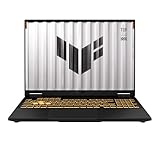
- READY FOR ANYTHING – Dive headfirst into gaming on Windows 11 powered by the Intel Core i5 Processor 13450HX and an NVIDIA GeForce RTX 5050 Laptop GPU with a Max TGP of 115W and NVIDIA Advanced Optimus.
- SUBTLE STYLING – The TUF Gaming F16 maintains its classic design, boasting a subtle embossed TUF logo on its sleek cover.
- IMMERSIVE VISUALS – The TUF Gaming F16’s FHD+ 165Hz display with 100% sRGB color draws you into the action. Adaptive-Sync technology reduces lag, minimizes stuttering, and eliminates visual tearing for ultra-smooth gameplay.
- MILITARY GRADE DURABILITY – As a TUF gaming machine, the F16 has been rigorously tested to meet Military Grade testing standards, MIL-STD-810H. Rest easy knowing this laptop will operate at peak performance in harsh conditions.
- EFFICIENT COOLING – Equipped with 2nd Gen Arc Flow Fans, full-width heatsink, and full-width vent, the TUF Gaming F16 optimizes cooling performance without extra noise.
Storage: leave room for more than the IDE
Microsoft lists 2.5–210 GB of available disk space for Visual Studio 2026 depending on installed features, with typical installations requiring 20–50 GB free, and recommends an SSD for Windows and Visual Studio. The engine, SDKs, assets, and multiple projects also need space. Choose SSD capacity according to the software and project files you expect to keep locally; the published Visual Studio allowance does not account for those additional files. See Microsoft’s Visual Studio 2026 system requirements.
Check OS, processor architecture, and toolchain before buying
Requirements change by engine release and development target. The following details illustrate why a laptop’s processor, operating system, graphics support, and IDE must all be checked as a set.
Best Value

- [Top Performance Processors] KAIGERR Light gaming laptop R7-5700U by ΑΜD ZEN 3 architecture, matched with 16MB of L3 cache, built by TSMC 7nm process with 8 cores & 16 threads (turbo up to 4.3GHz). KAIGERR office light gaming laptops makes it easy to qualify for your PC work and PC games which have amazing loading and processing power for a smoother PC used experience
- [Huge Capacity Storage] KAIGERR laptop comes with 16GB SODIMM DDR4 RAM, advantages of large operating memory capacity both can reduce read latency of memory data and improve CPU utilization. KAIGERR laptop computer configured with an M.2 2280 NVMe 512GB SSD which offers fast startup and loading of applications, as well as a large amount of storage space for your various files
- [Brilliant Display & Integrated Graphics] KAIGERR Light gaming laptop features an innovative thin-bezel display that provides more usable onscreen space for immersive FHD viewing. KAIGERR laptop integrates with ΑΜD Radeon Graphics and delivers strong graphics processing like a rich level of image detail making it possible to play computer games or edit pictures with a great experience on this laptop
- [Rich Interfaces & Wireless Connectivity] KAIGERR traditional laptop offers a variety of connectivity options, including HDMI, Type-C, 3.5mm TRRS Jack, Memory Card Slot and USB3.2 ports. You can easily connect to various devices and peripherals to expand your capabilities. Mini laptop computers equipped with WiFi6 & Bluetooth 5.2 which offer strong wireless signal, fast wireless connections, and reliable transmission speed
- [Portable Design & Durable] KAIGERR laptop compact design makes it easy to carry with you wherever you go. Also, you can enjoy the benefits of a powerful computer without the bulk of a traditional desktop. KAIGERR laptop computers are built with high-quality components and designed to handle heavy workloads and deliver consistent performance and longevity. If you encounter any problems, please contact us and we will help you solve the problem within 12 hours
- Unity 6.5: Unity documents Windows 10 21H1 (build 19043) or newer on x64, and Windows 11 21H2 (build 22000) or newer on Arm64. On macOS it lists Ventura 13 or newer with Intel x64 or Apple M1 and above; on Linux it lists Ubuntu 22.04 or 24.04 on x64. Graphics API and driver support varies by platform. Unity says its Editor supports laptop form factors without emulation, containers, or compatibility layers. See Unity 6.5 system requirements.
- Unreal Engine 5.8 on Windows: Epic lists Windows 10 22H2 64-bit or Windows 10 Enterprise 21H2 64-bit as minimum OS requirements for running the engine. For general development, it says to use Visual Studio 2026; Visual Studio 2022 is specified for Nintendo development and AGDE below v26.1.102. Epic also supports VS Code and Rider for Windows development. See Epic’s Unreal Engine 5.8 specifications.
- Unreal Engine 5.8 on Linux: Epic recommends Ubuntu 22.04 and provides separate processor, memory, and GPU guidance for Linux development. Do not substitute those details for the Windows requirements or generalize them to other platforms.
- Visual Studio 2026: Microsoft supports ARM64 or AMD64/x64 processor architectures. Its IDE requirements do not by themselves establish that a particular game engine, SDK, or target platform is supported on a given laptop.
Before purchase, verify the exact engine release, intended target platform, CPU architecture, graphics APIs and drivers, IDE, and compiler or SDK. Minimum OS support for running an engine should not be mistaken for a recommended laptop configuration for development.
Compare laptop trade-offs that specifications alone cannot settle
Once candidates meet the software and workload requirements, weigh practical factors that affect daily use. Official engine and IDE requirements do not establish comparative laptop rankings for these qualities, so use model-specific evidence rather than assuming the result from a processor or GPU name.
Quick Recap
- Sustained cooling and noise: Long builds and editor sessions can stress a laptop differently from short tasks. Look for credible measurements under sustained workloads.
- Battery life: Heavy compiling and real-time rendering may affect runtime; compare evidence for the actual laptop and conditions that match your use.
- Weight, ports, and display usability: Check whether the laptop is comfortable to carry and whether its screen and connections fit your work setup.
- Upgrade and service options: Verify whether memory and storage can be replaced or expanded on the exact model and configuration.
- Price and availability: Compare current configurations in your region. The software requirements cited here do not establish current prices, stock, or value for specific laptops.
A practical shortlist checklist
- Write down your heaviest workflow: Name the engine and release, target platform, project scale, rendering features, and tools you expect to run together.
- Filter for compatibility: Match the laptop’s OS, processor architecture, graphics APIs and drivers, and development toolchain to the official requirements for that workflow.
- Set memory and storage around the project: Use the engine and IDE figures as context, then account for simultaneous applications, assets, SDKs, and locally stored projects.
- Assess local build needs: Decide whether you compile locally or use distributed builds. If local compilation matters, compare sustained CPU performance for the specific laptop, not only its core count.
- Verify graphics against features: Check graphics memory and engine feature support for your platform and renderer before deciding whether a particular GPU is suitable.
- Compare daily-use evidence: Evaluate cooling, noise, battery, weight, display, ports, and upgradeability using information for the exact laptop configuration.
Product prices and availability are accurate as of the date/time indicated and are subject to change. Any price and availability information displayed on Amazon at the time of purchase will apply.

