
iTechGuides is reader-supported. When you buy through links on our site, we may earn an affiliate commission. As an Amazon Associate I earn from qualifying purchases. Learn more
Safe hoisting in extreme cold depends on more than a crane’s ordinary load rating. The equipment must be suitable for the actual low-temperature service, workers need protection that preserves both warmth and dexterity, and each lift needs clear authority, communication, and stop-work conditions. Russian Arctic materials and U.S. guidance address different legal settings, but their documented controls offer practical points of comparison for oil-and-gas operators.
Why extreme cold changes a lifting operation
Cold affects people, equipment, and the work area at the same time. Workers may lose dexterity or concentration; wet clothing can provide less insulation; and ice and snow can make access routes and working surfaces slippery. Cold surfaces can also draw heat from the body through contact. These effects can complicate tasks that depend on precise hand signals, secure footing, and coordinated movement.
Equipment suitability is a separate concern. The U.S. Bureau of Safety and Environmental Enforcement’s engineering study on offshore Arctic cranes explains that materials and design methods not validated for low temperatures can leave cranes vulnerable to brittle fracture. A crane’s familiar load rating, on its own, does not establish that it is suitable for Arctic service.
Free tools Windows power users keep installed
One-click scans. No signup required.
The International Labour Organization’s 2015 discussion paper frames the broader context: oil-and-gas exploration, extraction, and transportation in polar and subarctic climates can include crane work. It is a useful description of the operating environment, not a current U.S. regulatory manual.
#1 Best Overall
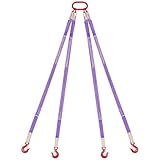
- 6600 lbs High Load Capacity: With a maximum working load of 6600 lbs, this lifting sling strap provides reliable lifting power for industrial and construction tasks
- Premium Polyester Strap: Made from high-strength polyester material, the polyester strap for lifting is 1 in wide, 0.08 in thick, and 5 ft long. It offers excellent tensile strength and flexibility, resisting deformation for enhanced security and reliability during lifting operations.
- Wear-Resistant & Long-Lasting: The thickened rigging strap, reinforced with strong stitching, provides outstanding abrasion resistance and durability for long-lasting performance
- Safety Latch Design: The bridle web sling straps feature a heavy-duty hook with a security latch to prevent accidental detachment, ensuring safe and secure lifting operations.
- Wide Application: The lifting slings are ideal for hoist deal for construction sites, factories, warehouses, machinery transport, shipbuilding, and heavy-duty lifting projects. One strap for multiple purposes, offering high practicality
What the Russian and U.S. sources actually cover
The comparison is about documented operating controls, not a shared legal regime or a claim that one country’s rules govern the other. Russian Arctic materials identified here emphasize worker protection and environmental conditions. U.S. sources explain federal workplace coverage and a technical question specific to offshore Arctic crane service.
| Control area | Russian Arctic material | U.S. material |
|---|---|---|
| Scope | Rosstandart lists GOST R 58215-2018 as a recommended standard for the production environment of Arctic offshore structures, including offshore platforms and mobile drilling units. | OSHA says most oil-and-gas drilling and servicing operations fall under 29 CFR 1910; site preparation is covered by 29 CFR 1926. Exact applicability depends on the work and location. |
| Cold exposure and work environment | Identified Russian materials address weather- and activity-suited clothing, cold stress, warming locations, exposure, and ice hazards. Do not generalize the offshore standard’s scope to every land operation in Russia’s Far North. | OSHA’s oil-and-gas pages describe the U.S. regulatory framework and hazards. The IOGP extreme-climate guidance provides industry good practice on cold-related performance and worker precautions, not U.S. law. |
| Crane suitability | The cited Russian materials establish worker and offshore-environment controls; they do not provide a comparable universal crane-derating rule in this source set. | BSEE’s engineering study examines validation of new-crane ratings and possible modification, including derating, for offshore Arctic service. It is an engineering assessment, not a binding regulation or a universal derating percentage. |
| Lifting work practices | The identified standards are useful for cold-work and site-environment considerations; they are not presented here as a complete lifting procedure. | IOGP describes industry lifting good practice: planning, assigned responsibility, competence, suitable equipment, inspection, load stability, and management systems. Its guidance is not a comprehensive technical procedure. |
Details about cold-protective clothing in a reproduced 2024 standard text should be checked against an official copy before being treated as a requirement. Likewise, the Rosstandart catalog listing establishes GOST R 58215-2018’s title and offshore production-environment scope; it does not support extending that scope to all Russian oilfield work.
Rank #2

- Heavy duty lifting straps 2 ply is made by ployester,lifting straps for hoist 2ft,engine hoist lifting straps with strong loops .Lifting straps 1 inch wide.Twist eyes strap is securing strap.
- Industrial quality lifting straps perfect for heavy cargo lifting,construction sites,finuture moving,towing,crane loading,handling,tree stool,branch,small boat,block and more.
- Sling is perfect for professional company,factory and personal use.it is can use in engine work,cranes,folklift operation,hoisting like a hook,chain,pulley,rigging equipment,forestry centre,meadow,pasture,field,paddock,factory.
- 2 layer poly web sling lifting strap have 3 hitch types,including vertical/straightline 3200 lbs/1452 kg,choker 2600 lbs/1180 kg and basket 6400 lbs/2903 kg.
- Please do not use if any of the following conditions are present: Sling identifications are missing or illegible. Damages to the sling including acid or caustic burns, melting or charring, holes, tears, cuts or snags.
How to qualify a crane for offshore Arctic service
Treat qualification as an engineering determination, not as a field assumption based on a nameplate rating. BSEE’s study focuses on whether methods for validating new-crane load ratings account for low-temperature service and how ratings for existing cranes may need modification for offshore Arctic use. The study identifies brittle fracture as a concern when materials and design are not validated for the temperatures involved.
- Establish the service conditions the crane will encounter, including the low-temperature environment relevant to the intended offshore operation.
- Have qualified engineering personnel assess whether the crane’s materials, design basis, and rating validation address those conditions.
- For existing equipment, determine whether the rating remains appropriate or requires modification for the proposed service. BSEE’s study does not establish one derating percentage that applies to every crane.
- Document the basis for the operating rating and any limits, and ensure lift planning and operating procedures use those limits.
This is an engineering issue with equipment- and service-specific answers. BSEE’s study should not be read as a blanket prohibition on crane use in the Arctic or as a substitute for applicable requirements, manufacturer information, or a competent engineering assessment.
Rank #3

- SAFELY LIFT, REPOSITION AND TRANSFER: Durably designed for patient safety and comfort, the Vive lift sling aids in lifting and repositioning patients and loved ones. Featuring four sling points and three additional hand grips, the transfer sling facilitates safe transfers to and from a bed, a wheelchair, shower or sofa and includes an opening for convenient toileting.
- MACHINE WASHABLE: Ideal for facilitating the use of the commode, the lightweight mesh lift sling features a reinforced opening for easier bathroom use. The easy-to-clean lift sling is also water-resistant and breathable, allowing air to freely circulate for greater comfort.
- STRONG HANDLES AND SLING POINTS: Compatible with most floor lift models, the Vive patient lift sling includes four sling points. Each corner of the sling is also reinforced for greater durability. On the underside of the transfer sling, three additional handles allow caregivers to easily reposition the patient or loved one from any angle.
- SUPPORTS UP TO 400 POUNDS: Providing a safe means of assistance, the Vive lift sling with reinforced stitching supports up to 400 pounds and is great for home health care, elder care and bariatric patients.
- HSA/FSA APPROVED & VIVE GUARANTEE: Eligible for purchase with Health Savings or Flexible Spending Account funds. Plus, enjoy the Vive one year unconditional guarantee for added confidence in your purchase
Which lifting controls transfer across borders?
IOGP’s lifting guidance offers a practical framework for organizing a lift. It calls for a lift plan for every lift, a designated person in charge, a competent team, equipment fit for its intended purpose and conditions, inspection, and a stable, controlled load. It also says work should be made safe and stopped if the lift deviates from its plan. These are industry good-practice controls, not a claim that IOGP sets the law in either country.
Plan the lift and assign authority
- Use a lift plan that reflects the load, equipment, route, work area, environmental conditions, and people involved.
- Identify one person in charge and make sure everyone knows who can direct the lift and who can call a stop.
- Set stop-work triggers in advance, including a change in conditions or a deviation from the plan.
Make communication and exclusion zones workable
- Agree on the visual or radio signals before movement starts, and confirm that the full team understands them.
- Keep workers clear of suspended loads and potential impact zones. Do not rely on a worker’s ability to move out of the way as the primary safeguard.
- Account for reduced visibility, noise, bulky clothing, or gloves that may make signals harder to see or use.
Check equipment, the load, and the team
- Use lifting equipment that is fit for the intended task and environmental conditions, and visually examine it before use.
- Confirm the load is secure and stable before lifting or moving it.
- Assign competent personnel to the roles required by the plan. Inspection and maintenance requirements should be determined from governing rules and employer procedures; IOGP’s page does not make its described intervals universal legal requirements.
How to protect workers without compromising the lift
Cold-weather protection must suit the task as well as the weather. Gloves, for example, need to provide appropriate protection while allowing the worker to handle controls, rigging, or communications reliably. Insulated work gloves are a category to consider, not a specific model or substitute for site PPE selection. Required PPE, dexterity needs, and the lifting task all matter.
Rank #4
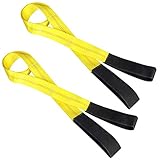
- Our lifting slings and straps Made of qualified polyester, which was widely used for lifting in civil engineering. Nylon web stretches more, helps avoid shock loading, 6,500 lbs Vertical, 5,200 lbs Choker, 13,000 lbs Basket Load Capacity, lifting straps for construction
- Durable webbing and Sturdy stitches, dexterous for utility situation. Abrasion resistant, corrosion resistance
- 2 inches width, perfect grip size. With this straps you can lift your furniture, TV, beds, sofa, refrigerator and so on easily. don't hurt your arm, hand, back, body.
- Durable and light weight are the basic requirements for a household lifting equipment, this straps could satisfy most of needs in your life.
- JCHL Team strive to provide you highest quality products and best service, 100% satisfaction guarantee
- Organize work to account for cold exposure and arrange nearby warming locations, as described in IOGP’s extreme-climate guidance and the identified Russian Arctic materials.
- Use protective clothing suited to activity and weather, and respond to wet clothing because moisture can reduce insulation.
- Avoid bare-hand contact in very low temperatures, while ensuring hand protection does not prevent safe grip or communication.
- Watch for slips on ice or snow and for signs that cold is affecting a worker’s performance. Reassess the task when conditions change.
These are operational considerations, not a set of universal exposure times or temperature cutoffs. The available sources do not establish one threshold suitable for every worker, task, and location.
The Tool Desk
Outbyte PC Repair FREERepair Windows errors before they cause bigger problemsFix Now →Outbyte Driver Updater FREEScan for outdated or missing drivers - takes under a minuteDriver Scan →Account for snow, ice, wind, and visibility in the work zone
A lift plan is only useful if it reflects conditions at the worksite. Snow and ice can affect footing and load stability; wind and poor visibility can make load control and communication more difficult. Russian Arctic materials specifically address ice hazards and slippery work areas, while IOGP’s cold-weather guidance supports considering environmental conditions in organizing work.
Best Value

- 👍 ROBUSTNESS AND RESISTANCE: Our super sturdy rigging straps are crafted from 100% polyester hoist straps, guaranteeing unmatched toughness combined with a soft touch. Reinforced with large double loop ends, they boast a mere 2% stretch, ensuring minimal bounce, enhanced control, and superior performance as tow straps. there resistant even in challeging conditions.
- 👍 UNMATCHED VERSATILITY: our heavy duty rigging sling can be utilized in a multitude of scenarios, from construction sites to outdoor adventures, providing a reliable and versatile solution for a range of pulling & lifting, recovery and towing tasks.
- 👍 EASY STORAGE: With its sturdy carry box included, the heavy-duty sling straps for lifting is easy to store and transport after use, making it practical for professionals on site and outdoor enthusiasts alike or in your yard or field. Don't forget that this lift straps hoist is essential for road users, because you never know when you might be in a tricky situation.
- 👍 PRODUCT DESCRIPTION: The kit includes a high-quality orange polyester pull straps sling protected against abrasion and prolonging life with reflective tape. this tow strap is thicker, wider and greater load capacity 3''x10ft, lab-tested and certified 25000lbs breaking strength. the safety pull tensile strength should not exceed 15000 pounds. What's more, it comes with a handy storage and an elegant orange box for a complete and convenient shopping experience.
- 👍 UNIVERSAL: Our lifting slings and straps are appropriate for all vehicle types including Full Size Pickup, SUV, ATV, UTV and boat. Use with Hitch Receiver, Snatch block, Winch, lifting hoist or D Ring Bow Shackles. It is more than tow cable o nylon sling. Designed with reinforced double stitching for added strength and reliability, our pull straps are lighter and easier to use than a lifting chain, nylon strap or web hoist, giving you a more comfortable feel when using them.
- Check access routes, work surfaces, and the area where workers will stand or guide the load.
- Assess whether the team can maintain the agreed signals and keep clear of the load under current visibility and weather conditions.
- Pause and reassess if conditions change enough that the planned route, communication method, or work area is no longer safe.
Apply the U.S. rules to the actual operation
OSHA states that most oil-and-gas drilling and servicing operations are covered by 29 CFR 1910, while site preparation is covered by 29 CFR 1926. OSHA also explains that the General Duty Clause applies to recognized serious hazards not addressed by a specific standard. Its oil-and-gas hazards page lists resources on cranes, derricks, hoists, slings, and oilfield practices.
Those summaries do not determine every case. The applicable requirements can depend on the work classification, crane type, location, and other site-specific facts; state-plan differences may also matter. Operators should identify the rules that apply to the specific work rather than assuming that construction requirements govern every oilfield lift.
OSHA reports that three of every five on-site fatalities in oil-and-gas extraction result from struck-by, caught-in, or caught-between hazards, citing its IMIS database. The cited OSHA hazards page does not state the years for that figure, so it should not be interpreted as a current annual rate. It does reinforce why exclusion zones, load control, and clear authority deserve explicit attention in lift planning.
Do these 3 things before closing this tab:
1Repair Windows errors before they cause bigger problems2Fix the driver behind crashes, sound loss and screen glitches3Clear out junk files and repair common Windows errorsQuick Recap
A practical pre-lift check for cold conditions
- Confirm the operating basis: verify that the crane and lifting equipment are suitable for the conditions and that the operating rating reflects any applicable engineering limits.
- Review the plan: confirm the load, route, work area, responsible person, team roles, communication method, and stop-work triggers.
- Inspect the work zone: assess footing, ice or snow, visibility, and any changes that could affect load control or keep workers from clear escape routes.
- Check worker readiness: ensure clothing and PPE suit the weather and task, warming arrangements are available, and gloves preserve necessary grip and dexterity.
- Verify the load and equipment: visually examine equipment before use, confirm the load is stable, and keep workers clear of suspended loads and impact zones.
- Stop and reassess when needed: if the operation departs from its plan or conditions undermine safe communication or control, make the operation safe before proceeding.
Product prices and availability are accurate as of the date/time indicated and are subject to change. Any price and availability information displayed on Amazon at the time of purchase will apply.

