
Recommended Free Tools
iTechGuides is reader-supported. When you buy through links on our site, we may earn an affiliate commission. As an Amazon Associate I earn from qualifying purchases. Learn more
To make an AI avatar video sound more natural, start with a script written for speech, then check the voice, pronunciation, delivery, pauses, and avatar performance in that order. Preview short sections and change one thing at a time: there is no single voice setting that works across every platform or speech model.
Why does an AI avatar sound robotic?
Flat or awkward narration can come from several places: sentences built for reading rather than speaking, a voice that does not suit the message, mispronounced terms, an unnatural pace, or emotion that does not fit the words. When the avatar’s expression and gestures seem wrong, the audio itself may also be contributing. Identify the likely cause before changing settings; otherwise, it is hard to tell which adjustment helped.
How do I make the script sound natural aloud?
Read the script aloud before generating the video. If a phrase feels stiff or leaves you short of breath, rewrite it rather than asking the voice to solve the problem. Short sentences and clear phrase boundaries generally give a speech system more manageable text. HeyGen’s avatar and voice guidance likewise recommends shorter sentences and writing for spoken delivery.
Free tools Windows power users keep installed
One-click scans. No signup required.
- Split sentences that carry several ideas into smaller units.
- Use commas for brief phrase boundaries and full stops where the listener needs a complete thought.
- Replace formal written constructions with the words you would naturally say.
- Use ellipses or filler words sparingly; they can imply hesitation that an explainer may not need.
Punctuation is a cue to test, not a guaranteed instruction. Different systems may interpret the same punctuation differently.
#1 Best Overall

- Omnidirectional Microphone - It is not a Speaker or Speakerphone, it is a condenser microphone. The microphone has an omnidirectional pickup pattern with a pickup distance of 11.5 ft, making it easy to capture the most subtle sounds from 360° directions and transmit the sound more loud and clear. Participants can hear each other without raising their voices.
- Made for Conferences - This microphone is perfect for small or medium meetings over an internet network by using Skype/GoToMeeting/WebEx/Hangouts/Fuze/VoIP/Zoom and other softwares. You can also use it for court reports, seminars, remote training, business negotiations, video chats, etc.
- Plug & Play, No Drivers Required - The microphone is compatible with all operating systems - both Windows and macOS. You just need to plug the microphone to start recording. If there is no response after inserting the mic, please go to the microphone setting of your computer and select the mic as the INPUT device.
- Convenient Mute Button - Quickly mute/unmute your microphone. The built-in blue indicator light for checking whether the USB microphone is working.
- Well Designed Cable - The microphone is constructed of sturdy and metal material and the base is fitted with an anti-slip mat which keeps it stable on desktop during use. It is small, convenient and does not require much space when in use. Connected with a 1.8m nylon shielded wire, it effectively eliminates signal interferences to achieve the best recording results.
How should I choose a voice and delivery?
Preview candidate voices and consider the subject, intended audience, accent, tone, and continuity across scenes. In HeyGen, the voice library and scene settings provide ways to preview voices and, where enabled, select a voice for an individual scene. Availability and controls can vary by workflow.
If text-only speech does not convey the intended rhythm or emotion, check whether your platform offers performance guidance. HeyGen documents two options: Voice Mirror applies tone, pace, and emotion from a recorded performance to a selected voice; Direct Voice lets creators give delivery directions for a line. Its Voice Mirror and Direct Voice guidance recommends clear instructions, short segments, trying presets, and avoiding overacting unless the script calls for it.
You can record yourself saying a line as a reference for pacing and emphasis even if you plan to use a different generated voice. That approach is useful only if your tool supports mirroring or another way to guide delivery; it is not a universal feature.
Quick wins for a faster PC:
Scan for outdated or missing drivers - takes under a minuteDriver Scan →Repair Windows errors before they cause bigger problemsFix Now →Rank #2
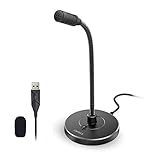
- 【Crystal Clear Audio Quality】Our Omnidirectional pattern condenser microphone accurately captures your voice, making it perfect for dictation, online classrooms, and more.
- 【Active Noise-Cancelling】Come in CMTECK CCS2.0 SMART CHIP with Omnidirectional Polar Pattern, which can effectively block the background noise. The pop filter prevents plosives from overloading the microphone, ensuring only your voice is heard.7
- 【Convenient Mute Button with LED Indicator】You can quickly mute/un-mute the microphone with the Mute Button and the built-in LED light lets you know the working status(Greenlight: Connected; Red light: Mute mode).
- 【Easy to use】 No drivers needed, just plug and record without external power supply, directly connect the microphone to a USB compatible device, well compatible with Windows(7, 8 and 10), Mac OS and PS4 (NOT compatible with Raspberry Pi/Linux/Android)
- 【Mini size with Adjustable Gooseneck】Adopted flexible and adjustable gooseneck metal pipe, easily adjust position 360 degrees to suit user comfort. The compact and stable base maximizes your desktop space.
How do I fix AI voice pronunciation?
Test difficult words before generating the full video. Make a short sample containing names, acronyms, brands, technical terms, dates, numbers, or email addresses, then listen with the actual voice and language you plan to use.
ElevenLabs documents phonetic approaches, including IPA support in Eleven v4, and notes that pronunciation can vary by voice and phrase. Its text-to-speech best practices describe trying phonetic spellings or alternate text where appropriate. Do not assume one spelling will work for every voice: verify the exact configuration and carry the working spelling or pronunciation control consistently into the final script.
How do I add natural pauses without creating glitches?
Pause controls are model-specific. For ElevenLabs v3 and v4, the documentation says to use audio tags and punctuation rather than SSML break tags. For Multilingual v2, Flash v2, and Flash v2.5, it documents SSML breaks such as <break time="1.5s" />, with pauses up to three seconds. The same guidance warns that excessive break tags can make speech speed up or introduce noise and artifacts. See ElevenLabs’ pause guidance for the supported models and syntax.
Rank #3

- [Convenient Setup] Plug and play recording USB microphone for PC, with 5.9-Foot USB cable included for computer PC laptop, is connected directly to USB-A port for recording music, computer singing or podcast. The office condenser microphone for computer is easy to use and install. (NOT compatible with Xbox and Phones)
- [Durable Metal Design] Solid sturdy metal construction design, the computer microphone for Zoom meetings with stable tripod stand is convenient when you are doing voice overs or livestreams on YouTube. Durable material extends the service life of the voice-over microphone.
- [Mic Volume Knob] Gaming condenser USB mic compatible for PS4 with additional volume knob itself has a louder or quieter adjustment and is more sensitive. Your voice would be heard well enough through the zoom microphone USB when gaming, skyping or voice recording. Also, you can adjust your volume to zero and protect your privacy.
- [Widely Use] USB-powered design, the condenser microphone for recording no need the 48v Phantom power supply, works well with Cortana, Discord, voice chat and voice recognition. The podcast microphone for Mac, with USB-B to USB-A/C cable, is compatible with desktop, laptop or PS4/PS5, which meets most of your daily recording needs.
- [Clear Output Voice] Cardioid condenser microphone for PC captures your voice properly, producing clear smooth and crisp sound. Great computer recording mic for gamers/streamers/youtubers focus on the main source and reduces background noise. The streaming microphone does the job well for broadcast ,OBS and teamspeak.
Use a pause where the meaning changes, after an important point, or before a transition—not between every phrase. If your editor has a native pause control, test it. If you are relying on punctuation, preview alternatives because the effect may differ by model.
What’s actually slowing this PC down?
Pick the symptom - the matching free tool is one click away.
What microphone do I need to clone my voice?
There is no particular microphone model established as necessary by the cited vendor guidance. A quiet room, clear and consistent speech, and little room echo matter for a useful source recording. Synthesia recommends a good microphone for voice cloning, while its personal avatar guidance says a condenser microphone in a quiet room can provide excellent quality and a laptop microphone may also work well in a quiet environment. An external USB microphone is an option, not a requirement supported for every setup.
For cloning or mirroring, prepare the recording for the sound you want the system to reproduce. ElevenLabs says noisy or reverberant audio, multiple speakers, and inconsistent volume or delivery can make results less predictable. Its voice-cloning documentation also advises clean source audio without long gaps; unwanted pauses and repeated “um” or “ah” sounds may be reflected in a clone.
Rank #4

- Studio-Quality Sound for Clear Podcast Recording – The K66 USB podcast microphone delivers studio-quality, broadcast-level audio using a high-performance condenser capsule and cardioid pickup pattern that focuses on your voice while reducing unwanted background noise. Designed as a reliable microphone for PC, it features a wide 40Hz–18kHz frequency response and a 46kHz sampling rate to reproduce rich lows, smooth mids, and clear highs for natural, detailed vocals. With –45dB ±3dB sensitivity, it captures balanced sound without distortion during expressive speaking. Ideal for podcasting, voice-over, online classes, meetings, and professional content creation.
- Intelligent Noise Reduction Mode for Cleaner Podcast Audio – This podcast microphone features an advanced Noise Reduction Mode designed for clearer, more focused voice recording in real-world environments. Press and hold the mute button to enable noise reduction (blue indicator). In this mode, the microphone helps reduce keyboard clicks, PC fan noise, air conditioner hum, and background chatter. Default Mode maintains a warm, natural vocal tone for quiet spaces. Designed as a reliable microphone for PC, it allows creators to identify the active mode instantly and adapt as needed, ensuring clear audio for podcasting, gaming, streaming, online classes, meetings, and recording.
- True Plug-and-Play USB Microphone with Wide Device Compatibility – Engineered for effortless plug-and-play use, the K66 USB microphone requires no drivers, apps, or software installation. Simply connect and start recording on Windows PC, Mac, laptops, PS4, PS5, and tablets. Included USB-C and Lightning adapters ensure seamless compatibility with iPhone, iPad, and modern USB-C phones and devices, making it easy to switch between desktop and mobile recording. Ideal for creators working across multiple platforms, this microphone delivers consistent, high-quality audio for YouTube, TikTok, Twitch, Zoom, Discord, OBS Studio, Streamlabs, podcasting, livestreaming, and professional voice recording.
- Real-Time Zero-Latency Monitoring with Adjustable Volume Control – This podcast microphone features real-time, zero-latency monitoring through a built-in 3.5mm headphone jack, allowing you to hear exactly what’s being recorded without delay. Designed as a reliable microphone for PC, it includes a dedicated monitoring volume control that lets you adjust headphone listening levels independently for accurate and comfortable audio monitoring. Real-time feedback helps identify distortion, background noise, or uneven volume before it affects your final recording, making this podcast microphone ideal for podcasting, streaming, online teaching, voice-over work, and professional content creation.
- Precision Audio Adjustment Knobs for Full Sound Control – This podcast microphone gives creators hands-on control with dedicated knobs for microphone volume, monitoring volume, and echo adjustment. Fine-tune mic gain to maintain clear, balanced vocal output, adjust headphone monitoring levels independently for comfortable listening, and add or reduce echo to enhance depth and presence. Designed as a reliable PC microphone, these intuitive physical controls allow fast, on-the-fly adjustments without software, helping identify distortion, background noise, or level inconsistencies instantly. Ideal for podcasting, streaming, ASMR, voice-overs, singing, and professional multi-platform recording.
Synthesia’s voice-cloning instructions advise speaking in a positive tone, pausing between paragraphs, and taking natural breaths. HeyGen’s recording tips recommend placing an external microphone 6–8 inches from the mouth and avoiding fabric rubbing or an obstructed mic. Treat those as vendor-specific setup tips, not universal equipment specifications.
Independent reader supportYour contribution helps us test, update, and keep practical guides available for everyone.How do I make the avatar’s expressions match the voice?
Review the audio and avatar together. Listen for even pacing, misplaced emphasis, unnatural gaps, or abrupt tone changes, while watching whether facial expression, gesture, and timing fit the narration.
This relationship is platform-specific. HeyGen says that in its Avatar V workflow, audio has higher input priority than gesture and facial-expression prompts; flat audio may therefore produce little gesture change even when a prompt requests movement. The HeyGen troubleshooting guidance does not establish that other avatar systems behave the same way.
A practical revision loop
- Generate a short sample. Start with a representative section, especially if the platform lets you render parts separately.
- Identify the mismatch. Decide whether the issue is the script, selected voice, pronunciation, pace, pause, source recording, or avatar performance.
- Change one cause. Revise only the relevant text or control so you can hear what made a difference.
- Replay the affected section. Check both narration and avatar movement; do not judge a voice control in isolation.
- Keep successful choices consistent. Reuse verified pronunciations and a coherent voice choice across scenes.
Feature names, supported models, and workflows can change. Check your platform’s current documentation before relying on a particular control.
Quick Recap
Product prices and availability are accurate as of the date/time indicated and are subject to change. Any price and availability information displayed on Amazon at the time of purchase will apply.

