
The Tool Desk
Outbyte PC Repair FREERepair Windows errors before they cause bigger problemsFix Now →Outbyte Driver Updater FREEFix the driver behind crashes, sound loss and screen glitchesFind Drivers →iTechGuides is reader-supported. When you buy through links on our site, we may earn an affiliate commission. As an Amazon Associate I earn from qualifying purchases. Learn more
A playlist cannot put video on YouTube by itself. A 24/7 YouTube Live channel needs something to send a continuous video feed to YouTube’s ingest server. That can be a software encoder running on a computer that stays on, a standalone hardware encoder, or a cloud service that loops your uploaded videos for you. The playlist lives inside that tool, and YouTube only receives the stream. This guide covers the do-it-yourself method with OBS Studio, the settings that matter, how to keep a home setup running, and the cloud alternative for people who do not want a computer on all day.
How a playlist becomes a live feed
Four pieces have to work together:
- The playlist. Your prerecorded files and their order. This sits in the encoder or in the cloud service, not in YouTube’s live system.
- The encoder. YouTube Help describes it this way: “An encoder converts your video into a digital format to stream on YouTube.” It reads the playlist and produces the live video and audio.
- The connection. The encoder sends that feed to the YouTube Live server URL using the stream key from your channel. Treat the stream key like a password.
- The broadcast. The watchable live event in YouTube Studio. YouTube’s API documentation separates the stream (the transmission settings, meaning the server and key) from the broadcast (the event viewers watch). One stream can feed more than one broadcast, for example a 24/7 feed with a separately surfaced interview. Most creators only need the stream and one broadcast.
If the encoder stops, the feed stops, even if the playlist is intact.
Before you start: channel requirements
Check these before you build anything. Most of them are not fixable on launch day.
- Verified channel. YouTube requires the channel to be verified for live streaming.
- No recent live-stream restrictions. The channel must have no live-streaming restrictions in the previous 90 days.
- Minimum age of 16. YouTube Help states that streamers must be at least 16.
- Enablement time. A first-time live stream may take up to 24 hours to become enabled. Turn on live streaming a day or more before you plan to launch.
- Stream limits. YouTube Help lists 10 active streams per channel and three broadcasts per stream key. Delete unused streams if you hit the cap.
Method: a 24/7 loop from OBS Studio on a computer
This is the free, fully local route. It works as long as the computer stays awake, the app stays open and the upload connection holds. Menu names differ slightly between OBS versions, so match the labels to what you see.
#1 Best Overall

- Compatible with Nintendo Switch 2’s new GameChat mode
- Auto-Light Balance: RightLight boosts brightness by up to 50%, reducing shadows so you look your best—compared to previous-generation Logitech webcams (1)
- Privacy with a Slide: The integrated webcam cover makes it easy to get total, reliable privacy when you're not on a video call
- Built-In Mic: The built-in microphone lets others hear you clearly during video calls
- Easy Plug-And-Play: The Brio 101 works with most video calling platforms, including Microsoft Teams, Zoom and Google Meet—no hassle; it just works
Step 1: Prepare the video files
- Use the same resolution and frame rate for every file in the playlist. Mixed formats are a common cause of stalls between clips (see troubleshooting below).
- If you can, merge the videos into one file, or transcode them to one format before you start. A single file loops more reliably than a long playlist.
- Confirm you have the rights to stream each file. Copyright is covered later in this guide.
Step 2: Add the playlist as a source
- In OBS, click + under Sources and choose VLC Video Source. This requires VLC media player to be installed. The built-in Media Source plays one file, so use VLC for a multi-file playlist.
- In the source’s properties, add your files in playback order.
- Turn on looping for the playlist so it restarts after the last file.
- Check that the playlist plays in the OBS preview before you go further.
Step 3: Set the canvas and output
- Open Settings > Video. Set Base (Canvas) Resolution and Output (Scaled) Resolution to 1920×1080 for a 1080p stream.
- Set Common FPS Values to 30 or 60, matching your files.
- Open Settings > Output, switch Output Mode to Advanced, and open the Streaming tab.
- Set Rate Control to CBR.
- Set the Bitrate using the table in the next section. Set Keyframe Interval to 2 seconds.
- Choose an H.264 encoder. A hardware encoder, if your computer has one, can reduce CPU load. Test whichever you choose for a full hour before going 24/7.
Step 4: Connect the stream key
- In YouTube Studio, click Create and then Go live.
- Open the Stream tab in Live Control Room. Create new stream settings or reuse existing ones.
- Copy the Server URL and the Stream key.
- In OBS, open Settings > Stream. Set Service to YouTube – RTMPS, which YouTube recommends. Paste the stream key into the Stream Key field. If your OBS version shows a manual server field, paste the Server URL there.
- Do not screenshot or post the stream key in a tutorial or support thread. Regenerate it if it leaks.
Step 5: Start, verify, then go live
- Click Start Streaming in OBS.
- Return to Live Control Room and confirm the preview shows your playlist before anyone else sees it.
- Check the stream health indicators and the audio and video levels. Let the stream run for at least 15 minutes and watch for dropped frames.
- Confirm the stream is working, then start the broadcast. Open the public watch page in a private browser window to check that viewers can reach it.
Resolution and bitrate: choose by upload speed, not by 4K
Pick the bitrate your sustained upload can carry, then set resolution to match. Do not pick 4K because it sounds better. A 4K stream that buffers for viewers is worse than a steady 1080p.
YouTube’s encoder settings page lists these recommended figures for RTMP and RTMPS streams:
| Resolution and frame rate | Codec | YouTube’s recommended bitrate |
|---|---|---|
| 1080p, 30 fps | H.264 | 5 Mbps |
| 1080p, 60 fps | H.264 | 6 Mbps |
| 1080p, 30 fps | H.265/HEVC or AV1 | 10 Mbps |
| 1080p, 60 fps | H.265/HEVC or AV1 | 12 Mbps |
These are YouTube’s recommendations, not measured requirements for every stream. Its settings page also lists H.264, H.265/HEVC and AV1 as accepted video codecs, supports up to 60 fps, and calls for CBR encoding. Check the current settings page for figures beyond 1080p.
Quick wins for a faster PC:
Repair Windows errors before they cause bigger problemsFix Now →Scan for outdated or missing drivers - takes under a minuteDriver Scan →Keyframes and protocol
- Keyframe interval: two seconds is recommended. Do not exceed four seconds.
- Protocol: YouTube recommends RTMPS over plain RTMP.
- Audio: audio bitrate counts toward the total bitrate. Settings of 128 to 160 kbps are a common choice for stereo.
How much upload speed you need
YouTube says the total streaming bitrate must fit within your available upload bandwidth and recommends leaving 20% headroom. Multiply your total bitrate by 1.2 to find the sustained upload you need:
| Total stream bitrate | Sustained upload needed with 20% headroom |
|---|---|
| 5 Mbps | 6 Mbps |
| 6 Mbps | 7.2 Mbps |
| 10 Mbps | 12 Mbps |
| 12 Mbps | 14.4 Mbps |
Measure sustained upload at the time of day you will stream, not with a single speed test. Other devices on the same connection reduce what the stream gets.
Keeping a home setup running for days
A computer that is left on is not automatically reliable. These are the usual points of failure:
- Sleep and hibernation. On Windows, open Settings > System > Power & battery and set sleep to never for plugged-in use. Set hibernation off as well.
- Updates and restarts. Set active hours in Settings > Windows Update so the computer does not restart during your stream. Pause updates while the channel runs.
- Connection. Use a wired Ethernet connection where you can. Wi-Fi drops are a common cause of mid-stream failures.
- Power. A battery backup (UPS) keeps the stream going through short outages and gives the encoder time to shut down cleanly.
- Monitoring. Check Live Control Room regularly. A stream that has stopped does not restart itself in a home setup unless you have built that yourself.
- Hardware encoder. A standalone hardware encoder can replace the computer as the encoding device. The same bitrate and bandwidth rules apply.
Archives, the 12-hour rule and broadcast limits
YouTube Help states that streams under 12 hours are automatically archived. The same guidance does not establish how a longer stream is divided or retained, so do not assume a 24/7 feed will produce one replay. If you need a permanent copy, keep your source files. They are the record of what was streamed.
Free tools Windows power users keep installed
One-click scans. No signup required.
Rank #2

- 1080P Webcam with Cover for Video Calls - EMEET computer webcam provides design and Optimization for professional video streaming. Realistic 1920 x 1080p video, 5-layer anti-glare lens, providing smooth video. C960 computer camera delivers 1920x1080 video with fixed focus (11.8–118.1 inches), so as to provide a clearer image. C960 USB webcam has a cover and can be removed automatically to meet your needs for privacy. For optimal image performance, use the webcam in a well-lit environment.
- Built-in 2 Omnidirectional Mics - EMEET webcam with microphone for desktop features 2 built-in omnidirectional microphones, picking up your voice to create clear audio for communication. When installing the webcam, select EMEET C960 as the default microphone input device in your computer and video applications and select C960 as the default device in Zoom/Teams and ensure microphone permissions are enabled for proper use. Please note that C960 does not include built-in speakers.
- Automatic Light Adjustment - Automatic exposure adjustment is applied in EMEET HD webcam 1080p so that the streaming webcam can deliver stable image performance. EMEET C960 camera for computer also features color adjustment and exposure optimization to help you look your best. For optimal video quality, it is recommended to use the webcam in normal or well-lit environments and select suitable video settings in your application. Proper lighting helps achieve a clearer and more balanced image.
- Plug-and-Play & Upgraded USB Connectivity - New C960 webcam features both USB Type-A & A-to-C adapter connections for wider compatibility. For stable performance, connect the webcam directly to the computer's main USB port and ensure the device is recognized correctly. If a hub or docking station is used, please ensure it provides sufficient power and stable data transmission, as limited ports may affect performance. 90° wide-angle lens captures more participants without frequent adjustments.
- High Compatibility & Multi Application - C960 webcam for laptop is compatible with Windows 10/11, macOS 10.14+, and Android TV 7.0+. Not supported: Windows Hello, TVs, tablets, or game consoles. It works with Zoom, Teams, Facetime, Google Meet, YouTube and more. Please select C960 webcam as the default camera and microphone device in your application and ensure camera/microphone permissions are enabled, especially on macOS. (Tips: Incompatible with Windows Hello)
Copyright and reused content
Live streams are held to the same rules as uploads. A loop of videos you do not own can attract copyright claims or removal, and a channel with repeated violations can lose live access. Before you stream a file:
- Confirm you own it, hold a license that allows live streaming, or have permission from the rights holder.
- Check whether a song, clip or stock footage in the file is covered. Background music is a frequent cause of claims.
- Avoid looping a short clip for weeks with no added value. Reused content is judged on whether the stream adds original value.
StreamNeo’s free copyright safety checklist walks through these checks.
Troubleshooting
The preview in Live Control Room is blank or shows no data
Cause: the encoder is not sending, the stream key was pasted incorrectly, or a firewall or VPN is blocking the outbound connection to YouTube’s ingest server.
Fix: confirm OBS shows the stream as live with a bitrate. Re-copy the stream key, paste it again, and restart OBS. Turn off the VPN and test again.
The channel cannot go live
Cause: the channel is not verified, has a live-stream restriction in the last 90 days, the streamer is under 16, or first-time enablement is still pending, which can take up to 24 hours.
Fix: check the channel’s live-streaming status in YouTube Studio and wait out enablement before launch day.
Recommended Free Tools
The stream stops after a few hours
Cause: the computer went to sleep, Windows restarted for an update, the upload connection dropped, or the machine overheated.
Fix: apply the power and update settings above, use wired Ethernet, and check the upload log for dropped frames to tell a network problem from a machine problem.
Viewers see buffering or quality drops
Cause: the total bitrate is higher than your sustained upload with 20% headroom.
Fix: lower the bitrate to fit the table above, or drop from 60 fps to 30 fps before you reduce resolution.
The playlist stalls between files
Cause: files in the playlist use different resolutions, frame rates or codecs, which can make the encoder pause at each transition.
Fix: transcode every file to the same settings, or merge them into one file and loop that.
Rank #3
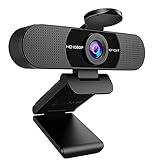
- Full HD 1080P Webcam with Cover for Video Calls - EMEET computer webcam provides design and Optimization for professional video streaming. Realistic 1920 x 1080p video, 5-layer anti-glare lens, providing smooth video. The fixed focal length makes the object in the focal length range of 11.8-118.1 inches, so as to provide a clearer image. The C960 usb webcam has a cover and can be removed automatically to meet your needs for protection. It is a great choice for home office.
- Built-in 2 Noise Reduction Mics - EMEET webcam with microphone for desktop is 2 built-in omnidirectional noise reduction microphones, picking up your voice and filtering out background noise to create an excellent radio effect.EMEET computer webcam enables you to enjoy crystal clear voice for communication. (When installing the web camera, remember to select EMEET C960 usb webcam as the default device for the microphones)
- Low Dependence on Light Condition - Automatic low-light correction technology is applied in EMEET HD webcam 1080p so that the streaming webcam could capture the image in dim light. EMEET C960 camera for computer also has low-light boost, color boost and adjust exposure so you look your best, even in dim and harsh lighting. Imagine you are working in front of a sunny window. Is it convenient for no need to draw the curtains first when a video call comes in to get a normal exposure picture?
- Plug-and-play & 90 Degrees Wide View - No driver required. EMEET C960 pc webcam can be used without drivers to realize plug and play for saving your trouble. The convenient foldable design of web camera allows you to take it anywhere, and the USB cord is long enough for any task. The 90° wide-angle lens of USB camera can accommodate more participants. In video calls, there is no need to frequently adjust the direction of the web cam to show people in different positions.
- High Compatibility & Multi Application - C960 webcam for laptop is compatible with Windows 10/11, MacOS10.14 or later, Linux, Android TV 7.0 or later. The compatibility of the streaming camera is super wide for major software like Zoom, Teams, Facetime, Google Meet, YouTube and more. Whether this web camera is used for online studying/ teaching, home office, conference, meeting or video calling, the web camera is perfectly suitable for you as a tripod-ready universal clip. (Tips: Incompatible with Windows Hello functions)
A stream key stops working or a stream will not start
Cause: the channel has reached 10 active streams, or a stream key is in use beyond the three-broadcast limit YouTube Help lists.
Fix: end and delete unused streams in Live Control Room, then create a new key if needed.
What’s actually slowing this PC down?
Pick the symptom - the matching free tool is one click away.
No archive appears after a long stream
Cause: streams under 12 hours are archived automatically, and longer streams are not guaranteed one archive.
Fix: keep your source files and a local recording if you need a replay.
What running it yourself costs
- Electricity: a computer running around the clock draws power every hour of the month.
- Internet: you need the upload capacity from the table above at all times, which is often more than a typical home plan provides.
- Your time: someone has to watch the stream, respond to failures and restart it.
- Hardware: a hardware encoder or a dedicated machine is an optional purchase.
The free cloud vs PC cost calculator lets you enter your own electricity rate and hours to compare costs.
Or let it run in the cloud
If you would rather not keep a computer or home connection on, StreamNeo is the option to try first. It is a cloud service from Yorker Media that keeps a YouTube channel live 24/7 from videos you upload. It streams to YouTube only and plays uploaded videos rather than going live from a camera.
YouTube’s encoder page also names two cloud services for continuous streaming: Gyre for continuous prerecorded video and Upstream for 24/7 cloud live video. This guide has not verified their current pricing, uptime or terms, so compare them directly before choosing.
Setup takes three steps:
- Upload your recording or build a playlist in StreamNeo.
- Add your YouTube stream key once.
- Go live. StreamNeo loops the playlist from the cloud.
The reasons to use it:
- Nothing has to stay on at home. Your computer can be off and your home connection can drop without stopping the stream.
- Any quality up to 4K 60fps at one price. Your upload streams as you made it, with no re-encode and no quality tiers. Each slot includes one always-on stream and 10 GB of storage, pooled across your active slots.
- Automatic recovery. If YouTube drops the stream, StreamNeo recovers it automatically.
- The first day is free, with no card. Each account gets one free day.
- Monthly plan: $9.99 per month. Shorter and longer terms are in the table below.
| Billing length | Price |
|---|---|
| Daily | $0.99 per day |
| Weekly | $2.99 per week |
| Monthly | $9.99 per month |
| 6 months | $49.99 for 6 months |
| Yearly | $89.99 a year |
Every plan is the same product; only the length changes. You can cancel at any time. UPI and cards work in India, and card checkout is available worldwide. If you need five or more slots, contact StreamNeo support.
Start with the free first day at app.streamneo.com/register. No card is needed. Learn more at streamneo.com.
Quick Recap
Product prices and availability are accurate as of the date/time indicated and are subject to change. Any price and availability information displayed on Amazon at the time of purchase will apply.

