
Quick wins for a faster PC:
Repair Windows errors before they cause bigger problemsFix Now →Scan for outdated or missing drivers - takes under a minuteDriver Scan →Clear out junk files and repair common Windows errorsFree Scan →iTechGuides is reader-supported. When you buy through links on our site, we may earn an affiliate commission. As an Amazon Associate I earn from qualifying purchases. Learn more
To make a ZFS scrub finish sooner, first check pool health and measure how it affects the work your server is doing. Scrubs run below normal interactive I/O, so raising scrub concurrency may help under contention—but it can also slow applications. If disk power use matters, schedule scrubs rather than running them continuously, and allow idle periods between runs.
What a scrub does—and what it does not do
A scrub reads pool data and verifies its block checksums to find silent errors. A resilver is different: it rebuilds data that ZFS knows is missing or out of date, such as after a device is added or replaced. OpenZFS describes a scrub as having a metadata-scanning phase followed by block reads, with metadata grouped so reads can be issued in larger sequential ranges. Only one scrub or resilver can run at a time. OpenZFS zpool-scrub(8)
A scrub can help ZFS repair damaged data when the pool has redundancy and a good copy is available. Without redundancy, ZFS can detect and report corruption but cannot reconstruct the correct data. Scrubbing is not a substitute for backups.
The Tool Desk
Outbyte Driver Updater FREEFix the driver behind crashes, sound loss and screen glitchesFind Drivers →Outbyte PC Repair FREEClear out junk files and repair common Windows errorsFree Scan →How to make a ZFS scrub faster without guessing
1. Check the pool and devices first
Run zpool status and inspect the pool state, device state, and any reported errors before changing settings or buying hardware. If performance is poor, a device or pool problem may be the cause; Oracle’s Solaris guidance also recommends using pool status to rule out hardware issues. Oracle Solaris 11.4: Storage Pool Practices for Performance
#1 Best Overall
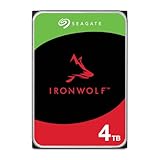
- IronWolf internal hard drives are the ideal solution for up to 8-bay, multi-user NAS environments craving powerhouse performance
- Store more and work faster with a NAS-optimized hard drive providing ultra-high capacity up to 16TB and cache of up to 256MB
- Purpose built for NAS enclosures, IronWolf delivers less wear and tear, little to no noise/vibration, no lags or down time, increased file-sharing performance, and much more
- Easily monitor the health of drives using the integrated IronWolf Health Management system and enjoy long-term reliability with 1M hours MTBF
- Three-year limited warranty protection plan included and three year Rescue Data Recovery Services included
2. Record a baseline under a representative workload
Note how long a scrub takes and observe application responsiveness and read/write performance while it runs. Record whether disks reach low-power idle states between maintenance runs if power use is important. Keep the workload and observation method consistent when comparing a later run; otherwise, a faster or slower result may reflect changing demand rather than a setting.
3. Change one supported setting only if measurements point to contention
OpenZFS gives scrub I/O lower priority than interactive synchronous and asynchronous work. Its scheduler limits concurrent I/O by class and in aggregate. Increasing scrub concurrency can improve scrub throughput under contention, but each physical device has a useful limit; beyond it, additional simultaneous I/O may stop helping or reduce throughput. In particular, raising zfs_vdev_scrub_max_active can shorten a scrub while making application reads and writes slower or less responsive. OpenZFS: ZFS I/O (ZIO) Scheduler
Rank #2

- Store more, compute faster, and do it confidently with the proven reliability of BarraCuda internal hard drives
- Build a power house gaming computer or desktop setup with a variety of capacities and form factors
- The go to SATA hard drive solution for nearly every PC application from music to video to photo editing to PC gaming. Ax. Sustained transfer rate OD: 190MB/s
- Confidently rely on internal hard drive technology backed by 20 years of innovation
- Frustration Free Packaging - This is just an anti-static bag. No cables, no box.
OpenZFS documentation lists zfs_vdev_scrub_min_active=1 in zfs(4), and its module-parameter documentation lists zfs_vdev_scrub_max_active=2. These are documented software values, not performance targets or guarantees. Defaults and implementation details can vary by OpenZFS version and operating system, so check the documentation for the version you run before changing a parameter. OpenZFS: Module Parameters
- Check
zpool statusand the documentation for your installed OpenZFS version. - Record scrub duration and foreground performance with a representative workload.
- If the evidence points to scrub contention, change only a setting supported by your version and platform.
- Repeat the same workload and compare scrub time with application responsiveness and throughput.
- Revert the change if the responsiveness cost outweighs the shorter scrub.
Do not set zfs_no_scrub_io=1 as a speed optimization. OpenZFS says this disables actual scrub I/O and leaves a metadata crawl, so it does not perform a real data scrub. OpenZFS: Module Parameters
Rank #3

- IronWolf internal hard drives are the ideal solution for up to 8-bay, multi-user NAS environments craving powerhouse performance.date transfer rate:6.0 gigabits_per_second
- Store more and work faster with a NAS-optimized hard drive providing 8TB and cache of up to 256MB
- Purpose built for NAS enclosures, IronWolf delivers less wear and tear, little to no noise/vibration, no lags or down time, increased file-sharing performance, and much more
- Easily monitor the health of drives using the integrated IronWolf Health Management system and enjoy long-term reliability with 1M hours MTBF
- Three-year limited product warranty protection plan and three year Rescue Data Recovery Services included
Does a ZFS scrub slow down a home server?
It can affect workload performance because the scrub competes for device I/O, although the scheduler gives scrub reads lower priority than normal interactive work. How noticeable the effect is depends on the workload, pool, devices, and concurrency. Raising concurrency may reduce scrub time while worsening latency or throughput for applications. There is no universal scrub speed or guaranteed setting that improves both completion time and foreground performance.
Can a scrub keep hard drives awake?
Yes. Scrubbing generates disk I/O, which can prevent idle drives from entering low-power states while the operation is active. Oracle Solaris 11.4 documentation says, “Scrubbing proceeds as fast as the devices allow, though the priority of any I/O remains below that of normal operations.” Its guidance suggests scheduling explicit scrubs when conserving disk power matters: that trades continuous scrub activity for longer intervals when no scrub is in progress. This power-management guidance is specific to Oracle Solaris; check how your own operating system or distribution schedules scrubs before adding a timer. Oracle Solaris 11.4: Explicit ZFS Data Scrubbing
Rank #4

- Available in capacities ranging from 2 to 22TB(1) | (1) 1GB = 1 billion bytes and 1TB = 1 trillion bytes. Actual user capacity may be less depending on operating environment.
- For RAID-optimized NAS systems with unlimited number of bays
- Rated for 550TB/yr workload rate(2) | (2) Annualized Workload Rate = TB transferred x (8760 / recorded power-on hours). The maximum rated workload is specified for operating at typical temperature of 40C. Workload Rate will vary depending on your hardware and software components and configurations.
- Designed to handle the demands of high-intensity 24x7 multi-user NAS environments
- Western Digital partners with a wide range of NAS system vendors for extensive testing to ensure compatibility with most NAS enclosures
What should you check during a home server upgrade?
Use the upgrade to examine pool health, layout, workload, and maintenance behavior—not to assume a new component will make scrubs faster.
What’s actually slowing this PC down?
Pick the symptom - the matching free tool is one click away.
- Pool topology: Large RAID-Z pools with many devices can take longer to scrub. Oracle’s guidance notes this qualitatively but does not give a universal completion time. Oracle Solaris 11.4: Storage Pool Practices for Performance
- Device health: Review
zpool statusfor errors or unhealthy devices before treating a long scrub as a tuning problem. - Foreground workload: Decide whether shorter scrub windows or smoother application performance matters more, then compare both outcomes when testing a change.
- Power schedule: Allow idle intervals between scheduled scrubs if reaching low-power disk states is a goal.
The available documentation does not establish that a particular drive, HBA, CPU, or memory configuration will improve scrub time. Device concurrency and pool layout matter, but they do not support a model-specific speed promise.
Quick Recap
Product prices and availability are accurate as of the date/time indicated and are subject to change. Any price and availability information displayed on Amazon at the time of purchase will apply.

